
Category: Recommended Reading
Julian Assange is finally free – but should not have been prosecuted in the first place
Ken Roth in The Guardian:
 Julian Assange’s lengthy detention has finally ended, but the danger that his prosecution poses to the rights of journalists remains. As is widely known, the US government’s pursuit of Assange under the Espionage Act threatens to criminalize common journalistic practices. Sadly, Assange’s guilty plea and release from custody have done nothing to ease that threat.
That Assange was indicted under the Espionage Act, a US law designed to punish spies and traitors, should not be considered the normal course of business. Barack Obama’s justice department never charged Assange because it couldn’t distinguish what he had done from ordinary journalism. The espionage charges were filed by the justice department of Donald Trump. Joe Biden could have reverted to the Obama position and withdrawn the charges but never did.
More here.
How Far Can We Scale AI?
Cupcakes and Crotch Kicks: On “What Makes Sammy Jr. Run?”
Tom Zoellner at the LARB:
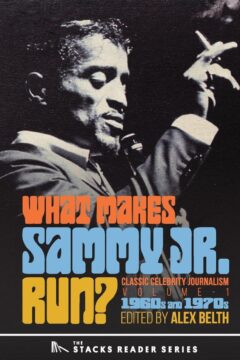 Editor Alex Belth has created an unusual literary anthology of some of the best celebrity magazine profiles from 1959 to 1979, what is generally regarded—at least by publishing old-timers—as the peak years of the genre, before the ferret-faced publicists cracked down on honesty and budgets ran dry. What Makes Sammy Jr. Run? Classic Celebrity Journalism Volume 1 (1960s and 1970s), published by the Sager Group this spring, puts 18 long-form stories about well-known actors, writers, and musicians into one place. The result is like a walk through a delightful museum of postwar America, with all its bright spots and faults.
The nostalgia for a lost era runs even thicker. Not only have celebrity profiles gotten flatter and duller—the canned hotel room conversation hardly makes for fun reading—but the entire medium of magazines has also taken serious economic blows and thinned out. Celebrities now do more direct and manageable communications with their fans through social media. Who needs to invite the annoying writer, that jealous guttersnipe hiding a knife in their back pocket?
more here.
America has a big birthday coming. How could we possibly celebrate it?
Jesus Rodriguez in The Washington Post:
 In the course of human events, America has come to agree on one thing: that any modern birthday celebration of itself will involve sizzling hunks of meat, Springsteen in the ears, smoke in the eyes, sulfur in the nostrils, rockets’ red glare.
What’s less self-evident is how to appropriately mark a big birthday — like America’s 250th, two short years away — at a time when the country is so politically split that many Americans may be ready to declare the Great Experiment kaput after November. A survey this year by Gallup found that 67 percent of adults feel either “very proud” or “extremely proud” to be American — down from 85 percent in 2013 and 90 percent in 2003. A much lower percentage say they are satisfied with the way things are going: 21 percent, in June. Two-thirds of the people who responded to a January Quinnipiac poll said they believed American democracy was in danger of collapsing. Historians have been sounding alarm bells, and this week Supreme Court Justice Sonia Sotomayor and two of her colleagues, dissenting against the court’s ruling that presidents have absolute immunity from criminal prosecution for official acts, said the court’s conservative majority had just made the president into “a king above the law,” upending “the status quo that has existed since the Founding.”
More here.
Wednesday Poem
Morning in the Burned House
In the burned house I am eating breakfast.
You understand: there is no house, there is no breakfast,
yet here I am.
The spoon which was melted scrapes against
the bowl which was melted also.
No one else is around.
Where have they gone to, brother and sister,
mother and father? Off along the shore,
perhaps. Their clothes are still on the hangers,
their dishes piled beside the sink,
which is beside the woodstove
with its grate and sooty kettle,
every detail clear,
tin cup and rippled mirror.
The day is bright and songless,
the lake is blue, the forest watchful.
In the east a bank of cloud
rises up silently like dark bread.
I can see the swirls in the oilcloth,
I can see the flaws in the glass,
those flares where the sun hits them.
I can’t see my own arms and legs
or know if this is a trap or blessing,
finding myself back here, where everything
in this house has long been over,
kettle and mirror, spoon and bowl,
including my own body,
including the body I had then,
including the body I have now
as I sit at this morning table, alone and happy,
bare child’s feet on the scorched floorboards
(I can almost see)
in my burning clothes, the thin green shorts
and grubby yellow T-shirt
holding my cindery, non-existent,
radiant flesh. Incandescent.
by Margaret Atwood
from Morning in the Burned House
Houghton Mifflin Co., 1995
mRNA Cancer Vaccines Spark Renewed Hope as Clinical Trials Gain Momentum
Shelly Fan in Singularity Hub:
 When Angela received her first shot at the Lombardi Comprehensive Cancer Center in early 2020, Covid-19 was months away. Far from a household name, mRNA vaccines were mostly relegated to lab studies. Yet the jab she received was made of the same technology. A melanoma patient, Angela had multiple malignant moles removed. Alongside an established immune-stimulating drug, the hope was the duo could fight off any residual cancerous cells and slash the chances of relapse. Scientists have long sought cancer vaccines that prevent the pesky cells from growing back. Like those targeting viruses, the vaccines would train the body’s immune system to recognize the cancerous cells and attack and eliminate them before they could grow and spread. Despite decades of research into cancer vaccines, the dream has mostly failed. One reason is that every cancer, in every person, is different. So is each person’s immune system. Tailoring vaccines to neutralize cancers for each patient would not only be expensive, but sometimes impossible due to how long they’d take to develop—time is not on cancer patients’ sides.
In contrast, mRNA vaccines are far speedier to build. After they were removed, Angela’s malignant moles were analyzed for specific cancerous “fingerprints” or neoantigens. Based on these proteins, scientists at Moderna—known for their Covid-19 vaccines—built a custom mRNA cancer vaccine to train her immune system to prevent her own cancer from recurring.
More here.
The Fantastical Lives of Ikbal and Idries Shah
Fitzroy Morrissey at Literary Review:
 Shortly before his death in 1974, R C Zaehner, Spalding Professor of Eastern Religions and Ethics at Oxford, observed that young Westerners who had turned away from Christianity were more often drawn to the religions of India and the Far East than to Islam. ‘The young’, the devoutly Catholic Zaehner stated, ‘are not interested in switching from one dogmatic monotheistic faith to another: hence they are little interested in Islam except when Islam itself is turned upside down and becomes Sufism, which in its developed form is barely distinguishable from Vedanta.’ ‘Indeed,’ he went on, ‘that egregious populariser Idries Shah has gone so far as to claim Zen as a manifestation of Sufism.’ This, Zaehner declared, was historical ‘nonsense’ and academically ‘detestable’.
Zaehner was referring to Shah’s The Sufis, which, since its publication in 1964, had become the most widely read book on Sufism in English. Helped by an introduction by the poet Robert Graves, The Sufis had met with critical acclaim. Writing in The Listener, the weekly magazine of the BBC, Ted Hughes described the book as ‘astonishing’, while, in The Spectator, Doris Lessing wrote that she couldn’t remember being more provoked or stimulated.
more here.
Tuesday, July 2, 2024
Ismail Kadare, giant of Albanian literature, dies aged 88
Richard Lea in The Guardian:
 Writing under the shadow of Albanian dictator Enver Hoxha, Kadare examined contemporary society through the lens of allegory and myth in novels including The General of the Dead Army, The Siege and The Palace of Dreams. After fleeing to Paris just months before Albania’s communist government collapsed in 1990, his reputation continued to grow as he kept returning to the region in his fiction. Translated into more than 40 languages, he won a series of awards including the Man Booker International prize.
Born in 1936 in Gjirokastër, an Ottoman fortress city not far from the Greek border, Kadare grew up on the street where Hoxha had lived a generation before. He published his first collection of poetry aged 17.
More here.
Dangerous mpox strain spreading in Democratic Republic of the Congo
Michael Le Page in New Scientist:
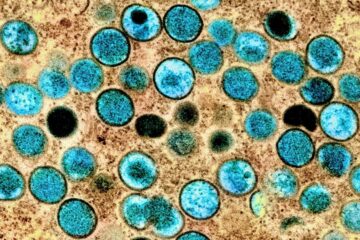 Urgent action is needed to try to contain the spread of a new strain of mpox transmitted mainly by heterosexual sex that has caused more than 1000 cases in the Democratic Republic of the Congo, say health experts dealing with the outbreak. They fear the condition is poised to spread to neighbouring countries and possibly further afield.
“It’s undoubtedly the most dangerous so far of all the known strains of mpox considering how it is transmitted, how it is spread and also the symptoms,” says John Claude Udahemuka at the University of Rwanda.
The new strain was first identified in the small mining town of Kamituga in South Kivu province in the east of the DRC in September. In recent weeks it has spread to cities in the area. It may already have reached neighbouring countries such as Rwanda, Burundi and Uganda, says Leandre Murhula Masirika at the South Kivu health department.
More here.
Linguist John McWhorter interviewed by Richard Dawkins
Prediction Markets Suggest Replacing Biden
Scott Alexander at Astral Codex Ten:
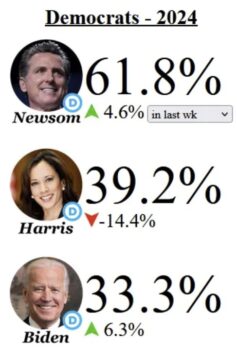 Some of the party’s problems are hard and have no shortcuts. But the big one – figuring out whether replacing Biden would even help the Democrats’ electoral chances – is a good match for prediction markets. Set up markets to find the probability of Democrats winning they nominate Biden, vs. the probability of Democrats winning if they replace him with someone else.
(see my Prediction Market FAQ for why I think they are good for cases like these)
Before we go into specifics, the summary result: Replacing Biden with Harris is neutral to slightly positive; replacing Biden with Newsom or a generic Democrat increases their odds of winning by 10 – 15 percentage points. There are some potential technical objections to this claim, but they mostly suggest reasons why the markets might overestimate Biden’s chances rather than underestimate them.
In Search of the Rarest Book in American Literature
Bradford Morrow at Lit Hub:
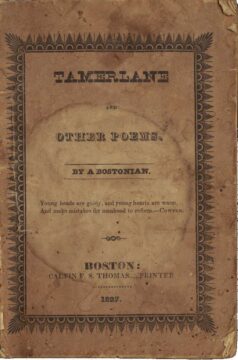 My first personal encounter with the rarest book in American literature was memorable, even moving, for many reasons, but its physical appearance wasn’t one of them. If ever a book ought not to be judged by its cover, Edgar Allan Poe’s debut collection, Tamerlane and Other Poems, is that book. Known as the Black Tulip, only twelve copies appear to have survived since its publication in July 1827. That one of the last two in private hands is coming to auction this month, not quite two centuries later, marks an historic bibliophilic event.
Both Poe and the novice printer Calvin F.W. Thomas were just eighteen when the poet handed over his manuscript, presumably at Thomas’s shop at 70 Washington Street in Boston, and paid him to make it into a book. The result was forty pages of unevenly printed verse bound in drab tan wrappers the shade of a faded tea stain. Tamerlane’s front cover features a potpourri of discordant typefaces within an ornamental frame that resembles a geometric queue of conifers—a heavy-handed period design I have grown to adore.
more here.
Neuroscientists must not be afraid to study religion
Patrick McNamara et al in Nature:
 Around 85% of the global population identifies as religious. Decades of work in the social sciences have found that religious or spiritual beliefs and practices can improve people’s health and well-being; increase social cohesion, empathy and altruistic behaviour; and protect people against cognitive decline or substance abuse1. But also, throughout history, religion and spirituality have amplified conflict, polarization and oppression2–4.
Despite the manifest importance of faith as an influencer of human behaviour, neuroscientists have tended to steer clear of studying how people’s beliefs affect their brains and vice versa. This includes investigation of the effects of beliefs in supernatural agents or miracles, practices around worship or prayer and participation in rituals. Such avoidance probably stems in part from centuries of powerful religious institutions resisting scrutiny and interrogation. But researchers and funders are also fearful that any investigation of religiosity or spirituality could be seen either as promoting a particular religion, or as flat-out unscientific.
More here.
How Stress Can Mask the Symptoms of Chronic Disease
Knvul Sheikh in The New York Times:
 Scientists now know that stress is intimately linked with many chronic diseases: It can drive immune changes and inflammation in the body that can worsen symptoms of conditions like asthma, heart disease, arthritis, lupus and inflammatory bowel disease. Meanwhile, many issues caused by stress — headaches, heartburn, blood pressure problems, mood changes — can also be symptoms of chronic illnesses.
Stress naturally kick-starts what’s called the fight-or-flight response. When we encounter a threat, our blood pressure and heart rate climb, muscles tense and our body concentrates blood sugar to make it easier to quickly react, said Dr. Charles Hattemer, a specialist in cardiovascular health at the University of Cincinnati. If people are stressed for weeks or months, their bodies may be unable to keep up as well with other functions, leading to problems like forgetfulness, fatigue and trouble sleeping. Stress hormones like adrenaline and cortisol can chronically elevate blood pressure or increase plaque deposits, which can damage the heart over time, Dr. Hattemer said.
More here.
Guillaume de Machaut’s Medieval Love Songs
Alex Ross at The New Yorker:
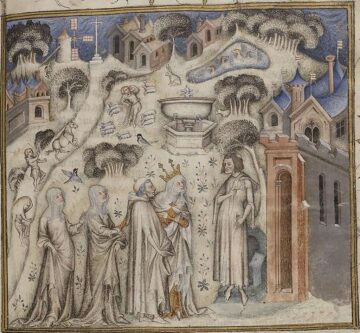 Guillaume de Machaut, the master poet-composer of fourteenth-century France, served for many years as the canon of the great Gothic cathedral at Reims, where the kings of the realm were crowned. Machaut’s most famous creation, the Messe de Nostre Dame, has a singular place in musical history, because it is an early attempt at creating a comparably sublime edifice in sound—a six-movement work in four-part polyphony, lasting well over half an hour, in which austere, granitic harmony is set against delicate contrapuntal play and spiky rhythmic motion. This Mass is, in fact, the oldest extant piece of its type to have been attributed to a single composer. When, the other day, the San Francisco-based vocal ensemble Chanticleer sang it at Grace Cathedral, on Nob Hill, a suitable atmosphere of awe accumulated.
Yet the Mass is ultimately not Machaut’s most striking achievement. Superbly constructed as the score is, it does not mark a leap beyond other, anonymous masses of the period. Chanticleer augmented the movements of the Mass with a generous selection of Machaut’s works in secular forms, for which he wrote both texts and music: ballades, rondeaux, lais, virelays, and motets.
more here.
Guillaume de Machaut: Douce Dame Jolie | La Morra
Tuesday Poem
Unholy Sonnets
1.
Dear God, Our Heavenly Father, Gracious Lord,
Mother Love and Maker, Light Divine,
Atomic Fingertip, Cosmic Design,
First Letter of the Alphabet, Last Word,
Mutual Satisfaction, Cash Award,
Auditor Who Approves Our Bottom Line,
Examiner Who Says That We Are Fine,
Oasis That All Sands Are Running Toward.
I can say almost anything about you,
O Big Idea, and with each epithet,
Create new reasons to believe or doubt you,
Black Hole, White Hole, Presidential Jet.
But what’s the anything I must leave out? You
Solve nothing but the problems that I set.
Miller Williams
from Poetry 180
Random House, 2003
Sunday, June 30, 2024
The loneliness of the low-ranking tennis player
Conor Niland in The Guardian:
 There are three tiers in the hierarchy of men’s professional tennis. The ATP Tour is the sport’s top division, the preserve of the top 100 male tennis players in the world. The Challenger Tour is populated mainly by players ranked between 100 and 300 in the world. Below that is the Futures tour, tennis’s vast netherworld of more than 2,000 true prospects and hopeless dreamers.
I wasn’t schlepping my way through the lower ranks of the professional tour for the money or the prestige, both of which were in short supply. I, like everyone else, was there to remove myself from the clutches of the lower tiers. The Futures tour sometimes felt like a circle of hell, but in practical terms it’s better understood as purgatory: a liminal space that exists only to be got out of as quickly as possible.
More here.
How AI Revolutionized Protein Science, but Didn’t End It
Yasemin Saplakoglu in Quanta:
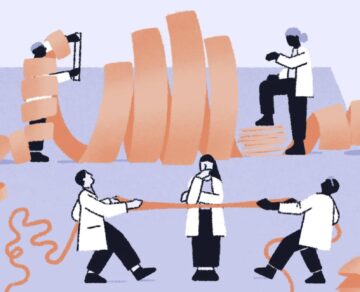 In an instant, the protein folding problem had gone from impossible to painless. The success of artificial intelligence where the human mind had floundered rocked the community of biologists. “I was in shock,” said Mohammed AlQuraishi, a systems biologist at Columbia University’s Program for Mathematical Genomics, who attended the meeting. “A lot of people were in denial.”
But in the conference’s concluding remarks, its organizer John Moult left little room for doubt: AlphaFold2 had “largely solved” the protein folding problem — and shifted protein science forever. Sitting in front of a bookshelf in his home office in a black turtleneck, clicking through his slides on Zoom, Moult spoke in tones that were excited but also ominous. “This is not an end but a beginning,” he said.
More here.