Tuesday Poem

After Making Love we Hear Footsteps

For I can snore like a bullhorn
or play loud music
or sit up talking with any reasonably sober Irishman
and Fergus will only sink deeper
into his dreamless sleep, which goes by all in one flash,
but let there be that heavy breathing
or a stifled come-cry anywhere in the house
and he will wrench himself awake
and make for it on the run – as now, we lie together,
after making love, quiet, touching along the length of our bodies,
familiar touch of the long-married

,
and he appears – in his baseball pajamas, it happens,
the neck opening so small
he has to screw them on, which one day may make him wonder
about the mental capacity of baseball players –
and flops down between us and hugs us and snuggles himself to sleep,
his face gleaming with satisfaction at being this very child.

In the half darkness we look at each other
and smile
and touch arms across his little, startling muscled body –
this one whom habit of memory propels to the ground of his making,
sleeper only the mortal sounds can sing awake,
this blessing love gives again into our arms.

by Galway Kinnell

from The Seashell Anthology;
Park Lane Press, 1996

Why Light Makes Migraines Worse

From Science:

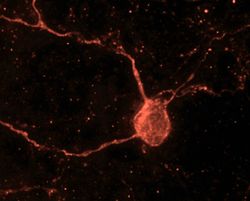
Cell Migraine sufferers often retreat to a dark room or pull the shades down. Any light just makes the searing pain worse. Now, scientists think they know why–thanks to some help from blind volunteers. Just why bright light exacerbates migraines is unclear, because brain regions that govern vision don't overlap with those that transmit pain. To narrow down which vision cells might be behind this, anesthesiologist Rami Burstein, who works at Beth Israel Deaconess Medical Center and Harvard Medical School in Boston, and colleagues tracked down migraine sufferers who also happened to be blind. Of the 20 blind individuals who volunteered for the study, six couldn't perceive light at all; they lacked eyes or had a severely damaged optic nerve, which connects the eye to the brain. The other 14, who suffered from genetic and other conditions that lead to blindness, couldn't see, but they could sense certain shades of light.

Not surprisingly, the six people who had no vision at all didn't experience pain from light when they had a migraine. But the other 14 did. This was an interesting clue, because these individuals had faulty rods and cones, cells in the retina that do most of the work of light detection. They did, however, have other retinal cells that functioned fine, particularly those with a type of receptor called melanopsin. Melanopsin doesn't help people see shapes, but it does react to light–specifically, blue light. At this point, says Burstein, “we needed to follow the melanopsin,” to see whether the cells expressing it might link up with cells that transmit pain. And indeed, in the rat brain, axons from the light-sensitive melanopsin cells hooked up to specific nerve cells in the thalamus that play a role in pain sensation, the team reports online this week in Nature Neuroscience.

More here.

Deciphering the Chatter of Monkeys

Nicholas Wade in The New York Times:

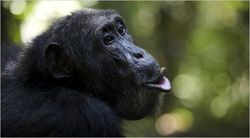
ArticleLarge Walking through the Tai forest of Ivory Coast, Klaus Zuberbühler could hear the calls of the Diana monkeys, but the babble held no meaning for him. That was in 1990. Today, after nearly 20 years of studying animal communication, he can translate the forest’s sounds. This call means a Diana monkey has seen a leopard. That one means it has sighted another predator, the crowned eagle. “In our experience time and again, it’s a humbling experience to realize there is so much more information being passed in ways which hadn’t been noticed before,” said Dr. Zuberbühler, a psychologist at the University of St. Andrews in Scotland.

Do apes and monkeys have a secret language that has not yet been decrypted? And if so, will it resolve the mystery of how the human faculty for language evolved? Biologists have approached the issue in two ways, by trying to teach human language to chimpanzees and other species, and by listening to animals in the wild. The first approach has been propelled by people’s intense desire — perhaps reinforced by childhood exposure to the loquacious animals in cartoons — to communicate with other species. Scientists have invested enormous effort in teaching chimpanzees language, whether in the form of speech or signs. A New York Times reporter who understands sign language, Boyce Rensberger, was able in 1974 to conduct what may be the first newspaper interview with another species when he conversed with Lucy, a signing chimp. She invited him up her tree, a proposal he declined, said Mr. Rensberger, who is now at M.I.T.

More here.

I Built an African Army. Here’s what it will take to build Afghanistan’s…

Sean McFate in Foreign Policy:

ScreenHunter_02 Jan. 12 09.44 In May 2004, I was hired for an unusual job: The U.S. State Department contracted DynCorp International, a private military company, to build Liberia's army. I was tapped as an architect of this new force. Previously I had worked for both the U.S. military and Amnesty International. I was a rare bird — an ex-paratrooper and human rights defender — and thus a good fit for this unprecedented task.

When I arrived in Liberia in 2004, the country's army was, at best, a mess. After decades of civil war, soldiers' hands were as bloodied as any rebels'. The troops were undisciplined, unpaid, and undertrained. They were a motley crew that protected no one in a country where pretty much everyone was vulnerable to violence. And it was our job to turn them into a professional military.

Today, just five years later, Liberia's soldiers are among the best in the region. They have been vetted, trained, paid, and readied for action. The difference was the impact of that little-known U.S. initiative — the first of its kind — that literally rebuilt the Liberian army from scratch. Our goal was for the Liberian army to fill the role of U.N. peacekeepers as the latter were slowly phased out, and it worked astonishingly well.

Now that model might be of use again. President Barack Obama's strategy for Afghanistan is predicated on creating Afghan security forces to replace coalition soldiers.

More here. [Thanks to Feisal H. Naqvi.]

The Unbelievably Bad Metaphors in Esquire’s Profile of Jay-Z

John Swansburg in Slate:

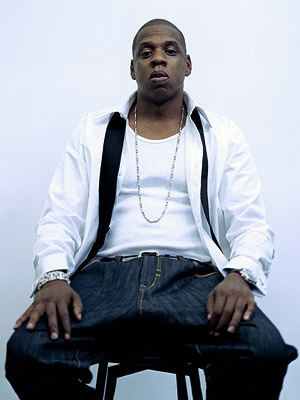
Jayz3 1. “Jay-Z walks into a gracious chamber at Manhattan's Plaza Hotel. It's the same room where, thousands of years ago, crown moldings were born.”

2. “He sits down in his hard-backed chair and the reporters collect around him in a buttery little square. But Jay-Z doesn't really sit. What he actually does is slalom down in his chair, real low like it's a water slide. Seventy-three inches of all-black everything, laid out like a ramp.”

3. “Jay-Z is a half-dangerous rapper who grew up in the gat-happy projects of the Bedford-Stuyvesant section of Brooklyn. He sold crack on feral corners and shot his brother for stealing his ring. Badass, for real.”

4. “Look up, left, and listen. Jay-Z's vamping scowl is paraded everywhere, his presence vibrates from sound systems and is woven into the fabrics.”

5. “Short and bald with a body type that plugs his surname, Steve Stoute is the underfamous but ubiquitous guy in all the celebrity pictures.”

6. “He's black and also liquid-shiny like the mimetic shape-shifting bad guy in Terminator 2. He's real deal-eyed, and what first comes off as arrogance you realize later is sentience, with an extra side of arrogance. He's wily as hell, plus hyper-protective and defensive of his products, both intellectual and carbon-based.”

More here.

What are the past, present and future?

Alexander Waugh in the Wall Street Journal:

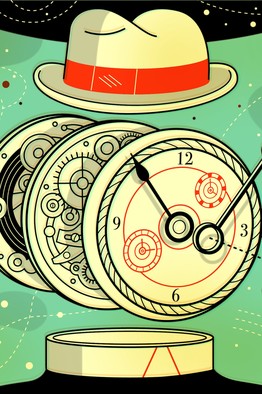
PT-AN459_books__DV_20100107191822 Sean Carroll is a formidable theoretical physicist from the California Institute of Technology, and “From Eternity to Here” is his first work of popular science. He outlines, in the simplest possible terms, all that is known about the arrow of time. That is to say, all that we think we know about the arrow of time, for Mr. Carroll's greatest virtue, aside from the clarity of his prose—an absolute “must” when dealing with matters as complex and counterintuitive as quantum gravity, black holes, tachyons and dark energy—is his honesty in delineating precisely what is known, what is unknown, what is subjective, what is hypothetical and what is purely theoretical.

Many popular-science writers try, to their discredit, to blur these lines, usually out of simple fear of revealing the depths of man's (and thereby their own) ignorance. But Mr. Carroll is not afraid to leave his readers with a general impression that practically nothing is known or properly understood about time, space, our universe or its place relative to anything outside of it. This is one of his book's greatest strengths, for only by admitting to our own lack of understanding can we find the pluck to ask the simplest questions. “Why does the arrow of time flow from the past toward the future—why not the other way round?” The question seems trivial, even a trifle babyish, but Mr. Carroll keeps on asking it and, in his brave attempt to provide a full and coherent answer, takes his readers on a fascinating and refreshing trek through every known back alley and cul de sac of quantum mechanics, relativity, cosmology and theoretical physics.

More here.

Monday, January 11, 2010

Those Obscure Objects of Desire: The Political Economy of Civilization in Orhan Pamuk’s The Museum of Innocence

by Ahmad Saidullah

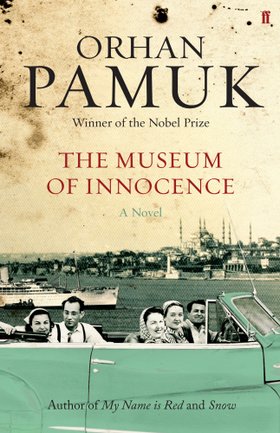
Book_museum_of_innocence_jpg_280x450_q85 The Museum of Innocence, Orhan Pamuk’s first novel since he won the 2006 Nobel Prize, is set in the period following the mid-seventies when the author was buying books in Istanbul “like a frantic person who was desperate to understand why Turkey was so poor.” A student of Turkish history and the politics of civilization, Pamuk noted in an essay on his library in The New York Review of Books that “in the 1970s, the stars of every bookstore were the large historical tomes that sought out the root causes of Turkey’s poverty and ‘backwardness’ and its social and political upheavals.”

The Museum of Innocence frames this history around the star-crossed fates of characters from the Turkish elite who live in Nişantaşı, a wealthy neighborhood in the Pera part of Istanbul where Pamuk grew up, and their poorer counterparts in the city. The central plot of Museum, a six-page story about desire and difference, appeared in The New Yorker. While shopping for Sibel, his rich socialite fiancée, Kemal Basacı, the son of one of Istanbul’s wealthiest industrialists, falls for Füsun Keskin, the shopgirl at the boutique, who sells him a fake designer handbag.

Füsun, whose name means “charm,” “enchantment,” “magic,” and “spell” in Turkish, happens to be Kemal’s poor cousin. The Basacıs shun her family members not just for their poverty but for their scandalous and somewhat déclassé decision in allowing Füsun to compete in a beauty pageant. Using the return of the knock-off “Jenny Colon” handbag (the real Jenny Colon was a nineteenth-century actress and Nerval’s muse) as a pretext for meeting again, Kemal and Füsun, a sexually precocious beauty modelled on Lolita, start a clandestine affair in an apartment in Merhamet. Kemal neglects the family business as his passion grows. Frustrated with his obsession and worried about the public odium that will follow the scandal, Sibel breaks off the engagement. Füsun disappears and Kemal on his visits to the Keskins starts collecting tokens of the affair that become his Museum of Innocence.

In the drawn-out second part of the book, Kemal resumes contact with Füsun when she returns to Istanbul with a husband, Feridun, an aspiring screenwriter. Kemal and Feridun pretend to help Füsun become a Yeşilçam film star but secretly do all they can to thwart her. Eventually, Kemal founds Lemon Films and produces a film adaptation of Turkish novelist Halit Ziya Uşaklıgil’s Broken Love (Kırık Hayatlar), a once-censored novel about unrequited love, in which Füsun stars. Her film career is shortlived.

The book ends with chapters on collectors and museums but not before Orhan Pamuk makes his second deus ex machina appearance in the book. He addresses Kemal in a ponderous metafictional apostrophe: “in the book you are telling me your own story and saying ‘I,’ Kemal Bey. I am speaking in your voice. Right now I am trying very hard to put myself in your place, to be you.”

Although Museum is written in an accessible middle style with balanced sentences that are almost flat and static, with few of the syntactical hijinks of some of Pamuk’s other novels, it is one of his more troubling books. He has claimed that this novel is about love and “love,” says a character in the book, “is Leyla and Macnun,” a reference to the Azeri poet Fużūlī’s classic ghazal about ill-starred lovers. Much of Museum’s plotline, though, moves between banal dialogue (“I am a penniless shopgirl, while you are the son of a wealthy factory owner”), platitudes (“Happiness means being close to the one you love, that’s all”) and coy, almost adolescent, descriptions of sex suited to the Yeşilçam romantic film melodramas that Pamuk adored in 1970s and ’80s Istanbul. Ever the bibliophile, Pamuk does not fail to include references to Nabokov’s Lolita, Flaubert’s Madame Bovary, Nerval’s Aurélia and Uşaklıgil who had modelled his style on French romanticism. He also refers to Flaubert’s affair with Louise Colet and the use of love tokens in Madame Bovary.

Read more »

Sunday, January 10, 2010

Three Quarks for Muster Murray!

GellMannTSNOver at The Science Network:

In celebration of the twenty-fifth anniversary of the Santa Fe Institute and Murray Gell-Mann's eightieth birthday, TSN visited Murray at home to discuss life, the universe and everything.

Murray named the quark after the sound made by ducks. He took the spelling from a line in James Joyce's Finnegans Wake:

Three quarks for Muster Mark!
Sure he has not got much of a bark
And sure any he has it's all beside the mark.

The Negative Side Of Positive Thinking

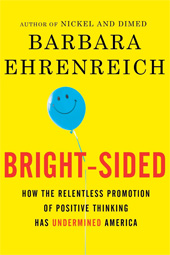
123109bookreview_170 Andrew Sullivan points to Barbara Ehrenreich's new book Bright-Sided: How the Relentless Promotion of Positive Thinking Has Undermined America. Michael Fumento reviews the book in Forbes:

“Anybody who ever built an empire, or changed the world, sat where you are now,” says George Clooney's “termination engineer” to just-fired employees in the comedy Up in the Air. Satire? Hardly. “We Got Fired! … And It's the Best Thing that Ever Happened to Us!” declares one book title. There's a cottage industry built around convincing canned workers that they just won the lottery.

A whole chapter is devoted to it in Barbara Ehrenreich's brilliant exposé of our smiley-faced culture in Bright-Sided: How the Relentless Promotion of Positive Thinking Has Undermined America. It's “an ideological force in American culture,” she says, “that encourages us to deny reality, submit cheerfully to misfortune, and blame only ourselves for our fate.”

Ehrenreich traces the roots of our nation's pathological positivity, ironically, to the dreariness of New World Calvinism and its fire-and-brimstone and pre-destination teachings. Society reacted to these by shooting off in the opposite direction.

First, many sought to take their health destiny into their own hands via Mary Baker Eddy, Christian Science and those ubiquitous reading rooms. Having done it with health, they tried it with wealth–the “Think and Grow Rich” movement that enthralls us. Beginning with Napoleon Hill's 1937 classic of the same name, it sometimes means just that: Envisioning something brings it to you.

In a subtler form it says that a positive outlook leads to positive circumstances. There's nothing that can't be solved with a bright smile and a grand effort to “Cheer up!” OK, so your wife left you for the young stud who also took your job, and the bank just foreclosed on your house. Just sing and whistle along with Monty Python: “Always look on the bright side of life!” After all, “There is no kind of problem or obstacle for which positive thinking or a positive attitude has not been proposed as a cure,” Ehrenreich observes. “Positive thoughts are even solicited for others, much like prayers.”

Ehrenreich notes 60% of female breast cancer patients attributed their continued survival to a “positive attitude,” yet studies repeatedly show no correlation between developing or surviving cancer and mental attitude.

Here's an interview with Ehrenreich over at KPBS, San Diego.

Politics and the Imagination

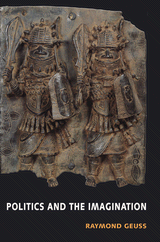
Guess new bookOver a Princeton University Press, from the first chapter of Raymond Geusss's new book here. From the book description:

In politics, utopians do not have a monopoly on imagination. Even the most conservative defenses of the status quo, Raymond Geuss argues, require imaginative acts of some kind. In this collection of recent essays, including his most overtly political writing yet, Geuss explores the role of imagination in politics, particularly how imaginative constructs interact with political reality. He uses decisions about the war in Iraq to explore the peculiar ways in which politicians can be deluded and citizens can misunderstand their leaders. He also examines critically what he sees as one of the most serious delusions of western political thinking–the idea that a human society is always best conceived as a closed system obeying fixed rules. And, in essays on Don Quixote, museums, Celan's poetry, Heidegger's brother Fritz, Richard Rorty, and bourgeois philosophy, Geuss reflects on how cultural artifacts can lead us to embrace or reject conventional assumptions about the world. While paying particular attention to the relative political roles played by rule-following, utilitarian calculations of interest, and aspirations to lead a collective life of a certain kind, Geuss discusses a wide range of related issues, including the distance critics need from their political systems, the extent to which history can enlighten politics, and the possibility of utopian thinking in a world in which action retains its urgency.

From the first chapter:

Traditional philosophy was utterly fixated on the search for a single fundamental concept the analysis of which would allow one to decipher a whole area of human experience, and for a very wide range of human activities philosophers thought they had discovered an Archimedean point in the concept of a “belief” or an “opinion.” I would like to suggest that this traditional approach might in some ways stand in the way of a proper understanding of politics. In contrast to the traditional views, I would like to propose two theses. First, if one thinks it necessary to isolate a single political concept that was purportedly more central than others, one would be well advised to take as basic not “belief” or “opinion” but “action” or the “context of action.” Political judgments are not made individually one by one, but always stand as parts of larger sets of beliefs and judgments, and a political judgment is always embedded in a context of action. A political judgment is itself specifically directed at focusing, guiding and orienting future action; expressing, or even entertaining, such a judgment is performing an action. Second, “context of action” would not be a concept that could serve as an essential definition of politics in the traditional sense in which philosophers have sought such a definition. At best, “context of action” is an open concept with indeterminate contours, and boundaries that can expand and contract depending on a variety of other factors.

The lost script

From The Boston Globe:

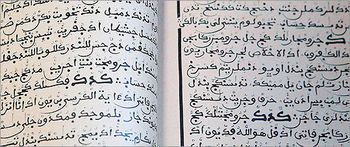
Script__1262971863_2274 One day while he was living near Seattle, the Senegal-born linguistics professor Fallou Ngom forgot to close a window before a rainstorm passed through, and the next morning discovered the wind had blown some of his papers to the floor. On one of them, a sheet several years old, his late father had recorded a debt. Ngom’s father was considered illiterate because he couldn’t read and write in the country’s official language, French. But like many Senegalese had for centuries, he wrote daily information in his native tongue using a modified form of Arabic script known as Ajami. Ngom was struck by the irony: Here was his “illiterate” father communicating with him years after his death, in writing. Ngom realized that this was more than just a touching personal moment. It also represented an immense opportunity. Ajami script had been widely used across Africa for day-to-day writing in a dozen languages, and Ngom knew those writings had been largely overlooked in the official story of the continent – in part because so few historians could read them. How many other documents like this existed across the continent? How many had simply been missed, or ignored?

Within a year, Ngom shifted his research from French linguistics, his specialty at Western Washington University, to the handwritten script of his father. Today Ngom is director of the African Languages Program at Boston University, and is training the first generation of American scholars capable of reading Ajami. What Ngom hopes is nothing less than to lay the groundwork for a reinterpretation of much of African history, using this widespread but little understood writing system to unearth new information about the daily life of Africans, the spread of Islam, the continent’s literary traditions, the Atlantic slave trade, and who knows what else.

Could one writing system have that much influence?

More here.

The Truth About Lions

Abigail Tucker in Smithsonian Magazine:

ScreenHunter_07 Jan. 10 16.15 Since arriving in Tanzania’s Serengeti National Park only that morning, I’d gaped at wildebeests on parade, dawdling baboons, gazelles rocketing by, oxpecker birds hitching rides atop Cape buffaloes, hippos with bubblegum-colored underbellies. The Serengeti usually dazzles first-time visitors, Packer had warned, making us giddy with an abundance of idyllic wildlife straight out of a Disney song-and-dance number.

The sublime brute only 15 feet away was my first wild Panthera leo. Male African lions can be ten feet long and weigh 400 pounds or more, and this one appeared to be pushing the limits of its species. I was glad to be inside a truck.

Packer, though, opened the door and hopped out. He snatched a stone and tossed it in the big male’s direction.

The lion raised its head. Its handsome face was raked with claw marks.

Packer threw another stone. Unimpressed, the lion briefly turned its back, showing hindquarters as smooth as cast bronze. The beast yawned and, nestling its tremendous head on its paws, shifted its gaze to us for the first time. Its eyes were yellow and cold like new doubloons.

This was one of The Killers.

More here.

Even as ALS tightens its grip, Tony Judt remains outspoken

Evan R. Goldstein in the Chronicle of Higher Education:

Tony Judt On a Monday evening in mid-October, the historian Tony Judt appeared onstage at the Jack H. Skirball Center for the Performing Arts, in Greenwich Village. “I hope you don't mind if I begin by shooting the elephant in the house,” he said, speaking from an electric wheelchair, wrapped in a black blanket, with a Bi-Pap breathing device attached to his nose. “As you can see,” he continued, his voice gravelly and labored, “I'm paralyzed from the neck down, and also use this rather ridiculous-looking tube on my face to breathe.” A little more than a year ago, Judt was diagnosed with a progressive variant of amyotrophic lateral sclerosis, better known as Lou Gehrig's disease, a fatal condition that gradually destroys a person's ability to move, breathe, swallow, and talk.

In 2005, just four years earlier, the professor of European history at New York University had reached the pinnacle of his career with the publication of Postwar: A History of Europe Since 1945 (Penguin Press), his highly acclaimed account of Europe's rebirth after World War II. The book was a finalist for the Pulitzer Prize and was selected by The New York Times as one of the top 10 books of the year. Beyond academe, Judt had achieved renown as a political essayist and a formidable combatant in the quarrels between the left and right and within the left. He is perhaps best known as a harsh critic of Israel and the most prominent advocate of the creation of a single, binational state—the so-called one-state solution to the struggle between Palestinians and Israelis, a position that has earned him both plaudits and scorn.

More here.

American Qur’an

ScreenHunter_06 Jan. 10 15.31

[Click picture to enlarge.]

Sandow Birk at his website:

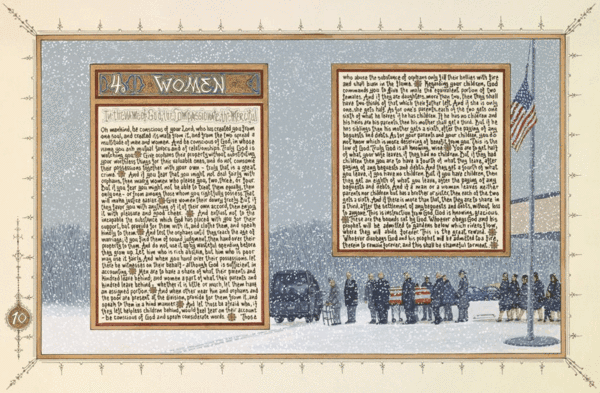
An ongoing project to hand-transcribe the entire Qur'an according to historic Islamic traditions
and to illuminate the text with relevant scenes from contemporary American life. Five years in the making, the project has been inspired by a decade of extended travel in Islamic regions of the world and undertaken after extensive research.

Unlike the Gospels of the New Testament – which relate narratives of Jesus’ ministry on earth – the Holy Qur’an is believed to be the verbatim words of God as communicated through the angel Gabriel to Muhammad in the 7th Century CE. Collected together and grouped generally according to length (rather than chronologically), the 114 chapters (“suras”) form a collection of sermon-like “revelations” that are the fundamental text of Islam, the fastest growing religion in America. At a time when the United States is involved in two wars against Islamic nations and declares itself to be in a cultural and philosophical struggle against Islamic extremists, American artist Sandow Birk’s latest project considers the Qur’an as it was intended – as a universal message to humankind. If the Qur’an is indeed a divine message to all peoples, he ponders, what does it mean to an individual American in the 21st Century? How does the message of the Qur’an relate to us, as Americans, in this life, in this time? What is this message that we have spent so much blood and treasure fighting against, and how can the message of the Qur’an be applied to contemporary American life? In short, what might the Qur’an mean to contemporary Americans?

From that starting point, Sandow Birk has spent the past five years creating a personal Qur’an. Following the traditions of ancient Arabic and Islamic manuscripts, the artist has been hand-transcribing the entire English-translated text of the Qur’an as was done in centuries past – following traditional guidelines as to the colors of inks, the formatting of the pages, the size of margins and the illuminations of page headings and medallions marking verses and passages.

More here. [Thanks to Jeff Strabone.]

Accentuating the Positive: Researchers Closer to Pinpointing Beneficial Evolutionary Mutations in the Human Genome

From Scientific American:

Positive-selection-mutations-human-evolution_1 Genetic mutations that enhance disease resistance or boost fitness in a particular climate have been positively selected over the course of human evolution. But current statistical methods to find these beneficial mutations, or variants, have only been able to home in on areas spanning several genes, which may cover a variety of other functions, as well. And within these broad swaths of the human genome, there are a number of nonselected, or neutral, variants that also get preferentially inherited because they are on the same chromosome as the selected variant. “It's basically that a whole haystack of [mutations] gets pulled up when selection occurs and then you're trying to find which one was the driver—the needle,” says Pardis Sabeti, an evolutionary geneticist at Harvard University's Department of Organismic and Evolutionary Biology.

To narrow down the culprits for positive selection, Sabeti and her team of researchers developed an approach that combines statistical methods that differ in their specificity for selected variants into one powerful tool. Using the composite tool, the group analyzed mutations in regions from different chromosomes spanning hundreds of kilobases, or hundreds of thousands of nucleotides. The mutations occurred both inside of genes or in the parts of the genome that do not encode genes. Although the team optimized their method for selection that has taken place in the past 30,000 years, Sabeti says that with some tweaking, the approach could stretch back to the point when human populations began migrating out of Africa and diverging from each other 50,000 to 70,000 years ago. The first study using the team's composite method was published January 7 in Science. Using this technique, the scientists could predict an area of the genome as narrow as a single gene, rather than several, that had likely been positively selected. For example, they found a single gene involved in eye color or skin pigmentation that was likely to be selected for from a region containing five genes.

More here.

Saturday, January 9, 2010

Poem: Whence Cometh Such Tender Rapture?

MarinaTsvetaeva

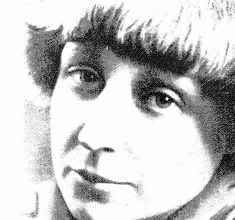
By Marina Tsvetaeva:

Whence cometh such tender rapture?
Those curls–they are not the first ones
I've smoothened, and I've already
Known lips–that were darker than yours.

The stars have risen and faded,
–Whence cometh such tender rapture?–
And eyes have risen and faded
In face of these eyes of mine

I'd never yet hearkened unto
Such songs in the depths of darkness,
–Whence cometh such tender rapture?–
My head on the bard's own breast

Whence cometh such tender rapture?
And what's to be done with it, artful
Young vagabound, passing minstrel
With lashes–too long to say.

New Year, New Science: What Scientific Research May Produce in 2010

_tmp_articling-import-20100106095306722312_463012a-i1.0Richard Van Noorden in Nature:

Earth-like worlds elsewhere

As planet-hunters eagerly await the discovery of an Earth-like planet in the habitable zone around a Sun-like star, they may have to make do this year with an easier target: a potentially hospitable planet around a red dwarf star. NASA's Kepler telescope has already discovered previously unknown planets (see page 15).

Hope for HIV prevention

Early this year, the first clinical trial to use a gel incorporating an antiretroviral drug is expected to release its initial results; several large trials of other microbicides have failed to show benefit in blocking HIV. Early results are also due from long-anticipated trials that look at 'pre-exposure prophylaxis', or administering anti-HIV drugs before risky sex.

A perfect symmetry

Evidence for supersymmetry — the theory that every known fundamental particle has an undiscovered, superheavy partner — may be the most intriguing discovery to come from Europe's Large Hadron Collider near Geneva, Switzerland. The find would be even more bizarre than the anticipated Higgs boson, the particle thought to imbue matter with mass.

Quantum effects go large

Solid objects in physics laboratories could be seen to enter a superposition of states — the real-world version of Schrödinger's mythical cat that is dead and alive at the same time. The effect, predicted by quantum mechanics, has previously been seen in objects no bigger than ions, but could push into the macroscopic realm this year.