
Category: Recommended Reading
How to Die Well
Karen Armstrong in Big Think:
On Meera Nanda’s The Wrongs of the Religious Right: Reflections on Science, Secularism and Hindutva
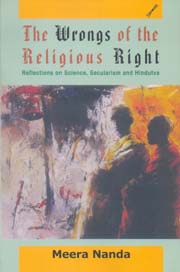
Secular government in the U.S. resulted from an alliance between politically disadvantaged churches and the supporters of the Enlightenment they otherwise disdained. American Protestantism was split. Those with a modernist bent gravitated toward more liberal, deistic, rationalist and scientific thinking. This tendency had political impact; however, it tended to be limited to highbrow, well-educated, and well-off congregations. Today, the fundamentalist Right leads a backlash against them.
Indian secularism was born of the need to keep the peace among rival religious groups, neutralize the caste system, and reform barbaric social practices associated with a variety of religious practices. The state took on the role of religious reform. The downside is that state interference in religion has made religion a battleground for political manipulation and power plays.
Hindu revivalism outmaneuvered the secular forces within the Indian independence movement. Hindu ideologues sanitized the past, proffering a ‘purified’ Hinduism as consistent with modern needs. This is reactionary modernism: the incorporation of modernizing impulses into an atavistic anti-modernist ideology. Secularization amounted to an endorsement of Hinduism, compounded by the hypocritical claim of essential Hindu ‘tolerance’. As in the United States, a rupture with the past was passed off as continuity with the past. India’s trajectory was far worse. The secularist, deistical, naturalistic and scientific tendencies of the American Enlightenment at least had some institutional impact, but there was no counterpart in India. No ‘disenchantment of nature’ took root among a decisive contingent of Indian intellectuals; instead, modern science was incorporated into Vedic superstition.
Nanda argues that the pragmatic maneuvers establishing secular states prior to the formation of secular cultures created the conditions for the right-wing religious populism that menaces both countries today. Secular states cannot ultimately survive without the secularization of their inhabitants.
The Annual Kenneth Arrow Lecture: Amartya Sen on “Social Choice and Individual Values.”
Eric Maskin and Joseph Stiglitz respond, at the Heyman Center for the Humanities:
TalibanLite™: More Virgins, Less Killing™.
Andy Borowitz in The New Yorker:
The Taliban have embarked on a sophisticated information war, using modern media tools as well as some old-fashioned ones, to soften their image. . . . The dictates include bans on suicide bombings against civilians, burning down schools, or cutting off ears, lips and tongues. —The Times.
Isn’t it time you took another look at . . . the Taliban™?
Not your father’s Taliban™. The New Taliban™. TalibanLite™.
We know what you’re thinking: “The Taliban™? Aren’t they the dudes who blow up shit and cut off body parts?”
LOL! You’re thinking of the Old Taliban™.
How do we know what you’re thinking?
Focus groups.
You’re, like, “Focus groups? Since when do the Taliban™ do focus groups?”
We’re, like, “Since Domino’s Pizza started doing them.”
You told Domino’s their crust tasted like cardboard and their sauce tasted like ketchup. Harsh, right? But your criticism only made their pizza much tastier. At the New Taliban™, we want to be the Domino’s of extremists.
So we held focus groups in caves across Afghanistan, only instead of talking about crust and sauce you talked about the things you didn’t like about us, like the way we explode things without warning and cut off ears, lips, and tongues. And you know what? It hurt to hear you say that stuff. But we’re big boys. We can take it. We sent your opinions down the hall to the guys in marketing, and this is what they came back with:
TalibanLite™: We’re Cutting Out the Cutting™.
Ears? History. Lips. Done-zo. Tongues? So 2001. If there’s a part of your body we don’t like, we’ll just defriend it. O.K., maybe we’ll cut off a little toe. Not the big one, mind you, but maybe the itty-bitty one. Come on, you weren’t using that one anyway.
Psych! Ha-ha, just messing with you.
More here. [Thanks to Ejaz Haider.]
Wednesday Poem
Clear Night
Clear night, thumb-top of a moon, a back-lit sky.
Moon-fingers lay down their same routine
On the side deck and the threshold, the white keys and the black keys.
Bird hush and bird song. A cassia flower falls.
I want to be bruised by God.
I want to be strung up in a strong light and singled out.
I want to be stretched, like music wrung from a dropped seed.
I want to be entered and picked clean.
And the wind says, “What?” to me.
And the castor beans, with their little earrings of death, say, “What?” to me.
And the stars start out on their cold slide through the dark.
And the gears notch and the engines wheel.
by Charles Wright
“The Genius in All of Us”
From Salon:
David Shenk's new book, “The Genius in All of Us: Why Everything You've Been Told About Genetics, Talent, and IQ Is Wrong,” is 300 pages long, and more than half of those pages are endnotes. You need to offer up a lot of evidence when your goal is to overturn a concept as commonplace as the idea that genes are the “blueprints” for both our physical bodies and our personalities. Above all, what Shenk wants to communicate is that “the whole concept of genetic giftedness turns out to be wildly off the mark — tragically kept afloat for decades by a cascade of misunderstandings and misleading metaphors.” Instead of acquiescing to the belief that talent is a quality we're either born with or not, he wants us to understand that anyone can aspire to superlative achievement. Hard, persistent and focused work is responsible for greatness, rather than innate ability.
Shenk does have a lot of evidence for this assertion, most of it coming from geneticists and other biological researchers who are perplexed at the way their disciplines get depicted in the media. “Today's popular understanding of genes, heredity and evolution is not just crude, it's profoundly misleading,” Shenk writes. While most scientists long ago rejected the idea that nature and nurture are two separate factors competing in a zero-sum game to dominate human behavior, laypeople still cling to the idea that whatever aspect of ourselves isn't caused by our environment must be caused by our genes, and vice versa. In recent decades, heredity has gotten most of the credit; the host of the brainiest NPR talk show in my area inevitably prompts every expert to confirm that whatever they're discussing — mathematical ability, wanderlust, ambition, mental illness — is genetically determined.
More here.
Stem Cell Vitamin Boost
From Scientific American:
Soon after the exciting discovery of a method to turn human adult cells into stem cells in 2007 came the frustration of actually trying to make that transformation efficient. In creating induced pluripotent stem (iPS) cells, scientists typically only get 0.01 percent of a sample of human fibroblast (skin) cells to change. A group led by Duanqing Pei of the Guangzhou Institutes of Biomedicine and Health in China has found that a simple chemical can boost the efficiency by 100-fold—namely, vitamin C.
The researchers can trigger the conversion to iPS cells by introducing genes or proteins to adult cells, typically with a virus. Once the cells become pluripotent, they have the ability to become any cell in the body, thereby offering the promise of repairing damaged organs and treating disease. But scientists have yet to come up with the ideal recipe. “It’s a worldwide effort to boost efficiency and make this more practical for much wider participation from the scientific community,” Pei says.
More here.
So who WERE the two Tory ministers who had gay flings with Christopher Hitchens at Oxford?
Once in a while we think about removing “Gossip” from the list of subjects we cover here at 3QD from our banner. But then we just post something like this and move on.
Geofferey Levy in The Daily Mail:
Alpha minds in and around Westminster that normally grapple with issues such as the forthcoming election, the sinking pound and the war in Afghanistan, were turned this week towards a ticklish and wholly unexpected political mystery.
Which two ministers of Margaret Thatcher's government had gay relations with the writer Christopher Hitchens while at Oxford?
Since Hitchens's extraordinary claim emerged this week, the louche figure, now 60, who has been married twice, has fended off all requests for further information.
After all – even for a clever polemicist who takes his work very seriously – such a tantalising, if frivolous kiss-and-tell is bound to sell extra copies of his memoir Hitch-22 when it is published in the summer.
But those who knew 'Hitch' in his Balliol College years, between 1967 and 1970, when he read Politics, Philosophy and Economics while simultaneously running amok as a rabid Trotskyist (he got a third-class degree, incidentally), have little doubt his claims are true.
For although he has always enjoyed a reputation as a womaniser, at Oxford Hitchens was known to be bisexual.
More here.
Flynt Leverett Debates Michael Ledeen on Iran Policy
[Thanks to Steve Chasan.]
Surprising insights into “sacred values”
Adam Waytz in Scientific American:
Consider the classic hypothetical scenario: Your house is on fire and you can take only three things with you before the entire structure becomes engulfed in flames. What would you take? Laptops and external hard drives aside, people’s responses to this question differ wildly. This diversity results from people’s flexibility in ascribing unique value to objects ranging from a hand-scrawled note from a loved one to a threadbare t-shirt that others might consider worthless.
The critical quality that leads people to treat rookie cards like rosaries is that of the sacred, whereby an object becomes worthy of boundless reverence, commitment, and protection. As diverse as people are in ascribing sacred status to possessions, they are equally varied in which values they consider sacred, a diversity that can breed substantial conflict. The abortion debate, for example, often presents a divide between those who consider woman’s “right to choose” sacred versus those who consider a fetus’ “right to life” sacred.
A recent study in the journal for Judgment and Decision Making assessed how the Iranian nuclear defense program has become a sacred value and how this affects negotiation over Iranian disarmament, an issue of growing global concern.
More here.
3QD Arts & Literature Prize 2010 Finalists

Once again, Carla Goller has provided a “trophy” logo that our finalists may choose to display on their own blogs. And if you like our site, please do add us to your blogroll and tell your friends.
So, here it is, the final list that I am sending to Robert Pinsky, who will select the 1st, 2nd, and 3rd prize winners: (given here in alphabetical order by blog name)
- 3 Quarks Daily: James Ensor: Keepin' It Surreal
- Amitava Kumar: Postmortem
- Digital Emunction: A Lume Spento
- Imaginary Boundaries: To Live Outside the Law, You Must Be Honest
- Infrequent Thoughts, Haphazardly Published: Lucky
- Novel Readings: Daniel Mendelsohn, The Lost
- November Sky Poetry: How to photograph the heart
- PEN America: Tomasz Rozycki on “Scorched Maps”
- The Millions: Proust’s Arabesk: The Museum of Innocence by Orhan Pamuk
We'll announce the three winners on March 20, 2010.
Good luck!
Abbas
P.S. The editors of 3QD will not be making any comments on our deliberations, or the process by which we made our decision, other than to simply say that we picked what we thought were the best six posts out of the semifinalists, and added up to three others that we also liked.
Tuesday, March 9, 2010
Understanding the Numbers Behind Climate Change, Unemployment and the Olympics
John Allen Paulos in his excellent Who's Counting column at ABC News:
As usual, simple arithmetic is crucial to understanding many of the biggest, most important news stories (as well as those, like the Tiger Woods saga, that are of no public significance). What follows is a collage of some of these stories.
One problem is that people often view numbers as providing decoration rather than information. Over the last couple of weeks, for example, I performed a little experiment with people I randomly met.
If our idle conversation turned to current events, I mentioned a headline I claimed to have just read proclaiming, “Experts Fear Annual Housing Costs in the U.S. (Rent, Mortgage Payments) May Top $2 Billion.” I followed up with, “Imagine that — more than 2 billion dollars per year.”
People usually responded by bemoaning the mortgage crisis, foreclosures, Wall Street, and a host of other issues. Only one noticed that $2 billion is an absurdly low number. A population of 300 million translates to about 100 million households. Dividing 100 million into $2 billion results in about $20 in rent or mortgage paid annually by the average household. Just $20!
More here.
Frozen Artists
I steal a post from today’s offerings to make a small request. Flux Factory is an arts organization that my wife Shuffy and I started lo those many years ago. It continues along nicely. They have an online campaign to get a new heating system. It’s easy to throw in a few bucks, they are using the Kickstart campaign, which seems a nice way to do a little fund raising online. And Flux is a pretty cool place, just trying to eke out a spot for a dollop of aesthetic freedom. 
Symphony in J flat: a new music

What prevents Bohlen-Pierce from becoming unpleasant, dissonant noise is the fact that is not merely an avant-garde musician taking a hacksaw to our current musical system for sheer destructive glee. In the same way that languages share certain principles, Bohlen-Pierce takes advantage of fundamental properties that make our own musical system work. It makes some different basic assumptions, most notably by not using the octave. But it also makes use of analogous ways of creating harmony and chords. The result is music that sounds different, but not bad. “A different tuning system is almost like a different language,” said Ross W. Duffin, a music professor at Case Western Reserve University and author of the book “How Equal Temperament Ruined Harmony (And Why You Should Care).” “There are other languages that sound completely different [from English] – that have different grammatical systems, that have different words for the same thing. And yet those things coexist, and it’s recognized there’s great beauty in a French poem, for example.”
more from Carolyn Y. Johnson at The Boston Globe here.
Tuesday Poem
Shane O'Neill's Cairn
When you and I on the Palos Verdes cliff
Found life more desperate than dear,
And when we hawked at it on the lake by Seattle,
In the west of the world, where hardly
Anything has died yet: we'd not have been sorry, Una,
But surprised, to foresee this gray
Coast in our days, the gray waters of the Moyle
Below us, and under our feet
The heavy black stones of the cairn of the lord of Ulster.
A man of blood who died bloodily
Four centuries ago: but death's nothing, and life,
From a high death-mark on a headland
of this dim island of burials, is nothing either.
How beautiful are both these nothings.
by Robinson Jeffers
Pleasure by Proxy
From Harvard Magazine:
Your parents recommend taking a Caribbean cruise and tell you about a discount deal. You’ve never taken a cruise and aren’t so sure you’d enjoy it, so you dig up some information on the Web and even watch a couple of videos. You recollect the times you’ve been on ships, and your past visits to Caribbean islands—rum drinks, aqua waters. But will you really enjoy an eight-day cruise? Turns out there is a better way to answer this question: ask anyone who has just gotten off a cruise boat—a total stranger is fine. That way, you’ll be 30 to 60 percent more likely to accurately predict your own experience than by basing your decision on painstaking research and inner speculations.
That’s the upshot of new work by professor of psychology Daniel Gilbert, author of the bestselling 2007 psychology book Stumbling on Happiness and host of the recent PBS television series This Emotional Life. In a recent issue of Science, Gilbert and his coauthors—psychology graduate student Matthew Killingsworth, Rebecca Eyre, Ph.D. ’05, and Timothy Wilson, Aston professor of psychology at the University of Virginia—reported findings on “surrogation”: consulting the experience of another person, a surrogate, in deciding whether something will make you happy. They discovered that the direct experience of another person trumps the conjecturing of our own minds.
More here.
Reaching for the Stars When Space Was a Thrill
Dennis Overbye in The New York Times:
It was “Mad Men” meets “Flash Gordon.”
The years from 1957 to 1962 were a golden age of science fiction, as well as paranoia and exhilaration on a cosmic scale. The future was still the future back then, some of us could dream of farms on the moon and heroically finned rockets blasting off from alien landscapes. Others worried about Russian moon bases. Scientists debated whether robots or humans should explore space. Satellites and transistors were jazzy emblems of postwar technology, and we were about to unravel the secrets of the universe and tame the atom (if it did not kill us first).
Some of the most extravagant of these visions of the future came not from cheap paperbacks, but from corporations buffing their high-tech credentials and recruiting engineering talent in the heady days when zooming budgets for defense and NASA had created a gold rush in outer space. In the pages of magazines like Aviation Week, Missiles and Rockets and even Fortune, companies, some famous and some now obscure, were engaged in a sort of leapfrog of dreams. And so, for example, Republic Aviation of Farmingdale, N.Y. — “Designers and Builders of the Incomparable Thundercraft” — could be found bragging in Aviation Week and Space Technology magazine in 1959 about the lunar gardening experiments it was doing for a future Air Force base on the moon.
More here.
Plumbing the Depths of “The Hurt Locker”
Ben Zimmer in Word Routes:
The movie's official website says of the title, “In Iraq, it is soldier vernacular to speak of explosions as sending you to 'the hurt locker.'” In fact, like so much American military slang, hurt locker (along with related hurt expressions) dates back to the Vietnam War.
In The Historical Dictionary of American Slang, Jonathan Lighter includes an extended entry for hurt in its military use, which he defines as “trouble or suffering, esp. deliberately or callously inflicted.” One common use of hurt that sprang up in the Vietnam era is in the phrase a world of hurt, “great trouble or suffering.” In “My First Day in Viet Nam Combat,” an Oct. 15, 1967 battle report in the Chicago Tribune, new recruit Russell Enlow wrote, “But now, as I drained the last drop from the fourth canteen, I realized what a world of hurt I would be in if that resupply chopper didn't show.”
Vietnam was a breeding ground for other hurt phrases, such as in the hurt locker, in the hurt bag and in the hurt seat, all defined by Lighter as “in trouble or at a disadvantage; in bad shape.” On February 21, 1966, an Associated Press article by John T. Wheeler appeared in many newspapers around the country, quoting a U.S. military adviser as saying, “If an army marches on its stomach, old Charlie is in the hurt locker.” (“Charlie is an American nickname for the Viet Cong,” Wheeler explained to readers not yet familiar with such slang.)
More here.
Little Master Farrukh Ali Moon
[Via All Things Pakistan.]