Cartier-Bresson

JO_GT_WILSO_CARTI_AP_002

As soon as artists (or is it journalists?) start talking about things like “the humanity of places” is when critics uncomfortably reach for adjectives like “platitudinous” and “melodramatic.” Likewise, whenever an artist (or is it a journalist?) nakedly sets out to capture beauty in this way, what always comes forth is that nagging question — Frank’s question of Cartier-Bresson — of whether beauty is enough, or whether something other than the beauty of it also needs to be happening. So I guess this is why I have failed, and will continue to fail, to write about Cartier-Bresson. The couple on the train in Romania. The young boys gathered in a sunny square in Madrid. The family having a picnic on the riverbank. I can’t imagine my life without images such as these. For me, the beauty simply has to be enough.

more from Jason Wilson at The Smart Set here.

the ham of arabic rock and roll

Orient_b

Mohammed El-Bakkar was forty years old in 1952 when his ship pulled out of the port of Cairo. For a decade he’d been a fixture of the Egyptian film industry, a singer with remarkable power and range, but now his hair was thinning and he was putting on weight, and it had been years since he’d been cast in a leading role. He’d turn up as a sailor or a bedouin and belt out a lighthearted novelty number. Or he’d do a cameo as a self-obsessed opera star, serenading his reflection in a dressing-room mirror, unaware that the hero—a younger, handsomer singer—was about to lock him in a trunk and steal his place onstage. The joke was that Bakkar was pompous, a ham, and there was probably some truth to it. Had he been less convinced of his abilities he might have resigned himself to the life of a clown. Instead, he did what hams around the world had been doing for generations. He moved to New York.

more from Saki Knafo at The Believer here.

out there

OuterSpacePictrue

My mother rarely calls to talk about my research. In April, however, she rang to ask: ‘Do you agree with Stephen Hawking?’ That’s usually an easy question to field. On topics ranging from the behaviour of black holes to the structure of the early universe, a safe answer is yes. But that wasn’t what my mother wanted to know. She wanted to know whether I agreed with the recently retired Lucasian Professor of Mathematics that trying to contact aliens was a bad idea. Any extraterrestrial civilisation that could receive our communiqués and act on them, Hawking warned, might show up on our doorstep, and wouldn’t necessarily be friendly. ‘Such advanced aliens,’ Hawking said, might be ‘looking to conquer and colonise whatever planets they can reach.’ In no time at all, the word spread from Hawking’s voice synthesiser to the world’s blogosphere. Soon even my mother was calling. And so it was that the word ‘aliens’ seemed to be on everyone’s lips (and screens) in time to mark the 50th anniversary of SETI, the Search for Extraterrestrial Intelligence. Though astronomers have long dreamed about alien intelligences, just like everyone else, the modern history of SETI began with a brief article in Nature in 1959, when two astrophysicists at Cornell, Giuseppe Cocconi and Philip Morrison, postulated that there existed a uniquely well-suited frequency, nestled in the microwave portion of the electromagnetic spectrum, at which intelligent civilisations might seek to communicate with us.

more from David Kaiser at the LRB here.

Monday, July 5, 2010

Sunday, July 4, 2010

Independent Streak

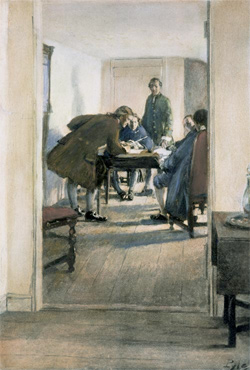
ID_NC_MEIS_DECLA_AP_001 Morgan on the Declaration of Independence, over at the Smart Set:

One of the most amazing thoughts in that most amazing of documents, the Declaration of Independence, comes in the second half of the second paragraph. The lines directly follow the more famous ones about life, liberty, and the pursuit of happiness. They address the question of (for lack of a better term) revolution. The case is stated thusly: “That whenever any form of government becomes destructive to these ends, it is the right of the people to alter or to abolish it, and to institute new government, laying its foundation on such principles and organizing its powers in such form, as to them shall seem most likely to effect their safety and happiness.”

In essence, it argues that the American people have a right to make up a new form of government, of whatever sort they like, any time the old forms of government seem like they aren't working. Needless to say, this is an incredibly bold and incredibly dangerous proposition to put forth. Thomas Jefferson, the principal author of the document, was — along with his colleagues — perfectly aware that he was opening a massive can of worms with this principle of revolution and self-rule.

That's why the next sentence in the Declaration comes right in to qualify the situation, to dampen down the radical impact of these thoughts. Jefferson writes, “Prudence, indeed, will dictate that governments long established should not be changed for light and transient causes; and accordingly all experience hath shown that mankind are more disposed to suffer, while evils are sufferable, than to right themselves by abolishing the forms to which they are accustomed.” We have a right to abolish any government and to establish a new one under any principles we fancy, but it is a right that only a fool would actually exercise.

It is an almost impossibly tricky line to establish, the one between revolution and prudence.

The Iranian Threat

by Noam Chomsky:

ScreenHunter_05 Jul. 04 19.57 The dire threat of Iran is widely recognized to be the most serious foreign policy crisis facing the Obama administration. General Petraeus informed the Senate Committee on Armed Services in March 2010 that “the Iranian regime is the primary state-level threat to stability” in the U.S. Central Command area of responsibility, the Middle East and Central Asia, the primary region of US global concerns. The term “stability” here has its usual technical meaning: firmly under US control. In June 2010 Congress strengthened the sanctions against Iran, with even more severe penalties against foreign companies. The Obama administration has been rapidly expanding US offensive capacity in the African island of Diego Garcia, claimed by Britain, which had expelled the population so that the US could build the massive base it uses for attacks in the Central Command area. The Navy reports sending a submarine tender to the island to service nuclear-powered guided-missile submarines with Tomahawk missiles, which can carry nuclear warheads. Each submarine is reported to have the striking power of a typical carrier battle group. According to a US Navy cargo manifest obtained by the Sunday Herald (Glasgow), the substantial military equipment Obama has dispatched includes 387 “bunker busters” used for blasting hardened underground structures. Planning for these “massive ordnance penetrators,” the most powerful bombs in the arsenal short of nuclear weapons, was initiated in the Bush administration, but languished. On taking office, Obama immediately accelerated the plans, and they are to be deployed several years ahead of schedule, aiming specifically at Iran.

“They are gearing up totally for the destruction of Iran,” according to Dan Plesch, director of the Centre for International Studies and Diplomacy at the University of London. “US bombers and long range missiles are ready today to destroy 10,000 targets in Iran in a few hours,” he said. “The firepower of US forces has quadrupled since 2003,” accelerating under Obama.

More here.

Understanding past could help restore U.S.-Arab ties

Ussama Makdisi in the Houston Chronicle:

Ussamamakdisi As the bloody events of last month have demonstrated, the Arab-Israeli conflict constantly upstages and undermines even the best-intentioned American diplomacy in the Arab world. The quagmires in Afghanistan and Iraq and the tension between the United States and Iran do not help.

But another important reason for the lack of progress is an evident tin ear in this country when it comes to listening to Arabs — and to a domestic political and cultural landscape that stereotypes them as a people without a meaningful history. The success this spring of extremists on the Texas State Board of Education in blaming “Arab rejection of the state of Israel,” “Palestinian terrorism” and “radical Islamic fundamentalism” rather than objectively studying the origins of the Arab-Israeli conflict is only the most recent example of a bleak outlook that promotes fear rather than engagement with others.

The perverse irony of where we are today is that a century ago Arabs had a largely positive view of the United States. Most of us are unaware that throughout the 19th century and well into the 20th, many Christian and Muslim Arabs were inspired by America. American missionaries were the primary catalysts for this early perception. In 1820 they set out to convert the inhabitants of the Ottoman Empire, but it was only when these evangelicals relinquished their religious fantasies in favor of establishing now legendary institutions of higher education across the Middle East that they had a decisive cultural impact on the Arab world.

Arabs appreciated this adaptation, just as they appreciated the lack of U.S. imperialism in the region, the possibilities afforded by emigration to the United States, and Wilsonian principles of self-determination.

The point of knowing this history is not to indulge in romanticism or in nostalgia for a bygone era. Rather, it is to lay the basis for a genuine, historically informed dialogue between Americans and Arabs.

More here. [Thanks to Najla Said.]

How America got its name

From The Boston Globe:

IdeaartAmerica__1278098092_1276 Each July 4, as we celebrate the origins of America, we look back ritually at what happened in 1776: the war, the politics, the principles that defined our nation. But what about the other thing that defines America: the name itself? Its story is far older and far less often told, and still offers some revealing surprises. If you’re like most people, you’ll dimly recall from your school days that the name America has something to do with Amerigo Vespucci, a merchant and explorer from Florence. You may also recall feeling that this is more than a little odd — that if any European earned the “right” to have his name attached to the New World, surely it should have been Christopher Columbus, who crossed the Atlantic years before Vespucci did.

But Vespucci, it turns out, had no direct role in the naming of America. He probably died without ever having seen or heard the name. A closer look at how the name was coined and first put on a map, in 1507, suggests that, in fact, the person responsible was a figure almost nobody’s heard of: a young Alsatian proofreader named Matthias Ringmann. How did a minor scholar working in the landlocked mountains of eastern France manage to beat all explorers to the punch and give the New World its name? The answer is more than just an obscure bit of history, because Ringmann deliberately invested the name America with ideas that still make up important parts of our national psyche: powerful notions of westward expansion, self-reinvention, and even manifest destiny.

And he did it, in part, as a high-minded joke.

More here.

The Willpower Paradox

From Scientific American:

Senay_880 Willingness is a core concept of addiction recovery programs—and a paradoxical one. Twelve-step programs emphasize that addicts cannot will themselves into healthy sobriety—indeed, that ego and self-reliance are often a root cause of their problem. Yet recovering addicts must be willing. That is, they must be open to the possibility that the group and its principles are powerful enough to trump a compulsive disease.

It’s a tricky concept for many and must be taken on faith. But now there may be science to back it up. Psychologist Ibrahim Senay of the University of Illinois at Urbana-Champaign figured out an intriguing way to create a laboratory version of both willfulness and willingness—and to explore possible connections to intention, motivation and goal-directed actions. In short, he identified some key traits needed not only for long-term abstinence but for any personal objective, from losing weight to learning to play guitar.

More here.

Sunday Poem

The Long Woman Bathing

Although he cannot admit it even to himself,
these are the years whose possibility he has always dreaded.

The man in the room listens to cars and rain, unfolded
maps that have failed him, lines tracing absence along the dark
…..intersate.

If a friend were to call him on the telephone,
the man would drawl, “It's like I'm being stalked in a dream.”

In the grey light of the television it happens that he awakens
on the floor and studies his overcoat hanging, remembering the old
…..self.

He is twenty again and running in the museum from room to white
…..room
where he finds her in the Bonnard, the long woman bathing in the
…..lilac water.

And were it possible at any moment he might cry out:
I refuse her ghost, I refuse to dart like a deer in the open.

by Maurice Kilwein Guevara
from
Touching the Fire
Anchor Books, 1998

Saturday, July 3, 2010

Preventing Lesbianism and “Uppity Women” in the Womb? No.

3830123744_7c4d47bbd7 Lindsay Beyerstein over at her blog Focal Point over at Big Think:

Alice Dreger, Ellen K. Feder, and Anne Tamar-Mattis made headlines this week with a post on Bioethics Forum entitled “Preventing Homosexuality (and Uppity Women) in the Womb?” The headline made it sound as if someone wanted to treat lesbianism in general. Predictably, the post touched off an online moral panic.

If you read more carefully, you find that this is a debate over how to manage an inherited error of metabolism called congenital adrenal hyperplasia (CAH). Patients with CAH lack an enzyme that converts androgen precursors into cortisol. Even in utero, their adrenal glands are pumping out androgens, which can cause girls to be born with male-looking genitals. As I explained earlier, the potential medical consequences of virilization go far beyond cosmetic appearance or even gender presentation. In severe cases, the patient may need multiple painful surgeries to create separate vaginal and urethral openings. Dreger and her colleagues dismissed dex as “fetal cosmetology” until they were called to the carpet by authors from Harvard who forced them to acknowledge the medical consequences of severe masculinization. The ill-effects include incontinence, kidney damage from recurrent UTIs, vaginal narrowing that interferes with menstruation and the future ability to have PIV intercourse. Girls may need multiple painful surgeries to correct these abnormalities.

If a pregnant woman takes the steroid dexamethasone, the drug can shut down the fetus's adrenal glands and allow the genitals to develop normally. (By “normally,” I mean the way they would have developed without the disease.)

Doctors have been using dex to prevent ambiguous genitalia in girls with CAH for about 30 years. Nobody disputes that the drug is very effective at preventing or diminishing masculinization, but there's not unequivocal experimental evidence that dex is safe over the long term. It's not that there haven't been follow-up studies. There have been many. By and large, they've been unable to establish harmful effects of prenatal dex. However, skeptics worry that these studies are too small or too badly designed to detect the risks if they exist. Every drug has side effects, but these have to be balanced against the benefits of treatment, and we do know that dex works really well at preventing serious birth defects.

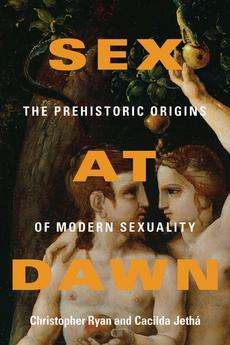
Time for Sex at Dawn!

44672-30205Christopher Ryan answers some questions about modern sexuality in Psychology Today (via Andrew Sullivan):

1. Why is long-term sexual monogamy so difficult for many couples?

Several factors conspire to make long-term sexual monogamy difficult for people. As a species, we’ve evolved to be sexually responsive to novelty. From a genetic point of view, the lure of new partners (known to scientists as the Coolidge effect) combined with less responsiveness to the familiar (the Westermarck effect) motivated our ancestors to risk leaving their small hunter/gatherer societies to join other groups, thus avoiding incest and bringing crucial genetic vigor to future generations.

Another problem is that most people in the West marry because they’re “in love,” which is a temporary, blissfully delusional state we should enjoy, but not expect to last forever. As the German poet, Goethe put it, “Love is an ideal thing, marriage a real thing. A confusion of the real with the ideal never goes unpunished.”

2. Why do you specify “sexual monogamy?” Isn’t all monogamy sexual?

Biologists distinguish sexual monogamy from social monogamy. As DNA testing has grown cheaper in recent years, we’ve learned that most species formerly classified as “monogamous” (primarily birds) are socially monogamous, but not sexually so. In other words, they form pairs that cooperatively care for that season’s brood of young, but the male may well not be the biological father. Applied to humans, we argue that a more flexible approach to sexual fidelity can increase marital stability and thus lead to greater social and family stability.

Germany, Not France, Delights in Multicultural World Cup Squad

Mesut-ozilFrom a little while ago, Robert Mackey in the NYT blog The Lede:

That a German player named Mesut Özil scored the goal that sent his nation through to the second round of this year’s World Cup is a sign that something fundamental has changed about what it means to be German. A country which, until quite recently, refused to give citizenship even to the German-born children of immigrants now finds itself represented by a squad of 23 players so ethnically diverse that 11 of them could have chosen to play instead for other nations.

The Telegraph’s Duncan White explained that the new Germans are drawn not just from neighboring countries that traditionally supplied Gastarbeiter to German industry, but also from across the globe:

While there have been several Polish-Germans of Silesian background to have played for Germany (including Miroslav Klose and Lukas Podolski in this squad), Joachim Löw’s team also has players of Bosnian-Serb, Brazilian, Ghanaian, Nigerian, Polish, Tunisian and Turkish descent.

As my colleague Rob Hughes reported in The Times, it is important not to get carried away with the melting pot narrative:

Not all Germans embrace with open arms this son of Turkish descent who reads the Koran before games. But there are 1.7 million people of Turkish origin in Germany, and with the national team, the Mannschaft, becoming a league of many nations, there could be more nights like this, more new heroes like Özil.

Something like the inverse of this story is playing out across the Rhine in France.

Part of Us that Can’t Be Touched

From Guernica:

Egan-Body With her new book, the short-story cycle A Visit from the Goon Squad, Jennifer Egan reinvents herself as a punk Proust, hippie Dos Passos, a rock-and-roll Faulkner who uses her mastery of multiple points of view to address the horrors of memory, perils of narcissism, and the evolution of PR in a tale that spans fifty years in just 272 pages. Goon Squad is not Egan’s first self-reinvention: like Michael Chabon or Karen Joy Fowler, she brings her subtle and vivid prose to a new genre with every book, producing novels and stories that function beautifully both as literary fiction and as urban fairytale or Gothic or picaresque or international thriller. What unifies much of her work is the theme of dangerously transcendent desires. The characters in Egan’s fiction fall into the trap of idealizing the world, themselves, and others: they embrace false epiphanies about the meaning of life; they long to emulate charismatic figures who are not good for them; they are led astray by their memories of the past and visions of the future.

To wit, Egan’s debut novel, The Invisible Circus, is an early example of the Hippie Elegy, that genre of novels, from Pynchon’s Vineland to Nunez’s The Last of Her Kind, that mourns and reconsiders the myth of the sixties. The novel follows teenager Phoebe O’Connor, who feels that she’s just missed the magic of the sixties, in her travels from San Francisco through England, Amsterdam, France, Germany, and Italy as she searches for clues to the fate of her dead sister Faith, a thrill-seeking flower child whose quest for sublime experiences led her to betray her own generous nature and join the Baader-Meinhof Gang. Her second novel, Look at Me, a National Book Award finalist in 2001, is an epic fable about identity, credulity, and what an understanding of post-industrial America can do to your head. Look at Me is intermittently narrated in the first person; but its fairy-tale heroine is a caustic has-been model, Charlotte Swenson, whose journey from New York back to her native Rockford connects her to all of the other disparate characters. The Keep, her third novel, is a Gothic metafiction about the confines of prison, gender, family, and desire itself. The three central characters’ points of view combine to tell a tale of envy, guilt, the inescapable past, and the remote possibility of freedom.

More here.

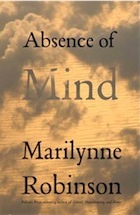
Absence of Mind

Karen Armstrong in The Guardian:

Absence-of-Mind-The-Dispelli At the same time as the western scientific revolution empowered human beings, opened new worlds and broadened their horizons, it progressively punctured their self-esteem. Increasingly, luminaries of modern thought have told us that our minds are not to be trusted: that even though we thought we were standing on a static Earth, our planet was moving very fast indeed; that we could never be sure that our ideas corresponded to objective reality outside our own heads; that some of our noblest ideals were simply the product of repressed sexuality; and that, finally, we are deluded if we imagine that we “think”, “reason,” “learn” or “choose”. Our minds are simply a passive conduit for an unknown, indifferent force.

In this published version of the Terry lectures, delivered at Yale University last year, the novelist Marilynne Robinson argues that positivism, the belief that science is the only reliable means to truth, has adopted a “systematically reductionist” view of human nature. Since Huxley, for example, Darwinians have found altruism problematic, as evolution would necessarily select against benevolence to another at cost to oneself. Altruism can only occur because of the “selfishness” of a gene. Thus for EO Wilson, a “soft-core altruist” expects reciprocation from either society or family; his byzantine calculations are characterised by “lying, pretence and deceit, including self-deceit, because the actor is more convincing who believes that his performance is real”. Every apparently compassionate action is, therefore, simply a matter of quid pro quo. In the same way, because it transfers useful information to somebody else and requires an expenditure of time and energy, language seems essentially altruistic. But, says the evolutionary biologist Geoffrey Miller, “evolution cannot favour altruistic information-sharing”, so the complexities of language probably evolved simply for verbal courtship, “providing a sexual payoff for eloquent speaking by the male and female”.

More here.

Reluctance to Let Go

Sean Carroll in Cosmic Variance:

72118-035-5FF6F790 Over the last four hundred or so years, human beings have achieved something truly amazing: we understand the basic rules governing the operation of the world around us. Everything we see in our everyday lives is simply a combination of three particles — protons, neutrons, and electrons — interacting through three forces — gravity, electromagnetism, and the strong nuclear force. That is it; there are no other forms of matter needed to describe what we see, and no other forces that affect how they interact in any noticeable way. And we know what those interactions are, and how they work. Of course there are plenty of things we don’t know — there are additional elementary particles, dark matter and dark energy, mysteries of quantum gravity, and so on. But none of those is relevant to our everyday lives (unless you happen to be a professional physicist). As far as our immediate world is concerned, we know what the rules are. A staggeringly impressive accomplishment, that somehow remains uncommunicated to the overwhelming majority of educated human beings.

That doesn’t mean that all the interesting questions have been answered; quite the opposite. Knowing the particles and forces that make up our world is completely useless when it comes to curing cancer, buying a new car, or writing a sonnet. (Unless your sonnet is about the laws of physics.) But there’s no question that this knowledge has crucial implications for how we think about our lives. Astrology does not work; there is no such thing as telekinesis; quantum mechanics does not tell you that you can change reality just by thinking about it. There is no life after death; there’s no spiritual essence that can preserve a human consciousness outside its physical body. Life is a chemical reaction; there is no moment at conception or otherwise when a soul is implanted in a body. We evolved as a result of natural processes over the history of the Earth; there is no supernatural intelligence that created us and maintains an interest in our behavior. There is no Natural Law that specifies how human beings should live, including who they should marry. There is no strong conception of free will, in the sense that we are laws unto ourselves over and above the laws of nature. The world follows rules, and we are part of the world.

More here.