
Jessica Grose in The New York Times:
 Three times a day my phone pings with a notification telling me that I have a new happiness survey to take. The survey, from TrackYourHappiness.org, asks me a series of questions about what I was doing the moment right before I take it, whether I wanted to be doing it, how focused I was on my task, how productive I was being and how happy I felt about it all. I measure my emotional levels with a little toggle that slides from “bad” to “good.” Though the trackers’ authors offer a disclaimer that “correlation does not prove causation,” results from thousands of its users published in 2010 suggest that people are happier when they are focused.
After I took 100 surveys over about a month, that’s not what my results told me. I reported the most happiness when I was eating and the least when I was working. I was happier at home than I was outside or anywhere else.
My biggest takeaway, though, is that much of my life consists of things that I don’t particularly want to do, like folding laundry and struggling with the wording of a paragraph. Being reminded that most of my life is obligatory does not exactly spark joy. As the weeks of survey-taking went by, I had another, more paralyzing thought: that this focus on my feelings was instilling a new kind of anxiety. Rather than just walking one of my kids home from school and contentedly listening to her chatter about sedimentary rocks, I was thinking about the survey’s infernal happiness toggle and where this experience ranked relative to the other moments I had tracked.
More here.
Enjoying the content on 3QD? Help keep us going by donating now.
 How could gaining knowledge amount to anything other than discovering what was already there? How could the truth of a statement or a theory be anything but its correspondence to facts that were fixed before we started investigating them?
 Writers are those naïfs among us who believe that language can be used to take the measure of experience. Readers demonstrate faith in them when they commit to a book or short story. The reader-writer relationship is a contract of sorts. But because the terms are not written down, there is much room in that contract for misinterpretation. What is at stake is not small: it is a shared picture of reality. Nor is it static. With each new publication or rereading, the reader-writer contract is up for review. What could go wrong?
 W
W I do not think that being mean is a virtue, but it is related to the virtue by means of which we tell the truth. There are other ways of telling the truth. We can be circumspect or ironic—there is very often a nicer way to put something. Yet there are good reasons for sometimes being just a little bit mean. (No, I am not thinking about that gratuitously nasty and rebarbative character now dominating our public realm.) I think of being mean the way that the King of Brobdingnag in Gulliver’s Travels talks about dangerous views: “For a man may be allowed to keep poisons in his closet, but not to vend them about for cordials.” That is to say, I think being nice is required for good politics, but being mean has definite social utility in private life—and it should stay there.
 Robotic vehicles can
  One of the core assumptions of modern liberalism is that if you can solve the problem of material scarcity, you can go a long way to solving the problem of free and peaceful coexistence among equals. Modern technology has been essential to that dynamic from the start, a key driver of “development” and the success of democratic regimes. The West, and large parts of the rest of the world, are what they are today in great measure due to this project.
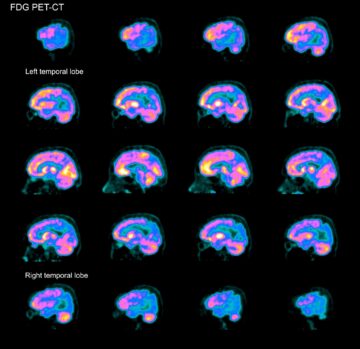 A newly developed blood test for
  If you hear the word Ozempic, weight loss immediately comes to mind. The drug—part of a family of treatments called GLP-1 agonists—took the medical world (and internet) by storm for helping people manage diabetes, lower the risk of heart disease, and rapidly lose weight. The drugs may also protect the brain against dementia. In a clinical trial including over 200 people with mild Alzheimer’s disease, a daily injection of a GLP-1 drug for one year slowed cognitive decline. When challenged with a battery of tests assessing memory, language skills, and decision-making, participants who took the drug remained sharper for longer than those who took a placebo—an injection that looked the same but wasn’t functional. The results are the latest from the
  There’s no question that we love to talk — but how did it happen? Yes, humpback whales sing, vervet monkeys use alarm calls, and bees convey information about food sources through dance, but
  How many clinical-trial studies in medical journals are fake or fatally flawed? In October 2020, John Carlisle reported a startling estimate
 Last month, the House of Representatives
  Fact: The Windy City nickname has nothing to do with Chicago’s weather