
Nelson Lichtenstein in Dissent:
After visiting the United Auto Workers convention in Atlantic City in 1947, C. Wright Mills wrote that the most impressive thing about the union was “the spectacle it affords of ideas in live contact with power.” While he considered union president Walter Reuther a dynamic leader, Mills was more impressed with the team of young men around him, the labor intellectuals who translated the radicalism and democratic enthusiasms of a boisterous rank and file into a set of concrete programs.
“One of the major clues to the politically disappointing history of American unions,” Mills wrote, “has been the absence of union-made intellectuals: men who combine solid trade union experience . . . with the self-awareness and wider consciousness that are the qualities of the intellectual. The key fact about the UAW is that there is a group of such men.”
Comparing them to the New York intellectuals—here he was undoubtedly thinking of Dwight Macdonald and writers for his magazine, politics—Mills called these UAW partisans “intellectuals without fakery and without neuroticism.” They were not academic strivers or little magazine impresarios. “The gap between ideas and action is not so wide as to frustrate and turn them inward; their ideas are acted out.” Unlike so many other intellectuals, wrote Mills, “they are not just waiting and talking their lives through.”
More here.
Enjoying the content on 3QD? Help keep us going by donating now.

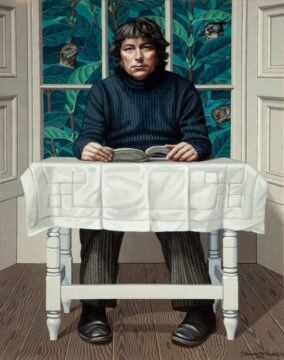 This buoyant anvil of a book has brought me to the edge of a nervous breakdown. Night after night I’m waking with Seamus Heaney sizzling through—not me, exactly, but the me I was thirty-four years ago when I first read him, in a one-windowed, mold-walled studio in Seattle, when night after night I woke with another current (is it another current?) sizzling through my circuits: ambition. Not ambition to succeed on the world’s terms (though that asserted its own maddening static) but ambition to find forms for the seethe of rage, remembrance, and wild vitality that seemed, unaccountably, like sound inside me, demanding language but prelinguistic, somehow. I felt imprisoned by these vague but stabbing haunt-songs that were, I sensed, my only means of freedom.
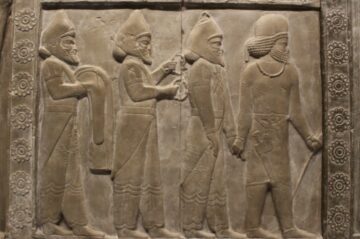 One Sumerian epic poem called Enmerkar and the Lord of Aratta gives the first known story about the invention of writing, by a king who has to send so many messages that his messenger can’t remember them all.
 Today, researchers are looking toward building quantum computers and ways to securely transfer information using an entirely new sister field called
  I first came to the United States for an academic exchange at Columbia University in 2005, and have spent the bulk of my time here since starting my PhD at Harvard University in 2007. No country changes nature overnight, and America still retains many of the virtues with which I fell in love all those years ago. But there are days when I fear that the place has been transformed so deeply that the qualities that would once have been touted as quintessentially American have forever been lost.
 SHORTLY AFTER Alice Munro died, a line from the title story of her 2009 collection Too Much Happiness began circulating on the internet: “Always remember that when a man goes out of the room, he leaves everything in it behind […] When a woman goes out she carries everything that happened in the room along with her.” The quote appeared in white font over a black background. The only attribution was to Munro, so at the time, I assumed it was something she had said in an interview. It felt piercingly ironic that the female winner of the 2013 Nobel Prize in Literature was being remembered for a remark she made about women’s supposed inability to live outside the context of men. Then, I learned the line was delivered by a character in “Too Much Happiness,” Munro’s fictional account of a real 19th-century woman, Sofya Kovalevskaya. Shortly afterward, the world learned of the sexual abuse Munro’s youngest daughter, Andrea Skinner, experienced as a child from her stepfather, Munro’s second husband. An abuse that Munro herself had learned of decades ago and chose to ignore.
 The medals keep coming for US swimmers at the
  This remarkable book begins dramatically and truthfully: ‘A monstrous child is blocking my view and has carved a nest in the soft darkness of my head. It eats the hours, this child, leaving me only crumbs.’ Motherhood can be overwhelming, however longed for. It is never a small thing, even if the rest of the world chooses to ignore it or view it as a block to professionalism. Cyril Connolly’s remark in Enemies of Promise (1938), ‘There is no more sombre enemy of good art than the pram in the hall’, was, of course, a reference to male creativity. But women have routinely been brainwashed into concurring with this dismissive observation – made, admittedly, before Connolly had children. In the 1950s, respected male tutors in colleges of art would dismiss female making as ‘frustrated maternity’. The sculptor Reg Butler asked Slade School of Fine Art students in 1962, ‘Can a woman become a vital creative artist without ceasing to be a woman except for the purposes of a census?’
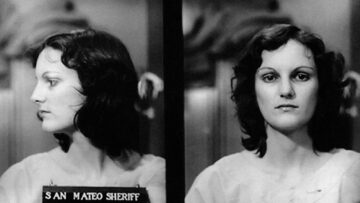 Fifty years ago, a young woman was kidnapped by the Symbionese Liberation Army, a ragtag group of revolutionaries willing to kill for gentle causes. For weeks, she recorded strident, sarcastic messages at her captors’ bidding, messages that bewildered and disturbed their intended audience. In time, she was taught the group’s thinking, given a nom de guerre (Tania), and handed a sawed-off carbine. She waved it around to help the SLA rob a bank—and later sprayed bullets from a machine gun to help them escape arrest. Of her own volition, she hid out with them for nearly a year. Public response swung from warm concern to fury.
 A backup of life on Earth could be kept safe in a permanently dark location on the moon, without the need for power or maintenance, allowing us to potentially restore organisms if they die out.