
Shalinee Sharma in Time Magazine:
 Across the nation, kids are heading back to school. It’s an exciting time. I remember both the joy and the nervousness that came with my now twin 13-year-olds’ first starting school. In fact, one day in particular stands out. I was rushing to the school, late as usual. As I hustled up four flights of stairs to their classroom, another parent interrupted my thoughts and started talking. “She’s like me, basically,” the woman said. “She’s just not a math kid. We are creative types.” I looked up, startled; I couldn’t hide my reaction. Here was a mom, already ruling out an entire world of possibilities for her child whose education had barely begun. Imagine if we treated reading in the same manner.
The experience I had at pick-up is far from unique. As a math learning expert, I understand how deeply ingrained the myth of the math kid is in our education system. We classify or sort kids based on our perception of their varied, inborn math ability—”math kids” on one side, everyone else on the other.
This view ignores the science that says all humans have an inherent number sense and ability to think mathematically from the start. In fact, scientists have proven that babies and toddlers show and develop numeracy—the ability to understand and work with numbers—early on. Babies only a few days old can distinguish two from three.
More here.
Enjoying the content on 3QD? Help keep us going by donating now.
 In America today, we are bad at conscious decisionmaking about technology. Our best efforts lately leave much to be desired: a decade of zero-sum argument about whose speech norms will prevail on social media, a long-delayed and fragmented debate about smartphones conducted through research about a teen mental health crisis, and scaremongering and special interests determining the fate of what was once the promise of “too cheap to meter” nuclear energy.
 In 1918, the citizens of Moscow, the new capital of Communist Russia, struggled to maintain a semblance of normal life. It wasn’t easy. A brutal civil war between the White and Red Russian armies was raging. The West had imposed a trade war. The capital was aswirl with revolutionary ideas, new ways of thinking about equality, justice, and history. Those of means who had not fled were demoted to ordinary citizens and forced to share their wealth and homes with the less privileged. Despite all the revolutionary fervor, Alexander Oparin, a young biochemist steeped in radical scientific ideas, received disappointing news. The censorship board would not permit him to publish a manuscript that speculated on how life arose from mere chemicals. Though the Bolsheviks had overthrown the tsar a year ago, their revolutionary ideology had not yet filtered down to the censors, perhaps because they were not yet ready to directly antagonize the Russian Orthodox Church.
 The protests stem from long-running resentment over a quota system that saw
  A final idea that frames Harris’ interpretation of Śāntideva—one that is clearly correct, and unappreciated—is that the universal altruism and the attitudes of kindness, care, impartiality, and joy in the accomplishments of others that Śāntideva recommends do not constitute self-sacrifice or self-abnegation. Instead, Harris demonstrates that, on Śāntideva’s view, they are both constitutive of and instrumental to human happiness (40 ff., 60 ff.). So, when Śāntideva compares pleasure in the everyday world to honey on a razor blade, he is pointing out that the pursuit of our own pleasure in the end yields only pain, because of the attachment it generates to a fragile commodity; when Śāntideva argues that we only become happy when we dedicate ourselves to the welfare of others, the freedom from attachment to our own narrow interest expands our sources of joy. As Harris puts it, “Perfect giving, for Śāntideva, is private, but other-focused; self-benefitting, but radically benevolent; total, and yet not self-injurious” (67).
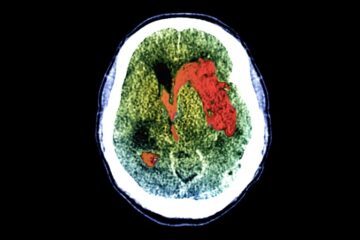 At least one-quarter of people who have severe brain injuries and cannot respond physically to commands are actually
 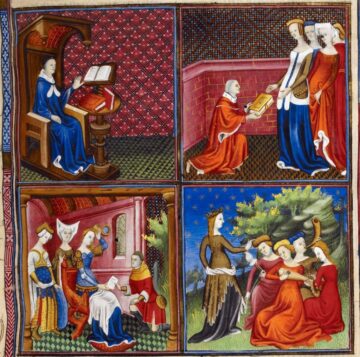 I imagine the ideal way in which to read Giovanni Boccaccio’s profane and earthy 14th-century classic The Decameron is to be ensconced for a sweltering summer at the Villa Schifanoia. There you would have a small but elegant room overlooking the Tuscan hillsides whose winding roads are lined with those tall and preposterously skinny trees, while evenings would be given over to feasts in the yellow-walled courtyard where you dine on cantaloupe wrapped in prosciutto cut to a near-translucent pinkness, pappardelle with fresh pesto studded with garlic and pine-nuts, and a thick cut of charred and marbled ribeye whose interior is as luridly crimson as a muscular human heart.
 May Webb sees her first hum standing at a bus stop, and mistakes it for a sculpture. One year later, in the anxious “now” of Helen Phillips’ new novel
  Roughly one year ago, thousands of people gathered in Denver, Colorado, for the largest psychedelic conference in history. The mood was electric, with most attendees confident that the US Food and Drug Administration (FDA) was on the verge of approving its first psychedelic drug.

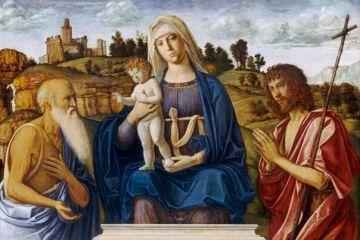 Although art historical writing had flourished since Giorgio Vasari’s Lives of the Artists, art consumers of the nineteenth century were particularly reliant on the expertise of the artists and art enthusiasts who published and became authorities on specific subjects. They needed guidance on what was best to buy.