
Jamieson Webster in LA Review of Books:
IT’S WELL-WORN KNOWLEDGE that Freud was pessimistic. Add to pessimism, elitism. Freud thought a more truthful relation to one’s true motives was only possible to the select few who were willing to interrogate themselves at all costs. In fact, he was so grandiosely pessimistic that he counted his theories as one of the great blows to mankind along with Copernicus and Darwin: we are not the center of the universe, we are not some unique species set apart from the rest of life on earth, and we are not masters in our own house. Freud’s message is often watered down to mean that there are processes in the mind that we don’t know about, like the way computer software runs in the background, or that there are parts of ourselves that are hidden and only need to be carefully revealed. These gloss the extremity of his actual message that we fundamentally cannot know ourselves—but for the tip of an iceberg.
How does our lack of self-knowledge tip the scales of history? It is important that we know what we don’t know, and what we can’t know. There is no better curb to human hubris. Actions we take might be more ethical if undertaken with a strong sense of our human limitations. As we begin to reckon with the failures of Western democracy, especially regarding the rationality of politics and the fitness of political leaders, could we have a better sense of how little shared knowledge there is?
This is a timely moment for Patrick Weil’s The Madman in the White House: Sigmund Freud, Ambassador Bullitt, and the Lost Psychobiography of Woodrow Wilson (2023), which provides a reassessment of the much-disputed book that Freud and American ambassador William C. Bullitt wrote about Woodrow Wilson, speculating about the president’s mental health.
More here.
Enjoying the content on 3QD? Help keep us going by donating now.

 “
“ In 2021, a driver in Albuquerque, New Mexico, ran a red light, striking and killing a 7-year-old and injuring his father. The suspect fled the scene and eventually escaped to Mexico. Using camera footage and cellphone data, the
  We are born; we grow up; we become an adult and perhaps reproduce. Then we might increasingly develop ailments or chronic diseases, before we decline and eventually — inevitably — die. These are the facts of life, at least hitherto, however much many of us might wish for them to be otherwise.
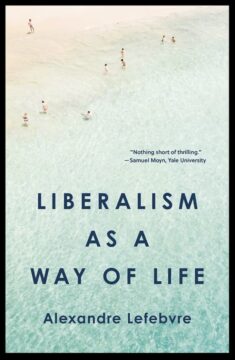 Today’s disheartening resurgence of authoritarianism, xenophobia, race-baiting, brazen sexism and religious zealotry, not to mention homicidal rampages in the name of ethnic identity, makes rallying to the defense of a beleaguered liberalism into an intellectual and moral imperative. Even Alexander Lefebvre, a delightfully entertaining Professor of Politics and Philosophy at the University of Sidney, acknowledges in an aside that “liberal institutions and values are threatened worldwide.” But his stylishly chatty and evangelizing new book aims to defend liberalism against a threat less grimly consequential than those making newspaper headlines. The danger to which he draws our attention is more bookish and professorial than blood-dimmed and existential. In making his eloquent case for liberalism, he says little about the malignant movements of the far right thriving on political confusion and division in the United States and the European Union. Instead, he concentrates his hostile fire on a fashionable but unjustifiably cramped interpretation of the teachings of his philosophical hero, John Rawls.
 W
W Shouldn’t charity serve the needs of recipients, not givers?
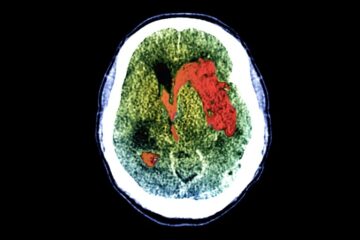 At least one-quarter of people who have severe brain injuries and cannot respond physically to commands are actually
  In 1979, most Latin American countries were ruled by right-wing military dictatorships. The Cuban Revolution was 20 years old, and copycat guerrilla groups had been comprehensively defeated across the region thanks in part to heavy United States counterinsurgency efforts. The flame of revolution appeared to be spent. It was in this unpropitious regional context, in the small Central American nation of Nicaragua, that the Frente Sandinista de Liberación Nacional (Sandinista National Liberal Front, FSLN), the guerrilla group known colloquially as the Sandinistas, overthrew the brutal, United States–backed dictatorship of Anastasio Somoza. It would turn out to be the last of Latin America’s Cold War revolutions. But for a moment, the Sandinistas’ feat returned hope to a battered socialist Left in the region.
 Gena Rowlands, who died last Wednesday, at the age of ninety-four, is, of all the actresses I’ve ever seen onscreen, the greatest artist. She’s the one whose performances offer the most surprises, the most shocks, the most moment-to-moment inventiveness, and, above all, the most almost-unbearable force of emotional expression, combining extremes of strength and vulnerability, of overt display and inner life. Her mighty talent is also a peculiar one, the strangeness of which is exemplary of the art of movies: it might never have come so fully to light were it not for her marriage to John Cassavetes and for the movies that they made together—especially the personal six that extend from “