A Page in the Life: Salman Rushdie

From The Telegraph:

Rushdiesumm_1734492c It’s a bright, sunny afternoon at the Children’s Museum of Manhattan and Salman Rushdie is being awfully game. A new exhibition dedicated to The Wizard of Oz has just opened, and toddlers are running around, waving wands and bashing exhibits. “I’m sure you’re used to this kind of thing,” says the photographer. “Surprisingly enough, I’ve not been photographed with a talking tree before.”

Still, it’s a fitting place to meet Rushdie. After all, he once wrote a study of the 1939 MGM film whose song Over the Rainbow he called “a celebration of Escape, a grand paean to the uprooted self, a hymn – the hymn – to elsewhere”. In other words, a grand paean to many of the themes dramatised in his own continent-hopping, migratory fictions. Buoyed by flights of surrealism and fantasy, jangling with wordplay, his writing has often been described as magical realism; it is just as useful, though, to think of it as a species of children’s literature.

More here.

Tuesday Poem

I am Still Thinking of That Raven

I am
still thinking of that raven
in the valley of Yush:
with the double rustle of its pair of black scissors
it cut a slanting curve
from the paper sky
and through the dry croaking of its throat
it said something
to the nearby peak
which the weary mountains
bewildered
under the full sun
repeated for long
in their rocky skulls.
Sometimes I ask myself
what a raven
with its decisive final presence
and its mournful persistent color
may have to say to the aged mountains
when at high noon
it glides over the baked ocher of a wheat-field
to soar atop a few aspens
which these tired sleepy hermits
repeat for long
together
at summer noontides.

by Amhad Shamlu

Taking Early Retirement May Retire Memory, Too

Gina Kolata in The New York Times:

Retire The two economists call their paper “Mental Retirement,” and their argument has intrigued behavioral researchers. Data from the United States, England and 11 other European countries suggest that the earlier people retire, the more quickly their memories decline. The implication, the economists and others say, is that there really seems to be something to the “use it or lose it” notion — if people want to preserve their memories and reasoning abilities, they may have to keep active. “It’s incredibly interesting and exciting,” said Laura L. Carstensen, director of the Center on Longevity at Stanford University. “It suggests that work actually provides an important component of the environment that keeps people functioning optimally.” While not everyone is convinced by the new analysis, published recently in The Journal of Economic Perspectives, a number of leading researchers say the study is, at least, a tantalizing bit of evidence for a hypothesis that is widely believed but surprisingly difficult to demonstrate.

Researchers repeatedly find that retired people as a group tend to do less well on cognitive tests than people who are still working. But, they note, that could be because people whose memories and thinking skills are declining may be more likely to retire than people whose cognitive skills remain sharp.

More here.

Barack Obama and the Limits of Prudence

Thomas Meaney and Stephen Wertheim in Dissent:

Obama If you have waited to see Barack Obama lose his cool, your moment has come. After the president finished giving the interview published in the October 15 issue of Rolling Stone, he charged back into the room to deliver a parting salvo. Stabbing at the air, Obama berated Democrats for “sitting on their hands complaining.” He even questioned their motives. “If people now want to take their ball and go home,” he said, “that tells me folks weren’t serious in the first place.”

How has it come to this—the president publicly doubting the motives of his own political base? Consider the grievance that stoked his anger: that progressives are unwilling to make the compromises necessary to achieve anything. Obama mocked the Left’s attitude toward health care reform: “Well, gosh, we’ve got this historic health care legislation that we’ve been trying to get for 100 years, but it didn’t have every bell and whistle that we wanted right now, so let’s focus on what we didn’t get instead of what we got.”

Saying this aloud may not help Obama. But his point is revealing. Obama and America are disenchanted today less because they have different values within the American political spectrum than because they have different orientations toward politics as a whole. More than any American president within memory, Barack Obama embodies the “ethic of responsibility” identified by the sociologist Max Weber in his lecture Politics as a Vocation. Obama weighs possible consequences carefully and tries to produce the best result. This comes in contrast to the “ethic of ultimate ends” favored by large swaths of the American public.

More here.

Monday, October 11, 2010

Sunday, October 10, 2010

Philippa Foot, Renowned Philosopher, Dies at 90

200px-Philippa.foot.1943William Grimes in the NYT:

Philippa Foot, a philosopher who argued that moral judgments have a rational basis, and who introduced the renowned ethical thought experiment known as the Trolley Problem, died at her home in Oxford, England, on Oct. 3, her 90th birthday.

Her death was announced on the Web site of Somerville College, Oxford, where she earned her academic degrees and taught for many years.

In her early work, notably in the essays “Moral Beliefs” and “Moral Arguments,” published in the late 1950s, Ms. Foot took issue with philosophers like R. M. Hare and Charles L. Stevenson, who maintained that moral statements were ultimately expressions of attitude or emotion, because they could not be judged true or false in the same way factual statements could be.

Ms. Foot countered this “private-enterprise theory,” as she called it, by arguing the interconnectedness of facts and moral interpretations. Further, she insisted that virtues like courage, wisdom and temperance are indispensable to human life and the foundation stones of morality. Her writing on the subject helped establish virtue ethics as a leading approach to the study of moral problems.

“She’s going to be remembered not for a particular view or position, but for changing the way people think about topics,” said Lawrence Solum, who teaches the philosophy of law at the University of Illinois and studied under Ms. Foot. “She made the moves that made people see things in a fundamentally new way. Very few people do that in philosophy.”

It was the Trolley Problem, however, that captured the imagination of scholars outside her discipline.

Matters of Life and Death: Trolleyology

David Edmonds in Prospect:

Feature_edmonds2 Moral philosophers have long debated under what circumstances it is acceptable to kill and why, for example, we object to killing a patient for their organs, but not to a distribution of resources that funds some drugs rather than others. To understand the debate you need to understand the trolley problem. It was conceived decades ago by two grande dames of philosophy: Philippa Foot of Oxford University (click here to read more about Foot) and Judith Jarvis Thomson of MIT. The core problem involves two thought experiments—call the first “Spur” and the second “Fat Man.”

In Spur, (see diagram one, below), an out-of-control trolley—or train—is hurtling towards five people on the track, who face certain death. You are nearby and, by turning a switch, could send the trolley onto a spur and save their lives. But one man is chained to the spur and would be killed if the trolley is diverted. Should you flick the switch?

In Fat Man (see diagram two), the same trolley is about to kill five people. This time, you are on a footbridge overlooking the track, next to a fat man. (The Fat Man is now sometimes described as a large gentleman. But fat or large, the fact of his corpulence is essential.) If you were to push him off the bridge onto the track his bulk would stop the trolley and save the lives of those five people—but kill him. Do you push him?

Study after study has shown that people will sacrifice the spur man but not the fat man. Yet in both cases, one person is killed to save five others. What, then, is the relevant ethical distinction between them? This question has spawned a thriving academic mini-industry, called trolleyology.

More here.

Hegel on Wall Street

03stoneimg-custom4Via Andrew Sullivan, J. M. Bernstein in the NYT's Opinionator:

As of today, the Troubled Asset Relief Program, known as TARP, the emergency bailouts born in the financial panic of 2008, is no more. Done. Finished. Kaput.

Last month the Congressional Oversight Panel issued a report assessing the program. It makes for grim reading. Once it is conceded that government intervention was necessary and generally successful in heading off an economic disaster, the narrative heads downhill quickly: TARP was badly mismanaged, the report says, it created significant moral hazard and failed miserably in providing mortgage foreclosure relief.

That may not seem like a shocking revelation. Everyone left, right, center, red state, blue state, even Martians — hated the bailout of Wall Street, apart of course from the bankers and dealers themselves, who could not even manage a grace moment of red-faced shame before they eagerly restocked their far from empty vaults. A perhaps bare majority, or more likely just a significant minority, nonetheless thought the bailouts were necessary. But even those who thought them necessary were grieved and repulsed. There was, I am suggesting, no moral disagreement about TARP and the bailouts — they stank. The only significant disagreement was practical and causal: would the impact of not bailing out the banks be catastrophic for the economy as a whole or not? No one truly knew the answer to this question, but that being so the government decided that it could not and should not play roulette with the future of the nation and did the dirty deed.

That we all agreed about the moral ugliness of the bailouts should have led us to implementing new and powerful regulatory mechanisms. The financial overhaul bill that passed congress in July certainly fell well short of what would be necessary to head-off the next crisis. Clearly, political deal-making and the influence of Wall Street over our politicians is part of the explanation for this failure; but the failure also expressed continuing disagreement about the nature of the free market. In pondering this issue I want to, again, draw on the resources of Georg W.F. Hegel. He is not, by a long shot, the only philosopher who could provide a glimmer of philosophical illumination in this area. But the primary topic of his practical philosophy was analyzing the exact point where modern individualism and the essential institutions of modern life meet. And right now, this is also where many of the hot-button topics of the day reside.

The Cold Truth

ID_IC_MEIS_TITAN_AP_001 Morgan Meis in The Smart Set:

The most compelling aspect of Titanic, to me, is the degree to which it multiplies stories without lessons. It is, of course, tempting to draw out a lesson about hubris from Titanic, and many have made the mistake of trying to do so. Here is man, challenging nature and the gods with a vessel that would tame the seas, and with beautiful carved mahogany interiors to boot. This behemoth proclaimed itself invincible, unsinkable, and then promptly went under at the hands of a silent and dumb chunk of ice. If frozen water could laugh, there'd have been some icy chuckling in the North Atlantic that night.

The great Protestant theologian Karl Barth tried an early sermon along these lines. This was a young and inexperienced Barth, to be sure. But his tale of hubris and human neglect of spiritual matters is a forced and clunky attempt. Barth said of it later, “… in 1912, when the sinking of the Titanic shook the whole world, I felt that I had to make this disaster my main theme the following Sunday, which led to a monstrous sermon on the same scale.” Titanic doesn't like such overreaching. She doesn't like to be a symbol for anything. The attempts to do so seem to pale in comparison to the actual facts. The grand reflections on morality that people have tried to hang on Titanic sink even more quickly than she did.

Joseph Conrad, a man otherwise reasonably subtle in his discussions of the darkness at the heart of men, tried to pen a few big thoughts about Titanic directly after the sinking. “But all this has its moral,” Conrad wrote. “Yes, material may fail, and men, too, may fail sometimes; but more often men, when they are given the chance, will prove themselves truer than steel, that wonderful thin steel from-which the sides and the bulkheads of our modern sea-leviathans are made.” Is that the moral of Titanic? I don't think Conrad even believed what he was writing, if he understood it. There are so many qualifications and backslidings in his final sentence it is a wonder it doesn't erase itself from the page.

I would offer perhaps as a counterexample, Thomas Hardy's poem, “The Convergence of the Twain,” “Lines on the loss of the 'Titanic'”.

How Multiculturalism Fails Immigrants

Brick_Lane_street_signsMike Phillips in Prospect:

Authentic historical identities are beside the point in most people’s life and work. The typical migrant, instead, survives by operating several different selves at once.

Yet the very policies designed to recognise and value citizens’ identity are still in many ways influenced by 19th century ideas about ethnicity. It is commonplace, for instance, to be told that a child with a dark(ish) skin needs to be acquainted with his or her “own culture,” even when it isn’t clear what that might mean. The more we know about the science of genetics and the history of humankind, the more obvious it is that race itself is a more or less meaningless category (see “Black Men CAN Swim” in Prospect’s August issue).

Ironically, over the last decade or so, as the label “race” began to be discredited, the word “culture” has been pressed into service as a surrogate for all the familiar old attitudes. Figures like the previous mayor of London, Ken Livingston, decided that multiculturalism would be the political strategy to solve all the problems of migrant and British identity. But multiculturalism offered different meanings to different people. Even the right-wing and racist parties, staunch opponents of what they might have described as “race-mixing,” recognised the advantages of a multicultural arrangement in which each “culture” could maintain its exclusivity behind various social and political barriers.

Multiculturalism, therefore, had made life easier for a number of institutions and authorities—if only because it allows connections between social, political and economic conditions to be sidestepped. Meanwhile the interests and aspirations of the ethnic minorities have invariably been ignored. Even worse, the fact that multiculturalism is now integral to the right-left divide in British politics has spawned its own pattern of damage. In my own experience of discussing funding and sponsorship, or reporting on the progress of cultural projects and programmes, it is clear that subsidies and patronage, especially in the context of local authority funding, may now depend on which side you’re on.

From Antagonistic Politics to an Agonistic Public Space: An Interview with Chantal Mouffe

Mouffe In Re-public:

In December 2008, Athens saw an eruption of violent protests that followed the murder of a teenager by a policeman. Initially reacting to police violence, the protestors did not articulate a specific agenda. The rallies, which mobilised a substantial part of the population – particularly the youth – dissipated a few weeks later. Similar outbreaks have taken place in other European cities in recent years (e.g. the Paris banlieues) and warrant a number of questions with regards to the capacity of our states and our cities to nurture a strong democratic life, acknowledging the role of conflict and preventing its violent expression.

Question: Do such events in their proportion and accumulated anger they carry illustrate the fact that liberal democracies actually fail to create room for dissent? In other words, could we argue that the emphasis on consensus has undermined the capacity of political actors to articulate dissent in ways that are necessary to democratic life?

Chantal Mouffe: In fact, I was thinking precisely of that at the moment when this was happening. This was a very good example of one of the arguments that I am making: that, if you don’t adopt an agonistic form of politics, if you don’t take the responsibility for different conflicts and struggles to take a political form of expression, then, when these conflicts erupt, they erupt in violent form. I was relating what took place in Athens on 2008 with the banlieues in France; it is a very similar phenomenon, in that there were no clear political demands. In order to understand the similarities between the two cases, it’s important to stress that, contrary to many interpretations, what happened in the banlieues was not an ethnic or religious conflict; this was a different phenomenon, a cleavage that concerned the youth. The conflict in this case erupted in a very violent manner but it did not articulate specific demands. And that of course was difficult for people to come to terms with, because they wondered: “What do they want? What do they ask for?”. This is similar to what happened in the Greek case: of course in the case of Greece there was no misunderstanding about ethnicity or religion, but I think the two phenomena have a lot in common. This is clearly the expression of a crisis of representation in politics due to the political move toward the centre; particularly by the socialists and the social-democratic parties, who seem to identify with a certain kind of middle class and leave many segments of the population, like traditional workers and the youth, without a discourse within which to address their demands. There is no political form of expression for those demands; so when the conflict erupts, it erupts in an antagonistic way and not in an agonistic way.

The big letdown

From The Boston Globe:

Boston America is disappointed. The economic recovery, such as it is, has produced few jobs and little growth, the war in Afghanistan is going poorly, and Washington’s political culture, which President Obama took office promising to reform, is as vitriolic and paralyzed as ever. As a supporter put it to Obama at a Sept. 20 town hall meeting, ”I have been told that I voted for a man who said he was going to change things in a meaningful way for the middle class. I’m one of those people. And I’m waiting, sir. I’m waiting.”

There’s no question that the president has failed to live up to the expectations of many of his supporters–expectations he created with his empyrean campaign rhetoric. But it turns out that human beings are easy to disappoint. Research suggests that even when people know that someone has nothing but bad options to choose from, they still blame the decider for a bad outcome. And while disappointment and regret and even anger are often spoken about in similar terms, psychologists see them as distinct emotions, triggered by different sorts of events and motivating us to act in different ways. Even disappointment itself comes in flavors: Being disappointed with a person feels different from being disappointed with an outcome, and demands a different response.

In short, alleviating disappointment means understanding what someone actually means when they say they’re disappointed.

More here.

Watcher of the Skies

Manjit Kumar in The Telegraph:

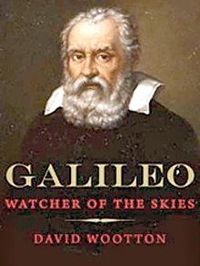
Galileo-m_1733576f It is a little known fact that in 1532 Copernicus’s sun-centred solar system was presented to an audience in the Vatican. Given the storm that was to come, it is barely believable that the then pope, Leo X, afterwards sent a note of encouragement to Copernicus as the Polish priest laboured to finish his book. On the Revolutions of the Heavenly Spheres was published in 1543 and Copernicus, so the story goes, held the first copy to come off the press just hours before he died. As long as his heliocentric model was presented as hypothetical, the Vatican was unconcerned by Copernicanism. One man changed all that.Born in February 1564, Galileo Galilei initially set out to be a doctor before switching to mathematics – much to the displeasure of his father. It is unlikely that, according to the legend, he ever dropped balls from the leaning tower of Pisa as he investigated the motion of falling bodies and discovered that all objects fall at the same rate, contradicting what everybody believed since Aristotle.

When, in 1609, he learnt of the invention of the telescope by a Dutch spectacle maker, Galileo quickly constructed his own. Within a matter of months he had transformed it from a toy into an instrument of scientific discovery and he found that the Milky Way was not a streak across the sky but a multitude of stars; that the Moon had mountains and valleys; and he observed the phases of Venus and the spots on the Sun. 'For Galileo, seeing was believing,’ says the historian David Wootton. Yet he argues persuasively in this well researched, intellectual biography that Galileo was a Copernican long before his discovery of the moons of Jupiter proved that not all heavenly bodies revolved around the Earth. In March 1610, Galileo published his discoveries in the aptly titled book, The Starry Messenger. All 550 copies were sold within a week and soon the 46 year-old was Europe’s most celebrated natural philosopher.

More here.

buffalo, the hallelujah, and a dog

Tumblr_l6ma42dhec1qabu3po1_500

I have never thought of Buffalo as a city of rebirth. It’s too cold there. And the city has been dying for more than a generation. All of upstate New York is like that, the creeping death and a winter that pounds the graveyards into tundra for much of the year. I have a healthy respect for Buffalo, for this very reason. But only a madman would go there to be reborn. LaDainian Tramayne Tomlinson is just such a madman. He was supposed to fade away, to be hidden deep in the roster of some team needing depth at running back after the San Diego Chargers traded him away at the end of last season. His motor had run down, his legs couldn’t do it anymore. Nine seasons is a long time for a workhorse. The body revolts. The ligaments, sinews, and tendons start to scream inside their fleshy shell all year long. And so, Tomlinson was meant to go out to pasture like all the rest, collecting a few more paychecks from a league whose memory is necessarily short.

more from me at The Owls here.

Saturday, October 9, 2010

The Elections: How Bad for Democrats?

Tomasky_1-102810_jpg_230x420_q85 Michael Tomasky in the NYRB:

My own answer to the question of how things got this bad has less to do with whether Obama should have been more liberal or more centrist than with his and his party’s apparent inability, or perhaps refusal, to offer broad and convincing arguments about their central beliefs that counter those of the Republicans. This problem goes back to the Reagan years. It is a failure that many Democrats and liberals hoped Obama could change—something he seemed capable of changing during the campaign but has addressed rather poorly once in office.

In American politics, Republicans routinely speak in broad themes and tend to blur the details, while Democrats typically ignore broad themes and focus on details. Republicans, for example, speak constantly of “liberty” and “freedom” and couch practically all their initiatives—tax cuts, deregulation, and so forth—within these large categories. Democrats, on the other hand, talk more about specific programs and policies and steer clear of big themes. There is a reason for this: Republican themes, like “liberty,” are popular, while Republican policies often are not; and Democratic themes (“community,” “compassion,” “justice”) are less popular, while many specific Democratic programs—Social Security, Medicare, even (in many polls) putting a price on carbon emissions—have majority support. This is why, when all else fails, Democrats try to scare people about the threat to Social Security if the GOP takes over, as indeed they are doing right now.

What Democrats have typically not done well since Reagan’s time is connect their policies to their larger beliefs. In fact they have usually tried to hide those beliefs, or change the conversation when the subject arose. The result has been that for many years Republicans have been able to present their philosophy as somehow truly “American,” while attacking the Democratic belief system as contrary to American values. “Putting us on the road to European-style socialism,” for example, is a rhetorical line of attack that long predates Obama’s ascendance—it was employed against the Clintons’ health care plan as well.

Kashmir’s Forever War

1283783497633.jpeg Basharat Peer in Granta:

Srinagar used to be a city of elegant latticed houses, mosques and temples on the banks of the river. Srinagar was people strolling on the wooden bridges and wandering into old bazaars or stepping with a prayer into a Sufi shrine with papier-mâché interiors. Now it is a city of bunkers, a medieval city dying in a modern war. One of the most prominent landmarks of war is the sprawling Martyrs’ Graveyard in north-western Srinagar; several hundred Kashmiris killed in the early days of the conflict are buried here. Among them is a well-known politician and head cleric of Srinagar grand mosque, Moulvi Mohammed Farooq, who was assassinated by pro-Pakistan militants on 21 May 1990. More than sixty mourners were killed when Indian paramilitaries fired upon his funeral procession. The cleric’s eighteen-year-old son, Omar Farooq, left school to inherit his father’s mantle. He is now one of the best-known Kashmiri separatists, heading the Hurriyat (Freedom) Conference coalition.

A few days before the twentieth anniversary of his father’s assassination, I walked past the Martyrs’ Graveyard to an old wooden mosque nearby, where Farooq was holding a meeting with his supporters. In an elegant brown lambskin cap and delicately embroidered beige gown, he deftly mixed his roles as a modern politician and the head cleric in Kashmir’s Sufi tradition, leading his followers in a sing-song voice humming Kashmiri and Persian devotional songs and then moving effortlessly to the question of Kashmiri politics. He spoke of the memory of the thousands who had died in the battles for Kashmir, including his father. He spoke of preventing further deaths. And then the old Kashmiri slogans for independence followed. ‘Kashmir is for Kashmiris!’ Farooq shouted. ‘We will decide our destiny!’ the people replied. He was about to lead a march through the city. Outside, excited young supporters were revving up their motorbikes and raising flags on cars.

Over the years, Farooq has engaged with both India and Pakistan and sought to rally the Kashmiris towards a peaceful agreement, often at a high personal price. In 2004, after failed peace talks with India, pro-Pakistan militants assassinated his uncle.