When the Mind Wanders, Happiness Also Strays

John Tierney in The New York Times:
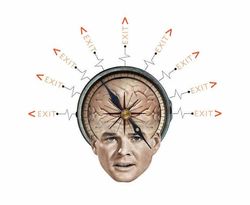
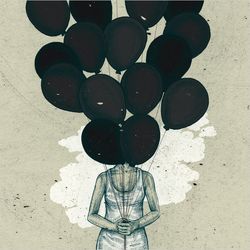
Brain A quick experiment. Before proceeding to the next paragraph, let your mind wander wherever it wants to go. Close your eyes for a few seconds, starting … now. And now, welcome back for the hypothesis of our experiment: Wherever your mind went — the South Seas, your job, your lunch, your unpaid bills — that daydreaming is not likely to make you as happy as focusing intensely on the rest of this column will.

I’m not sure I believe this prediction, but I can assure you it is based on an enormous amount of daydreaming cataloged in the current issue of Science. Using an iPhone app called trackyourhappiness, psychologists at Harvard contacted people around the world at random intervals to ask how they were feeling, what they were doing and what they were thinking. The least surprising finding, based on a quarter-million responses from more than 2,200 people, was that the happiest people in the world were the ones in the midst of enjoying sex. Or at least they were enjoying it until the iPhone interrupted. The researchers are not sure how many of them stopped to pick up the phone and how many waited until afterward to respond. Nor, unfortunately, is there any way to gauge what thoughts — happy, unhappy, murderous — went through their partners’ minds when they tried to resume. When asked to rate their feelings on a scale of 0 to 100, with 100 being “very good,” the people having sex gave an average rating of 90. That was a good 15 points higher than the next-best activity, exercising, which was followed closely by conversation, listening to music, taking a walk, eating, praying and meditating, cooking, shopping, taking care of one’s children and reading. Near the bottom of the list were personal grooming, commuting and working.

More here.

Monday, November 15, 2010

3 Quarks Daily Welcomes Our New Columnists

Hello Readers (and Writers!),

We received a triple-digit number of submissions of sample essays in our search for new columnists. Most of them were very good as usual (with the normal number of incomprehensible and some even insane pieces thrown in just to test our sanity, I suppose) and it was hard deciding whom to accept and whom not to. So hard, in fact, that we ended up deciding that we will dramatically expand the number of 3QD columns on Mondays. Hence today we welcome to 3QD the top 32 people (in the combined ratings of the editors). Without further ado, here they are, in alphabetical order by last name:

  1. Fountain-pens-530Omar Ali
  2. Robert P. Baird
  3. Kevin S. Baldwin
  4. Simon Boas
  5. Rishidev Chaudhuri
  6. Gabe DiNicola
  7. Melody Dye
  8. Wayne Ferrier
  9. Julia Galef
  10. Jonathan Halvorson
  11. Liam Heneghan
  12. Joy Icayan
  13. Thomas Jacobs
  14. David Maier
  15. James McGirk
  16. Vivek Menezes
  17. Dave Munger
  18. Feisal H. Naqvi
  19. Jen Paton
  20. Alyssa Pelish
  21. Gautam Pemmaraju
  22. Steven Poole
  23. Akim Reinhart
  24. Meghan Rosen
  25. Ryan Sayre
  26. Haider Shahbaz
  27. Hartosh Bal Singh
  28. Robert Basil Talisse & Scott Forrest Aikin
  29. Terrance Tomkow
  30. Jenny White
  31. George Wilkinson
  32. Frederick William Zackel

A few of these people will begin writing at 3QD today (see below). I will be in touch with the rest of you to schedule a start date. The “About Us” page will be updated with short bios and photographs of the new writers no later than the day they start.

Thanks to all of the people who sent samples of writing to us. It was sometimes tiring, but still a pleasure to read them all. If you didn't make it this time, we will keep you in mind for the future. And congratulations to the new columnists!

Best wishes,

Abbas

Sunday, November 14, 2010

Presidential Art

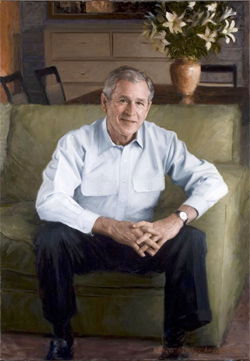
ID_NC_MEIS_BUSH_AP_001 Morgan decides that he admires the new, middlebrow official portrait of George W. Bush at the National Portrait Gallery of the Smithsonian, in The Smart Set:

The portrait is by Robert Anderson, a portrait painter more or less by trade and, as it happens, a classmate of Bush's from Yale. George W looked at the work of a number of painters and eventually settled on Anderson as the man to do the official portrait, the one that hangs in the National Portrait Gallery of the Smithsonian along with the other presidential portraits.

That can't be serious, I thought to myself when I turned a corner at the Gallery and saw the portrait. The mundane kitsch of the thing was shocking. There are standards. By God there are standards. Aren't there? A vase of flowers sits on the table of a dining room set behind him. The set is more middlebrow than anything you could find even at a mainstream outfit like IKEA. It is a set you'd find, I suppose, at Jennifer Convertibles. The whole scene is resolutely suburban. Aggressively suburban. The portrait is, essentially, a Sears portrait. Hanging at The National Portrait Gallery, not too far from where Elaine de Kooning's Modernist rendering of JFK can be found, is a Sears portrait of the 43rd President of the United States of America.

Pantless morgan

The more I looked at it, the more my admiration grew. Say what you like about George W. Bush, but that dummy is no dummy. Any other painting, any other style, any other approach would have been ridiculous. But how do you ridicule a Sears portrait that really and truly presents itself as nothing other than a Sears portrait? It should have been more classical, you could protest. It should have been more in line with contemporary trends in the arts. Oh, really?

I like how clean his shirt is, how crisp are the lines running up the right arm that Bush rests with such infinite comfort on his leg.

Bad Chemistry

57807-1 Mary Beth Aberlin in The Scientist:

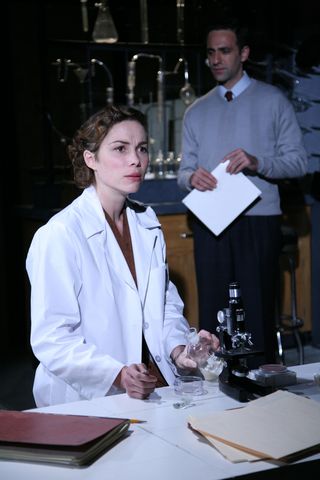
There's something irresistible about plays that deal with iconic scientific discoveries, especially when controversy surrounds the people who make these finds–just think of Niels Bohr and Werner Heisenberg in Copenhagen. That play, by Michael Frayn, portrayed seminal discoveries about the structure of the atom made in the early 20th century. The second iconic discovery of that century–the molecular structure of DNA–was every bit as earthshaking, and is the subject of a new play, Photograph 51, written by Anna Ziegler.

The drama centers on the story of X-ray crystallographer Rosalind Franklin and her role in elucidating DNA's double-helical structure from 1951 to 1953. James Watson, Francis Crick and Maurice Wilkins shared the 1962 Nobel Prize for this achievement. Franklin died from ovarian cancer in 1958, but had she lived, there is little possibility that she would have been tapped for the prize.

In Photograph 51, Franklin is portrayed as a complex person–attractive, competent, self-confident, but also driven and rather imperious. She arrives at Kings College in 1951 with the understanding that she will have sole charge of a project to determine the crystal structure of DNA, just as the molecule's role in the passage of hereditary information was becoming clearer. Ray Gosling, an affable young PhD candidate, who had formerly worked on DNA with Maurice Wilkins, is to be her assistant. Wilkins returns from vacation eager to work with Franklin, not knowing that the head of the department, J.T. Randall, has assigned his project to her. And Franklin doesn't know that Wilkins doesn't know. This terrible misunderstanding sets the stage for the bitter relationship that develops between the two, where daily life in the lab becomes a sad sort of turf battle.

Lost Your Libido? Let’s Try a Little Neuro-Realism, Madam

MRI-of-the-brain-006 Ben Goldacre in the Guardian:

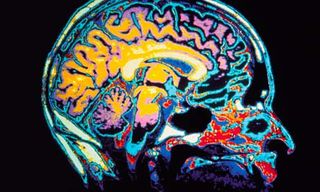
When the BBC tells you, in a headline, that libido problems are in the brain and not in the mind, you might find yourself wondering what the difference between the two is supposed to be, and whether a science article can really be assuming – in 2010 – that its readers buy into a strange Cartesian dualism in which the self is contained by a funny little spirit entity in constant and elaborate pneumatic connection with the corporeal realm. But first let's consider the experiment they're reporting on.

As far as we know (because this experiment has not yet been published, only presented at a conference), some researchers took seven women with a “normal” sex drive, and 19 women diagnosed with “hypoactive sexual desire disorder”. Participants watched a series of erotic films in a scanner while an MRI machine took images of blood flow in their brains: the women with a normal sex drive had an increased flow of blood to some parts of their brain associated with emotion, while those with low libido did not.

Dr Michael Diamond, one of the researchers, tells the Mail: “Being able to identify physiological changes, to me provides significant evidence that it's a true disorder as opposed to a societal construct”. In the Metro, he goes further: “Researcher Dr Michael Diamond said the findings offer 'significant evidence' that persistent low sex drive – known as hypoactive sexual desire disorder (HSDD) – is a genuine physiological disorder and not made up.”

This strikes me as an unusual world view. All mental states have physical correlates, if you believe that the physical activity of the brain is what underlies our sensations, beliefs and experiences. So while different mental states will be associated with different physical states, that doesn't tell you which caused which.

Far stranger is the idea that a subjective experience must be shown to have a measurable physical correlate in the brain before we can agree that the subjective experience is real. If someone is complaining of persistent low sex drive, then they have persistent low sex drive, and even if you could find no physical correlate in the brain whatsoever, that wouldn't matter: they still have low sex drive.

Sunday Poem

Border Song

I water my horse
Crossing an autumn river.
The water is cold,
The wind like a knife.

Away across level sands
The sun is still sinking.
Off in the darkness—
The beginning of the Great Wall.

A former days' battles
By the Great Wall,
Everyone says
Will and spirit ran high.

But yellow earth
Is all that remains,
Then or now.
White bones lie scattered
In the weeds.

by Wang Chang-Lin
Tang Dynasty, about 750 A.D.
from The Heart of Chinese Poetry
editor: Greg Whincup;
Anchor Books, 1987

Christopher Hitchens: ‘You have to choose your future regrets’

Andrew Anthony in The Guardian:

Christopher-Hitchens-006 First, though, there was dinner. We walked to a local restaurant where Hitchens knows the barman and the barman knows what Hitchens drinks, and I asked whether his cancer diagnosis had altered his political outlook at all. He looked mystified at the question, but I explained that he used to say that he woke up angry, full of disgust at the world. Was it still possible to feel so strongly about external enemies when the internal one had taken such malevolent root in his body? “It's the sort of alternative that doesn't present itself to you,” he says. “You don't think, 'Why do I care when I could be thinking about my daunting nemesis?'”

The banality of cancer seems to irk him almost as much as its lethality. Lacking any dialectical substance, it affords few opportunities to escape platitude or avoid cliche. It's a big subject, but it's essentially small talk, and Hitchens's style requires the elevated registers of the epic and the ironic. Anything less is like asking a high-wire artist to perform his act at ground level. Yet his engagement remains unusually engaging, in large part because with him it's never just about politics. His frame of cultural interests is far too large to be squeezed into the straitjacket of dogma and doctrine. He chided me a couple of times for not asking him about his first love, literature. “I wish people would put in a bit more of that because it's also what I think of when I say grand things like defending civilisation.”

More here.

Scientists’ Nightstand: Steven Weinberg

From American Scientist:

Weinberg Steven Weinberg is Josey Regental Professor of Science and a member of the physics and astronomy departments at the University of Texas, Austin. In 1979 he received the Nobel Prize in Physics with Abdus Salam and Sheldon Glashow for their contributions to the theory of the unified weak and electromagnetic interaction between elementary particles. His latest book is Lake Views: This World and the Universe (Harvard University Press, 2010).

Who are your favorite writers (fiction, nonfiction or poetry)? Why?

In English-language fiction, Anthony Trollope, Henry James, E.M. Forster, Edith Wharton, Herman Melville, Jane Austen, W.M. Thackeray. As you can see, I'm more at home in the 19th than the 20th century, let alone the 21st. I've enjoyed the great 19th-century French and Russian novelists, but unfortunately I have to read them in translation. In nonfiction, I read mostly history: Gibbon, Thomas Macaulay, G.M. Trevelyan, Thucydides, Tacitus, Winston Churchill, Allan Nevins, Samuel Eliot Morison. And memoirs: Ulysses S. Grant, the Duke of Saint-Simon, Churchill again, Henry Adams. In poetry, William Shakespeare, Andrew Marvell, John Donne, John Milton, John Keats, Lord Tennyson, Gerard Manley Hopkins, William Butler Yeats, Dylan Thomas, W.H. Auden, T.S. Eliot, Philip Larkin, Robert Frost, John Crowe Ransom.

What are the three best books you've ever read? Explain.

I have to include at least one novel by Trollope. I suppose I'd pick Barchester Towers (1857). It has a great cast of wonderfully drawn characters and is very funny. The language in Moby-Dick (1851) bowled me over when I read it years ago. And The Decline and Fall of the Roman Empire lays out an amazing panorama, spanning 13 centuries, with both sympathy and sarcasm.

More here.

Can Technology End Poverty?

Kentaro Toyama in the Boston Review:

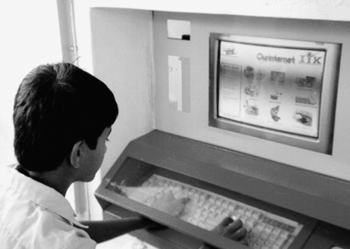
ScreenHunter_24 Nov. 14 12.07 A ten-year-old boy named Dhyaneshwar looked up for approval after carefully typing the word “Alaska” into a PC.

“Bahut acchaa!” I cheered—“very good.”

It was April, 2004, and I was visiting a “telecenter” in the tiny village of Retawadi, three hours from Mumbai. The small, dirt-floored room, lit only by an open aluminum doorway, was bare except for a desk, a chair, a PC, an inverter, and a large tractor battery, which powered the PC when grid electricity was unavailable. Outside, a humped cow chewed on dry stalks, and a goat bleated feebly.

As I encouraged the boy, I wondered about the tradeoff his parents had made in order to pay for a typing tutor. Their son was learning to write words he’d never use, in a language he didn’t speak. According to the telecenter’s owner, Dhyaneshwar’s parents paid a hundred rupees—about $2.20—a month for a couple hours of lessons each week. That may not sound like much, but in Retawadi, it’s twice as much as full-time tuition in a private school.

Such was my introduction to the young field of ICT4D, or Information and Communication Technologies for Development. The goal of ICT4D is to apply the power of recent technologies—particularly the personal computer, the mobile phone, and the Internet—to alleviate the problems of global poverty. ICT4D sprouted from two intersecting trends: the emergence of an international-development community eager for novel solutions to nearly intractable socioeconomic challenges; and the expansion of a brashly successful technology industry into emerging markets and philanthropy.

More here. [This is the lead article of a forum on the role of information and communication technology in global development, with responses from Nicholas Negroponte, Evgeny Morozov and others.]

In Praise of Tea

Lawrence Lessig in The Huffington Post:

Lessig Many of my friends have been puzzled that I have not been a strong critic of the Tea Party. Indeed, quite the opposite, I stand as a critical admirer. That means that while I don't share most of the substantive ends of many in that movement, and I strongly object to the extremism of some, I am a genuine admirer of the urge to reform that is at the heart of the grassroots part of this, perhaps the most important political movement in the current political context.

My admiration for this movement grew yesterday, as at least the Patriots flavor of the Tea Party movement announced its first fight with (at least some) Republicans. The Tea Party Patriots have called for a GOP moratorium on “earmarks.” Key Republican Leaders (including Senator Jim DeMint and Congressman John Boehner) intend to introduce a resolution to support such a moratorium in their caucus. But many Republicans in both the House and Senate have opposed a moratorium. Earmarks, they insist, are only a small part of the federal budget. Abolishing them would be symbolic at best.

More here.

Is Dark Matter Supernatural?

Sean Carroll in Cosmic Variance:

ScreenHunter_23 Nov. 14 11.30 No, it’s not. Don’t be alarmed: nobody is claiming that dark matter is supernatural. That’s just the provocative title of a blog post by Chris Schoen, asking whether science can address “supernatural” phenomena. I think it can, all terms properly defined.

This is an old question, which has come up again in a discussion that includes Russell Blackford, Jerry Coyne, John Pieret, and Massimo Pigliucci. (There is some actual discussion in between the name-calling.) Part of the impetus for the discussion is this new paper by Maarten Boudry, Stefaan Blancke, Johan Braeckman for Foundations of Science.

There are two issues standing in the way of a utopian ideal of universal agreement: what we mean by “supernatural,” and how science works. (Are you surprised?)

There is no one perfect definition of “supernatural,” but it’s at least worth trying to define it before passing judgment. Here’s Chris Schoen, commenting on Boudry et. al:

Nowhere do the authors of the paper define just what supernaturalism is supposed to mean. The word is commonly used to indicate that which is not subject to “natural” law, that which is intrinsically concealed from our view, which is not orderly and regular, or otherwise not amenable to observation and quantification.

Very sympathetic to the first sentence. But the second one makes matters worse rather than better. It’s a list of four things: a) not subject to natural law, b) intrinsically concealed from our view, c) not orderly and regular, and d) not amenable to observation and quantification. These are very different things, and it’s far from clear that the best starting point is to group them together. In particular, b) and d) point to the difficulty in observing the supernatural, while a) and c) point to its lawless character. These properties seem quite independent to me.

More here.

Saturday, November 13, 2010

“Ode on a Grecian Urn” is worth any number of old ladies

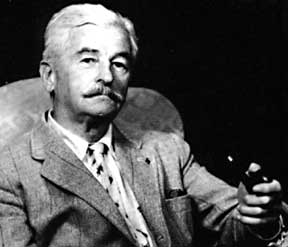
Jean Stein vanden Heuvel interviews William Faulkner in 1956 in the Paris Review:

INTERVIEWER

Do you mean the writer should be completely ruthless?

Wf FAULKNER

The writer's only responsibility is to his art. He will be completely ruthless if he is a good one. He has a dream. It anguishes him so much he must get rid of it. He has no peace until then. Everything goes by the board: honor, pride, decency, security, happiness, all, to get the book written. If a writer has to rob his mother, he will not hesitate; the “Ode on a Grecian Urn” is worth any number of old ladies.

INTERVIEWER

Then could the lack of security, happiness, honor, be an important factor in the artist's creativity?

FAULKNER

No. They are important only to his peace and contentment, and art has no concern with peace and contentment.

More here. [Thanks to John Ballard.]

The Dregs of States

Justin E. H. Smith in his own blog:

ScreenHunter_22 Nov. 14 11.04 Unlike most of my contemporaries, I simply hate the mafia. I hate everything that has to do with the mafia, including fictional representations of it in cinema, television, and video games. I am regularly forced to report ads for Mafia Wars on a certain social-networking site as 'offensive' (ads for KY Jelly, in turn, are dutifully denounced as 'irrelevant'). I hate so much as thinking about casinos, Teamsters, cocaine, construction firms, since these all invariably carry with them a further thought of the mafioso who makes them his business. I hate hearing imitations of Sicilian bosses doing their schtick (threatening to kill people in a funny accent), which are almost always imitations of Christopher Walken doing imitations of Sicilian bosses.

Most of all I hate it when earnest students of mine invoke omertà as an example of a moral code, as having a laudable principle at its core even if in its application it leads to regrettable consequences. Each time this comes up I think to myself: don't students read The Stranger anymore? Or do the 'classics' that inform their moral reasoning extend back only as far as The Godfather and Scarface (I admit I made it through the first of these, but only as a Coppola completist; I have never seen a single episode of the Sopranos, and the earliest memory I have of being repulsed by the whimsical representation of organized crime was Wise Guys, the horrid Brian de Palma film of 1986 starring Billy Crystal and Danny De Vito). I would greatly prefer to engage in a discussion about morality with a student contemplating the possibility of random, lone, unprovoked murder, than with one who thinks unquestioning group loyalty represents any sort of moral accomplishment at all. Omertà is for stunted cretins, I want to say, now get that Godfather poster off your dorm-room wall and start reading some Camus or some Nietzsche.

More here.

The man who writes your students’ papers tells his story

Ed Dante [a pseudonym] in the Chronicle of Higher Education:

Photo_8295_landscape_large You've never heard of me, but there's a good chance that you've read some of my work. I'm a hired gun, a doctor of everything, an academic mercenary. My customers are your students. I promise you that. Somebody in your classroom uses a service that you can't detect, that you can't defend against, that you may not even know exists.

I work at an online company that generates tens of thousands of dollars a month by creating original essays based on specific instructions provided by cheating students. I've worked there full time since 2004. On any day of the academic year, I am working on upward of 20 assignments.

In the midst of this great recession, business is booming. At busy times, during midterms and finals, my company's staff of roughly 50 writers is not large enough to satisfy the demands of students who will pay for our work and claim it as their own.

You would be amazed by the incompetence of your students' writing. I have seen the word “desperate” misspelled every way you can imagine. And these students truly are desperate. They couldn't write a convincing grocery list, yet they are in graduate school.

More here.

Can science prove we’re psychic?

From MSNBC:

Minority-Report-horiz-1p_photoblog600 Scientists are buzzing over a peer-reviewed study that suggests humans have predictive powers, but it’s too early to predict whether or not the research will hold up. The 61-page paper, titled “Feeling the Future,” was written by Cornell psychology professor emeritus Daryl Bem and is due for publication in the Journal of Personality and Social Psychology. Bem says his experiments support the idea that there really is something to human precognition of events that haven't yet occurred. You could argue that this is a case of science imitating sci-fi — particularly considering that precognition provided a key element of the plot for “The Minority Report,” a Philip K. Dick short story that was made into a movie starring Tom Cruise in 2002. You might be forgiven if you think this is the latest trick from a professor who used to be a stage magician. But Bem is dead serious about the experiments, and his submission to the journal is no work of fiction.

“My very first publication was 50 years ago in that journal, which would make a nice capstone,” Bem told me today. Bem said each of the experiments described in the paper simply takes a well-known method for testing how sensory input affects the brain's output “and turns it around backwards” in time sequence. Here are three examples:

  • Precognitive selection: A hundred subjects were asked to predict which of two computer screens will flash up a picture rather than an empty space. They're told in advance that some of the images will be erotic in nature. The computer didn't make its random selection of which images would appear where until after the human subjects made their choice. The subjects correctly identified the future position of the arousing images 53.1 percent of the time — while the success rate for the non-arousing images was merely the expected 50-50. A separate experiment, involving 150 subjects, came up with a 51.7 percent “hit rate” for selecting preferred images over negative images.

More here.

Saturday Poem

The Laying on of Hands

Priests offered it in weekly benedictions to bless
after chants and motets, in Eucharist
or Mass, to magnify a union or to heal
the sick. Doves were sometimes released.

Lovers do it too. The caresss—careless or casual.
The home from work, the comfort me, or the moment
when hands become all scent and skin; the arch of wrist,
the smooth palm and pure white fingertip.

So doctors learned it, palpated sick limbs, guaged temperatures,
pulses; probed chests, abdomens and necks to fathom symptoms,
interrogate signs. But now machines seek better, deeper,
further, filling the walls with images, bright and cold.

by Danielle Hope
from Jama (Journal of the American medical Association)
Vol. 301 No. 4; Jan. 28, 2009

The Mind of a Disease

Jonathan Weiner in The New York Times:

Weiner-popup ll patients begin as storytellers, the oncologist Siddhartha Mukherjee observes near the start of this powerful and ambitious first book. Long before they see a doctor, they become narrators of suffering, as Mukherjee puts it — travelers who have visited the “kingdom of the ill.” Many doctors become storytellers too, and Mukherjee has undertaken one of the most extraordinary stories in medicine: a history of cancer, which will kill about 600,000 Americans by the end of this year, and more than seven million people around the planet. He frames it as a biography, “an attempt to enter the mind of this immortal illness, to understand its personality, to demystify its behavior.” It is an epic story that he seems compelled to tell, the way a passionate young priest might attempt a biography of Satan.

Mukherjee started on the road to this book when he began advanced training in cancer medicine at the Dana-Farber Cancer Institute in Boston in the summer of 2003. During his first week, a colleague who’d just completed the program took him aside. “It’s called an immersive training program. But by immersive, they really mean drowning,” he said, lowering his voice the way many of us do when we speak of cancer itself. “Have a life outside the hospital,” the doctor warned him. “You’ll need it, or you’ll get swallowed.” “But it was impossible not to be swallowed,” Mukherjee writes. At the end of every evening he found himself stunned and speechless in the neon floodlights of the hospital parking lot, compulsively trying to reconstruct the day’s decisions and prescriptions, almost as consumed as his patients by the dreadful rounds of chemotherapy and the tongue-twisting names of the drugs, “Cyclophosphamide, cytarabine, prednisone, asparaginase. . . .”

Eventually he started this book so as not to drown.

More here.