Greenhouse Bananas

From Scientific American:
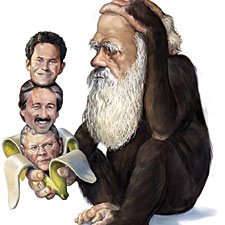
Greenhouse-bananas_1 Here’s my conclusion: the only strong evidence we have that Oklahoma Senator James M. Inhofe isn’t a clown is that his car isn’t small enough. As I write in early December, the Copenhagen climate change conference has just begun. And Inhofe, that gleeful anarchist, says he is going to Copenhagen to try to sabotage the affair. Inhofe has famously called climate change “the greatest hoax ever perpetrated on the American people.” (Actually, the greatest hoax ever perpetrated on the American people was Lord Amherst’s distribution of smallpox-ridden blankets, but I digress.)

But he has also called global warming the “second largest hoax ever played on the American people after the separation of church and state.” Well, it’s good to know that the senator is capable of revising his theories after he acquires new information, a necessary condition for a truly scientific worldview. Inhofe’s attacks on climate change science have been so engrossing that until recently I was unaware of his influence in Uganda. Investigative reporter Jeff Sharlet points out that Inhofe influences Ugandan parliament member David ­Bahati through their common membership in the Washington, D.C. evangelical group called the Family. Bahati introduced legislation in Uganda that recognized “aggravated homosexuality,” punishable in some cases by death. (Scrutiny by MSNBC’s Rachel Maddow led to Inhofe repudiating the bill as this issue went to press.)

More here.

Memoirs of an Anonymous Phone Sex Worker

From Granta:

ScreenHunter_18 Nov. 11 12.19 For the man with the rubber bands I was Madame Katherine. A green-eyed, red-headed English dominatrix dressed in slick leather and killer heels. In reality I was a black, dreadlocked and barefooted college student in a broom skirt and faded brown tank top looking over a pile of laundry at my alarm clock wondering what the hell I was going to say that would keep him on the phone for a minimum of ten minutes and wouldn’t disgust me too much.

I have three rubber bands, a belt and some ice cubes. Tell me what to do.

During my two days of training Heather, my mentor, named the four basic categories of men she encountered. There were the kinkies, the sneakies, the boyfriends and the regulars. It was just my luck that my first solo call was a kinky. I was questioning my sanity when the phone rang. Being a phone sex operator sounded good in theory. I could choose the callers I would accept. I decided my own hours and avoided the commute to work in the ridiculous extremes of Massachusetts weather that threatened in some months to steam me alive and in others to freeze the breath out of me. The job seemed interesting and at times amusing when I had Heather leading the way, but when my brief apprenticeship ended and my roommates left the apartment for their regular day jobs I was alone at a crossroads. Was I the kind of girl who could do this job or not?

More here.

Body-snatching, not socialising, drove the evolution of bigger-brained insects

Ed Yong in Not Exactly Rocket Science:

ScreenHunter_17 Nov. 11 12.12 Some insects, such as ants, lead famously social lives, with massive colonies of individuals, cooperating for a common good. These insects also tend to have unusually large brains. For over 150 years, this link has been tacitly taken as support for the idea that social animals need extra smarts to keep track of all their many relationships. But Sarah Farris from West Virginia University and Susanne Schulmeister from the American Museum of Natural History aren’t convinced.

After comparing a wide range of species, they think that the large brains of these insect collectives have little to do with their cooperative societies. Instead, their enlarged brains may have been driven by a far grislier habit: body-snatching.

The link between brain and group size was first documented by a French biologist called Felix Dujardin. He is credited for discovering mushroom bodies, a pair of structures in insect brains that control a variety of higher mental abilities: learning, memory, processing smell, attention and more. They are the insect equivalent of our own cerebral cortex, which also governs our most vaunted mental skills. Indeed, both the mushroom bodies and the cerebral cortex may have evolved from the same ancestral structure.

More here.

How to Win Back Pakistan

Michael O'Hanlon in Foreign Policy:

ScreenHunter_16 Nov. 11 11.47 Pakistan arguably remains the most complex ally the United States has ever had in wartime, making President Franklin D. Roosevelt's challenges in dealing with Stalin (a far worse leader, but at least one who knew the outcome he wanted) seem simple by comparison.

Nine years into the campaign, we still can't clearly answer the question of whether Pakistan is with us or against us. America needs bold new policy measures to help Islamabad — in all its many dimensions and factions — make up its mind.

The crux of the problem is this: Despite allowing massive NATO logistics operations through its territory and helping the United States pursue al Qaeda operatives, Pakistan tolerates sanctuaries on its soil for the major insurgencies fighting in Afghanistan. These include the Afghan Taliban (otherwise known as the Quetta Shura Taliban because its principle base remains in Quetta in the Pakistani province of Baluchistan) as well as the Haqqani and Hezb-i-Islami Gulbuddin (HiG) networks. The Haqqanis straddle the border between the Afghan provinces of Khost, Paktia, and Paktika as well as North Waziristan and other tribal areas within Pakistan; HiG is further north, operating in and around the Khyber Pass connecting Kabul and Jalalabad in Afghanistan with Peshawar and points east in Pakistan.

More here.

Wednesday, November 10, 2010

Iranians have stopped revolting and are now glued to a new, illegal satellite television channel

Christopher De Bellaigue in Prospect:

ScreenHunter_14 Nov. 10 16.21 Isabela rested her head on Salvador’s naked chest, looking up into his eyes. He reached across to the bedside table for a sip from a glass of wine. Isabela sighed. “There is so much I still need to tell you.”

“Fraud!” The Iranian woman sitting next to me in front of the big flat-screen television shook her head. Her husband explained that Isabela is not to be trusted; she is a poisoner and an adulteress. We were in the couple’s sitting room in central Tehran—a long way from Colombia, where Body of Desire is made. Every weekday night, anecdotal evidence suggests, a huge number of middle-class Iranians lose themselves in this preposterous programme, in which a murdered businessman’s spirit has entered the body of Salvador, a farmer. The fact that it is broadcast on an independent satellite channel means that these Iranians are breaking the law. More importantly, they are opening a new front in Iran’s cultural war with the world.

Body of Desire and a host of other soap operas are broadcast from Dubai by Farsi 1, a satellite channel co-owned by Rupert Murdoch and Saad Mohseni, an Afghan entrepreneur. The channel, which features shows from South Korea and the US, targets Iranians who have tired of the fare served up by the state broadcasting company. Even people close to the Iranian government concede that homegrown shows can be dull. Raunchy subjects are off limits, a hug between a mother and her son is deemed improper to show, and prayers and Koranic exegesis occupy primetime spots.

Programmes shown on Farsi 1 explore, if that is the right word, themes such as infidelity and lust, while making a show of respecting Iranian values.

More here.

The Internet? Bah! (or, The Worst Prediction of All Time?)

Clifford Stoll was riding high on his recent fame (for having helped to catch the infamous hacker Markus Hess) when he published this article in Newsweek in 1996 (he now sells blown glass Klein bottles on the web):

Cliffordstoll Consider today's online world. The Usenet, a worldwide bulletin board, allows anyone to post messages across the nation. Your word gets out, leapfrogging editors and publishers. Every voice can be heard cheaply and instantly. The result? Every voice is heard. The cacophany more closely resembles citizens band radio, complete with handles, harrasment, and anonymous threats. When most everyone shouts, few listen. How about electronic publishing? Try reading a book on disc. At best, it's an unpleasant chore: the myopic glow of a clunky computer replaces the friendly pages of a book. And you can't tote that laptop to the beach. Yet Nicholas Negroponte, director of the MIT Media Lab, predicts that we'll soon buy books and newspapers straight over the Intenet. Uh, sure.

More here. [Thanks to Jennifer Oullette.]

Greetings from Idiot America

Creationism. Intelligent Design. Faith-based this. Trust-your-gut that. There's never been a better time to espouse, profit from, and believe in utter, unadulterated crap. And the crap is rising so high, it's getting dangerous.

Charles P. Pierce in Esquire:

Cremus At the top of the hill, just past the Idlewild Concrete plant, there is an unfinished wall with an unfinished gate in the middle of it. Happy, smiling people are trickling in through the gate this fine morning, one minivan at a time. They park in whatever shade they can find, which is not much. It's hot as hell this morning.

They are almost uniformly white and almost uniformly bubbly. Their cars come from Kentucky and Tennessee and Ohio and Illinois and as far away as New Brunswick, Canada. There are elderly couples in shorts, suburban families piling out of the minivans, the children all Wrinkle-Resistant and Stain-Released. There is a clutch of Mennonite women in traditional dress — small bonnets and long skirts. All of them wander off, chattering and waving and stopping every few steps for pictures, toward a low-slung building that seems from the outside to be the most finished part of the complex.

Outside, several of them stop to be interviewed by a video crew. They have come from Indiana, one woman says, two toddlers toddling at her feet, because they have been home-schooling their children and they have given them this adventure as a kind of field trip. The whole group then bustles into the lobby of the building, where they are greeted by the long neck of a huge, herbivorous dinosaur. The kids run past that and around a corner, where stands another, smaller dinosaur.

Which is wearing a saddle.

More here.

the human mind through stories

OliverSacksBig

Oliver Sacks has been telling us some of the strangest stories in the world for forty years now. A neurologist, he writes of the ways in which the human brain both invents and perceives the world. He does so through endless anecdotes, told in an unadorned, attractive style. He draws no conclusions; his aim is to ask questions. The big one in this book is: ‘To what extent are we the authors, the creators, of our own experiences?’ The evidence for such a proposition has been mounting ever since the Seventies, when it became clear that the brain was not as hardwired as we thought it was. To a startling extent, it can remodel itself to cope with changes, especially those involving trauma. This book is all about changes in the sense of sight. This time Sacks himself is one of the patients. In 2005 he found he had a melanoma in his right eye. The effects and the ensuing treatment are described in a way that is both clinical and harrowing.

more from Bryan Appleyard at Literary Review here.

bringing inwardness and dialogue into political life

01jah2_en

Why did we protest holding World Philosophy Day in Tehran? To organize a philosophy congress in a country where a theocratic and intolerant regime continually denies freedom of thought and expression and is engaged in removing the humanities from university curricula—that is a challenge to philosophy itself. In a country where students of philosophy like Neda Agha Soltan are shot and philosophy professors are accused of preparing a “Velvet Revolution,” it would be difficult to take seriously an invitation to Tehran for a free philosophical discussion. To make sure that the UNESCO Philosophy Day would be a pure product of the Iranian establishment, President Ahmadinejad replaced Gholamreza Aavani—head of the Iranian Institute of Philosophy and director of the Iranian Philosophical Association—as the head of the organizing committee with Gholam Ali Haddad Adel, the former chairman of the Iranian parliament and the father in-law of Mojtaba Khamenei, the son of Ayatollah Ali Khamenei, the Supreme Leader of Iran. On August 30, 2009, Ayatollahi Khamenei addressed a gathering of professors and university administrators with a stern warning. He blamed the humanities for promoting “skepticism and doubt in religious principles and beliefs” and called on faithful professors to “identify the enemy” and revise the philosophy courses that create “lack of faith” among Iranian students.

more from Ramin Jahanbegloo at Dissent here.

in his own subtle insinuating way a sanctifier

Pinckney_1-112510_jpg_230x946_q85

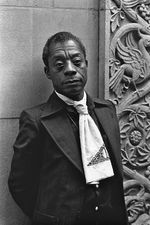
Life never bribed him to look at anything but the soul, Henry James said of Emerson, and one could say the same of James Baldwin, with a similar suggestion that the price for his purity was blindness about some other things in life. Baldwin possessed to an extraordinary degree what James called Emerson’s “special capacity for moral experience.” He, too, is persuasive in his antimaterialism. Baldwin, like Emerson, renounced the pulpit—he had been a fiery boy preacher in Harlem—and readers have found in the writings of each the atmosphere of church. It’s not that Emerson and Baldwin have much in common as writers. Harlem was not Concord. Except for his visits to England, Emerson stayed put for fifty years and Baldwin spent his adult life in search of a home. He left Harlem for Greenwich Village in the early 1940s, left Greenwich Village for Paris in 1948, and spent much time in Paris, Turkey, and the South of France between the 1950s and the 1980s. Yet Baldwin and Emerson both can speak directly to another person’s soul, as James would have it, in a way that “seems to go back to the roots of our feelings, to where conduct and manhood begin.”

more from Darryl Pinckney at the NYRB here.

Lydia Davis: Why she fell in love with Flaubert

From The Telegraph:

Davisumm_1755159c Reading the novel in her twenties, Davis was disappointed. “I think I must have been expecting something different, maybe a romantic love story with an uplifting ending, something along the lines of Jane Eyre.” But the story of Emma Bovary offered no “reader, I married him” thrill. Flaubert’s 1856 novel begins with marriage and what follows is the archetypal tale of a desperate housewife. Davis quotes Henry James’s assessment: “Anything drearier, more sordid, more vulgar and desolate than the greater part of the subject matter of this romance it would be impossible to conceive.” James also thought it was a masterpiece. Flaubert had set out to write a “book about nothing”, a book, in other words, the interest of which did not lie in its subject but in “the internal strength of its style”. Having initially read the novel in a poor translation, Davis couldn’t “see what was so remarkable about the style”. Now, she says, she understands. “One passage after the next is superbly accomplished. Each individual aspect of the novel is admirable – Flaubert’s handling of transitions, of points of view, of description, its recurring humour, its lack of sentimentality, its ruthlessness, and, in the end, Flaubert’s compassion for his characters”.

From the very first page of the novel, in which the young Charles Bovary arrives at a new school wearing a strange cap “whose mute ugliness has depths of expression”, we know that this is going to be a book in which details count. Our first glimpse of his soon-to-be second wife, Emma, comes in chapter two and, this time, through his eyes. She’s sewing and “as she sewed, she kept pricking her fingers, which she then raised to her mouth to suck”. Next time he visits she’s sewing again and “one could see, on her bare shoulders, little drops of sweat”. The reader, like Charles and Flaubert, can’t help but derive pleasure from these minute observations. They are sexy, fetishistic even, but at the same time suggest a certain detachment. Emma is certainly as demanding as her creator. She believes that love can only flourish if the perfect man appears in the perfect setting. He should be elegantly dressed, perhaps in a “long-skirted black velvet coat, soft boots, a pointed hat, and ruffles at his wrist” and his beard, ideally, would smell of vanilla and lemon. The affair would take place in Switzerland, possibly, or at the seaside, or in a “boudoir with silk blinds, a good thick carpet, full pots of flowers, and a bed raised on a dais”.

More here.

The Gene for Zzzzzzzz

From Science:

Sleep Many of us are zombies without 8 hours of sleep, while envied others seem to get by just fine on much less. Now geneticists have homed in on the first gene in the general population that seems to influence how much sleep we need. Sleep interests biologists in part because it varies with other factors, such as weight, that make people more prone to diabetes or heart disease. (The larger a person's body mass index, the less they generally sleep.) In search of sleep genes, a group of European researchers studied populations in seven countries, from Estonia to Italy, for a total of 4260 subjects. Each one filled out a simple questionnaire asking about his or her sleep habits and donated a DNA sample. The researchers then scanned the participants' DNA for thousands of genetic markers, looking for ones that were more common in people who slept more than those who slept less.

Sleep duration correlated strongly with a single genetic marker in a gene called ABCC9. When allowed to sleep as long as they want, those who have two copies of one version of this marker sleep on average 6% less than those carrying two copies of the other version, or about 7.5 hours versus 8 hours, says postdoc Karla Allebrandt, who is leading the study at the Centre for Chronobiology headed by Till Roenneberg at the University of Munich in Germany. Allebrandt presented the work last week at the annual meeting of the American Society of Human Genetics in Washington, D.C. The ABCC9 gene codes for a protein called SUR2 that is part of a potassium channel, a structure that funnels potassium ions into and out of cells. When the researchers knocked down the corresponding gene in two species of fruit flies, the flies slept significantly less at night compared with controls, Allebrandt reported.

More here.

Tuesday, November 9, 2010

A love of the marvelous

Simms-143x168

America’s nineteenth century cultural transformation from a traditional society, which was marked by common belief in supernatural intervention in everyday life, to a more materialistic society marked by a scientism, in which people predominately focused on naturalistic and mechanistic explanations of phenomenon, is well portrayed by William Gillmore Simms in his story, “Grayling: Or ‘Murder Will Out’” from his The Wigwam and the Cabin. The following brief essay will discuss Simms’ reflections about the rise of scientific naturalism (i.e., explaining phenomena according to mere natural and mechanistic causation, without citing supernatural intervention) and decline of supernaturalism (i.e., explaining phenomena in a manner that employs supernatural causal factors). In doing so, I will argue that Simms’ theses about the decay of morals and the arts resulting from the decline of supernaturalism can be elaborated upon by reflecting on the insights of Flannery O’Connor and the Southern Agrarians.

more from Peter Haworth at Front Porch Republic here.

Stability and continuity: our greatest luxury as Americans

NoChange__1288967787_5066

Change, in politics, is a lyrical and seductive tune. Think about Woodrow Wilson’s New Freedom, or Franklin Roosevelt’s New Deal; how Ronald Reagan greeted us with ”Morning in America,” or how Barack Obama ran an entire presidential campaign around the theme of ”change.” To listen to the victory speeches delivered on Election Day last week, one might start to believe that change is in the air again. Certainly, candidates across the country ran–and won–on the promise of changing Washington. But anyone counting on a radical transformation in government should steel themselves for another round of heartbreak come January, when the new Congress takes office: Their leadership is no more likely to revolutionize government than Obama’s did in 2008, or the long line of presidents and congresses before them. We might feel frustrated at this inaction, or relieved, depending on our politics. But what we shouldn’t feel is surprised. Because no matter how much politicians love to serenade us to the tune of change, and no matter how happy we are to flirt right back, our governmental system was designed to prevent seismic change from happening.

more from Elvin Lim at The Boston Globe here.

la violencia

Tijuana_575

How well she remembers those days. How could she ever forget—when the Juniors, as they became known, were in their prime: flashing their wealth around Tijuana, dripping gold with a scantily dressed beauty hanging from each arm? Cruising in their SUVs, taking over nightclubs in which they would drink only champagne. Cristina Palacios Hodoyán, lighting ultrathin cigarettes with a gold lighter held in her ultrathin fingers, remembers them with a sorrow in her eyes that even her polished demeanor cannot hide. How could she forget the Juniors, when two of her three sons were among them? The eldest, Alejandro, was kidnapped twice—once in 1996 and again the following year, since when he has never been seen again. The youngest, Alfredo, became known as “el Lobo,” the Wolf, and is serving 176 years in a Mexican jail, convicted of multiple murders and criminal association. “I had wanted them to become lawyers, or go into their father’s business as civil engineers,” their mother reflects. After finishing her cigarette, she picks at a smoked salmon sandwich, at a table in the Merlot restaurant, near the Tijuana Country Club, where the better class of people go. Mrs. Palacios turns sixty-nine the day after we have dinner, and says she plans a quiet meal with close friends, nothing extravagant.

more from Ed Vulliamy at Guernica here.

Building Bridges

From PW:

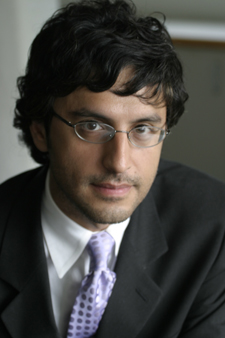
Reza Aslan is the editor of Tablet & Pen: Literary Landscapes from the Modern Middle East, an enormous and impressive anthology of 20th-century Middle Eastern literature.

Reza What made you want to take on this project?

I was interested in telling the story of the modern Middle East from a literary perspective, instead of the usual lens that's used to look at the region—the lens provided by academics and outsiders, colonialists and conquerors. It's an incredibly diverse region with a rich literary history, and I wanted to see how the story of the region sounded when the region spoke for itself.

This had to be an enormous undertaking.

It was a very long and grinding process. Words Without Borders [the online magazine] wanted to put together a collection of literature from “the Muslim world”—everything from Rumi to Pamuk. I disagreed with the notion of “literature from the Muslim world,” because there's no such thing as a “Muslim world” and because most of these writers don't think of themselves as Muslim writers, any more than Philip Roth considers himself a Jewish writer. I also wanted to shorten the time scale to the 20th century. I contacted friends and colleagues who are experts in the literature of the region, and together we collected hundreds of individual works. Then I just read for about nine months straight. And as I read, an overarching narrative began forming in my mind. I culled the list down and added a few more pieces, and finally I organized it in a hybrid chronological/geographical way so that it would read as one sustained narrative, from the first page to the last.

More here.

Tuesday Poem

I Knew a Woman

I knew a woman, lovely in her bones,
When small birds sighed, she would sigh back at them;
Ah, when she moved, she moved more ways than one:
The shapes a bright container can contain!
Of her choice virtues only gods should speak,
Or English poets who grew up on Greek
(I’d have them sing in chorus, cheek to cheek).
…………………………..
How well her wishes went! She stroked my chin,
She taught me Turn, and Counter-turn, and Stand;
She taught me Touch, that undulant white skin;
I nibbled meekly from her proffered hand;
She was the sickle; I, poor I, the rake,
Coming behind her for her pretty sake
(But what prodigious mowing we did make).
…………………………..
Love likes a gander, and adores a goose:
Her full lips pursed, the errant note to seize;
She played it quick, she played it light and loose;
My eyes, they dazzled at her flowing knees;
Her several parts could keep a pure repose,
Or one hip quiver with a mobile nose
(She moved in circles, and those circles moved).
…………………………..
Let seed be grass, and grass turn into hay:
I’m martyr to a motion not my own;
What’s freedom for? To know eternity.
I swear she cast a shadow white as stone.
But who would count eternity in days?
These old bones live to learn her wanton ways:
(I measure time by how a body sways).
…………………………………
………………………………..
by Theodore Roethke
from The Collected Poems of Theodore Roethke;
Random House, 1961