Antipsychotic drugs could shrink patients’ brains

From Nature:

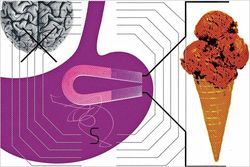
Brain Evidence that prescription drugs shrink patients' brains would, one might think, suggest only one course of action: stop prescribing them. But the matter turns out to be much more complicated, according to research published today in Archives of General Psychiatry on the effects of antipsychotic drugs in people with schizophrenia1.

In the past 15 years, research has indicated that people with schizophrenia have smaller cerebral volumes than the general population, and that this reduction is particularly large in 'grey-matter' structures, which contain the cell bodies of neurons. For instance, one meta-analysis points to 5–7% reductions in the size of the amygdala, hippocampus and parahippocampus2, which are all involved in memory storage and retrieval. But scientists have debated whether the decrease is caused by the disease alone, or whether powerful antipsychotic drugs also have a role. According to the latest findings, the more antipsychotics patients receive, the more likely they are to have a decreased amount of grey matter.

More here.

What It Means to be Colored in the Capital of the United States

The full text transcript of Mary E. Church Terrell's What It Means to Be Colored in the Capital of the United States speech, delivered at the United Women's Club in Washington D.C. – October 10, 1906 from EmersonKent.com:

Mary_church_terrell Washington D.C. has been called The Colored Man's Paradise. Whether this sobriquet was given to the national capital in bitter irony by a member of the handicapped race, as he reviewed some of his own persecutions and rebuffs, or whether it was given immediately after the war by an ex-slaveholder who for the first time in his life saw colored people walking about like free men, minus the overseer and his whip, history saith not. It is certain that it would be difficult to find a worse misnomer for Washington than The Colored Man's Paradise if so prosaic a consideration as veracity is to determine the appropriateness of a name.

It is impossible for any white person in the United States, no matter how sympathetic and broad, to realize what life would mean to him if his incentive to effort were suddenly snatched away. To the lack of incentive to effort, which is the awful shadow under which we live, may be traced the wreck and ruin of score of colored youth. And surely nowhere in the world do oppression and persecution based solely on the color of the skin appear more hateful and hideous than in the capital of the United States, because the chasm between the principles upon which this Government was founded, in which it still professes to believe, and those which are daily practiced under the protection of the flag, yawns so wide and deep.

More here.

Twenty reasons why it’s kicking off everywhere

Paul Mason of the BBC's Newsnight in his blog:

Protest We've had revolution in Tunisia, Egypt's Mubarak is teetering; in Yemen, Jordan and Syria suddenly protests have appeared. In Ireland young techno-savvy professionals are agitating for a “Second Republic”; in France the youth from banlieues battled police on the streets to defend the retirement rights of 60-year olds; in Greece striking and rioting have become a national pastime. And in Britain we've had riots and student occupations that changed the political mood.

What's going on? What's the wider social dynamic?

My editors yesterday asked me put some bullet points down for a discussion on the programme that then didn't happen but I am throwing them into the mix here, on the basis of various conversations with academics who study this and also the participants themselves.

At the heart of it all are young people, obviously; students; westernised; secularised. They use social media – as the mainstream media has now woken up to – but this obsession with reporting “they use twitter” is missing the point of what they use it for.

In so far as there are common threads to be found in these different situation, here's 20 things I have spotted:

1. At the heart if it all is a new sociological type: the graduate with no future

2. …with access to social media, such as Facebook, Twitter and eg Yfrog so they can express themselves in a variety of situations ranging from parliamentary democracy to tyrrany.

3. Therefore truth moves faster than lies, and propaganda becomes flammable.

4. They are not prone to traditional and endemic ideologies: Labourism, Islamism, Fianna Fail Catholicism etc… in fact hermetic ideologies of all forms are rejected.

5. Women very numerous as the backbone of movements. After twenty years of modernised labour markets and higher-education access the “archetypal” protest leader, organizer, facilitator, spokesperson now is an educated young woman.

More here.

Mubarak, he’s no dictator

Chase Madar in the London Review of Books blog:

Biden%20candidate When asked by Jim Lehrer, the host of Newshour on PBS, if Hosni Mubarak was a dictator, the US vice president, Joseph Biden, said: ‘Mubarak has been an ally of ours in a number of things and he’s been very responsible on, relative to geopolitical interests in the region, Middle East peace efforts, the actions Egypt has taken relative to normalising the relationship with Israel… I would not refer to him as a dictator.’

Here are some excerpts from the rest of Lehrer’s interview with Biden, containing more of the VP’s candid assessments.

On Darth Vader: Look, I know Darth fairly well, and Jim, I just want to mention that Darth has overcome asthma, some serious, serious asthma, and it’s just a really inspiring story, he’s written a children’s book about it, I gave a signed copy to my granddaughter for Christmas. Anyway our position is that before Darth blows up the planet Alderaan with his so-called Death Star, which is really just a large weather satellite with a few dual-use components, Darth should, you know, take some of that planet’s concerns into account. He should take their concerns seriously, and it should be a peaceful process. They have a right to protest against their planet getting blown up. But Jim, it’s a two-way street, and Alderaan shouldn’t be vandalising the Death Star’s weapon systems, which, of course, not that they exist. There’s been a concern that some of the more radical elements, you know, the Wookie Street, might try to do this. So no, we don’t think Darth Vader should resign. But if he does – if he does – we can find the recent appointment of Darth Maul as his acolyte Dark Lord of the Sith to be really, really encouraging from a human rights perspective. Just remember, the Empire is a fragile beacon of democracy in a turbulent universe.

More here.

A Mathematician Explores Claims of Prejudicial Treatment in the Media

John Allen Paulos in his Who's Counting column at ABC News:

John-allen-paulos A claim of prejudicial treatment is the basis for many news stories. The percentage of African-American students at elite universities, the ratio of Hispanic representatives in legislatures, and, just recently, the proportion of women among Wikipedia contributors have all been written about extensively.

Oddly enough, the shape of normal bell-shaped (and other) statistical curves sometimes has unexpected consequences for such situations. This is because even a small divergence between the averages of different population groups is accentuated at the extreme ends of these curves, and these extremes, as a result, often receive a lot of attention.

There are policy inferences, most of them wrong-headed, that have been drawn from this fact, but I certainly don't want to delve into questionable claims. I merely want to clarify a couple of mathematical points. To illustrate one such point, assume two population groups vary along some dimension – height, for example. Let's also assume that the two groups' heights vary in a normal or bell- shaped manner. Then even if the average height of one group is only slightly greater than the average height of the other, people from the taller group will make up a large majority of the very tall.

Likewise, people from the shorter group will make up a large majority of the very short. This is true even though the bulk of the people from both groups are of roughly average stature. So if group A has a mean height of 5'8″ and group B a mean height of 5'7″, then (depending on the variability of the heights) perhaps 90% or more of those over 6'3″ will be from group A. In general, any differences between two groups will always be greatly accentuated at the extremes.

More here.

Monday, February 7, 2011

Kelly Amis

3QD-Banner-High-Contrast

Kelly

Kelly Amis is the founder and president of Loudspeaker Films, a new independent film production company focused on social justice and education equity issues. Its first project, TEACHED, exposes disparities in the American public education system, especially as they impact urban minority youth.

After graduating magna cum laude from Georgetown University, Amis taught fourth and fifth grades in South Central, Los Angeles as a charter corps member of Teach for America. This experience inspired Amis to earn a master’s degree in Education Policy Analysis from Stanford University and to research local school governance as a Fulbright Scholar at the Australian Council for Educational Research in Melbourne.

Since then, Amis has worked as a legislative aide to U.S. Senator Dianne Feinstein—handling education, labor and foreign policy issues—and for a variety of education reform organizations, including: the Thomas B. Fordham Foundation, where she launched one of the nation’s first charter school incubators; the Sallie Mae Fund, where she helped design and start-up Building Hope, a charter school facilities fund; and Fight For Children, where she devised the “three sector strategy” that helped increase educational options for low-income District of Columbia students.

Amis is the co-author of “Making it Count: A Guide to High-Impact Education Philanthropy,” and numerous articles on education reform.  She lives in Northern California.

Email: k_amis [at] yahoo.com

  • Blah blah…
  • Blah

Sunday, February 6, 2011

The Chance for Democracy in Egypt is Lost

108735091 Robert Springborg in Foreign Policy:

The threat to the military's control of the Egyptian political system is passing. Millions of demonstrators in the street have not broken the chain of command over which President Mubarak presides. Paradoxically the popular uprising has even ensured that the presidential succession will not only be engineered by the military, but that an officer will succeed Mubarak. The only possible civilian candidate, Gamal Mubarak, has been chased into exile, thereby clearing the path for the new vice president, Gen. Omar Suleiman. The military high command, which under no circumstances would submit to rule by civilians rooted in a representative system, can now breathe much more easily than a few days ago. It can neutralize any further political pressure from below by organizing Hosni Mubarak's exile, but that may well be unnecessary.

The president and the military, have, in sum, outsmarted the opposition and, for that matter, the Obama administration. They skillfully retained the acceptability and even popularity of the Army, while instilling widespread fear and anxiety in the population and an accompanying longing for a return to normalcy. When it became clear last week that the Ministry of Interior's crowd-control forces were adding to rather than containing the popular upsurge, they were suddenly and mysteriously removed from the street. Simultaneously, by releasing a symbolic few prisoners from jail; by having plainclothes Ministry of Interior thugs engage in some vandalism and looting (probably including that in the Egyptian National Museum); and by extensively portraying on government television an alleged widespread breakdown of law and order, the regime cleverly elicited the population's desire for security. While some of that desire was filled by vigilante action, it remained clear that the military was looked to as the real protector of personal security and the nation as a whole. Army units in the streets were under clear orders to show their sympathy with the people.

Dedicated to Democracy

0226305724.01.LZZZZZZZ Corey Robin reviews Greg Grandin's The Last Colonial Massacre: Latin America in the Cold War in the LRB:

On 5 December 1982, Ronald Reagan met the Guatemalan president, Efraín Ríos Montt, in Honduras. It was a useful meeting for Reagan. ‘Well, I learned a lot,’ he told reporters on Air Force One. ‘You’d be surprised. They’re all individual countries.’ It was also a useful meeting for Ríos Montt. Reagan declared him ‘a man of great personal integrity . . . totally dedicated to democracy’, and claimed that the Guatemalan strongman was getting ‘a bum rap’ from human rights organisations for his military’s campaign against leftist guerrillas. The next day, one of Guatemala’s elite platoons entered a jungle village called Las Dos Erres and killed 162 of its inhabitants, 67 of them children. Soldiers grabbed babies and toddlers by their legs, swung them in the air, and smashed their heads against a wall. Older children and adults were forced to kneel at the edge of a well, where a single blow from a sledgehammer sent them plummeting below. The platoon then raped a selection of women and girls it had saved for last, pummelling their stomachs in order to force the pregnant among them to miscarry. They tossed the women into the well and filled it with dirt, burying an unlucky few alive. The only traces of the bodies later visitors would find were blood on the walls and placentas and umbilical cords on the ground.

Amid the hagiography surrounding Reagan’s death in June, it was probably too much to expect the media to mention his meeting with Ríos Montt. After all, it wasn’t Reykjavik. But Reykjavik’s shadow – or that cast by Reagan speaking in front of the Berlin Wall – does not entirely explain the silence about this encounter between presidents. While it’s tempting to ascribe the omission to American amnesia, a more likely cause is the deep misconception about the Cold War under which most Americans labour. To the casual observer, the Cold War was a struggle between the United States and the Soviet Union, fought and won through stylish jousting at Berlin, antiseptic arguments over nuclear stockpiles, and the savvy brinkmanship of American leaders. Latin America seldom figures in popular or even academic discussion of the Cold War, and to the extent that it does, it is Cuba, Chile and Nicaragua rather than Guatemala that earn most of the attention.

But, as Greg Grandin shows in The Last Colonial Massacre, Latin America was as much a battleground of the Cold War as Europe, and Guatemala was its front line.

We All Helped Suppress the Egyptians. So How Do We Change?

Johann Hari over at his blog:

The great Czech dissident Vaclav Havel outlined the “as if principle”. He said people trapped under a dictatorship need to act “as if they are free.” They need to act as if the dictator has no power over them. They need to act as if they have their human rights. Havel rode that principle to the death of Soviet tyranny and to the Presidential Palace of a free society.

The Egyptians are trying the same – and however many of them Mubarak murders on his way out the door, the direction in which fear flows has been successfully reversed. The tyrant has become terrified of “his” people – and dictators everywhere are watching the live-feed from Liberation Square pale-faced and panicked.

Of course, there is a danger that what follows will be worse. My family lived for a time under the torturing tyranny of the Shah of Iran, and cheered the revolution in 1979 – yet he was replaced by the even more vicious Ayatollahs. But this is not the only model, nor the most likely. The events in Egypt look more like the Indonesian revolution, where in 1998 a popular uprising toppled a US-backed, US-armed tyrant after 32 years of oppression – and went on to build the largest and most plural democracy in the Muslim world.

But the discussion here in the West should focus on the factor we are responsible for and we can influence – the role our governments have played in suppressing the Egyptian people. Your taxes have been used to arm, fund and fuel this dictatorship. You have unwittingly helped to keep these people down. The tear gas canisters fired at pro-democracy protesters have ‘Made in America’ stamped on them, with British machine guns and grenade launchers held in the background.

Very few British people would praise a murderer and sell him weapons. Very few British people would beat up a poor person in order to get cheaper petrol. But our governments do this abroad all the time. Of the three worst human rights abusers in the Middle East – Saudi Arabia, Israel, and Iran – two are our governments’ closest friends, showered with money, arms and praise. Why?

Social Welfare and Economic Irrationality

Over at the Economist's Democracy in America:

MIKE Konczal writes:

One of the more curious behavioral responses is that people hate unemployment. They hate not being part of their productive community, they hate not contributing, they hate the loss of identity that one gets as someone who works. To an economist that’s b-a-n-a-n-a-s. Unemployment should be a pleasant vacation! But, last time I checked, it wasn’t (is that consistent with the latest frontiers in happiness research?).

Mr Konczal is contributing to a discussion that's kicked up recently over a paper written by libertarian economists Bryan Caplan and Scott Beaulier, arguing that behavioural economics provides a basis for critiquing government welfare policies. Karl Smith highlighted Mr Caplan's paper as a serious challenge to his neo-classical economic belief structure; other commentors replied that the paper had no data and no mathematical models; Mr Smith responded that often simple, data-free models can be extremely helpful in posing problems and presenting complex ideas intuitively, and cited the example of Paul Krugman's famous essay on the babysitting co-op with its crystal-clear workaday picture of how a Keynesian liquidity trap works; Mr Krugman jumped in with his favourite simple, low-on-data papers, including David Hume's thought experiment “Of the Balance of Trade” and Evsey Domar's paper grounding slavery and serfdom in land surpluses and labour shortages. (I love this stuff. Blogs are the greatest thing to happen to intellectual life in the early 21st century; one day we'll look back on them as a latter-day Bloomsbury.)

Mr Caplan is taking up a problem for conservative critics of the welfare state who take a neo-classical economic perspective. From a neo-classical perspective, he says, giving people more choices (by giving them money, preference in university admissions, health care and so on) always makes them better off. So how can welfare hurt the poor? He thinks behavioural economics, which shows us how people often (usually, even) make decisions that are irrational from a classical economic perspective, can provide the answer:

A simple numerical example can illustrate the link between helping the poor and harming them. Suppose that in the absence of government assistance, the true net benefit of having a child out-of-wedlock is -$25,000, but a teenage girl with self-serving bias [unrealistically optimistic and overconfident] believes it is only -$5000. Since she still sees the net benefits as negative she chooses to wait. But suppose the government offers $10,000 in assistance to unwed mothers. Then the perceived benefits rise to $5000, the teenage girl opts to have the baby, and ex post experiences a net benefit of -$25,000 + $10,000 = -$15,000.

Mr Konczal responds that the fact that people are economically irrational shows us precisely why government safety-net programmes are necessary.

Are You There God? It’s Me, Brain

110203_SCI_beliefTN An excerpt from Jesse Bering’s The Belief Instinct: The Psychology of Souls, Destiny, and the Meaning of Life in Slate [h/t: Zoe Pollock over at Andrew Sullivan]:

The scientific jury is still out on whether our species is unique among social mammals in being able to conceptualize mental states—other species, such as chimps, dogs, scrub jays and dolphins, may have some modest capacity in this regard. But there’s absolutely no question that we’re much better at it than the rest of the animal kingdom. We are natural psychologists, exquisitely attuned to the unseen psychological world. Reasoning about abstract mental states is as much a trademark of our species as walking upright on two legs, learning a language, and raising our offspring into their teens.

There is a scientific term for this way of thinking—”theory of mind.” It’s perhaps easiest to grasp the concept when considering how we struggle to make sense of someone else’s bizarre or unexpected behavior. If you’ve ever seen an unfortunate woman at the grocery store wearing a midriff-revealing top and packed into a pair of lavender tights like meat in a sausage wrapper, or a follicularly challenged man with a hairpiece two shades off and three centimeters adrift, and asked yourself what on Earth those people were thinking when they looked in the mirror before leaving the house, this is a good sign that your theory of mind (not to mention your fashion sense) is in working order. When others violate our expectations for normalcy or stump us with surprising behaviors, our tendency to mind-read goes into overdrive. We literally “theorize” about the minds that are causing ostensible behavior.

The evolutionary significance of this mind-reading system hinges on one gigantic question: Is this psychological capacity—this theory of mind, this seeing souls glimmering beneath the skin, spirits twinkling behind orbiting eyes, thoughts in the flurry of movement—is this the “one big thing” that could help us finally understand what it means to be human? Could it tell us something about how we find meaning in the universe?

In Memory of Miriam Bratu Hansen, 1949-2011

Gul, two Bar Mitzvahs, Miriam and Seema 007 One of my loveliest and most beloved friends, Miriam Hansen, died peacefully at Northwestern University Hospital yesterday after a twelve year battle with multiple cancers. She was a noble soul besides being one of the wisest individuals I have known. Picture on the right shows her with me (center) and Seema (right) standing in the balcony of her beautiful apartment in Chicago. This is what her husband and my dear friend Michael said about her last moments:

“Her death came suddenly, but she passed away gently, more gently than you would ever consider imaginable. In one of her last lucid moments on Friday morning she said twice, the first time more determinate and the second time more resigned: “Ich sterbe”; and this is what she proceeded to do. In life and death she was Miriam.”

From Film studies for free:

Miriam Hansen was Ferdinand Schevill Distinguished Service Professor in the Humanities at the University of Chicago, where she also taught in the Department of English and the Committee on Cinema and Media Studies. Her publications include a book on Ezra Pound’s early poetics (1979) and Babel and Babylon: Spectatorship in American Silent Film (1991). She was completing a study entitled The Other Frankfurt School: Kracauer, Benjamin, and Adorno on Cinema, Mass Culture, and Modernity. Her next project was to be a book on the notion of cinema as vernacular modernism.

Inspired by her lifelong study of the Frankfurt School, Hansen's work rethought cinema as a part of the public and counterpublic spheres, situating it within a larger discourse of popular culture, and thus opening up the essential study of such 'periphery texts' as fan magazines, gossip columns, movie reviews, and so on. But her development of the concept of vernacular modernism also completely set the scene for the field of world or transnational cinema studies; and her historical work on cinematic spectatorship and her highly original addressing of the sensual experiences of film and new media are likewise in the process of revolutionizing their field of study (as W.J. T. Mitchell argues in relation to 'Miriam Hansen’s urging that cinema and other media be regarded as a vernacular modernism in which new theoretical propositions might be articulated while the senses are being reeducated').

It is hard to think, then, of anyone who has made a more significant contribution to Film Studies (and, latterly, new media studies), in the context of the Humanities as a whole, than she did.

Film Studies For Free hopes that Hansen knew just how grateful we are for her research — how changed we are by it — as well as for her inspiring work as a teacher. Here is a link to a warm and touching tribute by one of Hansen's former students.

More here.

Sunday Poem

In Basho's House

In Basho’s house
there are no walls,
no roof, floors
or pathway—
nothing to show

where it is,
yet you can enter
from any direction
through a door
that’s always open.

You hear voices
though no one
is near you—
you’ll listen without
knowing you do.

Time and time
you get up to greet
a stranger coming
towards you.
No one ever appears.

Hours and seasons
lose their names—
as do passing clouds.
Rising moon and setting sun
no longer cast shadows.

Sounds drift in
like effortless breathing—
frogsplash, birdsong,
echoes of your
own footsteps.

It all ceases
to exist in Basho’s house—
the place you’ve entered
without knowing
you’ve taken a step.

Sit down. Breathe
in, breathe out.
Close your tired eyes.
Basho is sitting beside you—
a guest in his own house.

by Peter Skyzynecki
from Old/New World: New & Selected Poems
University of Queensland Press, St Lucia, 2007

Basho

Noam Chomsky: It’s not radical Islam that worries the US – it’s independence

Noam Chomsky in The Guardian:

ScreenHunter_17 Feb. 06 11.20 A common refrain among pundits is that fear of radical Islam requires (reluctant) opposition to democracy on pragmatic grounds. While not without some merit, the formulation is misleading. The general threat has always been independence. The US and its allies have regularly supported radical Islamists, sometimes to prevent the threat of secular nationalism.

A familiar example is Saudi Arabia, the ideological centre of radical Islam (and of Islamic terror). Another in a long list is Zia ul-Haq, the most brutal of Pakistan's dictators and President Reagan's favorite, who carried out a programme of radical Islamisation (with Saudi funding).

“The traditional argument put forward in and out of the Arab world is that there is nothing wrong, everything is under control,” says Marwan Muasher, a former Jordanian official and now director of Middle East research for the Carnegie Endowment. “With this line of thinking, entrenched forces argue that opponents and outsiders calling for reform are exaggerating the conditions on the ground.”

Therefore the public can be dismissed. The doctrine traces far back and generalises worldwide, to US home territory as well. In the event of unrest, tactical shifts may be necessary, but always with an eye to reasserting control.

More here.

Superbowl Spleen

Justin E. H. Smith in his own blog:

ScreenHunter_16 Feb. 06 11.13 Let's see, how should I spend my Sunday? Should I keep reading Herwig Wolfram's magisterial History of the Goths? Should I perhaps go a-hunting online for some whimsical new videos of cats doing unexpected things? Or should I check to see if there are any noteworthy athletic spectacles on television?

There has been a dull din, growing louder over the past few weeks, that suggests to me that some big sports event is in the offing. Distant memories from childhood cause me to associate this din, in this particular season, with football. These associations, in turn, conjure up others still: of Ronald Reagan, of high-school meatheads in letter jackets telling me not to stand too close to their girlfriends, of ROTC, of PromiseKeepers, of words like 'buddy', of a model of American masculinity that quite literally spit me out as indigestible.

And now, here I am, back in the belly of the beast, steeling myself for yet another Superbowl. (The last Superbowl I can remember, in early 1994, I spent locked in a closet reading Anna Akhmatova as my parents hosted a wide-screen-TV Superbowl fiesta, complete with trays of bean dip made up with various ingredients to resemble a football field: sour cream for the yard lines, a goal post out of avocado, etc.)

More here.

Saturday, February 5, 2011

Ziauddin Sardar on Travel in the Muslim World

Georgie Day in The Browser:

Mecca_0 What does travel mean for you?

Travel is both a physical and a mental exercise – it is about immersing yourself in another culture. Travelling is the process of letting go of yourself and immersing yourself into different ways of knowing and seeing. If you cannot do this, you haven’t travelled. It’s certainly not a holiday – travelling is not staying in five-star hotels.

Tell us about your first book recommendation, The Travels of Ibn Battutah.

Ibn Battutah, whose name can be translated as Son of a Duck, is my hero and is regarded as ‘the traveller of Islam’. He left his native city of Tangier in 1325 at the age of 21 with the intention of performing the pilgrimage to Mecca. But he continued beyond Mecca. Travelling by horse, mule, ox wagon, junk, dhow and on foot, he covered over 75,000 miles and visited over 40 countries. Wherever he went, he found it easy to get employment as a jurist, or a courtier or an ambassador. His journeys involve swashbuckling adventures and chases with concubines in tow. He is a riveting read. The interesting thing with Ibn Battutah is that travel for him was not just going from one place to another; it was living in a place. Wherever he went, he made his home. He had a house, he married and he got a job. This allowed him to learn about the place by living as a part of it. Then he would move on. It wasn’t until he returned to Morocco in his ripe old age, that he wrote down all his adventure. It’s got a wonderful title in full, The Precious Gift for Lookers into the Marvels of Cities and Wonders of Travels.

More here.

Bill Gates: Vaccine-autism link ‘an absolute lie’

Sanjay Gupta interviews Bill Gates at CNN:

Bill-gates Gupta: There has been a lot of scrutiny of vaccines recently — specifically childhood vaccines. There has been a lot of news about is there a connection with autism, for example. What do you make of all that? Dr. [Andrew] Wakefield wrote a paper about this [in The Lancet in 1998] saying he thought there was a connection. And there were lower vaccination rates over a period of time as a result in Britain, then the United States. What are your thoughts?

Gates: Well, Dr. Wakefield has been shown to have used absolutely fraudulent data. He had a financial interest in some lawsuits, he created a fake paper, the journal allowed it to run. All the other studies were done, showed no connection whatsoever again and again and again. So it's an absolute lie that has killed thousands of kids. Because the mothers who heard that lie, many of them didn't have their kids take either pertussis or measles vaccine, and their children are dead today. And so the people who go and engage in those anti-vaccine efforts — you know, they, they kill children. It's a very sad thing, because these vaccines are important.

More here.