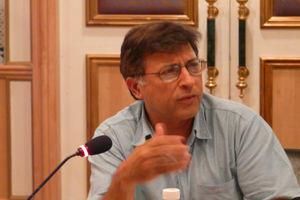
Pervez Hoodbhoy in Economic and Political Weekly:
More here.

Pervez Hoodbhoy in Economic and Political Weekly:
More here.
From The New Yorker:
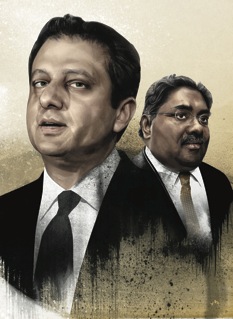
Kumar, born in Chennai, formerly Madras, India, was fastidious and morose, travelling at least thirty thousand miles a month for work, and seldom socializing. Rajaratnam, a Tamil from Colombo, Sri Lanka, was fleshy and dark-skinned, with a charming gap-toothed smile and a sports fan’s appetite for competition and conquest. Kumar was not among the group whom Rajaratnam took on his private plane to the Super Bowl every year for a weekend of partying. “I’m a consultant at heart,” Kumar liked to say. “I’m a rogue,” Rajaratnam once said. Kumar had the more precise diction and was better educated, but Rajaratnam was one of the world’s new billionaires and therefore a luminary among businessmen from the subcontinent. In an earlier generation of immigrant financiers, Kumar would have been the German Jew, Rajaratnam the Russian. Kumar might have felt some disdain for Rajaratnam, but Rajaratnam’s fortune made him irresistible.
More here.
From Nature:
Rosen is director of clinical and translational research at Maine Medical Center Research Institute in Scarborough and is a respected member of the bone-research community. But his role last year on an expert panel to determine how much calcium and vitamin D people need put him at odds with many of his colleagues. In the past few years, vitamin D has earned a reputation in Western countries for preventing or fighting prostate cancer, cardiovascular disease, multiple sclerosis and about 30 other maladies, leading to advice that most people should be supplementing what the body produces naturally when exposed to sunlight. But in November, the panel, put together by the Institute of Medicine (IOM) — a non-profit group affiliated with the US National Academy of Sciences — issued a report1 that challenged that view. Blood levels of vitamin D need not be as high as many physicians and testing companies had been advocating, it said, and high doses of the vitamin could actually cause harm. Since the report was released, Rosen says he's received about 150 e-mails critical of the panel's decisions. About one-third were downright hateful. “A rehabilitation doctor in Texas threatened to bring me to the board of malpractice to have my licence revoked. People tell me I don't know what I'm doing,” he says. “It has become personal.”
More here.
Sweet Early Spring
When the understory of the woods
is flattened
and you can see the contours
of the earth,
the rock out-croppings—all this
just after the
last pockets of snow disappear,
while everything
is still sere, brown, gray—when
now and then
a woodcock whistles or you can hear
a lone goose
going somewhere—all this, this sweet
early spring—
with no bugs at all, none, not a single one—
this
clear, beautiful and brief moment,
this emptiness—
this is the time
I love the best—
before the world fills up again with
insects, leaves,
brush, birds, green, a last brief rest—
quiet and peace—
before I have to turn and face
the lush and fertile,
noisy spring.
by David Budbill
from Happy Life,
forthcoming from Copper Canyon Press,
September 2011
Aaron L. Friedberg in The National Interest:
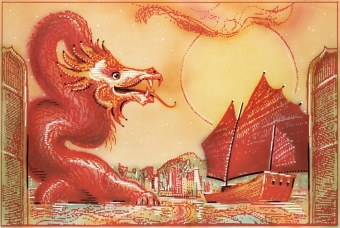
The fact that the U.S.-China relationship is competitive, then, is simply no surprise. But these countries are not just any two great powers: Since the end of the Cold War the United States has been the richest and most powerful nation in the world; China is, by contrast, the state whose capabilities have been growing most rapidly. America is still “number one,” but China is fast gaining ground. The stakes are about as high as they can get, and the potential for conflict particularly fraught.
More here.
Ben Davis in Artinfo:
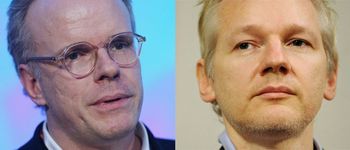
It works, however, on two levels. WikiLeaks, the organization that Assange has become the face of, has exposed the United States' secret assassination squads in Afghanistan and secret bombing campaigns in Yemen. Nevertheless, it has also become bogged down in sordid allegations about Assange's personal life (even as the U.S. government's open torture of accused leaker Bradley Manning has become a human rights scandal). In his interview, Obrist basically treats Assange as an artist (“science, mathematics, quantum theory — all of these come together in your work”), thereby for the most part refocusing the discussion on the issues that his work addresses rather than his biography. That is to say, the interview focuses on the philosophy that first made him a figure of international significance.
At the same time, the pairing works because there's a convincing case to be made that Assange is relevant to contemporary artists: questions of how to relate to the looming power of the corporate media, how individuals navigate the sprawling universe of contemporary information, and what the limits of free speech are today are all concerns of the most important recent art (and Obrist submits his interlocutor to questions contributed by the likes of Paul Chan, Martha Rosler, Superflex, and a pre-detention Ai Weiwei — who asks about how individuals can stand up to power — to prove it).
More here.
Pervez Hoodbhoy at the World Congress for the freedom of scientific research:
The upheaval in multiple Arab countries, known as the “Arab Spring”, is certain to lead to new political structures in a part of the world hitherto dominated by monarchies and dictatorships. But this revolution against autocratic stability and despotism, which are largely responsible for keeping the Arab world in darkness, does not by itself guarantee that a scientific revival is around the corner. An Arab renaissance will happen only if appropriate cultural and attitudinal changes follow the political changes. How fast, or slow, these countries move into the 21st century will depend on how Arabs choose to reinvent their way of life.
Formidable obstructions lie up ahead. Since the end of Islam's Golden Era in the 13th century, dogmatic religious beliefs have created an anti-science culture that encourages passive acceptance of knowledge and discourages true inquiry. But science demands a mindset that incessantly questions and challenges assumptions, not one that relies upon received wisdom from holy books. The inquisitive mind is frowned upon in most traditional societies, and it is an undeniable truth that intellectual and personal freedoms are sharply restricted in Muslim countries. Lack of intellectual space prevents talented young Muslims from exercising their innate intellectual capabilities and becoming accomplished actors, directors, singers, dancers, musicians, composers, artists, and writers. This is also why there are very few Muslim Arab scientists and mathematicians who are world class.
More here.
Laura Beil in the New York Times:
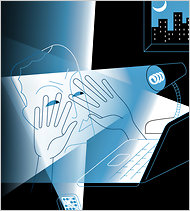
The workhorse of this system is the light-sensitive hormone melatonin, which is produced by the body every evening and during the night. Melatonin promotes sleep and alerts a variety of biological processes to the approximate hour of the day.
Light hitting the retina suppresses the production of melatonin — and there lies the rub. In this modern world, our eyes are flooded with light well after dusk, contrary to our evolutionary programming. Scientists are just beginning to understand the potential health consequences. The disruption of circadian cycles may not just be shortchanging our sleep, they have found, but also contributing to a host of diseases.
More here.
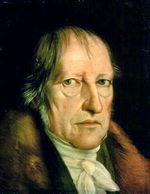
Robert Pippin: Hegel is the first to argue that philosophy has an historical and a diagnostic task. A traditional understanding of philosophy is distinguished by two central, normative questions, and its conviction that these questions can be answered by the exercise of pure human reason: What ought we to think, and what ought we to do? To Hegel, this conception of philosophy is insufficient and, in the Kantian sense, un-critical—that is, not aware of the conditions of its own possibility. Instead, Hegel argues that philosophy’s task is the comprehension of its own time in thought. That’s an extremely powerful and influential formulation, although it is not at all clear exactly what it means. Certainly, Hegel has in mind the self-justification of the use of coercive violence by a single authority in the state against all other members, otherwise known as politics. Under what justification could the coercive power of law, the ability to take away one’s freedom, operate? Hegel was skeptical of the “pure,” practically rational inquiry into this problem undertaken, say, by Plato’s Republic or Hobbes’s Leviathan. Human rationality, to Hegel, is not a faculty possessed by human beings, like sensibility or the imagination, which they exercise in isolation as monadic units. He thinks of rationality as the considerations we offer each other when our actions affect what others would otherwise be able to do. Rationality is a social practice and it has a history, as do the elements connected with it, such as the concept of subject or agent.
more from a discussion between Robert Pippin and Omair Hussain at nonsite here.
Even before you see The Tree of Life, it’s evident that the film has something to do with religion, though it’s not at all clear what. Co-star Brad Pitt has been making remarks to the press that he found his own religious upbringing to be “stifling.” (He and Angelina Jolie are widely thought by the atheist community to be kindred spirits.) It’s the story of a 1950s Texas family that happens to be Catholic, and whose reality and language is very much framed in those terms. The official synopsis leans toward something even more abstract: a “lost soul in the modern world” learns the lesson of “unselfish love.” But, then, is this a religious movie? Well, it’s not exactly confessional. It certainly doesn’t make one long for a revival of 1950s suburban Texas Catholicism, or much of anything else. There are religious themes, yes, but it’s not preachy by any stretch. Suggestive. Or, to use Erik Lokkesmoe’s could-mean-anything word, “spiritual.” As the lights dimmed in the screening room, a passage from the Book of Job appeared on the screen, the start of God’s monologue from the whirlwind. A woman’s voice tells us about the choice we have in life between nature and grace, and this opposition maps itself onto all that follows.
more from Nathan Schneider at Killing The Buddha here.
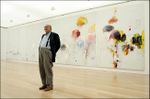
The magnificent retrospective of veteran American artist Cy Twombly at London’s Tate Modern is a bracing reminder that, before all else, painting is smearing and drawing is scribble. In his handling, informality can border on the infantile in its extremes of slightness and scatter. This show, which is curated by Tate’s director Sir Nicholas Serota, travels to the Bilbao Guggenheim in the fall and then Rome’s National Gallery of Modern and Contemporary Art, and is the first major survey since the artist’s retrospective 15 years ago at New York’s Museum of Modern Art. Mr. Twombly, who turned 80 this year, makes big, intellectually ambitious paintings and elemental sculptures that are complex in their interaction with other art and artforms. But he never lets us lose sight of art’s simplest instincts and manuvers, almost taunting the viewer with the base, raw impulses he lets loose. His art embraces contradiction. In room after room, this survey offers spare yet dynamic canvases, or cruddy yet evocative sculpture. However nonchalant his painterly marks may seem, they are somehow taut and expressive nonetheless. Almost scatological in their oozing and dribbling, his paintings are unfailingly elegant. There is also a dichotomy in Mr. Twombly’s work between the verbal and the non-verbal: Writing is key to his work — often there is text scribbled into his canvases, and titles manifest connections with poetry — but equally vital is a sense that splodges and gestures form an arcane system of pre-verbal expression.
more from David Cohen’s review of Twombly’s retrospective at the Tate in 2008 at Artcritical here.
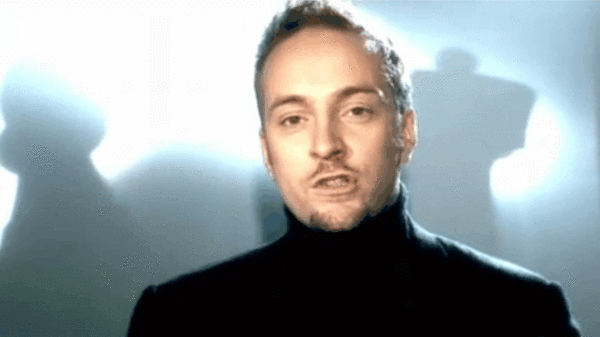
Click picture to watch. He reveals how he did it. It’s pretty cool.
From Salon:
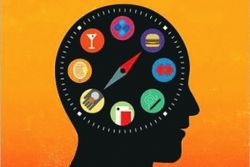
But that vexing civil war, with its shifting fields of victory and surrender, has actually never been waged with such crisp skirmishing. Indeed, the fact that we can't trust our brains to be sober assessors, that they are as lacking in objective vigilance as the untrustworthy heart, that they were wired by an ancient (and often amoral) electrician and are thus no longer entirely useful in a modern age, has become reasonably well known to the general reader. Disciplines from neuroscience to behavioral psychology to evolutionary biology have created a new cranial transparency that's unleashed a gush of books like “Blink,” by Malcolm Gladwell; “Sway: The Irresistible Pull of Irrational Behavior,” by Ori Brafman and Ron Brafman; “Nudge: Improving Decisions About Health, Wealth and Happiness,” by Richard H. Thaler and Cass R. Sunstein; and “The Upside of Irrationality: The Unexpected Benefits of Defying Logic and Work and at Home,” by Dan Ariely.
More here.
From PhysOrg:
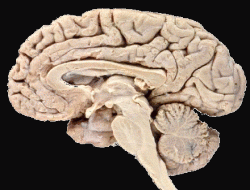
The pain scores were lower for the women when they were looking at a picture of their partner. Looking then at the MRI scans matching those shocks, the researchers found activity in the brain region associated with pain, but they also discovered activity in the ventromedial prefrontal cortex which is associated with a feeling of safety. Looking further at the women and the relationships they were in, they found that the longer the women had been in the relationship and the more overall support they received from their partner, the greater the level of activity in the ventromedial prefrontal cortex, or VMPFC, was demonstrated. The VMPFC is capable of inhibiting other pathways in the brain responsible for fear and anxiety, so this level of safety the women feel in their relationship helps to activate this and reduce pain. Researchers also discovered that the dorsal anterior cingulate cortex, an area responsible for stress response, had less activity when the women were gazing at the photos of their loved one.
More here.
Was there a foreign government behind the 9/11 attacks? A decade later, Americans still haven’t been given the whole story, while a key 28-page section of Congress’s Joint Inquiry report remains censored. Gathering years of leaks and leads, in an adaptation from their new book, Anthony Summers and Robbyn Swan examine the connections between Saudi Arabia and the hijackers (15 of whom were Saudi), the Bush White House’s decision to ignore or bury evidence, and the frustration of lead investigators—including 9/11-commission staffers, counterterrorism officials, and senators on both sides of the aisle.
Anthony Summers and Robbyn Swan in Vanity Fair:
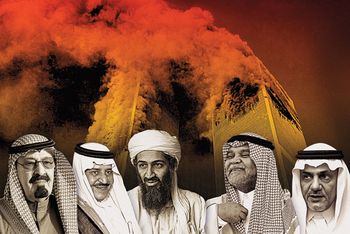
The idea that al-Qaeda had not acted alone was there from the start. “The terrorists do not function in a vacuum,” Defense Secretary Donald Rumsfeld told reporters the week after 9/11. “I know a lot, and what I have said, as clearly as I know how, is that states are supporting these people.” Pressed to elaborate, Rumsfeld was silent for a long moment. Then, saying it was a sensitive matter, he changed the subject.
Three years later, the commission would consider whether any of three foreign countries in particular might have had a role in the attacks. Two were avowed foes of the United States: Iraq and Iran. The third had long been billed as a close friend: Saudi Arabia.
More here.
In wanting to make photography an art for the museum—for the great hall, not the library or the print room—Wall has succeeded more than he could have hoped. In the past few years alone there have been three major presentations of his work: one at the Schaulager in Basel and the Tate Modern in London; another at MoMA, the Art Institute of Chicago and the San Francisco Museum of Modern Art; and a third at the Deutsche Guggenheim in Berlin. But there can be too much of a good thing; maybe Wall’s work is becoming overfamiliar. Certainly a reaction to his prominence has quietly set in. Has Wall lost his edge, become too much the official artist? I’ve heard this opinion voiced, perhaps not in so many words, by more than a few colleagues. A more grounded expression of discontent was recently put forth by Julian Stallabrass in New Left Review. Stallabrass attributes Wall’s success to what he labels the “conservative and spectacular elements of his practice”—which he claims have intensified in recent years—“increasingly accompanied by other conservative attachments,” by which he means a retreat from the leftist political commitment previously manifested in Wall’s imagery and writing. For Stallabrass this withdrawal is epitomized by Wall’s remaking of his Eviction Struggle, from 1988, as An Eviction in 2004, which he says transformed an image of class conflict into an anodyne and universal “meditation on human imperfection.” On the face of it, Stallabrass argues a credible case, and his target would hardly be the first artist to have grown complacent and conservative with age. After all, success conspires to translate art’s discoveries into platitudes, to divert the artist from making to managing (not only staff but one’s career and the interpretation of one’s work), and to focus the artist’s mind on interests that appear to coincide with those of the wealthy who sustain him through their patronage.
more from Barry Schwabsky at The Nation here.
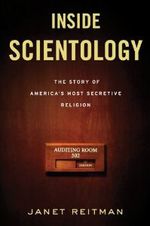
Quite often, religion proves every bit as stupid as it is crucial. Which is to say that the sheer preposterousness of a religion—any religion—can serve as a measure of spiritual need. The longing for cosmological certainty is so great that humanity is susceptible to all kinds of bunkum. The sad truth: Our most fundamental trait is foolishness. Janet Reitman’s Inside Scientology grew out of a National Magazine Award–nominated piece for Rolling Stone, and there are two reasons you might consider reading it. One, per the above rule of cracked religiosity, you might hope for an explanation of why something as zany as Scientology can even happen. Two, you might be curious about Scientology because Tom Cruise is a Scientologist and because, well, people just seem to talk about it a lot. If you’re in the latter camp, this book will serve you fine—maybe even too fine, as Reitman has a fetish for detail. But if you’re looking for more than shallow news value, you’re going to be disappointed.
more from J. C. Hallman at Bookforum here.
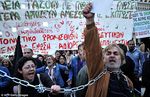
It isn’t the consequences for Greece of a Lehman-type ‘credit event’ that worry the central bankers and governments: the risk of ‘contagion’, as they call it, throughout the Eurozone is what preoccupies them. The euro was not designed to default, so when Greece does, other European countries who have had to ask for non-bailout bailouts – Ireland and Portugal – will have their ability to repay their debts questioned. If one or other of them undergoes a ‘rollover’, or ‘restructuring’, or ‘rescheduling’ of its debt – all polite words for default – the next country in line will be Spain, and that is where everything changes. The ECB/EU/IMF ‘troika’ can write a cheque and buy the Greek economy, or the Irish economy or the Portuguese economy. But Spain is the world’s twelfth-largest economy, and the ECB can’t just write a cheque and buy it. A Spanish default would destroy the credibility of the euro, and quite possibly the currency itself, at least in its current form. This is why the current situation has developed, in which governments are reluctant to lend Greece money because they don’t think they’re going to get all of it back, but they’re determined to do so anyway because they need to buy time. The euro was launched with a fundamental democratic deficit, which didn’t trouble the European elite behind it because they had come to believe in a version of manifest destiny.
more from John Lanchester at the LRB here.
From The Telegraph:
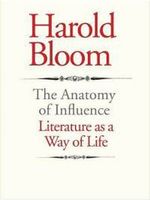
Of the several hundred books he has edited or written, including bestselling defences of the Western canon and Shakespeare, his most famous work remains The Anxiety of Influence (1973). It was the first of Bloom’s many attempts to turn readers’ assumptions upside-down and inside-out. As he described it, the scene of writing was an environment every bit as dangerous as Darwin’s tangled bank. Far from being meek and bookish, poets spent their creative lives trying to elbow each other out of the way in a desperate attempt to catch the eye of posterity. “Strong” poets rewrote their predecessors in order to take their place in the pantheon; lines of poetry were at once a literary genealogy and an imaginary piano wire used to strangle one’s rivals. This self-styled “swan song” is offered as Bloom’s final journey into the “labyrinth” of literary influence. Around 30 writers – all male – form a dense tangle of literary relationships that Bloom unpicks, although roughly two-thirds of the book is taken up by “our two towering precursors, Shakespeare and Whitman”.
More here.
Natalie Angier in The New York Times:
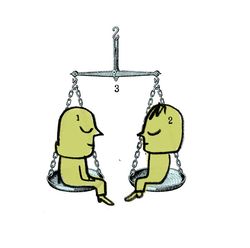
Among America’s top executives today, according to a study commissioned by The New York Times, the average annual salary is about $10 million and rising some 12 percent a year. At the same time, the rest of the tribe of the United States of America struggles with miserably high unemployment, stagnant wages and the worst economic crisis since the Great Depression. Now, maybe the wealth gap is a temporary problem, and shiny new quarters will soon rain down on us all. But if you’re feeling tetchy and surly about the lavished haves when you have not a job, if you’re tempted to go out and insult a piece of corporate meat, researchers who study the nature and evolution of human social organization say they are hardly surprised. Darwinian-minded analysts argue that Homo sapiens have an innate distaste for hierarchical extremes, the legacy of our long nomadic prehistory as tightly knit bands living by veldt-ready team-building rules: the belief in fairness and reciprocity, a capacity for empathy and impulse control, and a willingness to work cooperatively in ways that even our smartest primate kin cannot match.
More here.