
Tyler Dean at Artforum:
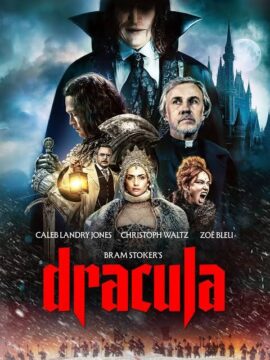 Coppola’s adaptation cleaves relatively closely to the plot of Stoker’s novel, but Besson’s script replicates, almost exactly, only the parts of Coppola’s film that deviate from Stoker’s story. In both films, Dracula is explicitly the undead Vlad Ţepeș (the Wallachian warlord whose moniker Stoker borrowed while eschewing the rest of the actual history), in love with his wife, who dies during the Count’s fight against the Ottoman Empire. In both films, the character of Mina Murray is reimagined as the reincarnation and doppelgänger of said dead wife, and lengthy sequences are added in which Dracula and Mina have a secret courtship and fall in love. But in its deviation from Stoker’s text, Besson’s Dracula introduces some intriguing if somewhat underdeveloped ideas: Besson combines Renfield (Dracula’s asylum-bound thrall) and Lucy (his first victim) into a single character. The Van Helsing role is filled by an unnamed priest, played by Christoph Waltz, who muses about the obligations of lapsed Christians (like Dracula) to a God who has failed them. This Dracula also has all the visual hallmarks of a typical Besson film: an arresting, overblown style; intricately choreographed, dance-like action sequences (and dance sequences); slapstick with a 50 percent hit rate; weird, cutesy little CGI dudes.
more here.
Enjoying the content on 3QD? Help keep us going by donating now.