
Larry Rohter at the NYRB:
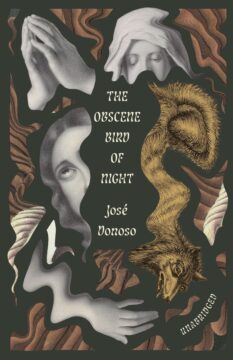 At the time of its initial publication in Spanish, José Donoso’s extravagantly grotesque novel The Obscene Bird of Night seemed to lend itself to a primarily political interpretation. It was 1970, and his native Chile was in the throes of the election campaign that resulted that September in the victory of Salvador Allende, the country’s first socialist president, and a sweeping effort to reorder its social and economic structures. Donoso’s novel read easily then as a deliberately outlandish allegory of the centuries of exploitation and oppression that were fueling Allende’s rise, and by the time the book appeared in English in 1973, the situation in Chile had cemented that impression: Allende and the transformation he sought were being besieged by the forces of reaction, and General Augusto Pinochet was soon to launch his bloody coup.
A half-century on, in a translation newly revised by Megan McDowell and with material excised from previous American editions now restored, Donoso’s novel registers very differently. A political interpretation is still possible, should one choose to lean in that direction, but The Obscene Bird of Night is too rich, deep, and complex to be confined to that single, limited view. In a time replete with manifold political monsters every bit as awful as those Donoso imagined, his novel also seems prescient in its presentation of gender, religion, and, above all, the anomie that results from the breakdown of the ties binding the individual and the community.
more here.
Enjoying the content on 3QD? Help keep us going by donating now.