
[Thanks to John Ballard.]
Category: Recommended Reading
the future

Although I’ve yet to see sandwich-board men on the steps of the nation’s capitol declaring that the end of the world is nigh, I expect that it won’t be long before the Department of Homeland Security advises the country’s Chinese restaurants to embed the alert in the fortune cookies. President Obama appears before the congregations of the Democratic faithful as a man of sorrows acquainted with grief, cherishing the wounds of the American body politic as if they were the stigmata of the murdered Christ. The daily newscasts update the approaches of weird storms, bring reports of missing forests and lost polar bears, number the dead and dying in Africa and the Middle East, gauge the level of America’s fast-disappearing wealth. Hollywood stages nostalgic remakes of the Book of Revelation; video games mount the battle of Armageddon on the bosom of the iPad. Nor does any week pass by without a word of warning from the oracles at the Council on Foreign Relations, Fox News, and the New York Times. Their peerings into the abyss of what to the Washington politicians are known as “the out years” never fail to discover a soon forthcoming catastrophe (default on the national debt, double-dip recession, global warming, nuclear proliferation, war in Iran) deserving the close attention of their fellow travelers aboard the bus to Kingdom Come. If the fear of the future is the story line that for the last ten years has made it easy to confuse the instruments of the American media with the trumpets of doom, the cloud of evil omens is not without a silver lining.
more from Lewis Lapham at Lapham’s Quarterly here.
Void darkness, Ginnungagap

Retelling a great myth is like performing a famous piece of music: between faithfulness to the familiar score and personal interpretation of it lie many risks and choices. Between the worldview of a Norse skald, or poet, and that of a writer ten or fifteen centuries later, the scope for risks and choices is immense. Ragnarök, A S Byatt’s contribution to the Canongate Myths series, is a brilliant, highly intelligent, fiercely personal rendition of the Scandinavian mythology. Its personal element has particular resonance for me because, like A S Byatt, I was a child during the Second World War. I, too, read the Norse myths, and like her I found they made sense of the strange world we were growing up in. But California was a long way from the north of England, and the versions of the story I knew were very different from hers. She read the translation of Wägner’s scholarly edition; I read Padraic Colum’s, written principally for younger readers. Colum gave the often incoherent material narrative shape, humanised its brutality to some extent, brought out its harsh humour, and told it in fine, clear prose. Byatt was dealing with something nearer the raw material. But we were both reading a story that moved inexorably through war towards doom.
more from Ursula K Le Guin at Literary Review here.
does Europe fail if the euro fails?

The reason this crisis keeps grinding ever deeper is because the euro itself is a machine for perpetual destruction. The currency is fundamentally warped and misaligned. It spans a 30pc gap in competitiveness between North and South. Intra-EMU current account deficits have become vast, chronic, and corrosive. Monetary Union is inherently poisonous. The countries in trouble no longer have the policy tools — interest rates, QE, liquidity, and exchange rates — to lift themselves out of debt-deflation. Just as they had few tools to prevent a catastrophic credit bubble during the boom. Their travails were caused in great part by negative real interest rates set by the ECB (irresponsibly) for German needs. Their fiscal deficits (and remember, Spain and Ireland ran big surpluses in the boom) have exploded because of the Great Recession itself — as they have in the UK, US, and Japan. Draconian fiscal tightening might be manageable for these countries if the Teutonic bloc is willing to offset the contraction in demand by cranking up their own stimulus, allowing the intra-EMU imbalances to close from both ends. But the Teutons instead cling to their pieties, and their morality tale. The result is the downward spiral that we can all see.
more from Ambrose Evans-Pritchard at The Telegraph here.
The decline of violence: Steven Pinker’s new book argues that the modern world is more peaceful, not less
From The Boston Globe:
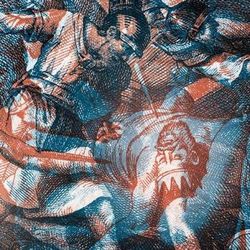
Steven Pinker used to wince at the carnage like everybody else, and wonder how the human race had managed to lose its way so horribly. Then, in 1989, he stumbled upon something remarkable: a graph in a history book, compiled by a political scientist named Ted Robert Gurr, showing that the homicide rate in England had declined sharply since the 13th century. Pinker was astonished. The rate had fallen in some areas by as much as one hundredfold. Could it be true, he wondered, that humans had actually become less violent with time, as opposed to more? And if so, how had we done it? Pinker, now a psychology professor at Harvard, was then a rising star at MIT known primarily for his work on how the mind processes language and vision. In the years after his eye-opening encounter with the Gurr graph, his interest in broader questions about human nature and the brain would lead him to write a series of bestselling books, including “How the Mind Works” and “The Blank Slate,” which helped establish him as one of the most recognizable public intellectuals of the past 20 years.
More here.
Experimental Error: Nobel Gas
Adam Rubin in Science:
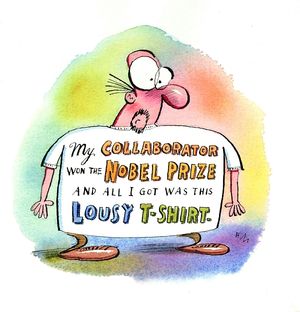
So I familiarized myself with the work that earned her the Nobel Prize: her co-discovery of telomerase, the enzyme that elongates telomeres within cells. But when we finally met, Dr. Blackburn threw me a curveball. Before I could say any of the intelligent scientific things I'd rehearsed, she told me that she'd read my book, which immediately filled me with shame, because my book is a comical guide to stealing free food in graduate school. I wondered whether I had negatively influenced the future of science by stealing time from a brilliant researcher, time she could have otherwise used to cure cancer. I imagined having to apologize to the world's cancer patients: “Sorry, guys. I know you were hoping for a cure, but I distracted the scientist who was your best hope with jokes about muffins.” Dr. Blackburn enjoyed the book, or at least she was nice enough to lie about it. “You're a very good writer,” she said, and that's exactly when my brain locked up. Knowing, at a primal level, that I ought to answer a compliment with a compliment, I said, “Thanks. You're … very good … at, uh, learning about … telomeres.” Then, following an awkward silence during which I realized I'd possibly just made the stupidest comment Dr. Blackburn had ever heard, someone else called her away to another part of the room.
More here.
Operation Twist and the Limits of Monetary Policy in a Credit Economy
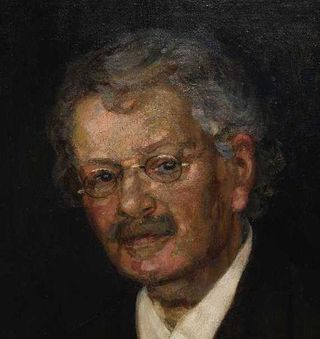
The conventional cure for insufficient aggregate demand and the one that has been preferred throughout the Great Moderation is monetary easing. The argument goes that lower real rates, higher inflation and higher asset prices will increase investment via Tobin’s Q and increase consumption via the wealth effect and reduction in rewards to savings, all bound together in the virtuous cycle of the multiplier. As I discussed in a previous post, QE2 and now Operation Twist are not as unconventional as they seem. They simply apply the logic of interest rate cuts to the entire yield curve rather than restricting central bank interventions to the short-end of the curve as was the norm during the Great Moderation.
But despite asset prices and corporate profits having rebounded significantly from their crisis lows and real rates now negative till the 10y tenor in the United States, a rebound in investment or consumption has not been forthcoming in the current recovery. This lack of responsiveness of aggregate demand to monetary policy is not as surprising as it first seems:
* The responsiveness of consumption to monetary policy is diminished when the consumer is as over-levered as he currently is. The “success” of monetary policy during the Great Moderation was primarily due to consumers’ ability to lever up to maintain consumption growth in the absence of any tangible real wage growth.
* The empirical support for the impact of real rates and asset prices on investment is inconclusive. Drawing on Keynes’ emphasis on the uncertain nature of investment decisions, Shackle was skeptical about the impact of lower interest rates in stimulating business investment. He noted that businessmen when asked rarely noted at the level of interest rates as a critical determinant. In an uncertain environment, estimated profits “must greatly exceed the cost of borrowing if the investment in question is to be made”.
If the problem with reduced real rates was simply that they were likely to be ineffective, there could still be a case for pursuing monetary policy initiatives aimed at reducing real rates. One could argue that even a small positive effect is better than not trying anything. But this unfortunately is not the case.
Tuesday, September 27, 2011
Facing down my eighth-grade tormentor
Steve Almond in Salon:
Really?
Yeah. It was mostly in this metal shop class we took together.
I definitely remember taking that metal shop class in eighth grade. And I was thinking about it, since you sent that original email, and I do remember being in a relationship with someone where I was the bully or the dominant, because I remember feeling that. But I never would have put two and two together and thought it was you.
I had this sense of being totally frozen out. And it was clear, or it seemed clear to me, that you were calling the shots. You were the alpha of that group.
It's funny you would say that, because this was around the time that Billy Dempsey entered the picture —
Yeah, I remember Billy coming up to me at the lockers, I think you were there for this, and threatening to kick my ass.
I don't remember that, but it wouldn't surprise me. The thing is, we had this very tortured relationship where I spent the entire time trying to prove myself to him. Billy was athletically more gifted than me and he was fearless and willing to get into fights with anybody, whereas I always saw myself as an egghead nerd. So it's quite possible, I could easily see, if there was an opportunity for me to prove to Billy that I was his equal in terms of being the macho guy I would have grabbed at it.
More here.
The Many Faces of Charles Dickens
From The Telegraph:
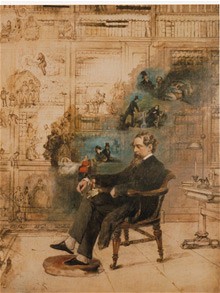
That doesn’t stop us trying. Next week sees the publication of my new biography Becoming Dickens, in which I investigate how in the space of five years an unknown reporter became the most famous novelist in the world. Within a few days it will be joined by Claire Tomalin’s cradle-to-grave Charles Dickens: a Life and Lucinda Hawksley’s more compact Charles Dickens, and later by Simon Callow’s book on Dickens’s love of the theatre. They will be followed by several documentaries, glossy BBC adaptations of Great Expectations and The Mystery of Edwin Drood, and a film about his lengthy secret affair with the actress Ellen Ternan. In 2012, his bicentenary year, Dickens’s face will be everywhere, his presence inescapable.
More here.
The Simplest Health Solutions? It’s Complicated
Abigail Zuger in The New York Times:

More here.
Regime Change Doesn’t Work
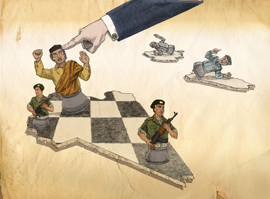
Beyond the question of whether it is wise for the United States to seek regime change in yet another country while it continues to clean up the mess from the last two, the Libya adventure begs a reconsideration of the wisdom of regime change in general. Focusing on consequences, I will steer clear of issues of legality and moral justification. Rather, I ask what the historical record tells us about the capacity of externally imposed regime change to bring peace, stability, and democracy to target countries. Is the bloody aftermath of regime change in Afghanistan and Iraq the exception or the rule? Does regime change work?
The short answer is: rarely. The reasons for consistent failure are straightforward. Regime change often produces violence because it inevitably privileges some individuals or groups and alienates others. Intervening forces seek to install their preferred leadership but usually have little knowledge of the politics of the target country or of the backlash their preference is likely to engender. Moreover, interveners often lack the will or commitment to remain indefinitely in the face of violent resistance, which encourages opponents to keep fighting. Regime change generally fails to promote democracy because installing pliable dictators is in the intervener’s interest and because many target states lack the necessary preconditions for democracy.
Gratitude and Forbearance: On Christopher Lasch
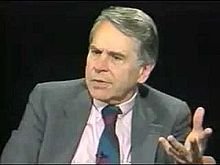
Born in Omaha in 1932, the year Franklin Roosevelt was elected president, Christopher Lasch graduated from Harvard in 1954, during the Eisenhower era’s mood of anxious complacency, and from there went directly to Columbia to do graduate work in history. Lasch’s career as a historian began as it would end forty years later with his death, with a search for the moral resources for the next New Deal. Lasch rejected the liberal history of Arthur Schlesinger Jr.—whose legitimation of the cold war he disliked, and whose view of the permanence of the New Deal’s achievements he found naïve. He learned much of modern social science as well as European political and social thought, and took psychoanalysis and theology seriously. He became one of the nation’s most prominent intellectuals, but he increasingly doubted the capacity of his colleagues to guide their fellow citizens. His first book, The American Liberals and the Russian Revolution, a critique of liberalism’s early capitulation to imperialism, sold a few hundred copies when it appeared in 1962. His next book was published three years later. Called The New Radicalism in America, 1889–1963: The Intellectual as a Social Type, it depicted intellectuals’ sometimes unintended subservience to power, and it made him famous. Lasch regarded his success in part as a burden, and throughout his life he would insist on the importance of his ties to family, friends, colleagues and students.
David Spiegelhalter on Statistics and Risk
Let’s have a look. First up is The Drunkard’s Walk by Leonard Mlodinow, which looks at how the mathematical laws of randomness affect our lives.
This is a general introduction to the history of probability and the way it comes into everyday life. It intersperses the historical development with modern applications, and looks at finance, sport, gambling, lotteries and coincidences.
It starts off with quotes from Cicero feeling that people were being misled by thinking that the gods influenced the throw of a die. Then it carries on through the early development of probability in the 16th century with [Italian Renaissance mathematician Gerolamo] Cardano. He threw two dice and looked at the distribution of the sum of the two faces. There was an incredibly popular game called Hazard where you threw two dice and betted on what the total would be. Amazingly, people had been gambling for centuries and had never realised you could do maths on gambling. Probability – which used to be known by the wonderful term “the doctrine of chances” – grew out of this.
the devil’s advocate
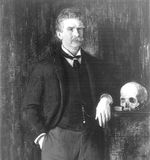
Cynicism, for Bierce, was not just an attitude; it was his life force. It’s ironic then that The Devil’s Dictionary is seen today primarily as a delightful little book of irreverent (if now anachronistic) witticisms. This is entirely Bierce’s fault. In life and in art, Bierce made it his prerogative to present himself as a Class A misanthropic know-it-all. Much of the real sensitivity and even anguish that produced The Devil’s Dictionary is obscured by an intentional ironic distance. By the time The Devil’s Dictionary was published, Bierce was 69. He had made a career as a curmudgeon, a writer with a big personality who always kept distance between himself and his public. He was famous for his motto “nothing matters” and was known as “Bitter Bierce.” Even his popular short stories, based on his experiences of the Civil War (see the classic “An Occurrence at Owl Creek Bridge”) were never autobiographical, never meant to bring readers closer to the man. He publicly attacked friends, employers, and of course, other writers. (Bierce had a literary run-in with Oscar Wilde once after the latter declared satire to be “as sterile as it is shameful, and as impotent as it is insolent.” Bierce responded in print with a torrent of insults, calling Wilde “a gawky gowk,” a “dunghill he-hen.” and the “littlest and looniest of a brotherhood of simpletons” who had “the divine effrontery to link his name with those of Swindburne, Rosetti and Morris.”) How could someone who addressed his book to “those…enlightened souls who prefer dry wines to sweet, sense to sentiment, wit to humor and clean English to slang” be taken all that seriously, especially by 21st-century readers? Today, The Devil’s Dictionary comes off as smart but smug. Who was Ambrose Bierce to pronounce such judgments on humanity?
more from Stefany Anne Golberg at The Smart Set here.
the pre-pre-raphaelite
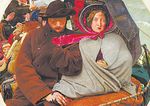
Most of what we associate with Victorian art is condensed into this picture: story-telling, social nuance, naturalism down to the last detail (“all the red-headed boys in Finchley” took turns sitting for the tousled ginger-haired child, for example, who appears as a mere fragment), humour (the cabbages dangling from the boat’s edge) balancing sentimentality, with the whole animated by vivid, piercing colour – the woman’s brilliant bonnet ribbon, fuchsia, crimson, mauve, magenta, fluttering across the picture; the deep maroon skeins of the deck rope – set against the grey wintry light and swell of a dull green sea. For the first time since this painting left Brown’s studio in 1855 it is shown here alongside a delicious preparatory oil sketch that reveals significant differences: the faces are finely featured, delicate as ivory and porcelain, rather than weather-beaten; textural details – an elaborate green and red embroidered shawl rather than the plain grey, for example – give a sumptuous surface sheen redolent of a Flemish miniature.
more from Jackie Wullschlager at the FT here.
Tuesday Poem
Postscript
And some time make the time to drive out west
Into County Clare, along the Flaggy Shore,
In September or October, when the wind
And the light are working off each other
So that the ocean on one side is wild
With foam and glitter, and inland among stones
The surface of a slate-grey lake is lit
By the earthed lightning of a flock of swans,
Their feathers roughed and ruffling, white on white,
Their fully grown headstrong-looking heads
Tucked or cresting or busy underwater.
Useless to think you'll park and capture it
More thoroughly. You are neither here nor there,
A hurry through which known and strange things pass
As big soft buffetings come at the car sideways
And catch the heart off guard and blow it open.
by Seamus Heaney
from The Spirit Level
publisher:Farrar, Straus and Giroux, 1996
paint speaking up for itself

Hals was an unusual artist in that, especially in the first half of his career, he was able to paint, with little or no coyness, people grinning, or being plain happy. The relative scarcity in the history of painting of people giggling or looking like they have just said or heard something tickling indicates how hard it must be for a painter to bring off such a thing. Hals’s images of laughter and mirth come across as being the underpinning of his approach. It is as if his work is based on a philosophical position, and he is saying, “We are alive, so how can we not be cheerful?” Far from all his people are effervescent. He was hardly a painter propounding a thesis. As Seymour Slive, our foremost authority on the artist, has suggested, Hals seems to have taken the key to each of his pictures from the nature of his encounter with the sitter. (Slive’s writings on Hals have the same warmth, directness, energy, and clarity that rise from the paintings.) The experience of the 1989 retrospective, which was largely Slive’s work and which can almost be recaptured in its catalog, where the reproductions are large and good, is that we are encountering a storehouse of subtle moods and expressions.
more from Sanford Schwartz at the NYRB here.
Monday, September 26, 2011
perceptions
Sunday, September 25, 2011
Crediting Poetry: Nobel Lecture by Seamus Heaney
From the Nobel winners' site:
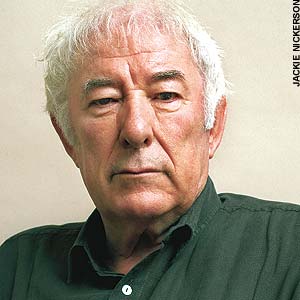
But it was not only the earth that shook for us: the air around and above us was alive and signalling too. When a wind stirred in the beeches, it also stirred an aerial wire attached to the topmost branch of the chestnut tree. Down it swept, in through a hole bored in the corner of the kitchen window, right on into the innards of our wireless set where a little pandemonium of burbles and squeaks would suddenly give way to the voice of a BBC newsreader speaking out of the unexpected like a deus ex machina. And that voice too we could hear in our bedroom, transmitting from beyond and behind the voices of the adults in the kitchen; just as we could often hear, behind and beyond every voice, the frantic, piercing signalling of morse code.
More here.
INTERVIEW WITH GIANNI VATTIMO AND SANTIAGO ZABALA, AUTHORS OF HERMENEUTIC COMMUNISM: FROM HEIDEGGER TO MARX
From Columbia University Press:
Question: Let’s talk about the structure of the book. Among the first things that come to mind looking at the table of contents is the balance among the two parts, four chapters, and twelve sections. Also, although all sections are the same length, chapters 2 and 4 contain many more notes than the other two chapters. Why is this?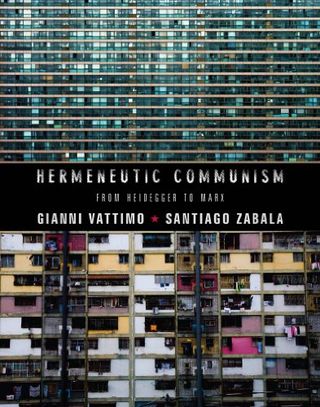
SV: Those chapters contain many more notes because we needed to justify with documents, articles, and other information some of our theses, for example, how Obama has increased military spending or Chávez has forced the oil industry to finance free health care for the poorest citizens of Venezuela. But if these chapters had to have more notes it’s also because they are the “ontic” sections of the book; that is, while chapters 1 and 3 are philosophical or ontological, chapters 2 and 4 are ontic or political. I’m not saying they could be read independently, but they correspond to each other. While part 1, “Framed Democracy,” is really a deconstruction of the “winners’ history,” that is, of the conservative realist positions of John Searle, Robert Kagan, and Francis Fukuyama, part 2, “Hermeneutic Communism,” outlines (through the work of Jacques Derrida, Richard Rorty, and others) how the “anarchic vein of hermeneutics” points toward a weakened communism.
More here.