The Science of Why We Don’t Believe Science

Chris Mooney in Mother Jones:

Truth_425x320A man with a conviction is a hard man to change. Tell him you disagree and he turns away. Show him facts or figures and he questions your sources. Appeal to logic and he fails to see your point.” So wrote the celebrated Stanford University psychologist Leon Festinger (PDF), in a passage that might have been referring to climate change denial—the persistent rejection, on the part of so many Americans today, of what we know about global warming and its human causes. But it was too early for that—this was the 1950s—and Festinger was actually describing a famous case study in psychology.

Festinger and several of his colleagues had infiltrated the Seekers, a small Chicago-area cult whose members thought they were communicating with aliens—including one, “Sananda,” who they believed was the astral incarnation of Jesus Christ. The group was led by Dorothy Martin, a Dianetics devotee who transcribed the interstellar messages through automatic writing.

Through her, the aliens had given the precise date of an Earth-rending cataclysm: December 21, 1954. Some of Martin's followers quit their jobs and sold their property, expecting to be rescued by a flying saucer when the continent split asunder and a new sea swallowed much of the United States. The disciples even went so far as to remove brassieres and rip zippers out of their trousers—the metal, they believed, would pose a danger on the spacecraft.

Festinger and his team were with the cult when the prophecy failed.

More here.

What are the chances of successful democratic transitions in Tunisia and Egypt?

Alfred Stepan in The Immanent Frame:

Power-of-revolution-300x180 What are the chances of successful democratic transitions in Tunisia and Egypt? I have just returned from both countries where many democratic activists shared notes with me about their situation, comparing it with the more than twenty successful and failed democratic transition attempts that I have observed throughout the world and written about.

The first reality to appreciate is that, despite worries about the incompatibility of Islam and democracy, over 500 million Muslims live in Muslim majority countries that are commonly classified as democracies: Indonesia, Turkey, Bangladesh, Senegal, Mali and Albania. But, for almost forty years, not a single Arab majority country has been classified as a democracy. Thus, if Arab-majority Egypt and Tunisia become democracies, it would thus be of immense importance for the Arab world and, indeed, for world affairs.

I believe Tunisia’s chances of becoming a democracy before the year ends are surprisingly good.

More here.

Friday, April 22, 2011

Evolution, Creationism, Templeton, Religion, Atheism, Dawkins, etc.

Nick Smyth in Yeah, OK, But Still:

ScreenHunter_04 Apr. 23 10.04 Take, for example, the concern with teaching creationism in schools. This, no doubt, is an important issue. As many remind us, it is important because a society (trivially) needs good education for its children. Yet, if this value forms the rationale for the massive amount of debate over intelligent design, why do we not see a similar mountain of discussion over, say, racial inequalities in early education? Or rapidly declining funding for public schools? Surely, these two issues alone constitute major threats to the quality of education in this country.

By comparison, as if, as if the educational health of children depended in some vital way on their acceptance of Darwinian biology or Intelligent Design Theory. Any idiot, let alone anyone who knows anything about education, will tell you that the vast majority of educational value is realized from the ages of 5-12, long before any child is able to take in upper-level biological theory. Participants in this debate should not be worried about whether students will read Darwin. They should be worried about whether they will be able to read Darwin.

More here.

The Perils of Metaphorical Thinking

Flying time Julia Galef over at Rationally Speaking:

[A] lot of recent research suggests that these metaphors operate below the level of conscious thought. In one study, participants who were asked to recall a past event leaned slightly backwards, while participants who were asked to anticipate a future event leaned slightly forwards. Other studies have shown that our metaphorical use of temperature to describe people’s demeanors (as in, “He greeted me warmly,” or “He gave me the cold shoulder”) is so deep-seated, we actually conflate the two. When people are asked to recall a time when they were rejected by their peers, and then asked to estimate the temperature of the room they’re sitting in, their average estimate is several degrees colder than that of people who were asked to recall being welcomed by their peers. And in one study that asked participants to read the dossier of an imaginary job applicant and then rate his or her personality, participants who had just been holding a hot object rated the imaginary applicant as being friendlier, compared to participants who had just been holding a cold object.

Another classic example is the “morality is cleanliness” metaphor. We talk about people having a clean record or a tarnished one, about dirty dealings and coming clean. And of course, religions are infused with this metaphor — think of baptism, the washing away of sin. One clever study published in Science in 2006 showed how deep-seated this metaphor is by dividing participants into two groups: those in the first group were asked to reflect on something virtuous they’d done in the past, and those in the second group were asked to reflect on a past moral transgression. Afterwards, each participant was offered a token gift of either a pencil or a package of antiseptic wipes. The result? Those who had been dwelling on their past wrongdoing were twice as likely to ask for the antiseptic wipes.

Associating the future with the forward direction and the past with the backwards direction seems pretty harmless. But cases like “morality equals cleanliness” start to suggest how dangerous metaphorical thinking can be. If people conflate dirtiness with immorality, then the feeling of “Ugh, that’s disgusting” becomes synonymous with the judgment, “That’s immoral.” Which is likely a reason why so many people insist that homosexuality is wrong, even though they can’t come up with any explanation of why it’s harmful — any non-contrived explanation, at least. As the research of cognitive psychologist Jonathan Haidt has shown, people asked to defend their purity-based moral judgments reach for logical explanations, but if they’re forced to admit that their explanation has holes, they’ll grope for an alternative one, rather than retracting their initial moral judgment. Logic is merely a fig leaf; disgust is doing all the work.

Treasure Hunt

Botton490x300NEW-thumb-490x300-1942 Alain de Botton in Lapham's Quarterly:

However powerful our technology and complex our corporations, the most remarkable feature of the modern working world may in the end be the widely held belief that our work should make us happy. Our choice of occupation is held to define our identity to the extent that the most insistent question we ask of new acquaintances is not where they come from or who their parents were but what they do, the assumption being that the route to a meaningful existence must invariably pass through the gate of remunerative employment.

It was not always this way. In the fourth century BC, Aristotle defined an attitude, which was to last almost two millennia, in the phrase “All paid jobs absorb and degrade the mind.” For the Greek philosopher, financial need placed one on a par with slaves and animals. The labor of the hands, as much as of the mercantile sides of the mind, would lead to psychological deformation. Only a private income and a life of leisure could afford citizens adequate opportunity to enjoy the higher pleasures of music and philosophy.

Early Christianity appended to Aristotle’s notion the still darker doctrine that the miseries of work are the appropriate means of expiating the sins of Adam. It was not until the Renaissance that new notes began to be heard. In the biographies of great artists, men like Leonardo da Vinci and Michelangelo, we hear early references to the glories of practical activity. While this reevaluation was at first limited to artistic work, and even then only to its most exalted examples, it came in time to encompass almost all occupations. By the middle of the eighteenth century, in a direct challenge to the Aristotelian position, Denis Diderot and Jean le Rond d’Alembert published their twenty-eight-volume Encyclopédie, filled with articles celebrating the particular genius and joy involved in baking bread, planting asparagus, operating a windmill, forging an anchor, printing a book, and running a silver mine. Accompanying the text were illustrations of the tools employed to complete such tasks, among them pulleys, tongs, and clamps, instruments whose precise purpose readers might not always understand, but which they could nonetheless recognize as furthering the pursuit of skillful and therefore dignified ends.

Patron Saints of Literary Gloom

Posessed The Economist reviews Elif Batuman's Possessed: Adventures with Russian Books and the People Who Read Them:

ACADEMICS are rarely reliable guides to literature. The magic that draws eggheads to certain books tends to get bludgeoned by theory, jargon and the need to be obscure. This is what makes “The Possessed” such a joy to read. In a handful of essays about Russian books and the people who read them (published in America last year), Elif Batuman, a Turkish-American professor with a doctorate from Stanford University, infectiously conveys the dreamlike inscrutability of Russian literature. With personal anecdotes about Tolstoy conferences, ice-castles in St Petersburg and a summer spent in Samarkand, she also captures the way life can be as mystifying and profound as these books.

Ms Batuman describes her route to a PhD in comparative literature with unusual verve. Perhaps this is because her explanation feels slightly defensive. An aspiring novelist, she had long assumed that fiction must come from experience, not from the study of other books. But there was something about Russian literature, indeed about “Russianness”, that tugged at her ever since her first violin lessons with a fascinatingly odd Russian man named Maxim. Something of a contemporary Eugene Onegin, Maxim wore black turtlenecks and appeared “deeply absorbed by considerations and calculations beyond the normal range of human cognition”. Mercurial and unpredictable, he was the kind of man who could only be explained by Pushkin or Tolstoy, if by anyone at all.

But it was at university that Ms Batuman came around to the idea that Russian — the language and the literature — was the best way to comprehend “the riddle of human behaviour and the nature of love”. When she describes the “otherworldly perfection” of “Anna Karenina”, her pulse quickens: “How had any human being ever managed to write something simultaneously so big and so small…so strange and so natural?” She marvels that the heroine doesn’t turn up until chapter 18, and the book goes on for 19 more chapters after her death. She recalls her first Russian- language textbook, which featured a story about a woman who goes to visit her boyfriend only to discover a note saying, “Forget me.” Intent on exploring how literature echoes and influences experience, is it any wonder that Ms Batuman chose to “immerse” herself in this world of compelling ambiguity?

What Makes a Riderless Bike Stable?

John Matson in Scientific American:

ScreenHunter_03 Apr. 22 15.13 Once rolling, bicycles can cover ground just fine on their own—no rider required—thanks to a property known as self-stability. If a bicycle starts to tip over, its front wheel turns into the fall, bringing the bike back into balance, just as a rider would do if he or she were behind the handlebars. Of course, that stability is missing when the bicycle is stationary—bicycles have a limited range of self-stable velocities within which they are able to regain their balance even if knocked sideways.

The question of how bicycles work—and what causes self-stability—has been around since the 19th century. Over the years, two main factors have emerged to explain a riderless bicycle's balancing act. One is the gyroscopic motion of the spinning front wheel; the other, a design feature known as trail, is the placement of the bicycle's steering axis so that the axis intersects the ground ahead of the point where the front wheel meets the ground. Both features act to couple the bicycle's steering to its leaning—if the bicycle tips rightward, it will steer to the right—allowing it to turn into a fall and remain upright.

But those two factors are not needed for a self-stable bicycle, as it turns out. In the April 15 issue of Science a team of researchers from the Netherlands and the U.S. describe an experimental bicycle that exhibits self-stability despite having neither trail nor a gyroscopic wheel.

More here.

Guilty or not – does it really matter?

Dawood Ahmed in Dawn:

Mortenson-290 Yes, Mortenson probably isn’t the angel many of us thought him to be; most people are not. Still, I do not think it is fair to jump on the moral policing brigade calling him a “daakoo” and condemning him to the shameful corridors of history when he probably got more done for the people of Baltistan than many of our countrymen would have if given the exact same opportunity and funds. Let’s be clear, the Pakistani complaint cannot be that he deceived us, it can only be that he claimed more success than he deserved. I am not in the least arguing that we should be blind to the truth or happily allow strangers to be deceived as long as it doesn’t affect us; all I’m saying is that we should really think long and hard before passing judgment on Mortenson when practically speaking, he has probably had a very positive social impact in a country which other foreigners have only very easily tended to dismiss as a lost cause, not worthy of their dime or time.

At such, I firmly believe we may be shooting ourselves in the foot by participating in this blame-game. If Mortenson is discredited and his organisation shuts down, we will gain nothing. Instead, we will suffer great harm by the sudden loss in whatever funding we receive from the Central Asia Institute. Rather as Pakistanis, our interests would be much better served by acknowledging this American’s contributions to our country, maintaining neutrality in this dispute but at the same time showing honesty by co-operating with investigations. In return we should use this opportunity strategically to negotiate for more transparency and a greater share of donations in the future.

More here.

Cameras capture the wonders of the underwater world

From MSNBC:

Gobi A fleeting encounter of two translucent goby fish has won the top prize at the 2011 Annual Underwater Photography Contest, hosted by the University of Miami. The winning photograph was of two tiny gobies, no bigger than an inch, spotted on a dive near Marsa Alam on Egypt's Red Sea coast. The sea creatures' quick get-together was captured by Tobias Friedrich of Germany. “I spotted the first goby and set up my camera for a close angle,” Friedrich said. “Slowly I was approaching the small fish so that it could fill out the picture a bit more. When I was ready for the shot, surprisingly, a second goby came out of nowhere and placed itself on top of the first one.”

More here.

The family that plays together stays together?

From PhysOrg:

Thefamilytha “Get off the computer and go play outside.” So go the words heard in homes around the country as parents and children clash over the social benefits of video games. But parents needn’t worry so much, according to Dr. Cuihua (Cindy) Shen, an assistant professor of Emerging Media and Communication at UT Dallas. Her recent research article in the Communication Research journal argues that online games can actually bolster family communication. “Even though most people think that spending large amounts of time playing online games can be harmful to one's social life, if people play online games with their existing friends and family, game play could actually enhance their social experiences,” Shen said. “An online game thus becomes an additional venue, albeit virtual, for socialization.” Shen surveyed more than 5,000 gamers about how they use the Internet, their specific activities in the virtual world and their psychosocial well-being for the article, “Unpacking Time Online: Connecting Internet and Massively Multiplayer Online Game Use With Psychosocial Well-Being,” co-written by Dmitri Williams.

According to the study, online games engage 76 percent of all teens and 23 percent of all adults in the United States. Of these games, networked games known as massively multiplayer online games (MMOs) are growing in popularity. The content of these games is based largely on social interactions, which supports the argument that new technologies create social augmentation, as opposed to displacement: “Not only could the Internet enhance one’s everyday communication with family and friends locally and over a distance,” wrote Shen, “it could also enlarge one’s existing social network by bringing together people with shared interest and values in virtual communities.”

More here.

A Baltimore Sun photographer who took a buyout, started a blog, and changed the photography business forever

Steven I. Weiss in Slate:

ScreenHunter_02 Apr. 22 13.11 At first glance, David Hobby looks like just another casualty of the decline of print media: A longtime staff photographer for the Baltimore Sun, he was one of many employees who accepted a buyout in 2008 as part of broad staff reductions at the distressed newspaper.

Yet last month he embarked on a sold-out, cross-country tour that will visit 29 cities. Approximately $1 million in tickets have been sold for the privilege of hearing Hobby and famed magazine photographer Joe McNally speak about their craft. Hobby's blog, Strobist, on which he teaches amateurs the lighting techniques used by professionals, welcomed 2 million unique visitors last year. (The largest professional photography association has a membership 1 percent of that size.) Manufacturers have named lines of equipment after him, an unheard-of honor.

How Hobby went from being a workaday newspaper photographer to an internationally recognized guru is a story tied up with seismic changes in the photography profession. By teaching a horde of novices the skills necessary to shoot photographs of a quality that was until very recently only within the grasp of an elite few, Hobby has played a significant role in the transformation of the profession. In the last few years, the market rate for many types of professional photographs has dropped by as much as 99 percent.

More here.

Thursday, April 21, 2011

Pakistan’s transgender tribe of tax collectors

From CNN:

ScreenHunter_01 Apr. 22 10.32 Miss your tax deadline in the United States this weekend, and you might get a nasty letter at your door. In Karachi, Pakistan's largest city, you might get Riffee and the gang. They are “transgender” tax collectors — whose weapons include flamboyancy, surprise — and a little lipstick.

In a move that speaks volumes about the lengths to which Pakistan is going to tackle tax evasion, Karachi officials are using Riffee – who like many people in South Asia works under a single name – and her team as enforcers with a difference. They are sent to the businesses or houses of debtors. The aim — in this very conservative Muslim society — to embarrass tax debtors into paying up.

Riffee — like her tax-collector friends Sana and Kohan — is physically a man, but prefers to be called and dress as a woman. Their job is quite simple: each morning they turn up to work and get a list of missed payments. One by one, they make house-calls, causing trouble at each debtor's home or office, trying to get them to pay up. It's not clear how effective this tactic is, but officials insist they would not do it if it did not work.

“Their appearance causes great embarrassment amongst the people,” said Sajid Hussein Bhatti, the tax superintendent who gives Riffee her orders every morning.

More here.

HE HAD SHAMAN’S EYES

Article

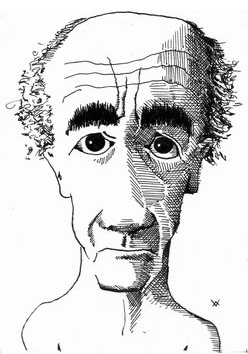
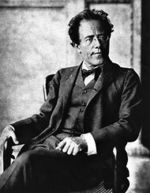
“GOD, PLEASE FUCK MY MIND FOR GOOD!” Captain Beefheart shouted at the end of Doc at the Radar Station, his second-to-last album. It was 1980, and it was a dare to whatever version of God might be present to receive it: his audience, maybe; music itself. Or it was a dare to time—the fifteen years since he’d made his first record, or the thirty years to come. Can you shut me up? Can you scramble my rhythm and my words until they’re a labyrinth I’ll never escape? I’ll do it first! His first record—a single that was cut in 1965 in Los Angeles, a street sign away from Glendale, where he was born Don Glen Vliet in 1941—was a huge, devouring version of Bo Diddley’s 1956 “Diddy Wah Diddy.” Diddy-WAHHHHHH, the by now renamed Don Van Vliet proclaimed, his voice lowering into a rumble that all but broke the needle on the recording console: “Ain’t no town, ain’t no city—” That was a dare: Wherever I go, I’ll leave confusion, awe, fear, and freedom in my wake. From Safe as Milk in 1967 to the double dare of Trout Mask Replica two years later, from Lick My Decals Off, Baby in 1970 through to Ice Cream for Crow in 1982, he performed as a crackpot, spouting riddles made out of puns, sketching conspiracy theories as winking and Grimms-like as the paintings—often featuring wisps of animal-human composites at once threatening and playful—that would occupy his last three decades. Legends surrounded him, stopping just short of claims that he’d been raised by wolves: that he ruled the musicians in his Magic Band like a cult leader, giving all of them new names, as if they had had no identity before him and would have none after; that he could predict when the telephone would ring, or make it ring to match his prediction. Nothing was so scary as the sense of certainty that drove his music like a stagecoach driver flashing his whip.

more from Greil Marcus at Artforum here.

the literature of cursi

Puig_ftr

Manuel Puig occupies a curious place in Latin American literature. Chronologically, he should be a member of the Boom generation, but he’s rarely included in the usual catalog of Boom writers (Gabriel García Márquez, Mario Vargas Llosa, Carlos Fuentes). This is not because he was less prominent, though since the 1980s his reputation has faded a little. His novels—especially Kiss of the Spider Woman (1976)—were internationally acclaimed and widely read. He was a genuinely popular writer while at the same time a radical innovator, with a subversive take on sexual and domestic affairs. Kiss of the Spider Woman was notorious for its frank depiction of a love affair between two prisoners; Betrayed by Rita Hayworth (1968) and Heartbreak Tango (1969), his first two novels, are kitschy tributes to the Argentina of his youth; his third, The Buenos Aires Affair (1973), is a frothy, Freudian noir. From the perspective of some critics, the trouble with Puig wasn’t that he wrote about homosexuals and housewives. It was that he didn’t write about them seriously. His protagonists weren’t so much persecuted heroes or twisted victims (though they were that, too) as they were creatures of sentiment—and, often, figures of fun. What disqualified Puig (implicitly) as a member of the Boom was his lack of gravitas, both in fiction and in life. In a New York Times review of Suzanne Jill Levine’s highly entertaining and essential biography, Manuel Puig and the Spider Woman: His Life and Fictions (2000), Vargas Llosa writes disapprovingly about what he sees as Puig’s lack of dedication to the world of books: “Of all the writers I have known, the one who seemed least interested in literature was Manuel Puig (1932–90). He never talked about authors or books, and when a literary topic came up in conversation he would look bored and change the subject.” As Francisco Goldman points out in his excellent introduction to Heartbreak Tango, one of three Puig novels recently reissued by Dalkey Archive, this was unfair and ungenerous. Of all the writers of the Boom, Vargas Llosa might have been expected to understand and appreciate Puig, because he too has occasionally embraced what might be called the literature of cursi.

more from Natasha Wimmer at The Nation here.

flattened and standardized

The_Nobel_Prize_736230a

A novelist is not famous today unless internationally famous, not recognized unless recognized everywhere. Even the recognition extended to him in his home country is significantly increased if he is recognized abroad. The smaller the country he lives in, the less important his language on the international scene, the more this is the case. So if for the moment the phenomenon is only vaguely felt in Anglophile cultures, it is a formidable reality in countries like Holland or Italy. The inevitable result is that many writers, consciously or otherwise, have begun to think of their audience as international rather than national. One can get a sense of the mindset behind this development by considering the changing profile of translation on the one hand and international literary prizes on the other. If a writer is to be projected on to the world stage, his work must be translated into a number of languages. If a certain amount of promotional hype is to be generated around a book, then the publisher will make sure that these translations are commissioned and completed in a number of territories more or less simultaneously and prior to the publication of the book in its country of origin. In this way the novel can be launched worldwide, something that increases its profile in each separate territory. Translation thus becomes an all-important part of the initial promotion of a novel, which may well find fewer readers in its original language than in its many translations. Yet translators are becoming less rather than more visible. Few readers will be aware who translates their favourite foreign novelist, even though that person will have a huge influence on the tone and feel of every page.

more from Tim Parks at the TLS here.

What exactly is India’s Pakistan policy?

Anjum Altaf in The South Asian Idea:

India-pack What exactly is India’s Pakistan policy? For years (decades, really) I have puzzled this over without being able to discern anything coherent. True, I am not privy to the inner councils of the Indian establishment but backward induction from observed actions does not seem to suggest I am grossly mistaken.

The Pakistani establishment, by contrast, has a very clear India policy: keep the pot boiling, engineering an incident when needed; bleed by a thousand cuts with the bleeding outsourced to third parties; shore up domestic support by transforming education and information into indoctrination; and minimize public contact across borders to prevent any erosion of the mythology.

India’s policy, at best, could be characterized as a reactive tit-for-tat illustrated poignantly by the exchange of helpless fishermen released from time to time by both sides after having languished pointlessly in jails for years. Yes, there is back-channel diplomacy, the occasional handshake over cricket, and citizen vigils but these hardly count as policy.

The question remains: what explains this lack of policy? I suppose one could find a rationale of the mindless tit-for-tat until, say, the end of the 1980s, in the general perception of equivalence between two poor countries but for the fact that India had six times as many people. That, however, is no longer the case – the trajectories have diverged markedly since then with India aspiring to be key global player within the century and Pakistan floundering to save itself from itself.

More here.

Mind Games

From Orion:

Mind AS PARENTS, we can only do so much to protect our children from the brain-disrupting chemicals that lurk in every part of the Earth’s dynamic systems— its water cycles, air currents, and food chains. Faith and Elijah spend their days in a school full of equipment and furniture that no doubt contain brominated flame retardants (which, according to a 2010 study published by the National Institute of Environmental Health Sciences, is linked to lower scores on tests of mental development among children exposed in utero). They ride home on a diesel-powered bus. They fly around town on bicycles — or scooters or skateboards— to flute lessons, piano lessons, the public library, passing by pesticide-treated fields and lawns as they go. And when we lie together in the dark at the end of the day, I sometimes wonder how their brain architecture might have been — might still be — irreversibly altered, even if only slightly, by brain-damaging chemicals that are still allowed to be manufactured and sold, that are constantly pouring out of smokestacks and tailpipes, that are used as ingredients in everything from lipstick to gasoline. I sometimes think about these things when I watch one or the other of them erase a hole through a frustrating homework assignment and start over again.

So don’t give me any more shopping tips or lists of products to avoid. Don’t put neurotoxicants in my furniture and my food and then instruct me to keep my children from breathing or eating them. Instead, give me federal regulations that assess chemicals for their ability to alter brain development and function before they are allowed access to the marketplace. Give me a functioning developmental neurotoxicant screening program, with validated protocols. Give me chemical reform based on precautionary principles. Give me an agricultural system that doesn’t impair our children’s learning abilities or their futures. Give me an energy policy based on wind and sun. Because I can do the thinking and research associated with making the right school choice for my children. I can help them with multiplication tables and subject-verb agreement. I can pack healthy school lunches. But I can’t place myself between their bodies and the two-hundred-plus identified neurotoxicants that circulate freely through the environment we all inhabit.

More here.

Gut study divides people into three types

From Nature:

Gut Just as there are a few major blood types that divide up the world, so too, a study has found, there are just three types of gut-microbe populations. The result could help to pinpoint the causes of obesity and inflammatory bowel disease, and to personalize medicine. “Canada, in March. Ehrlich, a senior researcher on the paper published in Nature today1, is director of the Microbial Genetics Research Unit at the National Institute for Agricultural Research in Jouy-en-Josas, France, and part of a European consortium aiming to unpick links between gut microbes and disease. The finding of just three types of gut-microbe population was an unexpected result that fell out of the team's early analysis. The types aren't related to age, gender, nationality or diet. “What causes it? We don't know,” says Ehrlich.

One possible explanation, which the team is testing, is that a person's gut-microbe make-up is determined by his or her blood type. Alternatively, it might be determined by metabolism: there are three major chemical pathways by which people get rid of excess hydrogen gas created during food fermentation in the colon, and the gut type might be linked to those. Or, perhaps the first microbes a baby is exposed to as his or her immune system is developing determines the type. A person's gut type might help to determine whether people can eat all they like and stay slim, whether they will experience more gut pain than others when sick and how well they can metabolize a certain drug.

More here.