Our Fantasy Nation?

Nicholas D. Kristof in the New York Times:

Kristof_New-articleInline-v2 With Tea Party conservatives and many Republicans balking at raising the debt ceiling, let me offer them an example of a nation that lives up to their ideals.

It has among the lowest tax burdens of any major country: fewer than 2 percent of the people pay any taxes. Government is limited, so that burdensome regulations never kill jobs.

This society embraces traditional religious values and a conservative sensibility. Nobody minds school prayer, same-sex marriage isn’t imaginable, and criminals are never coddled.

The budget priority is a strong military, the nation’s most respected institution. When generals decide on a policy for, say, Afghanistan, politicians defer to them. Citizens are deeply patriotic, and nobody burns flags.

So what is this Republican Eden, this Utopia? Why, it’s Pakistan.

More here.

looking behind the stuff and nonsense

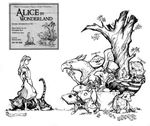
Alice in Wonderland 2

Of all the miracles that pinpoint the histories of our literatures, few are as miraculous as that of the birth of Alice in Wonderland. The well-known story is worth repeating. On the afternoon of July 4, 1862, the Reverend Charles Lutwidge Dodgson, accompanied by his friend the Reverend Robinson Duckworth, took the three young daughters of Dr. Liddell, Dean of Christ Church, on a three-mile boating expedition up the Thames, from Folly Bridge, near Oxford, to the village of Godstow. “The sun was so burning,” Alice Liddell recalled many years later, “that we landed in the meadows down the river, deserting the boat to take refuge in the only bit of shade to be found, which was under a new-made hayrick. Here from all three came the old petition of ‘Tell us a story,’ and so began the ever-delightful tale. Sometimes to tease us—and perhaps being really tired—Mr. Dodgson would stop suddenly and say, ‘And that’s all till next time.’ ‘Ah, but it is next time,’ would be the exclamation from all three: and after some persuasion the story would start afresh.” When they returned, Alice asked Dodgson to write out the adventures for her. He said he would try, and sat up nearly the whole night putting down the tale on paper, and adding a number of pen-and-ink illustrations; afterwards, the little volume, entitled Alice’s Adventures Underground, was often seen on the drawing-room table at the Deanery. Three years later, in 1865, the story was published by Macmillan in London under the pseudonym of “Lewis Carroll” and the title Alice’s Adventures in Wonderland.

more from Alberto Manguel at Threepenny Review here.

funnily enough

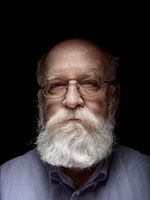
Dan+dennett+wired+portrait

“It’s funny because it’s true.” There are a lot of theories, like this one, that try to explain why we find things funny. But like the blind man’s description of the elephant, most of them are only partially right. In their recently published book Inside Jokes: Using Humor to Reverse-Engineer the Mind, Matthew Hurley, Daniel Dennett, and Reginald Adams Jr.—a cognitive scientist, a philosopher, and a psychologist—set out to discover a grand unified theory of humor. That theory would properly address questions such as: Why do only humans seem to have humor? Why do we communicate it with laughter? How can puns and knock-knock jokes be in the same category as comic insults? Why does timing matter in joke telling? And, of course, what are the necessary and sufficient conditions for a thing to be funny?

more from Nina Shen Rastogi at Slate here.

enter the inertwingularity

Intertwingled1

“Intertwingularity” is a term coined by Ted Nelson to express the complexity of interrelations in human knowledge. He wrote: “EVERYTHING IS DEEPLY INTERTWINGLED. In an important sense there are no “subjects” at all; there is only all knowledge, since the cross-connections among the myriad topics of this world simply cannot be divided up neatly…” And on that note, here are a bunch of “cross connections among a myriad of topics” that are very much not divided up neatly. The Noosphere and IDEA SEX: This “all knowledge” that Nelson refers to, akin to an invisible compendium of our collective intelligence, was coined by Pierre Teilharrd de Chardin as “the noosphere”, the ‘thinking’ layer of reality, sitting above the biosphere. If you want to experience this Noosphere directly, this trippy, numinous, truth-composite of the human species, all you have to do is visit a typical museum: art is the mirror we hold up to ourselves: yet more so than ordinary mirrors that only reflect our physical anatomy, museums reflect our psychic mind, our extended selves, they are a physical aggregate of the human species talking to itself at the highest levels, in real time.

more from Jason Silva at Big Think here.

Beyond Orientalism

Image Alexander Bevilacqua in n+1:

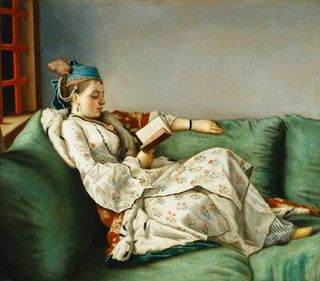
Many readers have been introduced to European–Near East relations by the books of Bernard Lewis and Edward Said, both of whom, albeit in very different ways, emphasized the missed opportunities and the lack of commensurability between European and Arab and Muslim societies. Despite decades of both sober criticism and seething polemic, the most frequently cited critical paradigm for examining East-West relations remains that of Said’s Orientalism (1978). Whatever Orientalism’s merits in explaining the 19th and 20th centuries, which are the book’s primary focus, for the period from the Renaissance to the French Revolution, Said’s model of intercultural relations is not a helpful or accurate explanatory device. In the early modern era, the balance of power had not yet tipped in Europe’s favor, and 19th- and 20th-century events were far from foreseeable. Today, thanks to several recent investigations by historians, it is possible to perceive a richer and more complex history, one that acknowledges both the animosities and the mutual attractions that brought Europeans and Ottomans into contact and exchange. Alongside the great military engagements of the early modern era, and before the very different ones of the 19th century, curiosity, imitation, and translation flowered.

Who created Ratko Mladic?

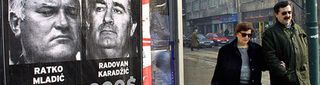
Mladic_poster_468x125 Slavenka Drakulic in Eurozine:

Ratko Mladic will now be judged in a court of law, which is the only way to determine whether an individual is guilty or innocent. But is his individual guilt – as well as that of other war criminals on all sides – all it boils down to? After the terrible wars that ravaged the former Yugoslav republics of Bosnia, Croatia and Kosovo, leaving at least 100,000 dead and a million homeless, can Mladic's trial be the end of the story?

n his first hearing in Belgrade, addressing the judge and all present, Mladic said “Don't blame me, it is you who elected Milosevic. Tko vam je kriv! (Who else is to blame!)” Certainly, he was trying to evade his own guilt by implying that he was only following orders. Although he rejected the authority of the ICTY and the charges against him, this will presumably be his line of defence. After all, Karadzic was his commander-in-chief as the president of Republika Srpska. But Mladic did have a point. If he is to be tried, what about citizens who repeatedly voted for Milosevic and Karadzic and their policies of nationalism, hatred and war? What about the responsibility of voters who, by casting their votes, made Mladic's war crimes possible? By sending him to The Hague, are they washing their own hands while marching towards the EU?

Is there such a thing as collective political responsibility? That is the question every side avoids asking. Certainly, it is impossible to talk of the collective guilt of an entire population, be it the Serbs or any other nation. But can the citizens of Serbia (or Bosnia or Croatia), who voted time and again for nationalist leaders who led them into destructive wars, truly believe that they had no part in the transformation of Mladic into a war criminal?

Bigness

799px-Women_of_Puducherry Isaac Chotiner reviews Patrick French's India: A Portrait, in TNR:

Patrick French’s India: A Portrait, which the author calls an “intimate biography of 1.2 billion people,” has received a number of hostile notices in the Indian press. As in the case of Slumdog Millionaire, many of the reviews seem concerned with the ways in which India is being interpreted. And a number of the criticisms lend credence to the notion that outsiders describing a foreign country are bound to be reprimanded. Pankaj Mishra, the first-rate novelist and essayist, has slammed French in two separate reviews, accusing him of ignoring India’s agricultural sector, minimizing the country’s widespread poverty, and making excuses for a new collection of oligarchs who seem completely uninterested in the welfare of the populace. French’s best chapter, on the nepotistic character of Indian politics, is dismissed by Mishra as being “blindingly plain” to any “sentient” observer. By this standard, French should not have written about impoverished Indians: Indian poverty is also blindingly plain to anyone who spends a day in the country.

But French’s book does exhibit some of the tendencies that have greeted the arrival of a “new” India with rose-tinted glasses. French, whose last effort was an astounding biography of V.S. Naipaul, is certainly aware of the dangers of writing about India, but he has trouble avoiding them. “Nearly everyone has a reaction to India, even if they have never been there,” he writes in his introduction.

They hate it or love it, think it mystical or profane; find it extravagant or ascetic; consider the food the best or the worst in the world. For East Asians, it is a competitor and a source of some of their own spiritual traditions. For Americans, it is a challenge, a potential hub of cooperation or economic rivalry—both countries are diverse and hulking, their national identities strong and to an extent constructed, their populations loquacious and outgoing and admiring of entrepreneurial success.

This cliché-ridden, Manichean passage begs several questions. For example, how many countries have unconstructed national identities? And how many travelers actually think the food in India is really the best or the worst in the world?

Trading Stories

Jhumpa Lahiri in The New Yorker:

Jhumpa In the fifth grade, I won a small prize for a story called “The Adventures of a Weighing Scale,” in which the eponymous narrator describes an assortment of people and other creatures who visit it. Eventually the weight of the world is too much, the scale breaks, and it is abandoned at the dump. I illustrated the story—all my stories were illustrated back then—and bound it together with bits of orange yarn. The book was displayed briefly in the school library, fitted with an actual card and pocket. No one took it out, but that didn’t matter. The validation of the card and pocket was enough. The prize also came with a gift certificate for a local bookstore. As much as I wanted to own books, I was beset by indecision. For hours, it seemed, I wandered the shelves of the store. In the end, I chose a book I’d never heard of, Carl Sandburg’s “Rootabaga Stories.” I wanted to love those stories, but their old-fashioned wit eluded me. And yet I kept the book as a talisman, perhaps, of that first recognition. Like the labels on the cakes and bottles that Alice discovers underground, the essential gift of my award was that it spoke to me in the imperative; for the first time, a voice in my head said, “Do this.”

As I grew into adolescence and beyond, however, my writing shrank in what seemed to be an inverse proportion to my years. Though the compulsion to invent stories remained, self-doubt began to undermine it, so that I spent the second half of my childhood being gradually stripped of the one comfort I’d known, that formerly instinctive activity turning thorny to the touch. I convinced myself that creative writers were other people, not me, so that what I loved at seven became, by seventeen, the form of self-expression that most intimidated me.

More here.

So Much More Than Plasma and Poison

Natalie Angier in The New York Times:

Jelly Among nature’s grand inventory of multicellular creatures, jellyfish seem like the ultimate other, as alien from us as mobile beings can be while still remaining within the kingdom Animalia. Where is the head, the heart, the back, the front, the matched sets of parts and organs? Where is the bilateral symmetry? Yet if any taxonomic dynasty is entitled to the originalist mantle, to the designation of genuine emblematic earthling animal, and also to brand the rest of us the alien arrivistes, it is the jellyfish. A diverse group of thousands of species of gooey, saclike invertebrates found throughout the world, the jellyfish are preposterously ancient, dating back 600 million to 700 million years or longer. That’s roughly twice as old as the earliest bony fish and insects, three times the age of the first dinosaurs.

“Jellyfish are the most ancient multiorgan animal on earth,” said David J. Albert, a jellyfish expert at the Roscoe Bay Marine Biological Laboratory in Vancouver, British Columbia.

More here.

Monday, June 6, 2011

Sunday, June 5, 2011

Imprisonment and the Lash

OB-OD534_0602fl_G_20110602121552 Peter Moskos in the WSJ (via Crooked Timber):

Not too long ago, in 1970, America had 380,000 incarcerated people. That was considered normal. Today, thanks in large part to a misguided war on drugs and get-tough sentencing laws, there are 2.3 million Americans behind bars. Something has gone terribly wrong. Never in the history of the world has a country locked up so many of its people. We have more prisoners than soldiers. We have more prisons than China, and they have a billion more people than we do.

The problem is so abysmal in California that the Supreme Court ordered 33,000 prisoners to be housed elsewhere or released. But even this is a drop in the bucket, compared to what is needed to bring our levels of incarceration back to what is acceptable for a free and civilized republic. Were California to return to its 1970s rate of incarceration, it would have to release more than 120,000 criminals.

Today’s prison reformers—and I wish them well—tinker with the machinery of incarceration while being dismissed too readily as soft on criminals. And even the most progressive reformer has no plan to reduce our prison population by 85%. I do: let’s bring back the lash.

If you think flogging is too cruel to even consider, what would you do if given the choice between five years in prison and 10 brutal lashes? You’d probably choose the lash. Wouldn’t we all? What does that say about prison?

We should offer criminals the choice between the status quo of prison and being caned, Singapore-style. If flogging were really so horrible, nobody would choose it. But of course most people would. And that’s my point. I defend flogging because something radical is needed to reduce the cruelty of incarceration.

Bulb In, Bulb Out

Mag-05lightbulb-t_CA0-articleLarge Andrew Rice in the NYT Magazine:

Over the past few years, in conditions of strict secrecy, a multinational team of scientists has been making a mighty effort to change the light bulb. The prototype they’ve developed is four inches tall, with a familiar tapered shape, and unlighted, it resembles a neon yellow mushroom. Screw it in and switch it on, though, and it blazes with a voluptuous radiance. It represents what people within the lighting industry often call their holy grail, an invention that reproduces the soft luminance of the incandescent bulb — Thomas Edison’s century-old technology — but conforms to much higher standards of energy efficiency and durability. The prototype is supposed to last for more than 22 years, maybe as long as you own your house, so you won’t need to stock up at the supermarket. And that’s fortunate, because one day very soon, traditional incandescent bulbs won’t be available in stores anymore. They’re about to be effectively outlawed.

As a consumer product, light bulbs belong to what one industry executive calls a “low-thought category,” and yet, of late, they’ve become a surprising flash point. Conservatives like Rush Limbaugh have denounced the “light-bulb ban” — actually, a new set of federal efficiency regulations that the traditional incandescent can’t meet — as a symbolic case of environmentalist overreaching, and Michele Bachmann invoked it in the Tea Party’s response to the State of the Union. Wherever your political sympathies lie, you may have found yourselves nodding along with Representative Joe Barton, a Texas Republican who has lambasted the harsh glare given off by those “little, squiggly, pigtailed” compact fluorescents. When it comes to making light, a fundamental necessity of human civilization, libertarians and aesthetes are joined in an unlikely alliance. Environmental groups say the complainers are a cranky minority — that consumers will eventually get used to new light — but those in the illumination business can’t afford to be so sanguine.

Morality Without “Free Will”

Boyballoon Sam Harris over at his blog (via Andrew Sullivan):

We are conscious of only a tiny fraction of the information that our brains process in each moment. While we continually notice changes in our experience—in thought, mood, perception, behavior, etc.—we are utterly unaware of the neural events that produce these changes. In fact, by merely glancing at your face or listening to your tone of voice, others are often more aware of your internal states and motivations than you are. And yet most of us still feel that we are the authors of our own thoughts and actions.

The problem is that no account of causality leaves room for free will—thoughts, moods, and desires of every sort simply spring into view—and move us, or fail to move us, for reasons that are, from a subjective point of view, perfectly inscrutable. Why did I use the term “inscrutable” in the previous sentence? I must confess that I do not know. Was I free to do otherwise? What could such a claim possibly mean? Why, after all, didn’t the word “opaque” come to mind? Well, it just didn’t—and now that it vies for a place on the page, I find that I am still partial to my original choice. Am I free with respect to this preference? Am I free to feel that “opaque” is the better word, when I just do not feel that it is the better word? Am I free to change my mind? Of course not. It can only change me.

There is a distinction between voluntary and involuntary actions, of course, but it does nothing to support the common idea of free will (nor does it depend upon it). The former are associated with felt intentions (desires, goals, expectations, etc.) while the latter are not. All of the conventional distinctions we like to make between degrees of intent—from the bizarre neurological complaint of alien hand syndrome to the premeditated actions of a sniper—can be maintained: for they simply describe what else was arising in the mind at the time an action occurred. A voluntary action is accompanied by the felt intention to carry it out, while an involuntary action isn’t. Where our intentions themselves come from, however, and what determines their character in every instant, remains perfectly mysterious in subjective terms. Our sense of free will arises from a failure to appreciate this fact: we do not know what we will intend to do until the intention itself arises. To see this is to realize that you are not the author of your thoughts and actions in the way that people generally suppose. This insight does not make social and political freedom any less important, however. The freedom to do what one intends, and not to do otherwise, is no less valuable than it ever was.

While all of this can sound very abstract, it is important to realize that the question of free will is no mere curio of philosophy seminars. A belief in free will underwrites both the religious notion of “sin” and our enduring commitment to retributive justice.

Sunday Poem

I Try To Wake You In The Dark

I try to wake You in the dark.
From Mecca or Jerusalem.
I try to wake You in the dark.

But You've been sleeping alone on dark stones.
Who knows for how long. In Mecca
or perhaps Jerusalem. Some say
millennia.
Or much longer.

But stubborn me, I still try.
I don’t give up. I'm still trying,
giving it my all, in the dark,
to wake You up.

From Mecca or Medina.
Jerusalem or Hebron.

Can You hear my voice
in the dark? To the right, down
there, in the tunnel?

Can You see me?
A tender youth, in the dusk
of madness?

Because all through the night
I have been throwing words at You,
expecting You.
In vain.

From Mecca or Medina.
Jerusalem or Hebron.

Perhaps some of the words hurt Your feelings?
Forgive me. I am only trying.
Perhaps millennia or more have passed.
In the dark. To wake You up.
With great tenderness.

Now,
from Jerusalem,

or

from Mecca.

Because if You awaken,

spontaneously, with a smile,
as my heart predicted,
You will say

suddenly:
Where art thou?

by Admiel Kosman
from Alternative Prayerbook
publisher: Hakibbutz Hameuchad,
Tel Aviv © 2007
translation by Lisa Katz and Shlomit Naor
© 2010

Life After Kevorkian

William Saletan in Slate:

Kevo Jack Kevorkian is dead. He didn't kill himself. But after years of failing health, he received his own medicine: a merciful end. He was 83. So was my father. Two months ago, my dad passed away. Like Kevorkian, he had cancer. He saw the end coming. He rejected chemotherapy, turned to hospice care, and went home to die. I spent weeks with him. He was at peace with the prospect of oblivion. Two weeks before he died, a group of friends came over to toast him. They said they were really going to miss him. “Well,” my dad joked, “Since I don't believe in an afterlife, I'm not going to miss you.”

Death was OK. But suffocation wasn't. His body, filling up with cancer, couldn't breathe. I saw the anxious look in his eyes, heard the plaintive tone as he asked the nurse for a little extra morphine. She stared back, gauging him. This, I learned, is what good caregivers do. They don't shut you down or hasten your death the first time you ask. They want to be certain you need it. They want to make sure that what's coming out of your mouth is your will, not just a moment of panic.

I always thought Kevorkian was basically right about assisted suicide.

More here.

God Bless You, Mr. Greybeard

Bill Moyers interviews Jane Goodall in Guernica:

Goodall-300 When Jane Goodall walked into the building for this interview, faces lit up. Our security chief told me she does animal rescue work after hours because of Goodall. Our stage manager whispered into my ear, “She’s been my hero for decades.” And the nine-year-old daughter of our video editor hurried into the studio because she was writing a school report on Goodall (she got an A, by the way). Everyone was aware of who Jane Goodall is or what she has done to close the gap between the animal world and our own species. Goodall herself evolved from a youthful enthusiast of animals—inspired by her father’s gift to her of a toy chimpanzee he named Jubilee—to the world’s most noted observer of chimpanzees and a global activist for all of life on earth. Through a chain of unintended consequences, the young Goodall met the famous anthropologist Louis Leakey in Kenya, was hired as his secretary, and then was sent into the forest as his primary researcher on chimps. Over many years in the Gombe Stream National Park, she came to know her subjects as individuals with distinct personalities, and with social and family lives shaped by their emotions, as are our own. Her landmark studies diminished the distance between human and nonhuman, and her television specials were so popular it became easy to think all of us had grown up with her and the chimps.

Bill Moyers: This life you’re living now is such a contrast to the life of the Jane Goodall we first met many years ago, living virtually alone in the forest in the company of chimpanzees, sitting for hours quietly taking notes, observing. And now, three hundred days a year, you’re on the road. You’re speaking. You’re lobbying. You’re organizing. Why? What’s driving you?

Jane Goodall: It actually all began in 1986. In the beginning of the year, I was in my dream world. I was out there with these amazing chimpanzees. I was in the forests I dreamed about as a child, I was doing some writing and a little bit of teaching once a year. And then this conference in Chicago brought together the people who were studying chimpanzees across Africa and a few who were working with captive chimps, noninvasively. We were together for four days and we had one session on conservation. And it was so shocking to see, right across the chimpanzees’ range in Africa, forests going, human populations growing, the beginning of the bushmeat trade, the commercial hunting of wild animals for food, chimpanzees caught in snares, population plummeting from somewhere between one and two million at the turn of the last century to at that time, about 400,000. So I couldn’t go back to that old, beautiful, wonderful life.

More here.