From Guardian:

A tall, well-built man in a brown uniform was waiting at her door. He seemed surprised when he saw her—she was usually at work at this time of day.
More here.

From Guardian:
A tall, well-built man in a brown uniform was waiting at her door. He seemed surprised when he saw her—she was usually at work at this time of day.
More here.
From American Scientist:
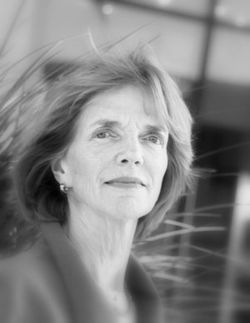
I work at the interface of philosophy and neuroscience. I call this endeavor “neurophilosophy,” and in 1986 I published a book with MIT Press by that name. My aim is to explore how developments in neuroscience bear upon traditional philosophical questions, such as: What is the self? Where do values come from? How does the brain cause consciousness? Owing to the tremendous growth in neuroscience, neurophilosophy has now become a flourishing subfield. The crux of my hypothesis is that neuroscience tells us some essential things about the basic platform for morality, but that there is much that arises from problem-solving in a social context, where solutions become social practices that become part of culture.
What books are you currently reading (or have you just finished reading) for your work or for pleasure? Why did you choose them, and what do you think of them?
I am reading Mao's Great Famine: The History of China's Most Devastating Catastrophe, 1958-1962, by Frank Dikötter (Walker, 2010). I am fascinated by history, and I was stunned to learn how callous and brutal Mao was. Tens of millions of people starved to death during Mao's attempt to restructure Chinese life according to his ill-informed fantasies. I have just finished reading Talking to the Enemy (Ecco Press, 2010), by Scott Atran, an anthropologist who has spent his research life in the Middle East and who has the most up-to-date and educated understanding of Islamic extremists.
When and where do you usually read (specific location, time of day, etc.)?
We have a comfy La-Z-Boy couch with a footrest that flips up. I have been known to read there just about any time of day. Because I travel a lot, I have lots of good things on my iPad, such as The Recursive Mind, by Michael Corballis (Princeton University Press, 2011).
Who are your favorite writers (fiction, nonfiction or poetry)? Why?
I find myself drawn to history and biography more than to fiction, though as an adolescent I was devoted to fiction — first Nancy Drew, but then George Eliot, W.M. Thackeray and Anthony Trollope. When we first moved to the United States from Canada, I realized that to understand my new country, I needed to understand the Civil War. And for two years, my extra-neuroscience reading was all about the Civil War. I was riveted, not by the battles, but by the run-up to the war, and by the period following the war. I also love the history of science, e.g. T. H. Huxley's account of William Harvey's discovery of the circulation of the blood; Sherwin Nuland's book The Doctor's Plague: Germans, Childbed Fever and the Strange Story of Ignác Semmelweis (W.W. Norton, 2003) and The Hidden Structure: A Scientific Biography of Camillo Golgi, by Paolo Mazzarello (Oxford University Press, 1999). In fiction, I love George MacDonald Fraser's Flashman series. When I need to be distracted, they always do the job. They are witty, rollicking and full of fascinating historical and cultural details, with just enough skullduggery and derring-do to hold one's attention.
What are the three best books you've ever read? Explain.
1. David Hume's A Treatise of Human Nature (1739) is profound and beautiful and still makes the best sense of morality. Hume understood social behavior, its underpinnings and its relation to social institutions and practices. I still go back to it again and again.
2. Macbeth, by William Shakespeare. Yes, I know it is a play, but I read it in high school, memorized most of it and pondered its meaning for politics, life and morality. I still do.
3. All the King's Men, by Robert Penn Warren (1946). The movie version, starring Sean Penn, is also wonderful.
More here.
March over to Europe to gawk at its churches and what are you told? The tour guides, the tour-guiding priests—they tell you that the greatest cathedrals are left unfinished, and do you know why? Don’t be afraid to raise a hand. The answer is because God’s work is unfinished—because we are unfinished. Most novelists have to die to leave behind their unfinished cathedrals. Think of Kafka, consigning his conclusionless books to the fire. Think of Robert Musil, who struggled with an epilogue to The Man Without Qualities, producing instead a second volume that sprawls next to the first like a chapel abandoned when the money ran out. Not many writers manage to make, or even aspire to make, that conscious perfect ruin. But with Parallel Stories, which will be published here this November, Hungarian Péter Nádas has done just that: He’s completed, or rather incompleted, an ornate secular monstrosity that must rank as one of his country’s strangest, most ambitious literary achievements. Parallel Stories is a European relic not just aware of but positively evangelical about its own timelessness. “To have inspiration for the future, you go much farther back, all the way to Plato or Homer,” Nádas tells me from his house in rural Gombosszeg, Hungary. “They are present-day authors, no older than Don DeLillo. Why wouldn’t Musil, Mann, or Broch be my contemporaries?”
more from Joshua Cohen at New York Magazine here.
In German, there are two words—three even. Enthusiasmus, like the English enthusiasm, is rooted in the Greek “en theos,” to have the god within, to be inspired by god or the gods. But Enthusiasmus was inadequate to contain the sixteenth-century German reformer Martin Luther’s rage against those who purported to receive direct divine inspiration. For them, he coined the term Schwärmer, from the verb schwärmen, to swarm, as in the swarming of bees. The Schwärmer were those, like the so-called Zwickau prophets, Nicholas Storch, Thomas Drechsel, and Marcus Thomas Stübner, who claimed to have direct revelations from the Holy Spirit, or Thomas Müntzer, who insisted that direct revelation and prophecy continued to occur in history. For Müntzer religious radicalism and political radicalism went hand in hand; the new prophecies and apocalyptic revelations he proclaimed called for the re-ordering of society, and not just of the church. In denouncing Müntzer, the Zwickau prophets, and others as Schwärmer, Luther rejected not only claims to continuing revelation, but also the forms of religious and political agitation to which he believed such claims gave rise. To be a Schwärmer, most often translated as enthusiast or fanatic, was to be ungovernable by either human or God.
more from Amy Hollywood at Immanent Frame here.
Hugh Kenner said it was the most hermetic poem in the English language. Robert Creeley called it “art . . . without equal.” My friend Jared White, a poet and a bookseller, calls it the Book Group Killer. James Laughlin, the founding publisher of New Directions Press, called it “a great poem really rolling in all its power and splendor of language”—and yet he declined to publish it. I’m talking, of course, about “A,” Louis Zukofsky’s erstwhile pillar of American Modernist poetry, in and out of print for years but recently reissued by New Directions. The NDP edition is a paperback original with a fine and thorough introduction by the Zukofsky scholar Barry Ahearn. It is the first edition of the full poem to be published by a non-university press (the two previous editions were from the University of California Press in 1978 and Johns Hopkins University Press in 1993) and has a yellowed white cover that seems to say, “This is how discolored with age this book would be if we had published it when we should have.” It is not a handsome look, but it does neatly sum up the problem of approaching “A,” and perhaps Zukofsky in general: how to foment the re-discovery of something that never quite had a proper heyday in the first place? Neither Zukofsky nor “A” has any real claim on the public imagination. Even among poets he doesn’t seem to be much read, discussed, or taught, except by a handful of deeply entrenched partisans. I started to investigate whether—and why—this might be the case, but then I realized that I was squandering a huge opportunity.
more from Justin Taylor at Poetry here.
Katrina vanden Heuvel in The Nation:
Executive Excess 2011: The Massive CEO Rewards for Tax Dodging reveals that last year twenty-five of the 100 most highly paid CEOs took home salaries greater than the amount their companies paid in 2010 federal income taxes. And it wasn’t because the corporations weren’t making dough—they averaged global profits of $1.9 billion, and only seven reported losses in US pre-tax income.
But these twenty-five companies shielded their profits in 556 tax haven subsidiaries in places like the Cayman Islands, Isle of Man, and Singapore, which proved to be a lucrative tax dodging strategy for the CEOs themselves: the twenty-five CEOs averaged $16.7 million in compensation, compared to $10.8 million for their peers in the S&P 500.
“What we’re seeing here is tax dodging, pure and simple,” says Sarah Anderson, who directs the global economy project at IPS and has coauthored the Executive Excess report for eighteen years running. “And tax dodging that’s benefiting the CEOs of these companies personally.”
More here.
Chris Mohr in Skeptic:

What follows is a brief summary of Gage’s points and my rebuttals to them.
1. EXPLOSIVE DEVICES WERE CAREFULLY AND SECRETLY PLANTED IN THE WTC BUILDINGS.
You cannot secretly prepare a controlled demolition of the two World Trade Center buildings containing 50,000 workers, plus extensive security systems and guards, working round the clock, without anyone noticing anything unusual. Instead, we should accept at face value what we all witnessed: two massive jets that slammed into the buildings, damaging the structures and setting off raging fires and igniting more than 40,000 square feet of office space per floor in a matter of seconds, igniting furniture, carpeting, desks, paper, etc. You cannot control the area around such a raging fire to start a demolition.
More here.
Noam Chomsky in the Boston Review:
In 1967, writing about the deceit and distortion surrounding the American invasion of Vietnam, I discussed the responsibility of intellectuals, borrowing the phrase from an important essay of Dwight Macdonald’s after World War II. With the tenth anniversary of 9/11 arriving, and widespread approval in the United States of the assassination of the chief suspect, it seems a fitting time to revisit that issue. But before thinking about the responsibility of intellectuals, it is worth clarifying to whom we are referring.
More here.
From Salon:

According to Cathy N. Davidson, a professor of interdisciplinary studies at Duke University, and the author of the new book “Now You See It: How Brain Science of Attention Will Transform the Way We Live, Work, and Learn,” much of the panic about children's shortened attention spans isn't just misguided, it's harmful. Younger generations, she argues, don't just think about technology more casually, they're actually wired to respond to it in a different manner than we are, and it's up to us — and our education system — to catch up to them. Davidson is personally invested in finding a solution to the problem. As vice provost at Duke, she spearheaded a project to hand out a free iPod to every member of the incoming class, and began using wikis and blogs as part of her teaching. In a move that garnered national media attention, she crowd-sourced the grading in her course. In her book, she explains how everything from video gaming to redesigned schools can enhance our children's education — and ultimately, our future.
More here.
From Smithsonian:
It wasn't until he failed as an artist that Morse revolutionized communication by inventing the telegraph:
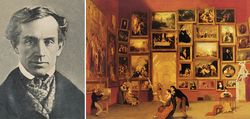
Working on a 6- by 9-foot canvas, Morse would execute an interior view of a chamber in the Louvre, a space containing his scaled-down survey of works from the 16th, 17th and 18th centuries. Not even the threat of a cholera outbreak slowed his pace. On October 6, 1832, Morse embarked for New York, his unfinished painting, Gallery of the Louvre, stowed securely below deck. The “splendid and valuable” work, he wrote his brothers, was nearing completion. When Morse unveiled the result of his labors on August 9, 1833, in New York City, however, his hopes for achieving fame and fortune were dashed. The painting commanded only $1,300; he had set the asking price at $2,500. Today, the newly restored work is on view at the National Gallery of Art in Washington, D.C. through July 8, 2012. In the six years since Morse had left Paris, he had known seemingly endless struggles and disappointments.
More here.
Sorry for the slight delay in the opening of the voting round.
The period for nominating entrees for the 3QD Philosophy Prize is over.
To browse the full list of the nominees and then vote, go here.
Good luck to all! The voting round closes on Sunday, September 11, 2011, at 11:59 pm NYC time.
Elizabeth Weingarten in Slate:
According to the Bible, Hagar was an Egyptian slave sent to the bed of her master, Abraham, by his barren wife, Sarah. When Hagar became pregnant with Ishmael—who would become Abraham's heir—the formerly submissive servant turned haughty and began to treat Abraham's lawful wife with “contempt.” Sarah punished Hagar for her attitude and sent the slave packing. (An angel of God eventually persuaded a chastened Hagar to return to the couple.) Several years later, after God restored Sarah's fertility and she gave birth to Isaac, Sarah began, once again, to fiercely resent her husband's concubine. “Cast out this slave woman with her son!” she demanded of Abraham. In an instant, Hagar was banished a second time. Her lesson: Any power she had ever acquired was ephemeral, contingent on factors beyond her ability to please her lover or bear him a healthy son. The mistress's pride was no match for the wife's wrath.
Several millenniums later, the mistress remains a tenuous position, as historian Elizabeth Abbott explores in her new book, Mistresses: A History of the Other Woman, out this week. Since Hagar's era, however, a handful of women have learned to parlay their scandalous relationships into positions of power—and some have changed history in doing so.
More here.

Not to mention that bin Laden was killed in his hiding place in Pakistan, a nation that the Bush administration had befriended after 9/11 by lifting the sanctions previously imposed in retaliation for Pakistan’s nuclear weapons program, a program connected with the proliferation of nuclear weapons know-how and the sale of nuclear material to North Korea, Libya and Iran.
Pakistan joined with only two other nations, Saudi Arabia and the United Arab Emirates, in granting diplomatic recognition to the Taliban government that provided a safe haven for Al Qaeda as bin Laden orchestrated the 9/11 attack. But instead of focusing on the source of the problem, Cheney led the effort to overthrow Saddam Hussein, who had ruthlessly hounded any Al Qaeda operatives who dared function in Iraq.
You don’t have to slog too deeply through Dick Cheney’s advertisement for himself to grasp not only the wicked cynicism of the man but also how shallow are his perceptions.
More here.
Facing stiff competition from Salman Khan’s Bodyguard on Eid, Pakistani film Bol is managing to hold its own thanks to the word of mouth publicity.
Rawinder Bawa in Dawn:

For starters, there is actress Vidya Balan who says, “Loved Bol! Love the performance of the father. The boy who played Saifuddin was cute. My heart went out to him.”
As one of the audience members, Tushar Pahwa, walking out after a show puts it, “Bol is a ubiquitous film- whether a Muslim family in Lahore or a Hindu family in Bihar, everyone can relate to it. Women and transgenders are disrespected in India and Pakistan both. I just hope people start to speak up after watching the movie. It was a good gift for Eid.”
Many have given the tickets to family and friends in beautiful gift envelopes as eidi. “This was my eidi to my sister The film’s message has been well received and I felt my sister must see this movie as an example,” says Shahnawaz Siddique, a shop keeper.
More here.
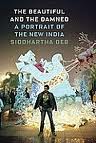
India’s economic ascent has launched a flurry of books, most of them touting neoliberalism’s power to not only propel the country out of poverty but to chase away its unsightly caste and class divisions, its nasty penchant for pogroms and female feticide. Siddhartha Deb’s very fine The Beautiful and the Damned tells a darker story, focusing on the boom’s seamy side: the scoundrels and profiteers, and the millions of farmers and migrant workers crushed beneath the juggernaut of “progress.” “The modernity of India,” he writes drily, is “an ambiguous phenomenon.” His point is that even as India has seen an increase in middle-class “aspirers,” “the poor have seen little or no improvement,” and he makes the argument with singular ease. Much of his reportage—on India’s villages, “cyber-cities,” and luxury malls—is done on foot, and his book possesses a gait of its own, achieving a contemplative, rambling rhythm that absorbs passing sights and sounds into anecdote, knits anecdote into analysis, and then analysis into advocacy. Deb’s inquiry begins with the beautiful people, the architects and beneficiaries of India’s gilded age: entrepreneurs, engineers, and their acolytes—“an army of Gatsbys, wanting not to overturn the social order but only to belong to the upper crust.” It’s a moment with its own name (“India Shining”) whose mantra is that you’re only as small as your ambitions (an ethos Deb nails in his observation that India’s evolving ideals have been mirrored in the career of actor Amitabh Bachchan, who went “from playing thin angry young men in the seventies to corporate patriarchs in the new millennium”). Deb strips away the myths to reveal a much harsher reality.
more from Parul Sehgal at Bookforum here.
I remember a scene related to me by a poet of the Belgrade surrealist circle, Dusan Matic. In 1941 he took part in the Montenegro guerrilla revolt, and while the to-be fighters were cleaning their guns around him, the poet sat on a nearby terrace, smoked and read Nietzsche. He was annoyed by the many soldiers who came to light their cigarette on his, he told me, he didn’t have the nerves to support the smoking habits of an entire people’s liberation struggle. So he returned to his room in Belgrade during the unpleasant period of occupation, with its many dangers. When I think about it now, I don’t believe that Matic distanced himself from war because of this smoker episode, but rather because the masses of soldiers had interrupted him while reading. It was quite a long time ago that Valéry Larbaud wrote about his observations of reading as a vice practiced with impunity. For myself, I know that this prolonged staring into a book interferes with the production routines in my family, the manufacture of everyday life – the admission of one who engages in the vice Larbaud describes. Personally I require many hours of reading, because I usually read tremendously thick books, and also notably boring ones; I am always convinced that at the core of an abstruse sentence lies the magnificence of a discovery just waiting to be made. And so I remain true to the pre-socratic philosophers, Musil and Lacan.
more from Bora Cosic at Sign and Sight here.
What are public memorials for? Are they meant to perpetuate the sorrow of loss; pay a debt of respect, or set a boundary about grief by turning it to public reverence? Must their primary obligation always be to the immediately bereaved? Should such places be no more than a site where those victimised by slaughter can find consolation in a community of mourning? Or is a public memorial, by definition, created to make something more universally redeeming from atrocious ruin? Does remembrance invite instruction or forbid it? Should it make mourners of us all; bow the heads and stop the mouths of all who stand before it? Is it greatly to their credit that Presidents George W Bush and Barack Obama will stand at that haunted site on the 10th anniversary and not utter a word? Or is that silence a missed opportunity for reflection? For some of us these will never be purely academic questions. I was in New York on 9/11 and in London on 7/7. I am a citizen of both of these unapologetically secular, mostly tolerant, rowdily cosmopolitan cities that the exterminating apostles of destruction chose as their target. I am at home in both places: I think of them as “the mansion house of liberty” – in John Milton’s fine phrase from Areopagitica, the poet’s passionate 1644 defence of freedom of publication – and the temerity of that liberty was, in the mind of the murderers, cause enough for immolation.
more from Simon Schama at the FT here.
From The Boston Globe:
Such references make psychological closure seem like a fact of life. But according to a new book, closure is something else: a myth. Closure, says sociologist Nancy Berns, simply doesn’t exist. While grief can diminish over time, there is no clear process that brings it to an end – and no reason that achieving this finality should be our goal. In “Closure: The Rush to End Grief and What It Costs Us,” Berns draws on scholarly publications and popular media to trace why closure became a staple of our discourse and how it affects us. In fact, while closure is widely considered possible, desirable, and important, she argues, it is not necessarily any of these things. Our reliance on the concept may even do us a disservice. Not only does closure mischaracterize how most people handle grief, but, she suggests, the pressure to achieve it might actually make loss more difficult.
More here.