Is there a crisis of secularism in Western Europe?

Tariq Modood in The Immanent Frame:
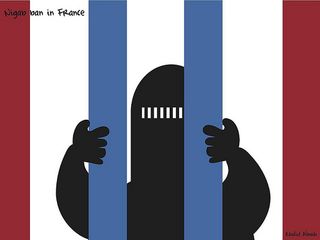
Niqab-Ban-in-France There is no endogenous diminution of secularization in relation to organized religion, attendance at church services, and traditional Christian belief and practice in Western Europe. Whether the decline of traditional religion is being replaced by no religion or by new ways of being religious or spiritual, neither mode is inspiring an attempt to connect with or reform political institutions and government policies. There is no challenge to political secularism there.

This is the context in which non-Christian migrants have been arriving and settling and in which they and the next generation are becoming active members of their societies, including making political claims of equality and accommodation. As the most salient post-immigration formation relates to Muslims, some of these claims relate to the place of religious identity in the public sphere.

It is here, if anywhere, that a sense of a crisis of secularism can be found. The pivotal moment, 1988-89, of this “crisis” was marked by two events. These created national and international storms, and set in motion political developments which have not been reversed, and they offer contrasting ways in which the two Western European secularisms are responding to the Muslim presence. The events were the protests, in Britain, against the novel The Satanic Verses by Sir Salman Rushdie; and, in France, the decision by a school head-teacher to prohibit entry to three girls unless they were willing to take off their headscarves on school premises.

More here.

What Monkeys Can Teach You About Money

How a Yale research team made history by teaching capuchins to spend money … and discovered that they’re just as smart—and stupid—as your financial advisor.

Allen St. John in Mental_Floss:

ScreenHunter_07 Sep. 03 10.29 It’s a little bigger than a quarter and about twice as thick, but because it’s made of aluminum, it weighs roughly the same. It’s flat and smooth, except for what seem to be a few tiny bite marks around the perimeter. To you, it might look like a washer without a hole. To Felix, an alpha male capuchin monkey, and his friends at Yale University, it’s money.

“When one of the monkeys grabs a token, he’s going to hold onto it as though he really values it,” explains Laurie Santos, a psychology professor at Yale. “And the other monkeys might try to take it away from him. Just like they would with a piece of food. Just as you might want to do when you see a person flaunting cash.”

During the past seven years, Santos and Yale economist Keith Chen have conducted a series of cutting-edge experiments in which Felix and seven other monkeys trade these discs for food much like we toss a $20 bill to a cashier at Taco Bell. And in doing so, these monkeys became the first nonhumans to use, well, money.

“It sounds like the setup to a bad joke,” says Chen. “A monkey walks into a room and finds a pile of coins, and he’s got to decide how much he wants to spend on apples, how much on oranges, and how much on pineapples.”

But the remarkable thing about the research isn’t that these monkeys have learned to trade objects for food—after all, a schnauzer can be taught to hand over your slippers in exchange for a Milk-Bone. The amazing part, Chen and Santos discovered, is how closely the economic behavior of these capuchins mimics that of human beings in all its glorious irration​ality.

More here.

Grave Lessons from Kashmir

Mallika Kaur in Guernica:

SSS_7317_1 Bilquees is one of Kashmir’s “half widows”: a woman whose husband has been “disappeared” and never heard from again, leaving her shrouded in uncertainty as to her marital status. Enforced disappearances have been recorded in Kashmir since the early 1990s and local civil society groups, such as the Jammu and Kashmir Coalition of Civil Society, estimate about 8,000 enforced disappearances and about 1,500 “half widows” in Kashmir.

Now, in August of this year, a State Government agency, the State Human Rights Commission, has announced the existence of “mass graves” in the Indian-administered Kashmir Valley: it has recorded multiple graves containing 2730 bodies. The report acknowledges that many of the graves contain civilians who had “disappeared”—574 of the 2730 have been identified as locals—rather than only “unidentified cross-border terrorists” as per the Indian government’s prior claims (even this official position is contrary to the Geneva Conventions, which prohibit torture and mutilation and call for proper burial of fallen combatants). While the skeletons in mass graves evidence suffering of the past, they are also stark reminders of continued suffering of women like Bilquees, who do not know whether their husbands are in the mass graves, or alive somewhere in captivity.

More here.

Friday, September 2, 2011

Europe and the “New German Question”

Habermas_debate_468x310 Christian Calliess, Henrik Enderlein, Joschka Fischer, Ulrike Guérot, and Jürgen Habermas in Eurozine:

Ulrike Guérot: Joschka Fischer, to begin right away with Jürgen Habermas' central idea: Is it true that Germany is once again staking an unabashed claim to leadership in a Europe that is increasingly shaped by Germany? Is this the trend of the age and are we therefore seeing a kind of renationalization of Germany, to the detriment of Europe?

Joschka Fischer: Jürgen Habermas' findings are impossible to disagree with, in the sense that the facts simply bear out his conclusions. But this “renationalization” does not express a conscious decision in the sense of a strategic U-turn, in the sense that on 9 November 1989 Germany made this great reversal back to the nation state. My impression is rather that, for several years now, this development is simply what is happening. Which, it must be said, does not improve the situation in the slightest. Of course the failure of the European constitutional treaty plays an important role in this, since the optimism connected with it has evaporated. I think the criticism of the treaty and its requirements as having been too ambitious is wrong, not least in view of what came next. It was not the oft-criticized ambition and emotionality of the European debate, particularly on the constitution, that led to failure; true cross-border democracy on a European scale could have done with this kind of emotion and engagement. That is the quintessence of the last few wasted years. The Lisbon treaty plainly cannot fill this emotional gap, for all its legal and administrative complexity.

A Libertarian’s Lament: Why Ron Paul Is an Embarrassment to the Creed

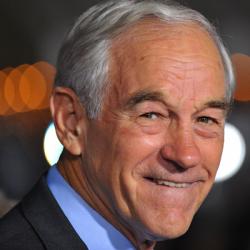
Rp2 Will Wilkinson in TNR:

[I]t irks me that, as far as most Americans are concerned, Ron Paul is the alpha and omega of the libertarian creed. If you were an evil genius determined to promote the idea that libertarianism is a morally dubious ideology of privilege poorly disguised as a doctrine of liberation, you'd be hard pressed to improve on Ron Paul.

Much of Paul's appeal comes from the impression he conveys of principled ideological coherence. Other Republican presidential aspirants are transparently pandering grab-bags of incoherent compromise. Ron Paul presents himself as a man of conviction devoted to liberty, plain and simple, who follows logic's lead and tells it plain. The problem is, often he’s not.

According to Paul's brand of libertarianism the inviolability of private property is the greater part of liberty. And Paul is crystal-clear about the policy implications of his philosophical convictions about property rights. As Paul writes in his 2009 book Liberty: A Manifesto, the income tax implies that “the government owns you, and graciously allows you to keep whatever percentage of the fruits of your labor it chooses.” To Paul, the policy upshot is evident: “What we should work toward … is abolishing the income tax and replacing it not with a national sales tax, but with nothing.” Whatever you think of this, you can't accuse Paul of dancing around the issue. However, Paul is not so dogged in consistently applying his principles in other domains.

A Reunion with Boredom

PAR13251_jpg_470x427_q85

Do people still suffer from periods of boredom even with computers, smart phones and tablets to occupy them endlessly? There’s also television, of course, which in homes of many Americans is on twenty-four hours a day, making it harder and harder to find a quiet place to sit and think. Even neighborhood bars, the old refuge of introspective loners, now have huge TV screens alternating between sports and chatter to divert them from their thoughts. As soon as college students are out of class, cell phones, and iPods materialize in their hands, requiring full concentration and making them instantly oblivious of their surroundings. I imagine Romeo and Juliet would send text messages to each other today as they strolled around Verona, though I find it hard to picture Hamlet advising Ophelia to betake herself to a nunnery. These and other thoughts came to me as I sat in a dark house for three days in the aftermath of Hurricane Irene. Being without lights and water is a fairly common experience for those of us who live in rural areas on roads lined with old trees. Every major rainstorm or snowstorm is almost certain to bring down the lines, which, because of the relative scarcity of population, are a low priority for the power company to fix. We use oil lamps and most often candles, so our evenings around the dining room table resemble séances. We sit with our heads bowed as if trying to summon spirits, while in truth struggling to see what’s on our dinner plates.

more from Charles Simic at the NYRB here.

Dubya and Me

Walt-and-dubya

They still called him Junior when we first met, in forlorn Midland, Texas, back in July 1986. He was known then for being the son of the vice president of the United States, the agonizingly named George Herbert Walker Bush. As a young staff writer at The Washington Post Magazine, I was trying to persuade Vice President Bush to let me spend several months with him for an in-depth profile I intended to write. But the veep was skeptical, and he left it up to Junior to pass judgment on me and my request. “Come on down and visit,” the man who would eventually be known to the world as President George W. Bush drawled cheerfully to me over the phone. “But I won’t tell you any good stuff until I’m sure you’re not going to do an ax job.” So began a long and fascinating acquaintanceship with the man who would become one of the most admired and, later, reviled presidents in U. S. history. Over the next 25 years, our paths crossed again and again, most recently in his Dallas office last April. I had just read Bush’s 2010 memoir Decision Points, and I was struck by his many references to history. In the back of my mind was an article that Karl Rove had written for The Wall Street Journal in 2008, which revealed (much to the consternation of the president’s derisive critics) that Bush had read 186 books for pleasure in the preceding three years, consisting mostly of serious historical nonfiction. Intrigued, I asked Bush whether he would talk to me about how his passion for reading history had shaped his presidency and perspective, and he agreed.

more from Walt Harrington at The American Scholar here.

Barry Duncan, master palindromist

Article_kornbluh

Even before actually meeting Duncan, I’d been told about his palindromes. It was early 2009, and I’d just taken a job with Harvard University Press. When I first heard him described as a “master palindromist,” I imagined, briefly, some sort of governing body with an esoteric ranking structure, doling out titles like “grandmaster” in chess. But no. For Duncan the title is self-proclaimed. “When I say I’m a master palindromist, there are two answers for what that means,” he explained. “One is that it means, when it comes to palindrome-writing, I know what I’m doing. The other, slightly longer, slightly more combative answer is that it means you shouldn’t confuse me with any of those garden-variety, ‘Madam I’m Adam’ hacks who couldn’t paint my shadow.” His speech often has a theatrical quality, slowed and emphasized toward the ends of sentences. You learn fairly quickly that he has a tendency to repeat himself. Not the careless repetition of telling you the same thing twice, but the practiced, verbatim repetition of entire anecdotes. And so, when he explains what it means to be a “master palindromist,” and it’s the only time that I see his hackles raised, I can tell that it’s a practiced response, a performed aggravation at the nerve of those who doubt. “I mean, I don’t know what to say. I gave myself the title ‘master palindromist,’ but I’m the one inventing the terminology, and making the rules, so I might as well be giving out titles as well.”

more from Gregory Kornbluh at The Believer here.

A searing novel and a sensational film has thrust Sapphire into the limelight

Sapphire talks to Arifa Akbar in The Independent:

Saph Shortly after the publication of her first novel, Push, which told the story of an obese, illiterate, black teenager abused by her mother and raped by her father, Sapphire was informed by a prominent African American magazine that it would not be featuring a review. Essence magazine's boycott was a defining moment for Sapphire. The story of Claireece Precious Jones, written phonetically in a vivid stream-of-conscious outpouring, remained below the radar for 13 years. Then, in 2009, it hit the New York Times bestseller list after a film adaptation by Lee Daniels (entitled Precious) which stunned audiences at the Cannes, Sundance, and Toronto festivals, won two Oscars, and made an unlikely heroine out of Precious Jones. She finds freedom, of sorts, despite having two babies by her father and contracting HIV from his abuse. Sapphire has a theory for why the book was disdained by Essence in 1996. “I think people thought maternal abuse made the black community look bad,” she says.

As one of the first books to lay open the character of the violent, sexually abusive mother-figure, it had perhaps too taboo a topic, although “I felt like saying 'I'm not trying to hurt you. Don't shoot the messenger'”. The then editor eventually wrote Sapphire a letter of apology. The magazine has, 15 years on, been among the first to review her second novel, The Kid (Hamish Hamilton, £12.99). An urban Bildungsroman featuring Precious's orphaned son, Abdul Jones, it is just as explicit, and damning, in its depiction of a forgotten underclass. Push's story of illiteracy, undetected abuse and social deprivation was a deliberate reflection on the failures of the American welfare system. It is rare that these fringes of existence are ever exposed, co-existing next to extreme affluence, and there is always disbelief when they are, she suggests.

More here.

To clear digital waste in computers, ‘think green,’

From PhysOrg:

Dump A digital dumping ground lies inside most computers, a wasteland where old, rarely used and unneeded files pile up. Such data can deplete precious storage space, bog down the system's efficiency and sap its energy. Conventional rubbish trucks can't clear this invisible byte blight. But two researchers say real-world trash management tactics point the way to a new era of computer cleansing. In a recent paper published on the scholarly website arXiv, Johns Hopkins University computer scientists Ragib Hasan and Randal Burns have suggested familiar “green” solutions to the digital waste data problems: reduce, reuse, recycle, recover and dispose. “In everyday life, 'waste' is something we don't need or don't want or can't use anymore, so we look for ways to re-use it, recycle it or get rid of it,” said Hasan, an adjunct assistant professor of computer science. “We decided to apply the same concepts to the waste data that builds up inside of our computers and storage devices.” With this goal in mind, Hasan and Burns, an associate professor of computer science, first needed to figure out what kind of computer data might qualify as “waste.” They settled on theses four categories:

  • Unintentional waste data, created as a side effect or by-product of a process, with no purpose.
  • Used data, which has served its purposes and is no longer useful to the owner.
  • Degraded data, which has deteriorated to a point where it is no longer useful.
  • Unwanted data, which was never useful to the computer user in the first place.

The researchers found no shortage of files and computer code that fit into these categories. “Our everyday data processing activities create massive amounts of data,” their paper states. “Like physical waste and trash, unwanted and unused data also pollutes the digital environment. … We propose using the lessons from real life waste management in handling waste data.” The researchers say a user may not even be aware that much of this waste is piling up and impairing the computer's efficiency. “If you have a lot of debris in the street, traffic slows down,” said Hasan. “And if you have too much waste data in your computer, your applications may slow down because they don't have the space they require.”

More here.

Friday Poem

Why the Young Men Are So Ugly

They have little tractors in their blood
and all day the tractors climb up and down
inside their arms and legs, their
collarbones and heads.

That is why they yell and scream and slam the barbells
down into their clanking slots,
making the metal ring like sledgehammers on iron,
like dungeon prisoners rattling their chains.

That is why they shriek their tires at the stopsign,
why they turn the base up on the stereo
until it shakes the traffic light, until it
dryhumps the eardrum of the crossing guard.

Testosterone is a drug,
and they say No, No, No until
they are overwhelmed and punch
their buddy in the face for joy,

or make a joke about gravy and bottomless holes
to a middle-aged waitress who is gently
setting down the plate in front of them.

If they are grotesque, if
what they say and do is often nothing more
than a kind of psychopathic fart,

it is only because of the tractors,
the tractors in their blood,
revving their engines, chewing up the turf
inside their arteries and veins
It is the testosterone tractor

constantly climbing the mudhill of the world
and dragging the young man behind it
by a chain around his leg.
In the stink and the noise, in the clouds
of filthy exhaust

is where they live. It is the tractors
that make them
what they are. While they make being a man
look like a disease.

by Tony Hoagland

Thursday, September 1, 2011

Pakistan, the Army and the Conflict Within

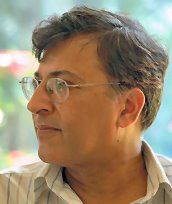
Pervez_HoodbhoyPervez Hoodbhoy and Zia Mian in MERIP:

Pakistan’s generals are besieged on all sides. Like never before, they are at odds with their own rank and file. According to the New York Times, the discontent with the top brass is so great as to evoke concerns of a colonels’ coup. The army also is losing support from its domestic political allies and subject to the increasing hostility of the Pakistani public. The generals are even at risk of being dumped by their oldest and most generous supporter, the United States.

Pakistani army chief Gen. Ashfaq Kayani and other military leaders know it is wise to stop digging when in a hole. But it is not clear if the generals can stop. On July 5, the New York Times reported that US officials hold senior officers of Inter-Services Intelligence (ISI), the military intelligence agency, responsible for the kidnapping, torture and murder of Pakistani journalist Saleem Shahzhad. Shahzhad was well known for his reporting on the military’s ties with militant Islamist groups.

The immediate cause of this crisis was the successful US operation to discover Osama bin Laden’s hiding place in Pakistan, stealthily enter the country and kill him. But, in reality, the generals have been brought to these dire straits by army policies, particularly those enacted over the past three decades, which have left the army, and Pakistan, deeply divided. Keeping the army and the country together is part of the same challenge.

A Counterproductive Disdain

Alexander Cooley and Lincoln Mitchell in the New York Times:

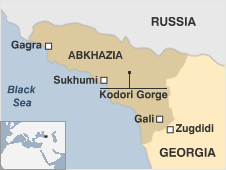
_45840292_abkazia226 Last Friday, voters in the Georgian breakaway territory of Abkhazia went to the polls in a presidential election that was broadly ignored by the United States and its European allies.

There were no international observers, no stern warnings to Abkhaz leaders about the rule of law, no Western congratulations to the winner — Alexander Ankvab, who had been acting president since Sergei Bagapsh, the twice-elected Abkhaz president, died suddenly in May.

In fact, many Western organizations, urged by Tbilisi, condemned the polling. Catherine Ashton, the European Union foreign policy chief, said the E.U. “does not recognize the constitutional and legal framework within which these elections have taken place,” while NATO declared that the alliance “does not recognize the elections.”

The main reason for these reactions is that while the people of Abkhazia view themselves as an independent state, the world’s governments, with only a very few exceptions, consider the territory as an integral part of Georgia. Only a few weeks ago the U.S. Senate passed a resolution describing Abkhazia as “occupied” by Russia.

Still, condemning political processes in the breakaway territory damages Western credibility and influence in the South Caucasus in a number of ways.

More here.

paul berman reflects

6a00d8341c562c53ef0133ed81a5e8970b-500wi

BUT WAIT. The anniversary of September 11 reminds me that, before I come up with a gloomy word to conclude my sentence, it might be useful to recall the Middle Eastern landscape of ten years ago. It was not a spectacle of hope. The whole region seemed to be veering in terrorist directions, with battles almost everywhere going on between Islamists of different stripes and mukhabarat regimes, likewise of different stripes, ranging from the bad to the ghastly. And ten years later? Dismal still, in a kaleidoscopically different pattern. Anyone can think of doomsday possibilities—an Iranian order to Hamas and Hezbollah to launch a regional war, and so on. Still, two new elements, which you could not have found ten years ago, figure nowadays on the landscape. Here and there around the region you can see democratic institutions, shaky as a leaf—threatened by terrorists and Islamist militias in Iraq, trampled underfoot by an Islamist militia in Lebanon, still merely a project for the future in Tunisia, and feebler yet in Egypt, given that, if the Egyptian elections go ahead, they will probably bring the wrong people to power. Democratic institutions nonetheless amount to a new element. And something else: the ineradicable fact that liberals, relatively isolated and weak as they are, have made a mass appearance on the public stage, and the liberals left a good impression on the rest of society, and they even demonstrated the ability, for a moment, to shape events, and their day may not be over yet. Do these new elements add up to nothing? If you are philosophically a hard-core materialist and you tally up the measurable facts of power and wealth, they add up to nothing. But if you consider that ideas sometimes have an autonomous force of their own, and that liberal ideas are more likely to flourish in an atmosphere of freedom, these two new and feeble elements look like—well, a beginning.

more from Paul Berman at TNR here.

canetti and the crowd

20110810_2011+33bookslead_w

As a child, Elias Canetti treasured Robinson Crusoe. The author of Auto da Fé (1935), the nightmarish story of a self-absorbed sinologist who is tricked into marriage by his illiterate housekeeper and who sinks first into the lower depths of society and then into madness, seems to have had the lifelong feeling of being solitary, separate from the rest of humankind. According to his later study in mass psychology Crowds and Power, crowds form in an effort to shake off the burden of individuality. Perhaps surprisingly – as he always claimed to value the individual human being above all else – the impression the reader takes from the book is that, for Canetti, this process of self-obliteration held a powerful attraction. Born into a Sephardic Jewish family in a small port city on the Ottoman Danube and growing up amid the festering anti-Semitism of interwar Europe, Canetti had no illusions about the wisdom of crowds. Yet he seems to have been drawn by suddenly formed masses of humanity, finding a sense of elation in being swept up as a student by a flood of people marching on the Palace of Justice in Vienna in 1927. The crowd was a threat, but also a way out from painful self-consciousness. Crowds fascinated Canetti, so much so that he was inclined to explain the whole of history through them.

more from John Gray at the New Statesman here.