The Joy of a Sun Bath, a Snuggle, a Bite of Pâté

From The New York Times:

Animal Two ring-tailed lemurs, perhaps a pair, perhaps just two guys out to catch a few rays, sit side by side tilted back as if in beach chairs, their white bellies exposed, knees apart, feet splayed to catch every last drop of the Madagascar sun. All they need are cigars to complete the picture.

There’s a perfectly good evolutionary explanation for this posture. Scientists use the term “behavioral thermoregulation” to describe how an animal maintains a core body temperature. But as the animal behaviorist Jonathan Balcombe points out in his exuberant look at animal pleasure, “The Exultant Ark,” they are also clearly enjoying themselves. A scientist through and through, Dr. Balcombe can’t help giving the study of animal pleasure a properly scientific name: hedonic ethology. True to its subtitle — “A Pictorial Tour of Animal Pleasure” — “The Exultant Ark” showcases surprising, funny, touching, sad, heartwarming pictures by photographers all over the world. Dr. Balcombe’s text is a serious examination of the subject of animal pleasure, a study that “remains nascent and largely neglected in scientific discourse.” But it also delights us along the way with Dr. Balcombe’s observations and examples. On the subject of food as pleasure, for instance, he tells us, “Rats will enter a deadly cold room and navigate a maze to retrieve highly palatable food (e.g., shortbread, pâté or Coca-Cola).” If they happen to find rat chow instead, “they quickly return to their cozy nests, where they stay for the remainder of the experiment.”

More here.
Aatish’s personal fire

Ejaz Haider in The Express Tribune:

ScreenHunter_03 Jul. 19 15.05 The father was killed because he supported a Christian woman. How does that fit in with the article’s thesis that the father hated India (and Pakistan has to hate India and be Muslim) because that religious distinction lies at the core of its ‘other’-isation of India? Or is Pakistan more complex than is hinted in the article?

Aatish’s father did not ‘hate’ India. He was one of those who did much to open up Lahore — to Indians — by using the Basant festival. There is not a single viable political party in Pakistan that does not want to normalise with India. That is a matter of record. But Salmaan Taseer (Aatish’s eye for detail doesn’t inspire much confidence since he gets the spellings of his father’s name wrong), like others, was a proud Pakistani. We don’t need to ‘other’ India to be Pakistanis but neither can we ignore real problems that need to be addressed. Tackling those problems requires mature analysis, not reducing everything to Pakistan’s identity crisis vis-a-vis India.

But what of the Pakistani military, the villains in all this? Since Aatish began with India’s failed GSLV rocket test, let me put in some facts here for him.

The Indian Army, standing at over 1.1 million active-service personnel and 1.8 million reserves, is configured under six area commands (operational) and one army training command (ARTRAC). Three of these area commands — western, northern and southwestern — are totally Pakistan-specific. A fourth, central command, with one corps (1 Corps) is also primarily Pakistan-specific. The Indian Army has 13 corps, out of which eight, including one from the central command, are specific to Pakistan.

More here.

Why My Father Hated India

Aatish Taseer in the Wall Street Journal:

ScreenHunter_02 Jul. 19 11.56 Ten days before he was assassinated in January, my father, Salman Taseer, sent out a tweet about an Indian rocket that had come down over the Bay of Bengal: “Why does India make fools of themselves messing in space technology? Stick 2 bollywood my advice.”

My father was the governor of Punjab, Pakistan's largest province, and his tweet, with its taunt at India's misfortune, would have delighted his many thousands of followers. It fed straight into Pakistan's unhealthy obsession with India, the country from which it was carved in 1947.

Though my father's attitude went down well in Pakistan, it had caused considerable tension between us. I am half-Indian, raised in Delhi by my Indian mother: India is a country that I consider my own. When my father was killed by one of his own bodyguards for defending a Christian woman accused of blasphemy, we had not spoken for three years.

To understand the Pakistani obsession with India, to get a sense of its special edge—its hysteria—it is necessary to understand the rejection of India, its culture and past, that lies at the heart of the idea of Pakistan. This is not merely an academic question. Pakistan's animus toward India is the cause of both its unwillingness to fight Islamic extremism and its active complicity in undermining the aims of its ostensible ally, the United States.

More here.

half Eeyore, half Falstaff

Sad_sack

It pains me to say this, given that I don’t just admire Bloom, but also find him a surprisingly endearing cultural icon, half Eeyore, half Falstaff. When he’s not going around all sad-eyed and plangent, he’s likely to be complaining that “there live not three good critics unhanged in all America, and one of them is fat, and grows old.” Besieged by ravening hordes of ideologues, Bloom has long proclaimed himself the last champion of aesthetic criticism. When Childe Harold to the Ivory Tower Came, he soon discovered that the barbarians of ideology and political correctness were within the gates. In years past, he duly fretted about “theory” and cultural studies, though more recently he has begun to worry that “visual culture will end imaginative literature.” In one splendid diatribe, Bloom derides the academy’s current flood of “comma counters, ‘cultural’ materialists, new and newer historicists, gender commissars, and all the other academic impostors, mock journalists, inchoate rhapsodes, and good spellers.” Against their advocacy of what he calls “the New Cynicism,” he now argues—like any good Augustinian—that love should be the basis for all worthwhile criticism.

more from Michael Dirda at The American Scholar here.

SECRETS & LYRES

Raphael_07_11

Ann Wroe’s favourite activity, it seems, is to plunge into the lacunae between myth and reality, history and fable. As she proved by her lively descant on Pontius Pilate (who she dared to suggest might have been born in Britain), she has a flighty capacity to spin webs of words, anchored in myth and anecdote, which supply a bridge between what others have said and what fancy supplies. Both erudite and eclectic, in Orpheus she seems as much at home in Greek myth as she was, several books ago, dealing with life in the Middle Ages in the French city of Rodez, in the Aveyron. Like Dionysus, who shares some of his distracting characteristics (both led people a pretty dance), Orpheus was an alien enchanter. Never quite fully Greek, he was born in bristling Thrace, where his father was said by some to be the king and by others to be a ‘sheep-herder and a lone dweller in the fields’. The lyrical Orpheus was a marginal and, at times, a commanding figure. As keleustes on the voyage of the Argo, he stood by the mast and gave the beat to the rowers, who included the A-list of heroic and semi-divine celebrities (that other hell-raiser Heracles not least of them). When the Argo put in at Lemnos, a flat island populated by fatal women (they had all killed their husbands in an earlier episode), the crew pleasured the dangerous females, but Orpheus refrained. He was literally the guiding spirit in the quest for the Golden Fleece, and his well-timed steersmanship later squeezed the Argo between the clashing rocks of the Symplegades.

more from Frederic Raphael at Literary Review here.

he has urinated on us all

Kinkade1

THE LOVE AFFAIR between the intellectuals and the trashmeisters, now more than a hundred years old, has just overtaken the man who is by some measures the most popular painter in America. Thomas Kinkade: The Artist in the Mall is an essay collection that exudes a creepy fascination. While a number of the contributors manage to provide level-headed assessments of Kinkade’s place in the American imagination, I am not remotely convinced that such attention should be lavished on Kinkade’s sugar-drenched Middle America, with its frosted gingerbread domiciles, dew-kissed old-fashioned small-town Main Streets, and farmlands so fertile they look as if they’re on steroids. Alexis L. Boylan, who edited the book, would no doubt protest that the size of Kinkade’s reputation justifies the attention on sociological or cultural grounds, pure and simple. I know that many intellectuals believe we overlook middlebrow tastes at our own risk. But there is a large dose of reverse snobbery threaded through this collection. More than a generation after Pop Art became holy writ, it is rather tiresome to be announcing yet again that we live in a democracy where one person’s treasure is another person’s trailer trash, and that their masterworks are not necessarily inferior to the Picasso’s and Matisse’s in our museums. Many of the contributors to Boylan’s anthology want to devour every last bite of their middlebrow cake, but only after each tasty morsel has been skewered on a highbrow fork. The problem is not that they respect Kincade anthropologically, it is that they respect him as an artist.

more from Jed Perl at TNR here.

Monday, July 18, 2011

Sunday, July 17, 2011

Stage Animal/Out of the Comfort Zone

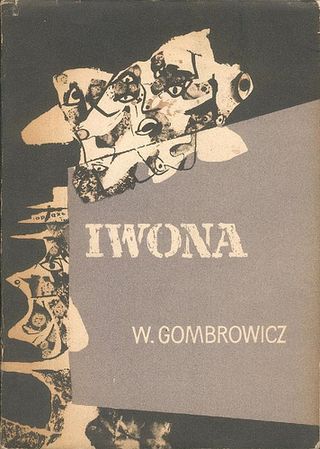
4994475333_d690a4968d Michael Handelzalts on Witold Gombrowicz's play “Yvonne, Princess of Burgundy” and its new staging, in Ha'aretz:

The situation in Witold Gombrowicz's play “Yvonne, Princess of Burgundy,” written in Poland in 1935, is simple yet challenging: in a small European kingdom of the sort that existed in mid-20th century films, the royal family (king, queen and princess ) admires the sunset, in full view of their subjects.

The prince, on his daily stroll, has suddenly come across a young woman. She is not pretty and does not present herself as a potential princess. Ugly, hard to size up and silent, she is accompanied by an aunt who apologizes for the strangeness of her niece.

The prince, tired of meaningless rounds of courtship, is challenged by the fact that the girl, whose name is Yvonne, radiates nothing in his presence; she is the very embodiment of passivity. It appears that anything may be done with her, and he decides to marry her. Where is it written that the prince must marry a beauty?

What begins as a game and a whim takes on monstrous proportions: Yvonne, in as much as she exists at all, wants nothing, says nothing, plans nothing, and so makes everyone uncomfortable. No one knows how to approach her. After all, there can be no creature which supplies not even a hint of its own significance and its relationship to us.

Notes on a Voice: W. G. Sebald

IL Sebald2 A.D. Miller in Intelligent Life magazine:

The essential theme of W.G. Sebald’s books is memory: how painful it is to live with, how dangerous it can be to live without it, for both nations and individuals. The narrators of his books—of which “Austerlitz” and the four linked narratives of exile in “The Emigrants” are the most compelling—live in a state of constant reminder. Everything blends into everything else: places, people, their stories and experiences, and above all different times, which seep into each other and blur together, often in long, unmoored passages of reported speech. The narrator of “Vertigo” gives a concise account of this method: “drawing connections between events that lay far apart but which seemed to me to be of the same order”.

Sebald, born in Bavaria in 1944, spent most of his adult life as an academic in Britain. He died in Norfolk in 2001, after having a heart attack at the wheel of his car. He wrote in German, but worked closely with his English translators, Michael Hulse and Anthea Bell. In either language, his voice is mesmeric.

Key decision

To invent his own hybrid form. Sebald’s main works blend travelogue and meditation, fiction with history and myth. They have a narrator who both is and is not Sebald himself: a spectral character who is sensitive, digressive and restless, compulsively peregrinating around Europe and its past.

Strong points

Finding a voice to fit his preoccupations. His sentences are looping, reflexive, moving forward yet endlessly turning back on themselves. By the time he wrote “Austerlitz”, the last book he published before his death, Sebald had more or less dispensed with paragraph breaks altogether. This fluidity creates a feeling, as the character Austerlitz says of his own sense of history, that “time will not pass away, has not passed away, that I can turn back after it”—clauses that are themselves part of a much longer, circular sentence. This is a style that tries to unbury the dead through syntax.

Eric Foner on the Evolution of Liberalism

E-f A Five Books interview by Eve Gerber:

Finally Christine Stansell’s The Feminist Promise examines the sweep of American women’s history. What can we learn by reading it?

Stansell shows why women’s rights became a central element of modern American liberalism. And she helps us understand how liberalism evolved to embrace individual rights and privacy in the most intimate areas of personal life. That came through the women’s movement. Stansell gives a very good account of how these feminist issues, on the one hand, go very deep back in American history, and, on the other hand, reached a critical mass of popular engagement during the 1960s.

Why did women’s rights become so aligned with the left?

In the 1970s social issues became more important to the Republican Party, and the notion that the women’s movement was a threat to the family and the stability of society became a mantra among conservatives. I think it’s important to remember that it wasn’t always that way. A century ago the movement for women’s suffrage was just as likely to get support from Republicans. Even in the 1960s plenty of conservatives supported legal equality. But today women’s rights are a dividing line between liberalism and conservatism.

Harry Potter: the Anti-Geek

Harry-potter-with-wand-wallpaper Amanda Marcotte in Pandagon:

With all the excitement over the last Harry Potter movie coming out, I thought it would be a fun time to float a thought I've had about the book that often seems to surprise people when I mention it. Even recently I was talking with some folks who were plowing through the books and enjoying them, and when one of them characterized Harry as “nerdy”, I had to take issue.

“Harry isn't a nerd,” I said, “Harry is a jock.” I mean, Harry has an existential crisis that gives him some depth, but social outcast and/or geek he's not. The opposite, in fact.

I realized then that the “band of misfits” theme has so much power over the American imagination (maybe not the British, which could explain Rowling's choices) that people just sort of shove Harry and his friends into that mold, and then rely on a handful of rationalizations for it—Harry wears glasses, Hermione is a bookworm, Ron is a redhead—in order for that theory to make sense. We're used to the X-Men or Buffy the Vampire Slayer and the Scooby Gang, so much so that we don't see that Harry's trajectory is the inverse of Buffy's. Buffy is a former cheerleader whose magic powers actually make her a geek and an outcast. Harry is a nobody-special who finds out that he's special, and becomes not just the star athlete and hero of his school, but an actual celebrity. Sure, there's ups and downs, but his trajectory is away from being the outcast and towards being the homecoming king. Which may not be as emotionally satisfying as “my greatness makes me an outcast”, but is probably more realistic. In his world, being a badass is appreciated and he's realistically rewarded in his society for it.

The Angriest Eye

8504.true-life-violence A. Ranganayaki in Open The Magazine:

One morning, two months ago, I read a horrific news report in the Hindustan Times about the rape and subsequent gangrape of an 18-year-old girl in Delhi. She was first raped by her brother’s father-in-law, who had asked her to his home on some familial pretext; she managed to escape him, found a taxi driver in her catatonic state, and asked to be dropped home. Instead, the driver and his companions took her someplace in Dwarka and gangraped her.

It was the use of the word ‘allegedly’ littered throughout the very short report that I first registered. It made me so angry, for some reason. I don’t think the word has been used or drawn my attention as sharply in reports about other crimes. Allegedly. Supposedly. Apparently. Maybe. We’re not sure.

Perhaps it is to do with my own ghosts, perhaps not. Reportage on sexual violence has, in recent years, become far more prevalent; popular, even. The typical ‘progressive’ response to this is one of affirmation, validation; the willingness to talk about it in public. My response was different. My entire being revolted against the ambivalence of the writing, because if anything, its uncertainty made the monstrosity of the act palatable. It gave me the option of feeling a passing horror at the article, and moving on. Then, there were responses from people on Delhi and its total lack of safety. That appalled me too. Is geography central to this story? I don’t believe it is. Relevant as an aside perhaps, nothing more. The cab driver and his mates raped her again. Because she told them what happened? Because she was already a tainted, violated body? Did it excite them?

Sexual violence and abuse are primal and unspeakable. It is far more comfortable to denounce them in terms of morality, emotionality and religiosity than to actually engage with them. They defy historicity, context and the narratives of modernisation. They are liminal, suspended, beyond the reach of articulation. Predicated upon cornerstones of morality, anything remotely related to sexuality is always exciting press, but it’s a fine line—you don’t want to offend sensibilities. People ask me if talking about experiences of rape, abuse and violence help “get over” it. “Is it somehow therapeutic?” they enquire sweetly and cluelessly. No, I tell them. You never “get over” violence. The experience of violence is always constitutive of our beings, our identities and sexualities. The reason I speak is because I can; because I want to; because it affords some navigability through a maelstrom which holds no “rationale”, escape or solace.

Confirmation Bias and Art

McNerney To follow up Julia Galef on the fallacy of difference in art, Samuel McNerney on confirmation bias in art, in Scientific American:

If we are defining confirmation bias as a tendency to favor information that confirms our previously held beliefs, it strikes me as ironic to think that it is almost exclusively discussed as a hindrance to knowledge and better decision-making, or as an aid to argumentation and persuasion as reinforced by Mercier and Sperber. With such a broad definition, I think it also explains our aesthetic judgments. That is, just as we only look for what confirms our scientific hypotheses and personal decisions, we likewise only listen to music and observe art that confirms our preconceived notions of good and bad aesthetics. Put differently, confirmation bias influences our aesthetic judgments just as it does any other judgment.

Let's observe music, a popular topic in the psychology world. One of the common themes to emerge from the literature is the importance of patterns, expectations, and resolutions. Many authors argue that enjoyable music establishes a known pattern, creates expectations, and resolves the expectations in a predictable way. As neuroscientist Daniel Levitin, author of This is Your Brain on Music explains, “as music unfolds, the brain constantly updates its estimates of when new beats will occur, and takes satisfaction in matching a mental beat with a real-in-the-world one.” This is one reason we repeatedly listen to the same songs and bands, we know exactly what we are going to get, and love it when they fulfill our preconceived expectations.

In this light, the relationship between confirmation bias and music is clear. In the same way that we decide to watch Fox or MSNBC, we decide to listen to Lady Gaga or The Beatles. In either case, our brains are latching onto patterns and getting pleasure from accurately predicting what comes next. Here is the key: your brain doesn’t “know” the difference between Glen Beck and Paul McCartney, but it does know, and it does care about confirming each in the context of their work: McCartney sings the chorus to “She Loves You,” while Beck reams Obama's latest political move. In other words, its predictions don't discriminate between different mediums; it just wants its expectations to be fulfilled. So ask yourself this: is there really any difference between a Beatles concert and a Glen Beck rally? Are people not just going to these events to have their opinions confirmed?

Miranda July Is Totally Not Kidding

Mag-17July-t_CA1-articleLarge Katrina Onstad in the NYT Magazine:

Miranda July stood in her living room in the Silver Lake neighborhood of Los Angeles, apologizing for the sunflowers. It really was a copious amount of sunflowers.

They sprouted from Mason jars and vases, punctuating the austere, Shaker-like furniture in the sunny home that July, who is 37, shares with her husband, the filmmaker Mike Mills, who’s 45. Noticing me noticing the sunflowers, she interjected: “We just had a party. We don’t usually have sunflowers everywhere.”

In person, July was very still, with ringlets of curly hair falling over her wide blue eyes like a protective visor, and she seemed perceptively aware of the “precious” label that is often attached both to her and to her work. At a different point in our time together, I followed her into a hotel room in San Francisco, where Mills had left her a knitted octopus wearing a scarf and hat on the couch. She laughed when she saw it but also appeared a bit mortified: “Oh, God,” she said. “It’s kind of a joke. . . . It’s not. . . . Really, this isn’t us at all.”

At their house, Mills emerged from his office; in contrast to July’s measured composure, Mills seemed in constant motion, often running his hands through his Beethoven hair. Both he and July have directed new films being released this summer. His film, “Beginners,” is loosely based on the true story of his father’s coming out at age 75. July’s film, “The Future,” is her second feature as a director, and it’s a funny, sad portrait of a couple at a crossroads. Sophie, played by July, works at a children’s dance school, and Jason, played by Hamish Linklater, provides tech-support by telephone from their sofa. The couple is weeks away from adopting Paw-Paw, an injured cat and a symbol of impending adulthood who is also the film’s narrator. A talking cat is exactly the kind of detail that might endear people who are endeared by Miranda July and infuriate people who are infuriated by her. There are plenty of both.

Ghalib Redux

Our own Azra Raza and Sara Suleiri Goodyear in Asymptote:

ScreenHunter_01 Jul. 17 14.45 When we first embarked on our project to translate a selection of Ghalib's ghazals, we foolishly chose to begin with Dil e nadaan tujhey hua kiya hay…a ghazal that struck us as exceptionally lucid in its simplicity and brevity. After several hours of arduous labor, we discovered our mistake and Ghalib's beguiling force. It made us conclude that there is little distinction between surface and depth in Ghalib's most seemingly accessible ghazals and so we began once more armed with the understanding that the mystery of Ghalib's poetry is its mirage-like quality: it is most opaque when it appears to be crystalline with clarity. This opacity however posed a challenge to the translators, who then had to further acknowledge that translation and interpretation were nearly synonymous. We read widely in available translations of Ghalib and finally decided that our mode and methodology should be based on dialogue because it best represents the continuum and the dynamic flow that initiates the acts of translation. As Walter Benjamin wisely observed, “Just as the manifestations of life are intimately connected with the phenomenon of life without being of importance to it, a translation issues from the original—not so much for its life as from its afterlife.”

This current article is, as it were, our tribute to the two past masters, Ghalib and Benjamin in that it represents the afterlife of our initial project Ghalib: Epistemologies of Elegance. Here, we essay a return to a few of the shers [couplets] that we previously translated and interpreted in order to witness how our own perspectives have evolved and modulated our prior readings of these verses. In the process, we took care not to consult our original interpretation but juxtaposed our readings only after we had completed the second version.

More here.

A whiff of history

From The Boston Globe:

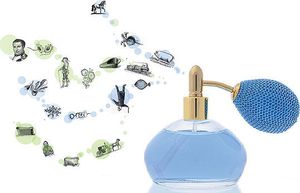
Awhiffofhistory__1310758902_6508 Think of some of your most powerful memories, and there’s likely a smell attached: the aroma of suntan lotion at the beach, the sharpness of freshly mown grass, the floral trail of your mother’s perfume. “Scents are very much linked to memory,” says perfumer Christophe Laudamiel. “They are linked to remembering the past but also learning from experiences.” But despite its primacy in our lives, our sense of smell is often overlooked when we record our history. We tend to connect with the past visually – we look at objects displayed in a museum, photographs in a documentary, the writing in a manuscript. Sometimes we might hear a vintage speech, or touch an ancient artifact and imagine what it was like to use it. But our knowledge of the past is almost completely deodorized. “It seems remarkable to me that we live in the world where we have all the senses to navigate it, yet somehow we assume that the past was scrubbed of smells,” says sensory historian Mark Smith.

It seems far-fetched to think we could actually start to smell the past – or somehow preserve a whiff of our daily lives. But increasingly, technology is making it possible, and historians, scientists, and perfumers are now taking the idea of smells as historical artifacts more seriously. They argue that it’s time to delve into our olfactory past, trying harder to understand how people experienced the world with their noses – and even save scents for posterity. Their efforts have already made it possible to smell fragrances worn a century ago, to re-create the smell of a rare flower even if it goes extinct, and to better understand the smells that ancient cultures appreciated or detested.

More here.

Q and A with Miss Manners

Arcynta Ali Childs in Smithsonian:

Q-and-A-Judith-Martin-631 Through September 5, the National Portrait Gallery is displaying 60 paintings on loan from private collections in Washington, D.C. Among the portraits is that of Judith Martin, better known as advice columnist “Miss Manners.” The first lady of etiquette spoke with the magazine’s Arcynta Ali Childs.

What etiquette breach do you most dislike?
The major etiquette problem in American nowadays is blatant greed. It’s people who are scheming to get money and possessions from other people, and who believe they are entitled to do so. Whether it is the gift registry—or people who claim to be entertaining and are telling their guests to bring food, to bring drink and sometimes even to pay—the ancient practices of exchanging presents and of giving hospitality are being undermined by this rampant greed.

In a December 2010 survey, Travel + Leisure magazine rated Washington, D.C. as the fifth rudest city in America. As a Washington, D.C. native, etiquette authority and frequent traveler, what are your thoughts?

I’m often told that when I travel. And I have to say to these people, whom are you talking about? I was born in Washington, and I’m not rude. You’re talking about people that you sent here. You’re talking about people you voted for and you sent to Washington. So if you have complaints, and when people do, they often say to me, well what can we do about it? I said the answer there is something called an election. That’s something you can do about it. The idea has gotten around that people who are virtuous are unable to restrain themselves by the decencies of etiquette and unable to deal with people who disagree with them. And therefore, the people who are the most contentious often win elections. But the voters forget, first of all, that we have a cooperative form of government. They have to get along if they’re going to get anything done. And second of all, that they themselves don’t like it. They think thatit’s amusing during the races, but then they don’t like it afterwards. So don’t vote for it. These are not native-born Washingtonians.

More here.

Saturday, July 16, 2011

Lust and Loneliness

20110716_BKP502_290 The Economist on the art of Laurel Nakadate:

THE current exhibit of Laurel Nakadate's work at MoMA PS1 raises more questions than it answers. This may be what this artist needs right now, considering how even the praise she has received tends to focus on the least challenging aspects of her work. For several years she made videos featuring lonely older men who started conversations with her in grocery stores and parking lots; she would agree to go home with them as long as they allowed her to film what happened, which would usually turn out to be a scenario of her choosing. In some cases this meant a pretend birthday party (we see the man eating a slice of cake and then singing to her) or a pretend music video (we watch her dance to “Oops, I Did It Again”, Britney Spears’s paean to inadvertent seduction). Ms Nakadate, who was 25 when she started to make these videos in 2000, would often film herself gyrating in flimsy camisoles while the men looked on.

Marilyn Minter, an American artist, has praised Ms Nakadate's attempt “to own the creation of sexual imagery” in the service of self-expression: “When you're a young woman, and beautiful, all eyes are on you. Can you capture that experience?” (For the current issue of the Paris Review, Ms Minter curated a portfolio that includes Ms Nakadate's photographs and stills from her work.) Ms Nakadate's critics, meanwhile, accuse her of using her sexuality to exploit the men in her videos—beer-bellied, awkward loners who seem remarkable mainly for how unremarkable they are.

But neither view conveys how uncomfortable it is to watch Ms Nakadate's work.