Category: Recommended Reading
Saturday, January 14, 2012
Me, Myself and Yoga
A debate over at the NYT begins: “In a Times magazine article last weekend, the author quotes a yoga teacher blaming 'ego' for yoga-related injuries and pointing out that 'the whole point of yoga is to get rid of ego.' If that’s the case, then why is narcissism so often on display in the yoga studio with students spending huge amounts of money on gym memberships and gear and even clamoring to mark their territory with their mats, hours before the class begins?” Suketu Mehta, Kaitlin Quistgaard, Sarah Miller, David Surrenda, Joslyn Hamilton, and Ganesh Das debate. Suketu Mehta:
The Hippocratic Oath should also apply to yoga: first, do no harm.
Yoga was never meant to be a competitive sport, like ice hockey. But when it spread to this robustly competitive nation, where it got turbocharged by money — the U.S. yoga market is worth $6 billion a year — its original meaning got dispersed. What is now called for is a broader understanding of the meaning of yoga.
The yoga that most Americans are aware of is hatha yoga, only one (and perhaps the least important) of the various types of yoga. Krishna in the Bhagvad-Gita defines them: karma yoga (the yoga of action), bhakti yoga (the yoga of devotion) and jnana yoga (the yoga of knowledge). Volunteering at a soup kitchen is yoga; raising your voice in praise in a gospel choir is yoga; trying to understand how the galaxies shift and why the poor lack shoes is also yoga.
Hatha yoga is not for everyone. The other forms are. Not everyone can — or should — stand on their heads, but everyone can use their heads to make the world a better place; yoke their emotions to their intelligence and feel more centered.
In this sense, the greatest teacher of yoga is not Iyengar or Bikram, but Gandhi. “The yogi is not one who sits down to practise breathing exercises,” he wrote in his interpretation of the Gita. “He is one who looks upon all with an equal eye, sees other creatures in himself.”
Finishing Touches
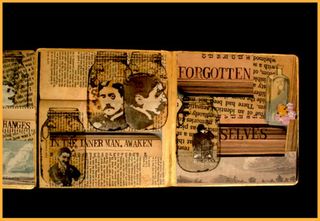
Maggie Nelson discusses Eve Sedgwick's posthumous work The Weather in Proust, in the LA Review of Books:
When I first heard that Duke University Press would be putting out a collection of the final writings of Eve Kosofsky Sedgwick — one of the primary founders of the field known as queer theory, who died of breast cancer in 2009 — I first imagined a scrapbook-like volume of wild stray thoughts and posthumous revelations. Then, when I heard the collection was titled The Weather in Proust, and that it included all the unfinished writing Sedgwick had done in service of a critical study of Marcel Proust, I imagined it might be a swirling, dense, epic literary analysis, à la Walter Benjamin’s 1,088 page The Arcades Project, the likes of which the world had never seen.
The slimmish, 215-page collection, edited by Jonathan Goldberg, is neither of the above. It is decidedly not a hodgepodge of odds and ends that Sedgwick left behind, but rather nine solid, finished-feeling essays on topics that preoccupied Sedgwick throughout her prolific career. These topics — which include webs of relation in Proust, affect theory, non-Oedipal models of psychology (especially those offered by Melanie Klein, Sandor Ferenczi, Michael Balint, Silvan Tomkins, and Buddhism), non-dualistic thinking and antiseparatisms of all kinds, and itinerant, idiosyncratic, profound meditations on depression, illness, textiles, queerness, and mortality — will be familiar to anyone who has spent time with Sedgwick’s previous work, which includes the groundbreaking Between Men: English Literature and Male Homosocial Desire (1985), Epistemology of the Closet (1990), Tendencies (1993), and Touching Feeling: Affect, Pedagogy, Performativity (2003).
But while a great deal here is familiar — indeed, many passages from the above books resurface, verbatim, throughout these pages — there is nothing rehashed about the project itself. To the contrary: For a writer whose prose (and thought) could often be astoundingly dense, circuitous, and lovingly (if sometimes frustratingly) devoted to articulating the farthest reaches of complexity, the overall effect of The Weather in Proust is one of great clarification and distillation. Indeed, for those unfamiliar with Sedgwick’s work, I would recommend starting with The Weather in Proust and moving backward from there, as the volume offers an enjoyably compressed, coherent, and retrospective portrait of Sedgwick’s principal preoccupations.
Spike Jonze’s Mourir Auprès de Toi
Ricky Gervais Would Like to Nonapologize
Dave Itzkoff in the NYT Magazine:
In a onetime mess hall on a decommissioned Royal Air Force base outside London, Ricky Gervais was directing the 4-foot-6 star of a low-budget re-enactment of “The Passion of the Christ” on how to play the Crucifixion for more laughs.
“You’re threatening them,” Gervais said to Dean Whatton, a dirtied-up actor dressed in a loincloth and a crown of thorns and playing the role of “Little Jesus.” Gervais was helping him with his line reading: “ ‘You wait until Sunday. This is not a good Friday.’ ”
“Cool, cool,” Whatton replied from his cross — but in his next take he flubbed his dialogue and apologized for getting tongue-tied. Gervais forgave Little Jesus for the transgression. “That’s what happens when you’re crucified,” he shouted back at Whatton. “You’re all over the place.”
Gervais was filming his new comedy series, “Life’s Too Short,” created with his writing and directing partner, Stephen Merchant. The show stars Warwick Davis, a 3-foot-6 actor perhaps best known for playing Wicket the Ewok in “Return of the Jedi.” “Life’s Too Short,” which was shown on Britain’s BBC Two at the end of 2011 and will make its U.S. debut Feb. 19 on HBO, is framed as a documentary about Davis, and in the episode I watched being filmed, featured several comedic re-creations of films, cast with little people: “Brokeback Mountain” performed by two short actors in cowboy costumes, or a fastidious homage to Sharon Stone’s interrogation scene from “Basic Instinct,” played by an actress whose feet did not reach the ground as she sat in her chair.
Gervais’s first TV series, also created with Merchant, was the original, can-you-believe-it’s-10-years-old incarnation of “The Office,” a now-legendary BBC comedy. “The Office” commandeered a documentary-style format from American pioneers like Christopher Guest and Albert Brooks and mined laughs from a fictional workplace and its mundane employees, including Gervais, who played a relentlessly ingratiating manager named David Brent. When “The Office” became a worldwide hit — including the U.S. version of the show, which until recently starred Steve Carell — it gave Gervais the resources, the clout and the good will to do more or less whatever he wants for the rest of his career. So far the things he has chosen to do include a second comedy series, “Extras”; a podcast; a handful of not-widely-seen movies; several stand-up tours; and two outings as the host of the Golden Globe Awards, with a third tour of duty coming on Sunday, Jan. 15.
Even five years ago, such a proposal would not have seemed credible: Scientists gear up to take a picture of a black hole
From Physorg.com:
The field of gravity around a black hole is so immense that it swallows everything in its reach; not even light can escape its grip. For that reason, black holes are just that –emitting no light whatsoever, their “nothingness” blends into the black void of the universe.
So how does one take a picture of something that by definition is impossible to see?
“As dust and gas swirls around the black hole before it is drawn inside, a kind of cosmic traffic jam ensues,” Doeleman explained. “Swirling around the black hole like water circling the drain in a bathtub, the matter compresses and the resulting friction turns it into plasma heated to a billion degrees or more, causing it to 'glow' – and radiate energy that we can detect here on Earth.”
By imaging the glow of matter swirling around the black hole before it goes over the edge of the point of no return and plunges into the abyss of space and time, scientists can only see the outline of the black hole, also called its shadow. Because the laws of physics either don't apply to or cannot describe what happens beyond that point of no return from which not even light can escape, that boundary is called the Event Horizon.
“So far, we have indirect evidence that there is a black hole at the center of the Milky Way,” Psaltis said. “But once we see its shadow, there will be no doubt.”
Even though the black hole suspected to sit at the center of our galaxy is a supermassive one at four million times the mass of the Sun, it is tiny to the eyes of astronomers. Smaller than Mercury's orbit around the Sun, yet almost 26,000 light years away, it appears about the same size as a grapefruit on the moon.
“To see something that small and that far away, you need a very big telescope, and the biggest telescope you can make on Earth is to turn the whole planet into a telescope,” Marrone said.
To that end, the team is connecting up to 50 radio telescopes scattered around the globe…
More here.
Toby Young lambasts Johann Hari, picks a bone with Christopher Hitchens, and selects five books that exemplify good reporting
From The Browser:
Talking of bad practice, you've been particularly excoriating towards disgraced reporter Johann Hari. I enjoyed your fisking of his too-little too-late apology. What precisely was it that Hari did which was inexcusable?
Hari’s crime wasn’t to lift quotes from other people’s interviews and insert them into his own without attribution. That’s borderline acceptable. Rather, his crime was to do that and deliberately give the impression that the people in question had said those things to him. In addition, creating a fake identity on Wikipedia and using it to trash people on his political enemies list was pretty low. If Hari had been a News of the World journalist, those things wouldn’t have mattered that much. But because he’s a holier-than-though, butter-wouldn’t-melt-in-my-mouth, world-class prig, they do.
Is British journalism particularly nasty? What is your take on the phone hacking scandal and red-top tabloids in general?
I’m a fan of red tops and regret the closure of The News of the World. In the furore following The Guardian’s story that the deletion of Milly Dowler’s phone messages had given false hope to her parents, all the important stories The News of the World had broken over the years got overlooked. Let’s not forget, it broke the cricket match-fixing story, the Jeffrey Archer story and many others. It didn’t just deal in celebrity tittle-tattle, it also exposed corruption and many powerful people will be sleeping more easily now that the Screws has closed.
How did you rate Christopher Hitchens?
I liked Hitchens personally, admired his courage and thought he was right about Islamofascism and the Iraq war, but found most of his journalistic output unreadable. He had this verbose, hyperarticulate, mannered style that I just couldn’t stomach. I didn’t usually get beyond the first paragraph. I prefer reading his brother, Peter.
More here.
Amazing Airliner Tricks: Crosswinds, ‘Cat IIIC’ Landings
James Fallows in The Atlantic:
1) The “Crab Into Kick” Crosswind landing technique: A few weeks ago I posted a video of a dramatic landing by a Lufthansa plane, in Canada, as it coped with gale-force crosswinds. It was a useful demonstration of the classic “crab into kick” technique of landing in a crosswind. The airplane approaches the runway at a “crabbed” angle, to offset the wind — then at practically the last instant before touchdown the pilot uses the rudder to “kick” the plane into alignment with the runway, so when the wheels make contact they are pointed straight ahead. That post also had a lot of links to how-to discussions of landing techniques.
Here is a fascinating demonstration of how various pilots apply the technique, during tough crosswinds last week in Dusseldorf, Germany. As you watch the sequence of planes coming in, you're looking to see how close each touchdown point is to the runway's center line, and whether the plane has been “kicked” so that it points straight ahead.
The landings shown here range from very precise, to “good enough.” The results are a combination of the pilots' handling of the approach and the control characteristics of the various airplanes. Also, you get to see some crosswind takeoffs. At time 1:15 you'll note a plane “going around” — breaking off an approach so it can circle around for another landing attempt — because the pilot didn't like the way things were set up.
More here.
How Mosquitoes Fly in Rain
Mariel Emrich in Talking Science:
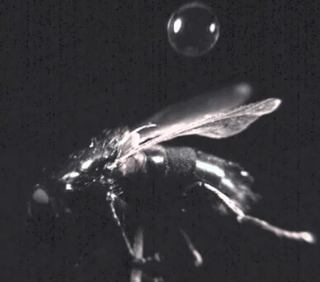
Mosquitoes are as adept at flying in rainstorms as under clear skies. But how is that possible? Wouldn’t rain crush a mosquito to the ground since mosquitoes weigh 50 times less than raindrops?
David Hu, an assistant professor of mechanical engineering and biology at the Georgia Institute of Technology, and his graduate research assistant Andrew Dickerson have found that while mosquitoes do get hit by raindrops, they don’t get crushed by them.
Hu discussed their research in a talk at November's APS Division of Fluid Dynamics Meeting that was entitled “How Mosquitoes Fly in the Rain”.
The researchers measured the impact forces of raindrops on both regular mosquitoes and custom-built mosquito mimics. The mimics were made from small Styrofoam spheres of mosquito-like size and mass. They used high-speed video to capture images of the mosquitoes getting hit with raindrops.
Since the bugs fly so slowly (a maximum of 1 meter per second) compared to the drops (which fall between 5 to 9 meters per second), the mosquitoes cannot react quickly enough for avoidance, and most likely cannot sense the imminent collision.
More here.
Why, despite everything, the Obamas seem to have a truly great marriage
From Slate:
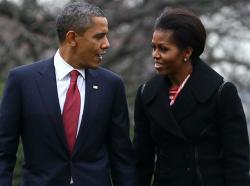
I remember coming home and telling you about the one conversation I had with Michelle Obama, for a story I wrote about her husband the senator in 2006. She talked in the blunt way she used to be able to before he became a presidential candidate. She said she couldn’t stand Washington, couldn’t think of a single good thing to say about it, which is why she had decided to stay back in Chicago with their daughters. But she really believed in Barack and because of that was willing—though hardly eager—to make major personal sacrifices for the sake of his political career. That interview, and a longer one I had with him for the same story, left me with an inkling about their marriage. Not an understanding of it—just a sense of how rich a subject it might be. Both Obamas are deep, layered, hard-to-read people. As personalities, they have some appealing qualities in common. They’re driven, but unusually observant and reflective for driven people. The most reluctant of political couples, they’re allergic to performance and fakery. Their relationship is obviously authentic—and clearly has its share of tensions and difficulties.
More here.
What Friedrich Nietzsche Did to America
From The New York Times:
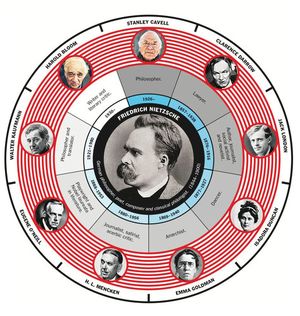
The “higher man” — or as Nietzsche sometimes called him, the “overman” or “Übermensch” — did not succumb to envy or long for the afterlife; rather he willed that his life on earth repeat itself over and over exactly as it was. In later works, Nietzsche wrote with continued brilliance and growing megalomania of his disdain for the common “herd,” the dangers of nihilism and the possibility that the will to power is the “Ur-fact of all history.” He spent his last stricken decade in the care of his mother and then his sister, a fervent anti-Semite who would put him in good standing with the German nationalists he despised. As Nietzsche faltered, his writings began to spread. Small circles of European radicals, literary aristocrats and misfits styled themselves apprentice Übermenschen, ready to fashion the new values the age demanded. The German aesthete Count Harry Kessler plotted to build a Nietzsche memorial in Weimar with a stadium, a temple and a statue; it would, he hoped, effect “the transposition of the personality of Nietzsche into a grand architectural formula” expressing “the unity of lightness, of joy and of power.” But if Nietzsche inspired rapture and devotion, he also puzzled and dismayed. A sickly recluse with impeccable manners, he praised cruelty and strength. He decried Christianity as “a crime against life” even as he claimed that it made man interesting for the first time, and he proposed that everything we know is merely a partial “perspective knowing” even as he composed some of the most categorical remarks ever made: “God is dead”; “It is only as an aesthetic phenomenon that existence and the world are eternally justified”; “There are no facts, only interpretations.”
From the start, Nietzsche’s American readers were bewitched and bedeviled. His hatred of Christian asceticism, middle-class sentimentality and democratic uplift was an assault on 19th-century America’s apparently most salient characteristics. For that very reason, he attracted young Americans who felt estranged from their culture, and has continued to do so. But today’s inescapable and perplexing Nietzsche is not necessarily the same Nietzsche who inspired readers in the past; and it’s the achievement of Jennifer Ratner-Rosenhagen’s “American Nietzsche” to show how that is the case.
More here.
Saturday Poem
Steam Shovel
All silence troubles me.
There’s always something it leaves out:
a treason plotted amongst wisterias
the final explanation of the existence or the inexistence of God
the sound of rats in the rubbish
the clash of propeller and wind at the abandoned airport.
But morning bursts forth at the work site and I hear the noise of the steam shovel.
Men have already awakened and returned to their construction and destruction.
They’re going to build new houses and new tombs.
In the sunny morning, the Beetle comes to a stop in the motel alley.
Once again penis and vagina will try to understand each other
in this world so filled with failed encounters.
The steam shovel shovels and the caterpillar treads advance in the crater open like a flower.
Seen by the conductor’s sleepy eyes as the bus goes down the avenue, the world as spectacle.
.
by Lêdo Ivo
from O rumor da noite
Publisher: Nova Fronteira, Rio de Janeiro, 2000
Friday, January 13, 2012
Deep Streep?
Martin Filler over at the NYRB blog:
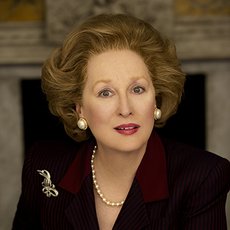
[W]e have the 62-year-old Streep in what many critics deem the crowning achievement of her storied 35-year Hollywood career, as Margaret Thatcher in the starring role of Phyllida Lloyd’s The Iron Lady. But when I watched this strange tour de force of Important Acting, I was uncertain whether I was witnessing a tragedy or a farce.
To be sure, there is a certain piquance in Streep, that inveterate vocal chameleon, impersonating a British prime minister whose own altered accent and lowered tonal production were of considerable import in a class-obsessed country where one’s status is instantly pinpointed by telltale speech indicators. Streep-as-Thatcher overenunciates nearly every phrase in the same way the Iron Lady herself did, in contrast to the clipped-and-swallowed speech patterns of the aristocracy. With her flair for mimicry, the actress is clearly aware of such nuances, and many of her line readings here are hilarious. I laughed out loud when she breathily intoned, apropos some draconian Thatcher budget cut, “YES, the med-cine will be HOSH…”
Nonetheless, thoughts of performers other than Thatcher kept popping into my head as I watched Streep’s latest, grimly fascinating turn—the film traces the British leader from her childhood in the northeastern town of Grantham (where we see young Maggie [Alexandra Roach] doughtily protecting her family’s rationed butter during a World War II bombing raid), to her improbable climb to the top of the class-ridden Conservative Party, to her eleven contentious years in power, and finally to her present-day senescence.
Sanjay Reddy on Economics
(Via Crooked Timber):
chronotope
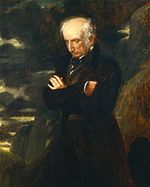
The long-established scholarly project of a specifically literary history has often been called into question in recent decades, whether through challenges to the idea that literature constitutes a separate and distinct strand of culture or through critiques of the ideological and exclusionary bias in the concept of history itself. This is nowhere more the case than in literary studies of Romanticism, a period of Western culture whose intellectual coherence has been debated ever since its inception but which has been subject to particularly strong skepticism since the late 1960s. We have been shown through intricate close readings of its texts, that the “rhetoric of Romanticism,” anticipating late 20th-century poststructuralist theory, undermines belief that language can provide anything other than figures of speech; we have been told that this radical rhetorical shiftiness means that the major poetry of this period can do nothing more than gesture toward self-contradictory meanings, even as it does so with brilliant insight into its own blindness. We have also been told by critics engaged in cultural studies and ideology critique that the ideas of nature, myth, and the symbol-making imagination, unifying concerns of the Romantic movement for critics in the 1940s, ‘50s and ‘60s, are part and parcel of a self-mystified, politically reactionary “Romantic ideology.” A recent essay by Jerome McGann, who coined the latter phrase, asks bluntly, “Is Romanticism Finished?”
more from Walter L. Reed at nonsite here.
more bolaño
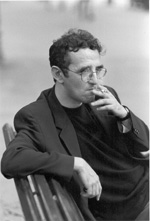
The latest title to appear in English from the late Chilean writer Roberto Bolaño presents itself as the diary of a young German tourist on the Costa Brava one summer in the 1980s. Udo Berger has taken a holiday against his better judgement: it’s not his day job at an electricity company that bothers him, but his reputation as a champion war gamer. To the dismay of his girlfriend, Ingeborg, who would rather lie on the beach and hit the clubs, Udo has brought along his ever-present boards and counters, not to mention a stack of reading for an article he plans to write on strategy in advance of an imminent conference in Paris – all of which means he must maintain contact with Conrad, his mentor back home in Stuttgart. At his best, Bolaño is a terrific writer, but it may deter sceptics that, despite most of the author’s books being short, his most touted novel, the fiendish 2666, is huge, and, for vast stretches, grim as hell. The fourth and longest of its five parts documents in forensically repetitive detail the rapes and murders of dozens of Mexican factory workers. Based on real-life killings that date back to 1993, the victims of which number hundreds, ‘The Part about the Crimes’ dares you not to care – a device that cuts horrifically to the quick of why most of the actual ‘femicides’ remain unsolved. No such ethical weight attaches to readerly boredom in The Third Reich, which was written in 1989, and discovered among Bolaño’s papers after his premature death in 2003.
more from Anthony Cummins at Literary Review here.
Friday Poem
Life is the only way
to get covered in leaves,
catch your breath on the sand,
rise on wings;
to be a dog,
or stroke its warm fur;
to tell pain
from everything it's not;
to squeeze inside events,
dawdle in views,
to seek the least of all possible mistakes.
An extraordinary chance
to remember for a moment
a conversation held
with the lamp switched off;
and if only once
to stumble upon a stone,
end up soaked in one downpour or another,
mislay your keys in the grass;
and to follow a spark on the wind with your eyes;
and to keep on not knowing
something important.
.
by Wislawa Szymborska
translated by S. Baranczak and C. Cavanagh
Early Learning
From Harvard Magazine:
Sister Suzanne Deliee climbs the steps of the East Harlem brownstone, rings a bell, and is buzzed in. The visiting nurse has come to see Susana Saldivar and her four-week-old son, Xavier. He was born prematurely, at 33 weeks, and as Deliee asks questions, it becomes clear Saldivar is nervous about caring for him properly, even though he is not her first child. Xavier has not yet learned to latch onto his mother’s breast. While keeping him nourished with formula, Saldivar has been encouraging him to suckle. “That’s all you can do—truly,” the nurse reassures her. The conversation turns to how Saldivar plays with her son. “What kind of rattle are you using?” Deliee asks. Saldivar looks bashful and begins to explain in a soft voice. Deliee gently interrupts: “Do you have a bottle of pills? That will work just fine.”
None of Deliee’s words are random or accidental. She is choosing them carefully to educate Saldivar about child development: preemies commonly have trouble learning to suckle; using a rattle is important to Xavier’s cognitive development. She is also assuaging fears: Saldivar doesn’t need an expensive toy for her son; she is doing just fine as a parent, even if Xavier isn’t yet proficient at breastfeeding. Deliee’s communication style typifies the unique and powerful approach to child development crafted and disseminated by the Brazelton Touchpoints Center, part of the Harvard-affiliated Children’s Hospital Boston. Deliee’s employer, Little Sisters of the Assumption Family Health Service, first sent staff members to the center for training in 2006; today, employees say the approach is integral to the agency’s holistic, relationship-oriented view of social services.
More here.
Bacon linked to higher risk of pancreatic cancer
From The Guardian:
Eating two rashers of bacon a day can increase the risk of pancreatic cancer by 19% and the risk goes up if a person eats more, experts have said. Eating 50g of processed meat every day – the equivalent to one sausage or two rashers of bacon – increases the risk by 19%, compared to people who do not eat processed meat at all. For people consuming double this amount of processed meat (100g), the increased risk jumps to 38%, and is 57% for those eating 150g a day. But experts cautioned that the overall risk of pancreatic cancer was relatively low – in the UK, the lifetime risk of developing the disease is one in 77 for men and one in 79 for women. Nevertheless, the disease is deadly – it is frequently diagnosed at an advanced stage and kills 80% of people in under a year. Only 5% of patients are still alive five years after diagnosis.
The latest study, published in the British Journal of Cancer, is from researchers at the respected Karolinska Institute in Stockholm, Sweden. They examined data from 11 studies, including 6,643 cases of pancreatic cancer. They found inconclusive evidence on the risks of eating red meat overall, compared to eating no red meat. They found a 29% increase in pancreatic cancer risk for men eating 120g per day of red meat but no increased risk among women. This may be because men in the study tended to eat more red meat than women.
More here.
The Future of Black Politics
Michael C. Dawson in the Boston Review:
People who live at the bottom of the social order, especially at the bottom of more than one of its hierarchies, are frequently condemned to a life of crippling disadvantage. The existence of such mutually reinforcing power hierarchies calls the social order itself into question as a matter of justice. Political movements need to disrupt these hierarchies to overcome injustice.
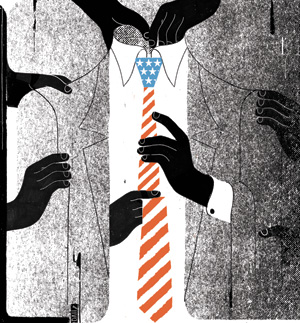
In the United States, a healthy black politics is indispensable to that task. Black politics—African Americans’ ability to mobilize, influence policy, demand accountability from government officials, participate in American political discourse, and ultimately offer a democratic alternative to the status quo—have at times formed the leading edge of American democratic and progressive movements; black visions were some of the more robust, egalitarian, and expansive American democratic visions. This status has been lost.
The decline of progressive black politics is apparent in the Occupy actions that have swept the country to protest economic injustice. There has been black participation, and in some areas, such as Chicago, black efforts to mobilize communities have been aided by the presence of a local Occupy movement. But, for the most part, Occupy has been divorced from black politics.
Yet both today’s black communities and black political traditions have much to offer Occupy and progressives at large.
More here.