
H/t Jyotsna Uppal:
Category: Recommended Reading
Test Tube Yeast Evolve Multicellularity
Sarah Fecht in Scientific American:

“This is a significant paper that addresses one of the most fundamental questions in evolutionary and developmental biology,” says Rick Grosberg, an evolutionary biologist at the University of California at Davis, who was not involved with the research.
Since evolution acts on individual cells, it pays off for a cell to be selfish. By hogging resources and hindering neighbors, a cell can increase the odds that more of its own genes get passed into the next generation. This logic is one of the reasons it has been challenging to imagine how multicellularity arose; it requires the subjugation of self-interest in favor of the group’s survival.
More here.
Barbarism In Cultured Soil: Rushdie’s Great Pakistani Novel
Shehryar Fazli at The India Site:

But first, a word about my own copy of this novel. It’s a 1984 Picador edition, with the Urdu word for shame, ‘sharam’, written as if by hand with Tippex in Arabic script above the English title. I say ‘my’ copy, but it in fact belonged to my father, who bought it in the 1980s at a secondhand bookstore in Islamabad. What’s peculiar about this is that General Zia-ul-Haq’s military government had banned Shame in Pakistan, a decision that attracted more attention to the book than the dictatorship intended, and induced several Western capitals to ship copies to Islamabad through the diplomatic bag for their envoys to read. Once done, these people would sell their copies to one of the many used bookstores in the capital.
More here.
Award-winning teen-age science in action
Iran’s Bomb and Pakistan
Pervez Hoodbhoy in The Express Tribune:

On the other hand, an Israeli attack — whether aided or not by the US — would be truly terrible. The Middle East would become a permanent war zone. The third Gulf War would surely devastate Iran. But today it is in a position to inflict much greater damage on the US than were Iraq or Libya. The US would plunge into an economic crisis the likes of which it has not seen before. The last bits of its post-withdrawal strategy from Afghanistan would be shredded to pieces.
More here.
How Obama’s Long Game Will Outsmart His Critics

A president in the last year of his first term will always get attacked mercilessly by his partisan opponents, and also, often, by the feistier members of his base. And when unemployment is at remarkably high levels, and with the national debt setting records, the criticism will—and should be—even fiercer. But this time, with this president, something different has happened. It’s not that I don’t understand the critiques of Barack Obama from the enraged right and the demoralized left. It’s that I don’t even recognize their description of Obama’s first term in any way. The attacks from both the right and the left on the man and his policies aren’t out of bounds. They’re simply—empirically—wrong.
A caveat: I write this as an unabashed supporter of Obama from early 2007 on. I did so not as a liberal, but as a conservative-minded independent appalled by the Bush administration’s record of war, debt, spending, and torture. I did not expect, or want, a messiah. I have one already, thank you very much. And there have been many times when I have disagreed with decisions Obama has made—to drop the Bowles-Simpson debt commission, to ignore the war crimes of the recent past, and to launch a war in Libya without Congress’s sanction, to cite three. But given the enormity of what he inherited, and given what he explicitly promised, it remains simply a fact that Obama has delivered in a way that the unhinged right and purist left have yet to understand or absorb. Their short-term outbursts have missed Obama’s long game—and why his reelection remains, in my view, as essential for this country’s future as his original election in 2008.
Tuesday Poem
Justice
That Justice is a blind goddess
Is a thing to which we black are wise:
Her bandage hides two festering sores
That once perhaps were eyes.
Langston Hughes
What if humans could be made twice as intelligent?
From MSNBC:
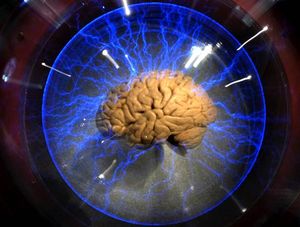
Haier believes greater intelligence, which he defines as the ability to learn faster and remember more, would be highly advantageous on an individual scale. “Experiencing the world with a higher IQ might be more interesting for most people. They might enjoy reading more, might have a greater depth of appreciation for certain things and more insight into life,” he told Life's Little Mysteries. Furthermore, IQs of 200 would allow us to pursue activities and careers that most interest us, not just those we're mentally capable of, Haier said. We could master new languages in a few weeks, for example, or become brain surgeons. Smarter humans would also be healthier and longer-living, the scientists said, because they'd have a better grasp of what behavior leads to these attributes.
More here.
Cracking Open the Scientific Process
From The New York Times:

More here.
Monday, January 16, 2012
Martin Luther King – I Have A Dream
This is not the first time you have heard this, but I defy you to listen to (or read, below) the whole thing and remain unmoved by it. This post is dedicated to my sister Azra and my niece Sheherzad. Now watch, or read, or do both:
And here is the text of the speech:
I am happy to join with you today in what will go down in history as the greatest demonstration for freedom in the history of our nation.
Five score years ago, a great American, in whose symbolic shadow we stand today, signed the Emancipation Proclamation. This momentous decree came as a great beacon light of hope to millions of Negro slaves who had been seared in the flames of withering injustice. It came as a joyous daybreak to end the long night of their captivity.
But one hundred years later, the Negro still is not free. One hundred years later, the life of the Negro is still sadly crippled by the manacles of segregation and the chains of discrimination. One hundred years later, the Negro lives on a lonely island of poverty in the midst of a vast ocean of material prosperity. One hundred years later, the Negro is still languishing in the corners of American society and finds himself an exile in his own land. So we have come here today to dramatize a shameful condition.
In a sense we have come to our nation's capital to cash a check. When the architects of our republic wrote the magnificent words of the Constitution and the Declaration of Independence, they were signing a promissory note to which every American was to fall heir. This note was a promise that all men, yes, black men as well as white men, would be guaranteed the unalienable rights of life, liberty, and the pursuit of happiness.
It is obvious today that America has defaulted on this promissory note insofar as her citizens of color are concerned. Instead of honoring this sacred obligation, America has given the Negro people a bad check, a check which has come back marked “insufficient funds.” But we refuse to believe that the bank of justice is bankrupt. We refuse to believe that there are insufficient funds in the great vaults of opportunity of this nation. So we have come to cash this check — a check that will give us upon demand the riches of freedom and the security of justice. We have also come to this hallowed spot to remind America of the fierce urgency of now. This is no time to engage in the luxury of cooling off or to take the tranquilizing drug of gradualism. Now is the time to make real the promises of democracy. Now is the time to rise from the dark and desolate valley of segregation to the sunlit path of racial justice. Now is the time to lift our nation from the quick sands of racial injustice to the solid rock of brotherhood. Now is the time to make justice a reality for all of God's children.
Sunday, January 15, 2012
Religion for Atheists
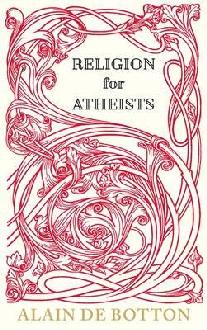
Diderot, a doyen of the French Enlightenment, wrote that the Christian gospel might have been a less gloomy affair if Jesus had fondled the breasts of the bridesmaids at Cana and caressed the buttocks of St John. Yet he, too, believed that religion was essential for social unity. Matthew Arnold feared the spread of godlessness among the Victorian working class. It could be countered, he thought, with a poeticised form of a Christianity in which he himself had long ceased to believe. The 19th-century French philosopher Auguste Comte, an out-and-out materialist, designed an ideal society complete with secular versions of God, priests, sacraments, prayer and feast days.
There is something deeply disingenuous about this whole tradition. “I don't believe myself, but it is politically prudent that you should” is the slogan of thinkers supposedly devoted to the integrity of the intellect. If the Almighty goes out of the window, how are social order and moral self-discipline to be maintained? It took the barefaced audacity of Friedrich Nietzsche to point out that if God was dead, then so was Man – or at least the conception of humanity favoured by the guardians of social order. The problem was not so much that God had inconveniently expired; it was that men and women were cravenly pretending that he was still alive, and thus refusing to revolutionise their idea of themselves.
God may be dead, but Alain de Botton's Religion for Atheists is a sign that the tradition from Voltaire to Arnold lives on. The book assumes that religious beliefs are a lot of nonsense, but that they remain indispensible to civilised existence. One wonders how this impeccably liberal author would react to being told that free speech and civil rights were all bunkum, but that they had their social uses and so shouldn't be knocked. Perhaps he might have the faintest sense of being patronised. De Botton claims that one can be an atheist while still finding religion “sporadically useful, interesting and consoling”, which makes it sound rather like knocking up a bookcase when you are feeling a bit low. Since Christianity requires one, if need be, to lay down one's life for a stranger, he must have a strange idea of consolation. Like many an atheist, his theology is rather conservative and old-fashioned.
De Botton does not want people literally to believe, but he remains a latter-day Matthew Arnold, as his high Victorian language makes plain.
Debating Casual Sex

Society dictates that only within marriage or another long-term relationship do sex and intimacy exist and popular culture upholds this as the ultimate formula for happiness. Despite the high divorce rate, tax laws, for example, continue to bestow benefits on married couples, while relegating single people to second-class status.
How many times have you heard: He's afraid of intimacy? In arguing against casual sex, marriage advocates regularly flaunt research purportedly showing that spouses are happier than single people. But these studies contain a damaging methodology, which cannot be readily identified by their findings. That is, they fail to consider the guilt and shame that some single people internalize as a result of how society stigmatizes them.
The truth is, long-term relationships or marriage do not guarantee a satisfying emotional life or sexual intimacy. Everyone knows someone stuck in a barren marriage, whose members have lost their autonomy and in which sex has disappeared. Brandon's assertion that people do not belong together forever is correct, but too many of us fear facing that truth or consider alternatives to that permanence.
There are times when casual sex actually deepens one's self-knowledge. With intelligence and clarity of purpose, casual sex is more than instant gratification. By openly exploring our fantasies and true desires with different partners in a way that may not possible in a committed relationship, we can transcend our inhibitions. With each new encounter we can discover buried parts of ourselves and in time experience the totality of who we are. We can even experience profound, revelatory moments that unravel our past and show us things we never knew about ourselves. We can satisfy unmet needs by embracing those aspects of our sexuality that are deeply meaningful and we can choose to let go of those that no longer have importance.
How to Build Your Pop Culture Persona

Branding is all anyone can talk about these days. It’s how celebrities stay famous. It’s what Twitter is really for. It’s even what the last season of America’s Next Top Model was all about (besides Tyra Banks’s book, we mean). This week saw famed Bright Lights, Big City author Jay McInerney’s birthday — the renowned playboy is 57 years old, if you can believe it. Inspired by the persistence of the McInerney legend even after all these years, we thought we’d give you a brief outline of how to build a successful pop culture persona using two demonstrative models: the aforementioned Jay McInerney, poster boy of ’80s excess, and Lady Gaga, Queen of overblown contemporary pop. Click through to pick up a few helpful tips on how to build your pop culture persona based on these two tabloid legends, and make sure to send us a postcard from the top when you get there.
1. Come onto the scene with a little salacious controversy.
You have several options on this front, depending on your existing skill set. But whether you write a novel, drop a hit single, or debut in a film, make sure there’s some scandal attached. For instance, if you decide to write a novel, you should make sure that the main character is almost identical to you, that he is consumed with cocaine and the party boy lifestyle, as Jay McInerney did with Bright Lights, Big City. It will help if you have a posse already, so you can look even more like one of the popular kids. If you’re a musician, make sure you’re wearing something so ridiculous no one can look away or shut up about it, like Lady Gaga — in this case, it will also help if that outfit makes it unclear whether or not you secretly have a penis. Now people are paying attention to you. You may proceed.
Zoologger: Unique Life Form is Half Plant, Half Animal

Species: Mesodinium chamaeleon
Habitat: seawater around Scandinavia and North America, chowing down on a new generation of slaves
Many animals transform themselves almost beyond recognition in the course of their lives. Caterpillars become butterflies and tadpoles become frogs, and if we couldn't watch them do so we might not even suspect that the two stages were the same creature.
Spectacular as these shifts are, they are only shape-shifting. A tadpole and a frog are both animals, so both must take in food from their surroundings.
Not so Mesodinium chamaeleon. This newly discovered single-celled organism is a unique mixture of animal and plant.
Plant pals M. chamaeleon is a ciliate – a kind of single-celled animal covered in hundreds of tiny “hairs” called cilia. It was discovered in Nivå bay in Denmark by Øjvind Moestrup of the University of Copenhagen, also in Denmark, and his team. Other specimens have since been found off the coasts of Finland and Rhode Island.
Ciliates using their hair-like cilia to motor around rapidly in water. Most get their food by eating other organisms, rather than by synthesising the nutrients themselves. This marks them as quite animal-like.
Tebow Time: Is God or Math the Explanation for Tim Tebow’s Success?

In a very short time, Tim Tebow has become the most polarizing NFL player in a generation. There are many reasons for this, but one thing that has fascinated fans and foes alike is Tebow's apparent ability to rally his team, the Denver Broncos, when it matters the most.
Tebow's performance on the field is extremely uneven. He'll often stink it up for three quarters only to become what The New York Times describes as “a Hall of Fame candidate in the Fourth.” His efforts contributed to a crucial six-game winning streak that helped land Denver in the playoffs, and last week Tebow led the Broncos to a first-round victory with a touchdown pass in overtime. What is the explanation for his success? And how has Tebow been able to overcome seemingly insurmountable odds again and again? Do certain athletes possess the ability to elevate their game simply by willing it? Does Tebow share a common gene with Derek Jeter and Michael Jordan? Or is it divine intervention (43 percent of Americans believed so in a recent poll)?
If you are like me and believe that God has greater concerns than the outcome of a football game, you are left in search of another explanation.
John Steinbeck on Falling in Love: A 1958 Letter
From The Atlantic:
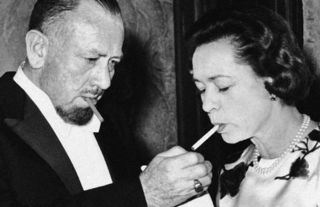
Among his correspondence is this beautiful response to his eldest son Thom's 1958 letter, in which the teenage boy confesses to have fallen desperately in love with a girl named Susan while at boarding school. Steinbeck's words of wisdom—tender, optimistic, timeless, infinitely sagacious—should be etched onto the heart and mind of every living, breathing human being.
New York
November 10, 1958
Dear Thom:
We had your letter this morning. I will answer it from my point of view and of course Elaine will from hers.
First — if you are in love — that's a good thing — that's about the best thing that can happen to anyone. Don't let anyone make it small or light to you.
Second — There are several kinds of love. One is a selfish, mean, grasping, egotistical thing which uses love for self-importance. This is the ugly and crippling kind. The other is an outpouring of everything good in you — of kindness and consideration and respect — not only the social respect of manners but the greater respect which is recognition of another person as unique and valuable. The first kind can make you sick and small and weak but the second can release in you strength, and courage and goodness and even wisdom you didn't know you had.
More here.
Stuff white girls say to brown girls
When You Were Dying
Rana Javadi in lensculture:

More here.
Money is in the Eye of the Beholder
From Smithsonian:

More here.
What is your favorite deep, elegant, or beautiful explanation?
This year, along with 188 others, I was also asked by John Brockman to contribute a response to Edge.org's annual question. Here's my short piece:

So, here is a question: think of common animal species like cats, or dogs, or humans, or golden eagles; why do all of them have (nearly) equal numbers of males and females? Why are there not sometimes 30% males in a species and 70% females? Or the other way? Or some other ratio altogether? Why are sex ratios almost exactly 50/50? I, at least, never even considered the question until I read the incredibly elegant explanation.
Let us consider walruses: they exist in the normal 50/50 sex ratio but most walrus males will die virgins. (But almost all females will mate.) Only a few dominant walrus males monopolize most of the females (in mating terms). So what's the point of having all those extra males around, then? They take up food and resources, but in the only thing that matters to evolution, they are useless, because they do not reproduce. From a species point-of-view, it would be better and more efficient if only a small proportion of walruses were males, and the rest were females, in the sense that such a species of walrus would make much more efficient use of its resources and would, according to the logic of group-selectionists, soon wipe out the actual existing species of walrus with the inefficient 50/50 ratio of males to females. So why don't they?