Apple’s Mind-Bogglingly Greedy and Evil License Agreement

Eb-profileEd Bott in ZDNet, via Zite:

Summary: Over the years, I have read hundreds of license agreements, looking for little gotchas and clear descriptions of rights. But I have never, ever seen a legal document like the one Apple has attached to its new iBooks Author program.

I read EULAs so you don’t have to. I’ve spent years reading end user license agreements, EULAs, looking for little gotchas or just trying to figure out what the agreement allows and doesn’t allow.

I have never seen a EULA as mind-bogglingly greedy and evil as Apple’s EULA for its new ebook authoring program.

Dan Wineman calls it “unprecedented audacity” on Apple’s part. For people like me, who write and sell books, access to multiple markets is essential. But that’s prohibited:

Apple, in this EULA, is claiming a right not just to its software, but to its software’s output. It’s akin to Microsoft trying to restrict what people can do with Word documents, or Adobe declaring that if you use Photoshop to export a JPEG, you can’t freely sell it to Getty. As far as I know, in the consumer software industry, this practice is unprecedented.

Exactly: Imagine if Microsoft said you had to pay them 30% of your speaking fees if you used a PowerPoint deck in a speech.

I’ve downloaded the software and had a chance to skim the EULA. Much of it is boilerplate, but I’ve read and re-read Section 2B, and it does indeed go far beyond any license agreement I’ve ever seen…

Worth All the Sweat

20120121_STP001_0In the Economist:

As doctors never tire of reminding people, exercise protects against a host of illnesses, from heart attacks and dementia to diabetes and infection.

How it does so, however, remains surprisingly mysterious. But a paper just published in Nature by Beth Levine of the University of Texas Southwestern Medical Centre and her colleagues sheds some light on the matter.

Dr Levine and her team were testing a theory that exercise works its magic, at least in part, by promoting autophagy. This process, whose name is derived from the Greek for “self-eating”, is a mechanism by which surplus, worn-out or malformed proteins and other cellular components are broken up for scrap and recycled.

To carry out the test, Dr Levine turned to those stalwarts of medical research, genetically modified mice. Her first batch of rodents were tweaked so that their autophagosomes—structures that form around components which have been marked for recycling—glowed green. After these mice had spent half an hour on a treadmill, she found that the number of autophagosomes in their muscles had increased, and it went on increasing until they had been running for 80 minutes.

To find out what, if anything, this exercise-boosted autophagy was doing for mice, the team engineered a second strain that was unable to respond this way. Exercise, in other words, failed to stimulate their recycling mechanism. When this second group of modified mice were tested alongside ordinary ones, they showed less endurance and had less ability to take up sugar from their bloodstreams.

A thousand ways to please a husband

Sadie Stein in The Paris Review:

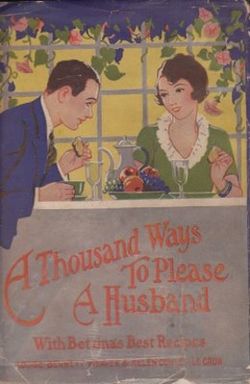
ThousandcoverMany people engage in dubious experimentation in their youth. Some get involved with intravenous drugs. Others sleep with problematic men. A few tattoo their faces. I, for my part, went on a spree when I was nineteen of cooking exclusively from a 1917-era cookbook. The book, A Thousand Ways to Please a Husband (with Bettina’s Best Recipes), might sound vaguely titillating. It’s not. ATWtPaH, by Louise Bennett Weaver and Helen Cowles LeCron, is the story of Bettina and Bob’s first year of marriage. The fictional, surnameless couple, who populate a series of domestic vignettes (with menus and recipes), seems to live on the outskirts of an anonymous American city where Bob does … well, some kind of office job. It’s 1917, but apparently no need at all to mention the War. My copy is a yellow hardcover I acquired at a long-ago church sale; it’s illustrated liberally with images of mischievous chef-cupids and periodic thumbnail sketches of the newlyweds. By the time we meet the pair, on their first night in their brand-new, cozy brown bungalow, the honeymoon is over—literally. When the happy-go-lucky Bob suggests dinner out, after they disembark from the train, he’s treated to the following:

“I’m ashamed of you! We’ll take the first car for home—a streetcar, not a taxi! Our extravagant days are over, and the time has come to show you that Bettina knows how to keep house!” Home again, and swathed in a trim percale apron, Bettina turns to her “Emergency Shelf,” which will become a recurring character, along with the word “economical,” her energy-efficient fireless cooker (a slow cooker of sorts), and the budget notebook that is her preferred topic of dinner-table conversation. “That was fun,” Bob says of the day they assembled the shelf. “Yes, and work, too,” said Bettina, “but I’m glad we did it. Do you remember how much I saved by getting things in dozen and half-dozen lots? And Mother showed me how much better it was to buy the larger sizes in bottled things, because in buying the smaller bottles you spend most of your money for the glass. Now that you have to pay my bills, Bob, you’ll be glad that I know these things.” In case you’re wondering, that evening Bob sat down to:

Creamed Tuna on Toast Strips
Canned Peas with Butter Sauce
Rolls Butter
Strawberry Preserves
Hot Chocolate with Marshmallows

More here. (Note: For my own favorite Uber Chef and dear friend Elatia Harris with love)

A Sharper Mind, Middle Age and Beyond

From The New York Times:

Edl-22middleage-t_CA1-popupIN 1905, at age 55, Sir William Osler, the most influential physician of his era, decided to retire from the medical faculty of Johns Hopkins. In a farewell speech, Osler talked about the link between age and accomplishment: The “effective, moving, vitalizing work of the world is done between the ages of 25 and 40 — these 15 golden years of plenty.” In comparison, he noted, “men above 40 years of age” are useless. As for those over 60, there would be an “incalculable benefit” in “commercial, political and professional life, if, as a matter of course, men stopped work at this age.” Although such views did not prevent the doctor from going on to accept a post at Oxford University, one he retained until his death at age 70, his contention that brainpower, creativity and innovation have an early expiration date was, unfortunately, widely accepted by others. Until recently, neurologists believed that brain cells died off without being replaced. Psychologists affirmed the supposition by maintaining that the ability to learn trudged steadfastly downward through the years. Of course, certain capabilities fall off as you approach 50. Memories of where you left the keys or parked the car mysteriously vanish. Words suddenly go into hiding as you struggle to remember the guy, you know, in that movie, what was it called? And calculating the tip on your dinner check seems to take longer than it used to. Yet it is also true that there is no preordained march toward senescence. Some people are much better than their peers at delaying age-related declines in memory and calculating speed. What researchers want to know is why. Why does your 70-year-old neighbor score half her age on a memory test, while you, at 40, have the memory of a senior citizen? If investigators could better detect what protects one person’s mental strengths or chips away at another’s, then perhaps they could devise a program to halt or reverse decline and even shore up improvements.

As it turns out, one essential element of mental fitness has already been identified. “Education seems to be an elixir that can bring us a healthy body and mind throughout adulthood and even a longer life,” says Margie E. Lachman, a psychologist at Brandeis University who specializes in aging. For those in midlife and beyond, a college degree appears to slow the brain’s aging process by up to a decade, adding a new twist to the cost-benefit analysis of higher education — for young students as well as those thinking about returning to school.

More here.

Sunday Poem

The Way We Were Made
.
But you made every
delicate, elegant wrist
& glistening ankle.
But you made them
beautiful
in braided rope
& dime store gold.
But you made every
necklace clasp.
But you made them
caress the nape
like an errant wind
after a shower.
But you made every
eyelash erotic. Every
single strand of hair
soft.
But you made them
from dust & bone.
Made every glorious
singing thigh. Every
button nose.
But you made them
with holes—
wide open
to the faintest hints
of salt
in a sea breeze, salt
in the sweaty mouth
of a navel, salt
in the blood, sweet
in every wrong way.
.
.
by Marcus Wicker
from Poetry, November2011

etta james

120123_etta-james_p233_opt

By the time she was a teen-ager, James was reunited, if that is the word, with her mother, who took her to San Francisco, where James’s love of R.&B. saved her, to some extent—but is talent enough if one has been continually unloved by those unreliable specimens, other people? That was what her big sound was about—a deafening cry in the wilderness of her unconquerable loneliness. She was fat: with drugs, food, incredible technical skill. But nothing could fill her up. All she could do was try to expel—shake off—some of the evening’s exertions (looking for dope on a more or less daily basis amounts to a job in itself) in the recording studio, where she sang a kind of speeded up blues, which I do not associate with R.&B. so much as it being just James’s singing, a variation of a sound I’ve heard all my life: black mothers calling down from various tenement windows for their children to come on in and eat their supper, or take some kind of nourishment, emotional and otherwise. I didn’t realize the extent of James’s gifts as a singularly butch performer until I saw an old YouTube clip of her singing “Precious Lord,” with Chaka Khan and Gladys Knight—a trio so powerful one would be frightened for one’s soul if they weren’t speaking directly about the soul. In it, James lead the choir with a rumble that supported Khan and Knight (particularly Khan) as they rose up to even greater heights of understanding vis-à-vis their respective gifts. As they did so, James stood back, nodding knowingly, a quintessential American artist in that she knew something about loneliness, and, from time to time, what to do with it.

more from Hilton Als at The New Yorker here.

Saturday, January 21, 2012

Jewish American newspaper publisher suggests Israel assassinate Barack Obama

Chemi Shalev in Haaretz:

893209974The owner and publisher of the Atlanta Jewish Times, Andrew Adler, has suggested that Israeli Prime Minister Binyamin Netanyahu consider ordering a Mossad hit team to assassinate U.S. President Barack Obama so that his successor will defend Israel against Iran.

Adler, who has since apologized for his article, listed three options for Israel to counter Iran’s nuclear weapons in an article published in his newspaper last Friday. The first is to launch a pre-emptive strike against Hamas and Hezbollah, the second is to attack Iran’s nuclear facilities and the third is to “give the go-ahead for U.S.-based Mossad agents to take out a president deemed unfriendly to Israel in order for the current vice president to take his place and forcefully dictate that the United States’ policy includes its helping the Jewish state obliterate its enemies.”

Adler goes on to write: “Yes, you read “three correctly.” Order a hit on a president in order to preserve Israel’s existence. Think about it. If have thought of this Tom-Clancy-type scenario, don’t you think that this almost unfathomable idea has been discussed in Israel’s most inner circles?”

More here.

Will Hutton on Fairness and Inequality

From The Browser:

What precisely is your critique of the capitalism we’re living in now?

ScreenHunter_02 Jan. 21 20.50The apologists for today’s capitalism have a series of theories which at a high level of abstraction are about markets always working optimally. What sits behind those theories is a belief system that the way markets work, and the way life works, revolves very much around the principles of Darwinian natural selection. That capitalism is about survival of the fittest, and hunter-gatherers pursuing their own interests individualistically.

My critique is that this doesn’t describe the world of hunter-gatherers, doesn’t describe how Darwin conceived of natural selection, and more importantly doesn’t describe how actually a contemporary capitalism works and how it has an ongoing legitimacy. My argument is that capitalism delivers its best when it respects some very deeply held human views about the way reward and punishment should be distributed.

More here.

Performing Protest Under Occupation: Iraq’s Tahrir Square

Nahrain Al-Mousawi in Muftah:

ScreenHunter_01 Jan. 21 20.44Iraq’s recent re-entry into American public discourse was marked by the withdrawal of U.S. troops from the country as well as hagiographies marking the death of the Iraq war’s foremost advocate, Christopher Hitchens. This renewed interest in Iraq serves as a reminder not only of the country’s displacement from public consciousness, but also the likelihood that U.S. military withdrawal signals Iraq’s final dismissal from the American narrative.

Although it is easy to now scoff at Bush’s misplaced Mission Accomplished banner and boasts in 2003, for most Americans the gap between rhetoric and reality on Iraq has by no means narrowed. This is evident in the widespread assumption that the withdrawal of American forces means that the war in Iraq is over. This conclusion erroneously assumes that the imprint of America’s material legacy in Iraq can be magically erased, and is as misplaced as Bush’s confidence in the immediate success of the Iraq campaign.

The enduring nature of the Iraq war is reflected by recent developments on the ground. U.S. announcement of the war’s end was met with a coordinated bombing in Baghdad on December 22, 2011, consisting of 16 explosions that involved 9 car bombs, 6 roadside bombs, and 1 mortar. Within two hours, 63 people were killed and 185 wounded. Amidst these bombings, the tributes to Christopher Hitches, who had succumbed to cancer on December 15, 2011, were a particularly fitting reminder of the American disconnect between reality and rhetoric on Iraq.

More here.

Lust and liberty in the 18th century

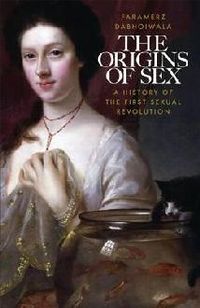
Faramerz Dabhoiwala in The Guardian:

GetImageWe believe in sexual freedom. We take it for granted that consenting men and women have the right to do what they like with their bodies. Sex is everywhere in our culture. We love to think and talk about it; we devour news about celebrities' affairs; we produce and consume pornography on an unprecedented scale. We think it wrong that in other cultures its discussion is censured, people suffer for their sexual orientation, women are treated as second-class citizens, or adulterers are put to death. Yet a few centuries ago, our own society was like this too. In the 1600s people were still being executed for adultery in England, Scotland and north America, and across Europe. Everywhere in the west, sex outside marriage was illegal, and the church, the state and ordinary people devoted huge efforts to hunting it down and punishing it. This was a central feature of Christian society, one that had grown steadily in importance since late antiquity. So how and when did our culture change so strikingly? Where does our current outlook come from? The answers lie in one of the great untold stories about the creation of our modern condition.

When I stumbled on the subject, more than a decade ago, I could not believe that such a huge transformation had not been properly understood. But the more I pursued it, the more amazing material I uncovered: the first sexual revolution can be traced in some of the greatest works of literature, art and philosophy ever produced – the novels of Henry Fielding and Jane Austen, the pictures of Reynolds and Hogarth, the writings of Adam Smith, David Hume and John Stuart Mill. And it was played out in the lives of tens of thousands of ordinary men and women, otherwise unnoticed by history, whose trials and punishments for illicit sex are preserved in unpublished judicial records. Most startling of all were my discoveries of private writings, such as the diary of the randy Dutch embassy clerk Lodewijk van der Saan, posted to London in the 1690s; the emotional letters sent to newspapers by countless hopeful and disappointed lovers; and the piles of manuscripts about sexual freedom composed by the great philosopher Jeremy Bentham but left unpublished, to this day, by his literary executors. Once noticed, the effects of this revolution in attitudes and behaviour can be seen everywhere when looking at the 18th, 19th and 20th centuries. It was one of the key shifts from the pre-modern to the modern world.

More here.

For Edith Wharton’s Birthday, Hail Ultimate Social Climbers

Pat Ryan in The New York Times:

Wharton-edith-photoIn dramas about the British aristocracy we Americans await with tingly pleasure the inevitable moment when the family learns that there is no more money to run the estate, and everyone must retrench or — worse — the heir must get a job. Then, like the arrival of the cavalry in a western, all is saved — the footmen, the ancestral portraits, even the Georgian silver — by the imminent commingling of fortunes with an American kissing cousin who has daughters and dollars. The “Upstairs Downstairs” details long familiar from novels, movies and television shows, and now from the popular “Downton Abbey,” seem to render us spellbound. The English actor and writer Julian Fellowes, who created the PBS mini-series “Downton Abbey” and wrote the screenplay for “Gosford Park,” told The Telegraph that the idea for the series came from a book he was reading at the time, “To Marry an English Lord,” by Gail MacColl and Carol Wallace. It was about “American girls who had come over to England in the late 19th century and married into the English aristocracy.” Mr. Fellowes added, “It occurred to me that while it must have been wonderful for these girls to begin with, what happened 25 years later when they were freezing in a house in Cheshire aching for Long Island?” One answer comes from a native New Yorker who grew up among such heiresses: “These awful English marriages” tie you tight and “strangle you in a noose when you try to pull away from them,” Edith Wharton wrote in 1937 in her unfinished novel “The Buccaneers.” But she saw both sides of these Anglo-American unions. In an earlier novel, “The Custom of the Country,” she told the scathing tale of Undine Spragg, an American serial social usurper who blackmails her ex-husband to get enough money so her lover can bribe the pope to annul her previous marriage. Mr. Fellowes cited this Wharton book as another “Downton” influence (although Undine lands herself a French nobleman).

Edith Wharton, whose 150th birthday on Tuesday will be celebrated around New York — she was born on West 23rd Street — knew exactly what she was delineating. She was the ultimate insider, born into the New York upper crust, which she called “a group of bourgeois colonials” transformed into “a sort of social aristocracy.”

More here.

Saturday Poem

This Bread I Break

This bread I break was once the oat,
This wine upon a foreign tree
Plunged in its fruit;
Man in the day or wine at night
Laid the crops low, broke the grape's joy.

Once in this time wine the summer blood
Knocked in the flesh that decked the vine,
Once in this bread
The oat was merry in the wind;
Man broke the sun, pulled the wind down.

This flesh you break, this blood you let
Make desolation in the vein,
Were oat and grape
Born of the sensual root and sap;
My wine you drink, my bread you snap.

.

by Dylan Thomas

insights, sadness, rumination and splashes of dazzling travelogue

Picoiyer

Greene, for sure, is a writer who goes on inspiring other writers, haunting them, even, as evidenced by Pico Iyer’s lovely new book “The Man Within My Head,” which chronicles an obsession to which in many ways he’d rather not be subjected. Greene, after all, was nothing if not an Englishman, whereas Iyer, educated in England and California, born to dazzling Indian parents, springs from several cultures and has created a career moving among many more. Iyer is a very modern kind of guy; Greene, while prescient in many ways, stalks us from another era. “But there he is, in spite of everything,” Iyer writes. “Not a hero or a counselor or the kind of person I would otherwise want to claim as kin. I see the gangly, long-legged figure graciously receiving a visitor in his room and keeping the intruder at bay with an offer of a drink, folding his awkward limbs around himself on the sofa; I see the high color in his cheeks, and the pale, unearthly blue eyes that speak to everyone of the troubled depths he’s both concealing and perceiving in the world. He speaks in a slightly strangled English voice … and, when amused, he breaks into an unhardened, high-pitched giggle, suddenly, that equally abruptly stops, as if he’s been caught out, the mischievous boy escaping, for a moment, from the sharp-eyed keeper of his own counsel.”

more from Richard Rayner at the LA Times here.

kirsch on gass

KIRSCH-articleInline

“When reviewers take the trouble to compliment a writer on her style,” William H. Gass writes in “Life Sentences,” his new collection of essays, “it is usually because she has made it easy for them to slide from one sentence to another like an otter down a slope.” Gass’s sentence enacts its own dissent from this critical preference for clear and simple prose: as soon as the otter barges in, the reader’s attention is forcibly drawn away from Gass’s meaning and toward his style. An ostentatious style is often considered a token of difficulty, and Gass certainly has a reputation as a difficult writer in the high-modernist mode. In his long career — he is now 87 years old — he has published only two novels, the most recent of which, “The Tunnel,” was a 650-page exploration of the psychology of fascism. (The other is “Omensetter’s Luck,” an avant-garde historical novel about the nature of good and evil.) Yet that otter is a cheerful kind of disruption, and the style of prose Gass practices and celebrates in “Life Sentences” tends to be not knotted and elliptical, but exuberantly baroque. Early on, he announces that “the three greatest masters of English prose” are the 17th-century writers Thomas Hobbes, Jeremy Taylor and Thomas Browne; other touchstones are Emerson’s essays and the rococo style of Henry James.

more from Adam Kirsch at the NY Times here.

sport as literature

Dde19bd4-4313-11e1-93ea-00144feab49a

There was an implicit understanding in these books that most of us live, as Ford puts it in his 1986 novel The Sportswriter, “applauseless” lives, none more so than Harry “Rabbit” Angstrom, the everyman “hero” of Updike’s great tetralogy, written between 1960 and 1990, that comprises Rabbit Run; Rabbit Redux; Rabbit Is Rich; and Rabbit At Rest. Rabbit is a sportsman of sorts – he was once a “first-rate” basketball player. But as a mature adult, he is restlessly second-rate. We first encounter him as a young man on the basketball court, where he is nimble and commanding. Then, at the end of Rabbit at Rest, we look on as he dies in bloated and complacent late middle-age – on a basketball court, completing the circle of his life. Rabbit’s is an emblematically American death. He has joined in with a group of kids who are playing in a park, and he collapses, “bursts from within”, as he rises to shoot a basket, the ball hitting the ground just after he does. “Harry,” wrote Updike in an introduction to the collected Rabbit novels in 1995, “was for me a way in – a ticket to the America all around me.” The narrator of Ford’s The Sportswriter is, like Rabbit, a would-be man of action and sportsman who has lost his way in life but who never stops believing in the redemptive capacity of sport.

more from Jason Cowley at the FT here.

Friday, January 20, 2012

a little context

Khoury_220px

The peaceful revolutions in Tunisia and Egypt have broken with the past and opened the door to change in neighbouring countries. They do not owe their existence to an ideology or political manipulation. This fact alone constitutes an unprecedented chapter not just in Arab history but in history full stop. No one is currently in a position to foresee what the future will bring. A number of issues are on hold: social and economic challenges yet to make themselves felt (in Egypt in particular); the danger of a return to corruption and old police practices; the weakness of the replacement political structures; but also opportunism in future foreign policy, from all countries involved worldwide, in respect of these newly liberated peoples. Westerners fear Islamists will hijack the revolutions or seize power. Many of the people who rose up fear this too, proving that such a seizure can be avoided. This is not a guarantee; it is a hope. After all, what should be feared most is the eroding of democracy by the powers it establishes. Is it not high time for the western powers to change their policy in the Arab countries and give up creating divisions?

more from Gérard D. Khoury at Eurozine here.

tariq in pyongyang

_40622954_redgraveali_rnewsom_238

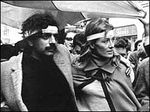
Forty-two years ago, I was mysteriously invited to visit North Korea. Pakistan’s military dictatorship had been toppled after a three-month struggle and in March 1970 the country was in the throes of its first ever general election campaign. I was travelling to every major town and many smaller ones, interviewing opposition politicians and those who’d taken part in the uprising for a book. I was still there in May, my work unfinished, when the invitation arrived. North Korea was even then a country set apart. The letter came via a local Communist known as Rahim ‘Koreawallah’, secretary of the Pak-Korea Friendship Society. Short, paunchy, loquacious and full of beer, he was out of breath as he handed me the letter from Pyongyang. I had to leave straightaway, he said. Why? Because the North Koreans were convinced that the US was preparing to invade and needed global solidarity. In January 1968 the Koreans had captured the USS Pueblo, a naval intelligence vessel, and arrested its crew. Relations between the two countries remained poor. Could I leave next week, Koreawallah asked? I laughed and said no. I was on my way to what was then East Pakistan. North Korea was a distraction. Koreawallah was both angry and insistent, but his argument was weak. There was no evidence that Washington was preparing for war. I had experience to back me up. A few years earlier I had spent six weeks in North Vietnam and, as well as crouching in air-raid shelters during US bombing raids on Hanoi, I sat through several military briefings by senior Vietnamese officers who made it clear that they would eventually win the war. For the Americans, already overstretched in Indochina, a new war in Korea would be suicidal.

more from Tariq Ali at the LRB here.

In Memoriam: Omar Azfar 1968-2009

The Nobleness of Life is to do Thus

A tribute to Omar Azfar by Azra Raza, M.D. being re-posted on his third death anniversary

Clip_image001There’s a special providence in the fall of a sparrow. If it be now, ’t is not to come; if it be not to come, it will be now; if it be not now, yet it will come: the readiness is all.

Shakespeare, HAMLET, Act v. Sc. 2.

At the end, the readiness to face whatever providence had in store was there, both in the case of Omar as well as his mother Naheed. I only saw him two or three times without Naheed in the roughly 16 months of our acquaintance in New York, therefore it is hard for me to think of them separately. She brought her two sons to meet me in September of 2007 shortly after I had moved to New York. Omar, the 38 year old elder son, a graduate of Oxford and Columbia, had been diagnosed with a highly malignant osteogenic sarcoma of the left shoulder. He had received a round of aggressive chemotherapy a few days before and his mouth was a battlefield of raw ulcers, abraded mucosa, bleeding gums. As we sat down to an elaborate meal with family and a few close friends, Omar calmly produced a bottle containing some sort of a bland, soothing drink and sipped away as if it were an equally exclusively prepared gourmet meal, all the while entertaining us with his signature brilliant quips and observations. Such was his class, such his chic. My childhood friend and the current Consul General of Pakistan, Mohsin Razi and his lovely wife Sarwat were present at dinner that evening. Earlier this year, when Mohsin and Sarwat heard about Omar’s death, they rushed to offer their condolences to Kamal and Naheed, both tearing up in the car at the memory of this dinner when Omar had shown such an astonishing and calm acceptance of his condition.

Starting with the first note I received from Omar via cyberspace in the summer of 2007 which was copied to Ama, and ending with my last glimpse of him as he lay dying with his mother curled up next to him in bed, straightening his blanket, holding his hand, I was exquisitely aware of what a unique privilege it was to be witnessing this sublime relationship. Of course love is never quantifiable. In Shakespeare’s Anthony and Cleopatra, Act 1 Scene 1, Cleopatra demands to know how much Anthony loves her.

Cleo.If it be love indeed, tell me how much.

Ant.There’s beggary in the love that can be reckon’d.

Cleo.I’ll set a bourn how far to be belov’d.

Ant.Then must thou needs find out new heaven, new earth.

The friendship alone that existed between Omar and Naheed would require new heavens and new earths to accommodate it.

More here.