Carlo Rotella on “The Wire,” How Bill Clinton was Like a Character in a Spielberg Movie, and Why Good Pundits are So Hard to Find

Matt Bieber in The Wheat and Chaff:
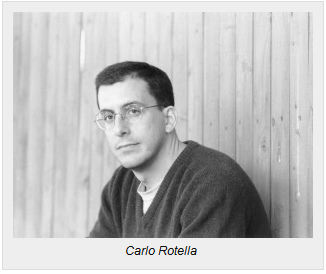
ScreenHunter_13 Feb. 07 11.46Carlo Rotella is one of the most exciting thinkers I’ve ever met. He’s a professor, writer, and public intellectual, and his mind ranges everywhere: from boxing to the blues and free play to fantasy novels.

A couple of weeks ago, Rotella wrote a brilliant column in the Boston Globe about the challenge of conveying nuanced ideas in media formats which value glib summaries above all else. (Even the title – “Why Academics Turn Into Robots on TV” – was great.)

I emailed Rotella, and he agreed to talk some more about his ideas. I called him a few days later, and I did my best to follow his fertile mind as it criss-crossed acres of political and cultural terrain.

MB: In a recent essay in the Boston Globe, you talked about the relative absence of experts on TV and radio who are capable of articulating complicated ideas in a digestible way. You suggested that there’s a “sweet spot between the eminent scholar who had so much to say but couldn’t find a way to say it and the media pro who didn’t have much to say but managed to get it said memorably in a few seconds of airtime.”

It sounds like you’re lamenting a lack of real public intellectuals. Who do you think of as the best occupants of that sweet spot right now?

CR: Well, at the risk of starting up by saying, “Well, Matt, it’s complicated,” let me just amend the first part of that. I think there are a lot of people who can do it on both sides. That is, there are a lot of academics who are able to talk to a general audience and who have an ambition to make things more complicated than they often come out in the press. And on the other side, there are a lot of people in the writing trades and journalists who are interested in what academics have to say, and are familiar with that world and want the academics to give them that material.

So, a lot of what I’m talking about is actually the technical difficulty of squeezing it in to the niches that are made available to do it. Even with goodwill on both sides, sometimes it’s hard to do, right? So I’m not lamenting the lack of people who can do this; I’m saying that it’s hard to do and it’s a very specific skill, separate from having something to say. And so, it often doesn’t work even when there are good intentions on all sides.

More here.
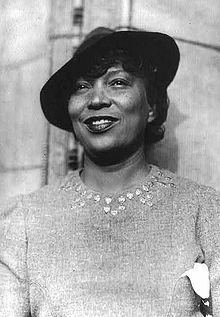
African American Women Who Changed the World: Zora Neale Hurston

From Webster:

Zora2Hurston lived in New York during different times in her career from 1925 on, and joined the Harlem Renaissance. She was one of the shapers of the black literary and cultural movement of the twenties. Hurston received a lot of criticism in her time by other writers, some of whom were also involved in the Harlem Renaissance. Langston Hughes, an important black author of the period was supported early on by the same white woman as Hurston but still offered harsh criticism toward her, regarding her career. Darwin Turner was a critic of Hurston's work who tended to primarily base his critique of her work on his person views of her personality. He said she was a “quick-tempered woman, arrogant toward her peers, obsequious toward her supposed superiors, desperate for recognition and reassurance to assuage her feelings of inferiority” (1979). Darwin Turner states that all of Hurston's work must be looked at in regards to the above statement. When Darwin Turner critiques an African American male writer of that time period, Jean Toomer, he mentions nothing of Toomer's marriage to a white woman or that at one point in his career he refused to be identified with other blacks. Turner skirts this issue and says that Toomer's insisting that he wasn't a “Negro” or Caucasian- but a member of the “American” race is “philosophically viable and utterly sincere” (1979). Hurston's work came at a time when critics were both white and black, but were all men. Mary Helen Washington has said that “To a large extent, the attention focused on Zora Hurston's controversial personality and lifestyle has inhibited any objective critical analysis of her work. Few male critics have been able to resist sly innuendoes and outright attacks on Hurston's personal life, even when the work in question was not affected by her disposition or her private affairs” (1979).

Hurston was the first black scholar to research folklore on the level that she did. She researched songs, dances, tales, and sayings. Much of her book material revolves around issues of slavery and the time period immediately following it. She took her black rural culture and heritage and celebrated it at a time when most black scholars were trying hard to deny and forget it. Hurston also studied voodoo practices in Jamaica, Haiti, and the British West Indies. She took photographs and recorded their songs, dances, and rituals. She had a Guggenheim Fellowship to research in the Caribbean, where she stayed for two years. In the Caribbean, Zora Neale Hurston wrote the book she is probably most known for Their Eyes Were Watching God. It was written in 1937, after the ending of a love affair she had with a younger man. It took her seven weeks to complete. The book is about a woman named Janie who learns to find herself and accept an identity that society is not so fast to accept, as a fulfilled and autonomous black woman. Janie also finds love in this novel in a way untypical of other “love” stories of the time.

More here. (Note: In honor of African American History Month, we will be linking to at least one related post throughout February. The 2012 theme is Black Women in American Culture and History).

Exercise as Housecleaning for the Body

From The New York Times:

ExerciseWhen ticking off the benefits of physical activity, few of us would include intracellular housecleaning. But a new study suggests that the ability of exercise to speed the removal of garbage from inside our body’s cells may be one of its most valuable, if least visible, effects. In the new research, which was published last month in Nature, scientists at the University of Texas Southwestern Medical Center in Dallas gathered two groups of mice. One set was normal, with a finely tuned cellular scrubbing system. The other had been bred to have a blunted cleaning system. It’s long been known that cells accumulate flotsam from the wear and tear of everyday living. Broken or misshapen proteins, shreds of cellular membranes, invasive viruses or bacteria, and worn-out, broken-down cellular components, like aged mitochondria, the tiny organelles within cells that produce energy, form a kind of trash heap inside the cell.

In most instances, cells diligently sweep away this debris. They even recycle it for fuel. Through a process with the expressive name of autophagy, or “self-eating,” cells create specialized membranes that engulf junk in the cell’s cytoplasm and carry it to a part of the cell known as the lysosome, where the trash is broken apart and then burned by the cell for energy. Without this efficient system, cells could become choked with trash and malfunction or die. In recent years, some scientists have begun to suspect that faulty autophagy mechanisms contribute to the development of a range of diseases, including diabetes, muscular dystrophy, Alzheimer’s and cancer. The slowing of autophagy as we reach middle age is also believed to play a role in aging. Most metabolism researchers think that the process evolved in response to the stress of starvation; cells would round up and consume superfluous bits of themselves to keep the rest of the cell alive. In petri dishes, the rate of autophagy increases when cells are starved or otherwise placed under physiological stress. Exercise, of course, is physiological stress. But until recently, few researchers had thought to ask whether exercise might somehow affect the amount of autophagy within cells and, if so, whether that mattered to the body as a whole.

More here.

the defeated

StorySmallImageQHDVEVZThe-Defeated_sml

ON THE AFTERNOON OF 19 MAY 2009, at around 1:20 pm, a ration shop accountant named Sivarajan ran to the front of the winding lunch queue in the Anandakumaraswami Zone 3 refugee camp to serve rice and sodhi, a watery concoction of chillies and coconut milk. Swarna, a former militant, sat in her tent nearby, yelling at her mother for having told an army man from the morning shift that their family belonged to Mullaitivu, on the northeastern coast, where the war between the Sri Lankan Army and the separatists—“Tigers,” she called them—was still raging. At that moment, they got a text message on their mobile phones from the government’s information department. Addressed to all Sri Lankans, it proclaimed, in Sinhala—a language neither Sivarajan nor Swarna could read—that Velupillai Prabhakaran, the man who led a 26-year-long separatist battle for a Tamil Eelam (state), had been killed by the army in a lagoon just a two hours drive north of where they were. So when the news was announced in Tamil over a loudspeaker that evening, they did not believe it. When it finally sank in, they realised—neither with remorse nor relief, but mere wonder at its very possibility—that in an instant the war they had been born into had left their lives. Nothing would ever be the same again.

more from Anonymous at Caravan here.

glass

120213_r21847_p233

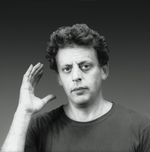
Philip Glass’s place in musical history is secure. His sprawling, churning, monumentally obsessive works of the nineteen-seventies—“Music with Changing Parts,” “Music in Twelve Parts,” “Einstein on the Beach,” “Satyagraha”—have fascinated several generations of listeners, demonstrating mesmeric properties that are as palpable as they are inexplicable. Twice in recent months, I’ve been gripped by the almost occult power of early Glass. Most memorably, I had my first live encounter with “Einstein,” his epic 1976 collaboration with Robert Wilson, which, twenty years after its last revival, is being prepared for a yearlong international tour. Three preview performances took place in Ann Arbor, Michigan, in mid-January; the official première will be in Montpellier, France, in March. Accounts of earlier stagings of “Einstein” primed me for transcendence; more than a few friends had told me that the work had changed their lives. For the first hour or so, though, I worried that the phenomenon might have faded. Each element of Glass and Wilson’s pop-absurdist fantasy on Einstein-ian themes came recognizably to life: the cool recitation of numbers, the frantic mathematical gesturing, the purring Gertrude Stein-like texts (“These are the days my friends / It could get some wind for the sailboat”), the locomotive inching across the stage, the violin-playing Einstein, the iconic beams of light, and, underneath it all, those moto-perpetuo arpeggios and churchlike drones.

more from Alex Ross at The New Yorker here.

looking back: the American and the Soviet century

2

The opening of McDonald’s on Moscow’s Pushkin Square in 1990 was a sensation. The Moscovites who were used to standing in line for an entire day to buy anything from cakes and school notebooks to vodka, cars or toilet paper, were quite happy to spend hours in an unmoving queue just to be there when the Soviet Union’s first fast-food restaurant opened its doors to the public. Consumerism, it seemed, had triumphed over communism. But it was not so much the taste of hamburgers and cola that drew in the people. It was something else they wanted to see: a service culture in which the guest was not treated as a pesky visitor or even enemy, but who had to be wooed as a customer. It suddenly became clear that a business would only flourish if customers got their money’s worth. Things had to happen fast, and friendliness was included in the price. The question in these late Soviet times was whether, under the rush of the crowds and the pressures of everyday Soviet life, the staff would be able to maintain the standards they proclaimed at the outset.

more from Karl Schlögel at Sign and Sight here.

Monday, February 6, 2012

Perceptions

ValleyofRocks1 Nightwalks series

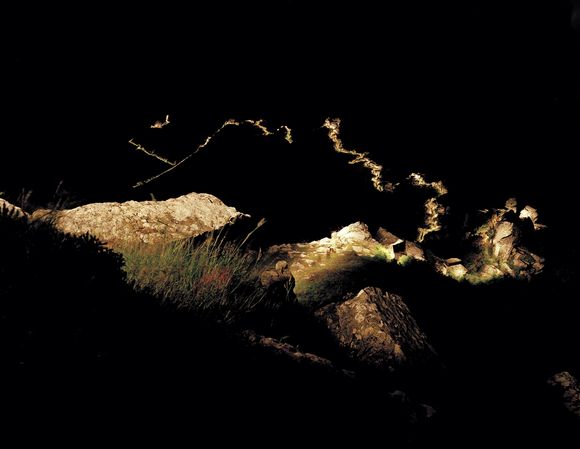
Tim Knowles. Valley of Rocks #1. Nightwalk Series. 2008.

C-type print mounted on Aluminium and framed with non-reflective glass.

Nightwalks are a series of illuminated walks that Tim Knowles created in the countryside during a new moon. Over the period of an hour, the artist walked away from the camera while carrying three wide-beam torches. His path, along a precarious rocky ridge in the darkness, was illuminated and captured using a long-exposure, large-format photograph.

More here and here.

Sunday, February 5, 2012

Superbowl Spleen

Justin E. H. Smith in his blog:

6a00d83453bcda69e20147e255274e970b-250wiLet's see, how should I spend my Sunday? Should I keep reading Herwig Wolfram's magisterial History of the Goths? Should I perhaps go a-hunting online for some whimsical new videos of cats doing unexpected things? Or should I check to see if there are any noteworthy athletic spectacles on television?

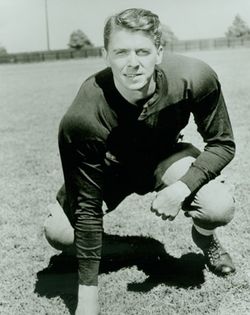
There has been a dull din, growing louder over the past few weeks, that suggests to me that some big sports event is in the offing. Distant memories from childhood cause me to associate this din, in this particular season, with football. These associations, in turn, conjure up others still: of Ronald Reagan, of high-school meatheads in letter jackets telling me not to stand too close to their girlfriends, of ROTC, of PromiseKeepers, of words like 'buddy', of a model of American masculinity that quite literally spit me out as indigestible.

More here.

Myth and Fiction at the Jaipur Literature Festival

William Dalrymple in the New York Times:

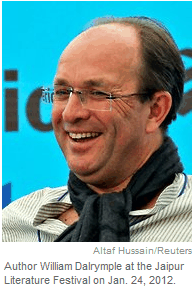
ScreenHunter_10 Feb. 05 17.43While those journalists who actually attended the festival were able to write with accuracy about what happened, the further away journalists and columnists were from the event, the more distorted became their reports. Increasingly we have seen ourselves, and the festival we run, caricatured beyond all recognition.

The first myth I have watched developing after Salman cancelled his visit was that there was never any threat to his life. This is nonsense.

While we at the festival have no way finally to determine if the intelligence agencies really did exaggerate the threat perception to Salman—and that is certainly possible — what we do know is that there was a very real threat of violence at the venue if he did come. In a meeting held in Jaipur with representatives of 19 Muslim organizations on the 19th of January, the day before our opening, while the great majority of the groups were happy to pursue peaceful protests, we organizers were confronted by a few thugs who were hell bent on creating serious trouble and threatened large scale violence and personal harm to Salman and us.

They screamed threats and made it clear that they had no compunction about maiming or murdering to get their way. There were strong hints given that money had been offered to disrupt the event by any means possible. When Salman made the decision to cancel his visit, writing to us that “I can’t imperil the audience or my fellow writers or any of you,” I have no doubt that, sadly, he made the right call.

More here.

Qatar Purchases Cézanne’s The Card Players for More Than $250 Million, Highest Price Ever for a Work of Art

Cn_image.size.cezanne

Alexandra Peers in Vanity Fair:

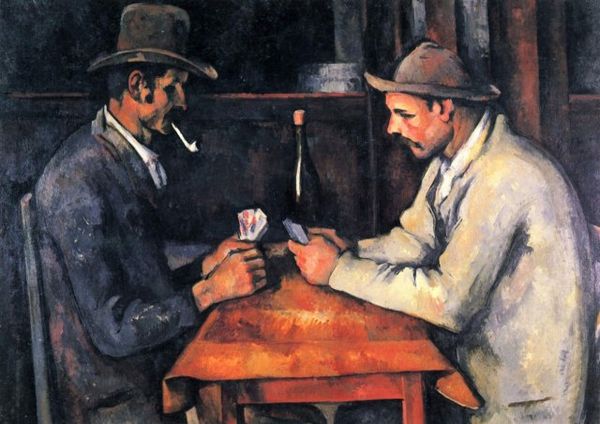
The tiny, oil-rich nation of Qatar has purchased a Paul Cézanne painting, The Card Players, for more than $250 million. The deal, in a single stroke, sets the highest price ever paid for a work of art and upends the modern art market.

If the price seems insane, it may well be, since it more than doubles the current auction record for a work of art. And this is no epic van Gogh landscape or Vermeer portrait, but an angular, moody representation of two Aix-en-Provence peasants in a card game. But, for its $250 million, Qatar gets more than a post-Impressionist masterpiece; it wins entry into an exclusive club. There are four other Cézanne Card Players in the series; and they are in the collections of the Metropolitan Museum of Art, the Musée d’Orsay, the Courtauld, and the Barnes Foundation. For a nation in the midst of building a museum empire, it’s instant cred.

Is the painting, created at the cusp of the 20th century, worth it? Well, Cézanne inspired Cubism and presaged abstract art, and Picasso called him “the father of us all.” That said, “$250 million is a fortune,” notes Victor Wiener, the fine-art appraiser called in by Lloyd’s of London when Steve Wynn put his elbow through a Picasso, in 2006. “But you take any art-history course, and a Card Players is likely in it. It’s a major, major image.” For months, he said, “its sale has been rumored. Now, everyone will use this price as a point of departure: it changes the whole art-market structure.”

More here.

Dear Super Bowl Advertisers: No Spoilers!

From The New Yorker:

Ferris-bueller-adSuper Bowl ads have been a major part of the game’s telecast since 1984, at least. That was the year that Apple débuted its “1984” spot, which was directed by Ridley Scott and showed a benumbed crowd herded into an auditorium before being liberated by an enlightened, hammer-throwing revolutionary. The commercial was a homage to George Orwell’s novel, of course, but also a suggestion that Apple Macintosh users might be more interested in individuality and energy than, say, P.C. users. It ran during the Super Bowl and only once more before it was removed from circulation; cult fame was instant.

There had been notable Super Bowl ads before “1984”: Joe Namath hawked Noxzema in 1973 and Xerox launched its famous monastery spot in 1977. But “1984” kicked things up a notch. Apple returned the following year with the “lemmings” ad, in which P.C. users marched off a cliff; it was considered a failure, but still generated tremendous interest in the week leading up to the game. In 1990, Ridley Scott directed a spot for Nissan that courted criticism for what some said was a glorification of street racing. In 1993, basketball dominated: Larry Bird and Michael Jordan played an increasingly Byzantine game of H-O-R-S-E, and Jordan was featured in a second ad that featured Looney Tunes characters and became the basis for the movie “Space Jam.” And then there was the post-9/11 Clydesdales ad of 2002, where the famed Budweiser horses crossed the Brooklyn Bridge and then bowed their heads in prayer.

More here.

Maya Angelou: Global Renaissance Woman

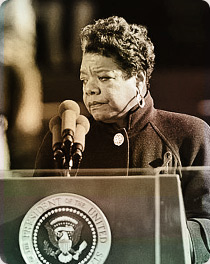
Bio6Dr. Maya Angelou is one of the most renowned and influential voices of our time. Hailed as a global renaissance woman, Dr. Angelou is a celebrated poet, memoirist, novelist, educator, dramatist, producer, actress, historian, filmmaker, and civil rights activist. Born on April 4th, 1928, in St. Louis, Missouri, Dr. Angelou was raised in St. Louis and Stamps, Arkansas. In Stamps, Dr. Angelou experienced the brutality of racial discrimination, but she also absorbed the unshakable faith and values of traditional African-American family, community, and culture. As a teenager, Dr. Angelou’s love for the arts won her a scholarship to study dance and drama at San Francisco’s Labor School. At 14, she dropped out to become San Francisco’s first African-American female cable car conductor. She later finished high school, giving birth to her son, Guy, a few weeks after graduation. As a young single mother, she supported her son by working as a waitress and cook, however her passion for music, dance, performance, and poetry would soon take center stage. In 1954 and 1955, Dr. Angelou toured Europe with a production of the opera Porgy and Bess. She studied modern dance with Martha Graham, danced with Alvin Ailey on television variety shows and, in 1957, recorded her first album, Calypso Lady. In 1958, she moved to New York, where she joined the Harlem Writers Guild, acted in the historic Off-Broadway production of Jean Genet's The Blacks and wrote and performed Cabaret for Bio5Freedom. In 1960, Dr. Angelou moved to Cairo, Egypt where she served as editor of the English language weekly The Arab Observer. The next year, she moved to Ghana where she taught at the University of Ghana's School of Music and Drama, worked as feature editor for The African Review and wrote for The Ghanaian Times.

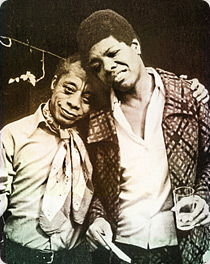
During her years abroad, Dr. Angelou read and studied voraciously, mastering French, Spanish, Italian, Arabic and the West African language Fanti. While in Ghana, she met with Malcolm X and, in 1964, returned to America to help him build his new Organization of African American Unity. Shortly after her arrival in the United States, Malcolm X was assassinated, and the organization dissolved. Soon after X's assassination, Dr. Martin Luther King, Jr. asked Dr. Angelou to serve as Northern Coordinator for the Southern Christian Leadership Conference. King's assassination, falling on her birthday in 1968, left her devastated. With the guidance of her friend, the novelist James Baldwin, she began work on the book that would become I Know Why the Caged Bird Sings. Published in 1970, I Know Why the Caged Bird Sings was published to international acclaim and enormous popular success. The list of her published verse, non-fiction, and fiction now includes more than 30 bestselling titles.

More here. (Note: In honor of African American History Month, we will be linking to at least one related post throughout February. The 2012 theme is Black Women in American Culture and History).

Sunday Poem

One of the best leaves: Wislawa Szymborska, 1923-2012

Could Have

It could have happened.
It had to happen.
It happened earlier. Later.
Nearer. Farther off.
It happened, but not to you.

You were saved because you were the first.
You were saved because you were the last.
Alone. With others.
On the right. The left.
Because it was raining. Because of the shade.
Because the day was sunny.

You were in luck — there was a forest.
You were in luck — there were no trees.
You were in luck — a rake, a hook, a beam, a brake,
A jamb, a turn, a quarter-inch, an instant . . .

So you're here? Still dizzy from
another dodge, close shave, reprieve?
One hole in the net and you slipped through?
I couldn't be more shocked or
speechless.
Listen,
how your heart pounds inside me.

by Wislawa Szymborska
from View With a Grain of Sand
Harcourt, Brace, 1996)
translation: Stanislaw Baranczak and Clare Cavanagh

Saturday, February 4, 2012

Adonis: a life in writing

Maya Jaggi in The Guardian:

ScreenHunter_09 Feb. 05 16.47Adonis, the greatest living poet of the Arab world, ushers me down a labyrinthine corridor in a stately building in Paris, near the Champs Elysées. The plush offices belong to a benefactor, a Syrian-born businessman funding the poet's latest venture – a cultural journal in Arabic, which he edits. Fetching a bulky manuscript of the imminent third issue of the Other, Adonis hefts it excitedly on to a coffee table, listing the contributors “from west and east”, many of them of his grandchildren's generation. He turned 82 this month. His eyes spark: “We want new talents with new ideas.”

A Syrian-born poet, critic and essayist, and a staunch secularist who sees himself as a “pagan prophet”, Adonis has been writing poetry for 70 years. He led a modernist revolution in the second half of the 20th century, exerting a seismic influence on Arabic poetry comparable to TS Eliot's in the anglophone world. Aged 17, he adopted the name of the Greek fertility god (pronounced Adon-ees, with the stress on the last syllable) to alert napping editors to his precocious talent and his pre-Islamic, pan-Mediterranean muses. Since the death of the Palestinian poet Mahmoud Darwish in 2008, it would be hard to argue for a poet of greater stature in a literary culture where poetry is the most prestigious form as well as being popular.

He moved to Paris in 1985, and was named a commander of France's Order of Arts and Letters in 1997. Last year he was the first Arab writer to win the Goethe prize in Germany, and each autumn is credibly tipped for the Nobel in literature – the only Arab recipient of which to date was the Egyptian novelist Naguib Mahfouz in 1988.

More here.