Saturday Poem

Tap-Tapping

Rough, wet winds
parch my agonised face
as if salting the wound of
……………………… Bulhoek
…………………..Sharpeville
……………….. Soweto,
unbandage strip by strip
the dressings of Hope;
I wade my senses
through the mist;
I am still surviving
the traumas of my raped soil
alive and aware;
truths jump like a cat leaps for fish
at my mind;
I plod along
.. into the vortex
of a clear-borne dawn

by Mafika Gwala
from Jol’iinkomo
publisher: AD Donker, Johannesburg, 1977

Editor's Note: Bulhoek: A tiny village in the Eastern Cape where, in 1922, the police and army shot about 180 members of a religious community.

Sharpeville: At a peaceful protest against the Pass Laws in 1960 at the Sharpeville Police Station in the Vaal Triangle, 69 people were killed and 180 injured.

Soweto: At a march of high school students protesting the imposition of Afrikaans as an official language of instruction in black schools, 23 students were killed.

spring not over

5ce610d2-538f-11e1-aafd-00144feabdc0

Yet, for all the pain and the setbacks, there is no doubt that the political upheaval has transformed the consciousness of Arabs. Last year’s revolts, particularly the drama in Tahrir Square, opened Arab eyes to the tantalising possibility of change. In a region held back by authoritarianism and bedevilled by social divisions and sectarian tensions, people were brought together in a rare show of unity, the liberals embracing the Islamists, the Muslims praying next to the Christians. Beyond the revolutionary countries, people looked on hopefully, believing for the first time in the possibility of overcoming decades of tyranny and inequality. For those hoping to relive the moment it all changed, novelist Ahdaf Soueif, author of the Man Booker-shortlisted The Map of Love and also a leftist activist, takes you into an unfolding revolution almost day by day. In Cairo: My City, Our Revolution, the story of Egypt’s uprising is intertwined with biographical detail and wrapped in an overwhelming passion for Cairo, a city that she feels had been disfigured by previous regimes and only now can be reclaimed as her own.

more from Roula Khalaf at the FT here.

Distrust That Particular Flavor

67954032

Herein lies one of Gibson’s most incisive gifts: his appreciation for the undersung, the copy, and how it can proliferate. Not the original, because as recontextualization, mash-ups, memes and other clever varietals of simulacra have possibly forever detonated our sense of originality and authenticity, the first is simply the start of an idea and not necessarily the best iteration, at that. Instead, Gibson knows that each copy adds more nuance to the object of our cultural fascination, imparted in its own weird, sometimes trashy but wholly individual code. The moments in “Distrust” where he translates the details of those codes are among the collection’s best. London, he says, “can reflect Japan, distort it, enjoy it, in ways that Vancouver, where I live, never can.” In Gibson’s writing, he functions as London does but to the past; he reflects it, distorts it and then projects it into the future. Or more precisely, he finds certain fun-house experiments already happening in the culture and then he takes those ideas and extrapolates them to their hysterical end in fiction. Take his massive urban environment, the Sprawl, used in “Neuromancer” and other books and short stories, a city that spawns so much of itself that it’s monstrous.

more from Margaret Wappler at the LA Times here.

Our nation is coming apart at the seams

12CONFESSORE-articleInline

For some decades now, a popular conservative narrative of modern America has gone something like this: Our center-right nation, devout and industrious, is ruled by a politically liberal elite that disdains family, despises religion and celebrates indolence with government handouts. Many people find this story convincing. It helped fracture the postwar Democratic Party and midwifed the culture wars. Today it feeds the political frustrations of the Tea Party movement. Charles Murray, the influential conservative scholar and provocateur, believes this story is wrong. In his new book, “Coming Apart,” Murray flips the script that has energized Republican politics and campaigns since Richard Nixon: the white working class, he argues, is no longer part of a virtuous silent majority. Instead, beginning in the early 1960s, it has become increasingly alienated from what Murray calls “the founding virtues” of civic life. “Our nation is coming apart at the seams,” Murray warns — “not ethnic seams, but the seams of class.”

more from Nicholas Confessore at the NY Times here.

Friday, February 10, 2012

A Peaceful, but Very Interesting Pursuit

Lisa Levy in The Rumpus:

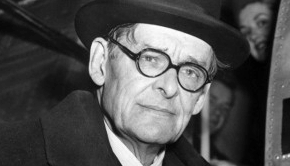
ScreenHunter_20 Feb. 10 13.30From 1917 until 1925, T.S. Eliot worked in a bank. A simple, declarative sentence, a biographical fact. Not the subject of dissertations or the reason two hefty volumes of The Letters of T.S. Eliot (Volume 1: 1898-1922; Volume 2: 1923-5) have just been published, but along with his disastrous and draining marriage to Vivien Haigh-Wood, Eliot’s employment at Lloyd’s Bank of London was the driving force of his life in the years of these letters, until he left Lloyd’s in October 1925 for a position as an editor at the publishing house Faber & Gwyer (later to be Faber & Faber).

There is a general antipathy about hearing too much about a writer’s day job once he has become successful, and Eliot’s successes piled up as he rose at Lloyd’s: Prufrock and Other Observations was published in 1915; his essays collected in The Sacred Wood in 1921; The Waste Land stormed both sides of the Atlantic in 1922, etc. Like Eliot at the bank, we know Wallace Stevens sold insurance, but nobody wants to think about the poet at the water cooler, or, even worse, pouring over actuarial tables. Same goes for William Carlos Williams being a doctor: Do we want a man so skilled with words to perform our annual physicals? It’s fine for a writer to have a quirky or strange day job, like nude model, “oyster pirate,” even garbage man. Yet the point of the writer’s life must remain to end up at the writer’s desk somewhere, with all that nonsense left behind.

More here.

Friday Poem

Welcome Morning
.

There is joy
in all:
in the hair I brush each morning,
in the Cannon towel, newly washed,
that I rub my body with each morning,
in the chapel of eggs I cook
each morning,
.
in the outcry from the kettle
that heats my coffee
each morning,
in the spoon and the chair
that cry “hello there, Anne”
each morning,
in the godhead of the table
that I set my silver, plate, cup upon
each morning.
All this is God,
right here in my pea-green house
each morning
and I mean,
though often forget,
to give thanks,
to faint down by the kitchen table
in a prayer of rejoicing
as the holy birds at the kitchen window
peck into their marriage of seeds.
.
So while I think of it,
let me paint a thank-you on my palm
for this God, this laughter of the morning,
lest it go unspoken.
.
The Joy that isn't shared, I've heard,
dies young.
.
.
by Anne Sexton
from The Awful Rowing Toward God

Toni Morrison: The Day, and Its Splendid Parts

From The New York Times:

Toni_morrison_01On June 10, 1973, a few years after Toni Morrison had published her first novel, “The Bluest Eye,” the Book Review asked her for an essay, for its annual Summer Reading issue, about, of all things, cooking out. The essay Morrison delivered is lovely, and hard to read without conjuring summer and blankets spread across shady lawns. With spring almost in the air, here is Morrison’s essay again, plucked from our archives. At the time, we identified her this way: “Toni Morrison, the author of ‘The Bluest Eye,’ cooks on a proper stove in Spring Valley, N.Y.”

By TONI MORRISON

Uncle Green was late so that meant all the Blue Gums would be late too. He was up from Alabama for 20 days with a $500 bill which never broke because nobody – nobody – had change and so he had to borrow whatever he needed until the time he could get to a store big enough to handle it. Mama and Aunt Millie looked at his big bill, then at each other, then at the sky that stretched overhead with precisely the infinite patience they had lost. The fish were already awake, the potatoes were sliced and simmering next to the onions, and this whole tribal effort to have a day-long fish-and-cookout at Turkeyfoot Lake in honor of the eldest member of the Alabama wing of the family was beginning to draw Mama’s and Aunt Millie’s lips together in annoyance.

More here. (Note: In honor of African American History Month, we will be linking to at least one related post throughout February. The 2012 theme is Black Women in American Culture and History).

Syrian poet Adonis introduces his artworks

From The Guardian:

Adonis2

A major tribute to the great Syrian poet Adonis, including an exhibition of his stunning drawings and a series of literary events. Adonis is today considered one of the most important figures in the Arabic literary history of the last fifty years, and the Arab world’s greatest living poet. His work has spanned poetry, literary criticism and history, Sufism, politics and contemporary cultural affairs. His drawings are inspired by and include sections of poetry, handwritten in Arabic calligraphy and collaged with layers of found objects. These pieces, like his literary work, combine traditional and contemporary influences. Exiled to France after the Israeli invasion of Lebanon in 1982, he worked to bring to Arabic poetry the international recognition it deserved. Even today, when he is more than eighty years old, he retains his fresh and critical outlook on the events of his homeland, attracting controversy and debate because of his cautionary and critical words on the Arab Spring. In 2011, Adonis was awarded the highly prestigious Goethe Prize.

About 10 years ago the Syrian poet Adonis started making images using calligraphy, colour and figurative gestures which he calls 'rakaim'. Here he talks about the inspiration behind some of his latest work, currently on show at the Mosaic Rooms in London.

Picture on right: 'This is the only rakima where I've used a photograph. It's a young woman protesting against the wall in Palestine. The text is an assemblage of pre-Islamic writings which speak of peace and against oppression.'

More here.

Notes from the Undercity

Article00Jonathan Shainin in Bookforum:

On December 9, 2011, the ABC News program 20/20 aired a dramatic report from India, presented by the show’s Emmy Award–winning anchor Elizabeth Vargas. In an uncharacteristically long piece devoted to social issues in a foreign country not recently liberated from tyranny by an American invasion, the fifteen-minute segment set out to reveal what its title dubbed “India’s Deadly Secret.” The deadly secret in question—so secret that the Times of India has only mentioned it about six hundred times in the past two years, according to LexisNexis—is the propensity of Indian families to abort female fetuses: a disturbing and disturbingly widespread practice, which has produced badly skewed child sex ratios (as high as 129 boys for every 100 girls in certain districts) that indicate the “disappearance” of tens of millions of women over the past several decades.

This is a subject of unquestionable significance, but 20/20’s report on India’s “growing gender gap” turned out to be a kind of master class in how deeply a group of well-meaning journalists can drown their good intentions in a warm bath of patronizing condescension and pity. Backed by the requisite sitar-and-tabla sound track, Vargas strode bravely down dusty, crowded roads with nary a female in sight. “Walk down any street, as I did throughout India,” she said in a voice-over, “and you notice something startling: In every direction you see men, and very few women.” Cut to a slow-motion shot of four uniformed schoolgirls walking past the camera: “Now look closely at the faces of these girls. They are the lucky ones—they’re alive.” (Figures from the 2011 census suggest that they have the company of 572 million other living Indian women.)

If you were playing Sentimental Orientalist bingo while watching at home, your card would have filled up pretty fast. Obligatory reference—“in a land where men revere female goddesses”—to “spiritual” India? Check. Needless (and erroneous) recourse to “ancient tradition” as an explanation for contemporary behavior? Check. Failure to acknowledge that the scourge of sex-selective abortion afflicts countries from Albania and Armenia to South Korea and Vietnam? Check. Concluding with ponderous and vaguely uplifting quote on-screen from Mahatma Gandhi? Check. Spelling his name incorrectly? Bingo.

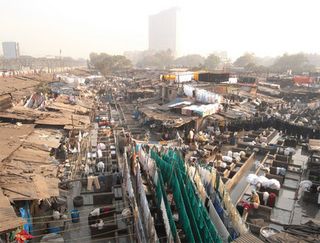
If I had to tell you one thing about Katherine Boo’s astonishingly fine new book, Behind the Beautiful Forevers, I might start by noting that what a team of journalists from ABC News failed to accurately convey with fifteen minutes of video and who knows how many thousands of dollars, Boo manages in a single sentence. After describing how Fatima, one of the Mumbai slum dwellers whose lives this book chronicles with remarkable precision and a bracing refusal of pity, had drowned her own two-year-old daughter in a bucket, Boo encapsulates the whole terrible phenomenon of female feticide in India in thirty-two unadorned words: “Young girls in the slums died all the time under dubious circumstances, since most slum families couldn’t afford the sonograms that allowed wealthier families to dispose of their female liabilities before birth.”

Hungary’s Government Tightens Grip on Arts

Hungary-gripJulia Michalska in The Art Newspaper:

Already under attack from the European Commission for its policies on banking, the law and the media, Hungary’s national conservative government is now facing a tide of protest from the arts community. The government, led by Viktor Orban, stands accused of systematically replacing key figures in cultural institutions, staging pro-government exhibitions, rethinking permanent museum displays and replacing historic statues to fit its political agenda. “The fact that an authoritarian government wants to control the arts is in itself not surprising,” says the Hungarian economist Janos Kovacs. “But it’s incredible that this is happening in the middle of the European Union without provoking angry reactions in Brussels.”

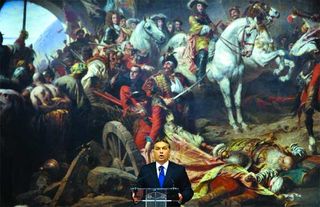
Since coming to power with a two-thirds majority in 2010, Orban’s Fidesz party has passed more than 350 laws and rushed through a constitution which, the international community argues, endangers Hungarian demo­cracy. Last month, to celebrate the official inauguration of the constitution, Orban opened a government-organised exhibition at the National Gallery. It chronicles 1,000 years of Hungarian history, focusing on sovereign statehood and Christ­ian­ity (until 16 August). The show includes 15 large state-commissioned canvases depicting important historic events spanning 150 years, including an image of Orban. The event contributed to the decision by the National Gallery’s director, Ferenc Csak, to resign before the show opened. “The government shouldn’t have the power to order exhibitions with such a high political agenda. Museums shouldn’t be getting involved in politics,” says Csak.

There have been other government-instigated changes in personnel at leading institutions. Laszlo Simon, a Fidesz party MP and chairman of the parliamentary cultural and press committee, has become the head of the National Cultural Fund of Hungary—which up until now was a body independent of government, monitored by the culture committee. It is one of the most important organisations that funds Hungarian cultural institutions, including museums, libraries, theatres and archives.

Mikhail Lomonosov and the dawn of Russian science

FigureVladimir Shiltsev in Physics Today:

As a scientist, Lomonosov was equal parts thinker and experimenter. He tested his theories and hypotheses with experiments that he planned and carried out himself. Although proficient in math, he never used differential calculus. He would work on research topics for years, even decades at a time, always with an eye toward turning discoveries into new practices or inventions.

Lomonosov believed physical and chemical phenomena were best explained in terms of the mechanical interactions of corpuscles—“minute, insensible particles” analogous to what we now know as molecules.1 Giving name to the philosophy, he coined the term “physical chemistry” in 1752.

He is perhaps best known for being the first person to experimentally confirm the law of conservation of matter. That metals gain weight when heated—now a well-known consequence of oxidation—confounded British chemist Robert Boyle, who had famously observed the effect in 1673. The result seemed to implicate that heat itself was a kind of matter. In 1756 Lomonosov disproved that notion by demonstrating that when lead plates are heated inside an airtight vessel, the collective weight of the vessel and its contents stays constant. In a subsequent letter to Euler, he framed the result in terms of a broad philosophy of conservation:

All changes that we encounter in nature proceed so that . . . however much matter is added to any body, as much is taken away from another . . . since this is the general law of nature, it is also found in the rules of motion: a body loses as much motion as it gives to another body.

Who Needs God?

Creation-of-adam-handKenan Malik over at his blog (h/t: Zack Beauchamp over at Andrew Sullivan):

The difference between believers and atheists is not about whether either can explain the ultimate cause of the universe. It is about how we wish to explain it. I am happy to say, ‘I do not know what First Cause is, or even if there is one. It may be that one day we discover the answer to that. Or it may be that we never will. For now I am happy to keep an open mind, accept our ignorance of First Cause and live with the uncertainty of not having one’. Believers are unwilling to say that. They insist that there must be a First Cause and that that First Cause must take the form of God. They cannot live with the uncertainty about First Cause that comes with non-belief. In Peter Stannard’s words they know – they have to know – that God exists. The difference between believers and atheists is, in other words, not simply a difference of philosophy, it is also a difference of psychological temper.

A similar distinction can be drawn between atheists and believers with respect to the second issue for which it is claimed that God is necessary – morality. ‘If God does not exist, everything is permitted’. Dostoevsky never actually wrote that line, though so often is it attributed to him that he may as well have. It has become the almost reflexive response of believers when faced with an argument for a godless world. Without religious faith, runs the argument, we cannot anchor our moral truths or truly know right from wrong. Without belief in God we will be lost in a miasma of moral nihilism. ‘The elimination of God’, the theologian Alister McGrath writes, ‘led to new heights of moral brutality’. Though given the extent of brutality undertaken in the name of God, I am not sure that that is a particularly astute sentiment.

‘If God does not exist’, William Craig claims, ‘Objective moral values and duties do not exist’. There is a voluminous philosophical literature on the debate between moral realists and moral anti-realists, that is between those who see moral values as akin to facts, and those who reject that idea. It is an intellectual swamp, and one into which I do not intend stepping, at least in this talk. All I would say is it is possible to believe that moral questions have non-arbitrary answers without conflating facts and values.

The Defeated: Sri Lanka’s Tamils After the War

DefeatedAn anonymous writer in Caravan:

ON THE AFTERNOON OF 19 MAY 2009, at around 1:20 pm, a ration shop accountant named Sivarajan ran to the front of the winding lunch queue in the Anandakumaraswami Zone 3 refugee camp to serve rice and sodhi, a watery concoction of chillies and coconut milk. Swarna, a former militant, sat in her tent nearby, yelling at her mother for having told an army man from the morning shift that their family belonged to Mullaitivu, on the northeastern coast, where the war between the Sri Lankan Army and the separatists—“Tigers,” she called them—was still raging.

At that moment, they got a text message on their mobile phones from the government’s information department. Addressed to all Sri Lankans, it proclaimed, in Sinhala—a language neither Sivarajan nor Swarna could read—that Velupillai Prabhakaran, the man who led a 26-year-long separatist battle for a Tamil Eelam (state), had been killed by the army in a lagoon just a two hours drive north of where they were. So when the news was announced in Tamil over a loudspeaker that evening, they did not believe it. When it finally sank in, they realised—neither with remorse nor relief, but mere wonder at its very possibility—that in an instant the war they had been born into had left their lives.

Nothing would ever be the same again.

ONE

IT HAD TO BE INAPPROPRIATE to want a bath when shells were raining from the sky. But for the fifth day in a row, it was all Siva could think of. Crouching with his wife, daughter and six others in a hastily dug five-foot deep hole in the ground that was dissolving in the nonstop downpour, he was going crazy with the thick layer of mud on his skin. It itched, and he was sure he could smell blood and shit on it.

Above Siva’s head, across the coconut orchard of Kombavil village in Puthukkudiyiruppu region of Mullaitivu district, the Liberation Tigers of Tamil Eelam (LTTE) and the Sri Lankan Army were exchanging gunfire. Aircraft ejected shells into the area, which had once been home to about 50 families; since April 2009, it had been transformed into a dizzying two sq km maze of felled trees and underground bunkers dug and redug by the army, LTTE and fleeing, hiding villagers. Below the rain rivulets and the rattle of machine guns, about 3,000 people cowered underground, packed like iron rods in a truck, judging danger and safety by the ebb and rise of the sounds of battle. They were petrified, but more unbearably, they were hungry.

America with one eye closed

Storyempire_377_final

Inevitably, it also contains within it two Americas. One is the America which develops and uses—not once, but twice—a weapon of a destructive capability which far outstrips anything that has come before, the America which decides what price some other country’s civilian population must pay for its victory. There is nothing particular to America in this—all nations in war behave in much the same way. But in the years between the bombing of Hiroshima and now, no nation has intervened militarily with as many different countries as America, and always on the other country’s soil; which is to say, no nation has treated as many other civilian populations as collateral damage as America while its own civilians stay well out of the arena of war. So that’s one of the Americas in Hiroshima—the America of brutal military power. But there’s another America in the book, that of John Hersey. The America of looking at the destruction your nation has inflicted and telling it like it is. The America of stepping back and allowing someone else to tell their story through you because they have borne the tragedy and you have the power to bear witness to it. It is the America of The New Yorker of William Shawn, which, for the only time in its history, gave over an entire edition to a single article and kept its pages clear of its famed cartoons. It is the America which honored Hersey for his truth telling.

more from Kamila Shamsie at Guernica here.

the last liberal

Tony-Judt-006

“The twentieth century,” Tony Judt asserts in this luminous book of conversations with the Yale historian Timothy Snyder, “is the century of the intellectuals.” What does it say about intellectuals, then, that the century in which they exercised so much influence on policymaking and public opinion was also the bloodiest in history? There are some sobering answers—few of them flattering—in Thinking the Twentieth Century. Published two years after Judt’s death from motor neurone disease, this book contains his final views on politics and economics and on a range of thinkers from Keynes to Eric Hobsbawm. A relatively obscure British academic based in New York, Judt refashioned himself in the last decade of his life into a strikingly bold and prominent public intellectual. Published in 2005, his masterpiece Postwar, a panoramic account of Europe after the second world war, broadened his reputation as a scholar of French intellectual history. But Judt was to become even better known for his eloquent defence of the old values of good governance, social and economic justice, and his attacks on his peers—western liberal intellectuals—for having succumbed to the false consolations of dogma and the blandishments of power.

more from Pankaj Mishra at Prospect Magazine here.

A reflexive “aqua-nationalism”

Moraine_Lake

Canadians are still “dead serious” about water. Coureurs de bois and the ghost of Tom Thomson haunt the misty lakes of our collective subconscious. The effect, too often, is to dissolve reasoned debate about the subject in a solution of mythic imagery infused with implied threats to our identity. A reflexive “aqua-nationalism,” clothed in environmental righteousness, is hostile to any suggestion that Canada’s water could ever become a tradable commodity. The animus is all the more implacable if the discussion involves trading water with Americans — an idea close to treason in some eyes. In this atmosphere it’s easy to ridicule visionaries who dream of replumbing the continent. Nonagenarian Newfoundlander Tom Kierans’s scheme to dike James Bay and pipe water to the US Midwest through the Great Lakes invites a check of the old man’s sanity, and it hardly surprises that right-wing American anti-Semite Lyndon LaRouche is behind a plan to reroute water from the Peace and Liard rivers from northern BC deep into the United States. But our hostile reductionism is going to become difficult to sustain as greenhouse-gas emissions continue to heat up the planet. New patterns of wind, humidity, and ambient temperature are already dramatically altering the weather map. Some parts of the country are receiving more rain than ever before; other regions are drying up.

more from Chris Wood at The Walrus here.

Thursday, February 9, 2012

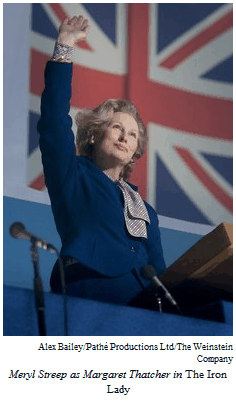
Julian Barnes reviews The Iron Lady

Julian Barnes in the New York Review of Books:

ScreenHunter_19 Feb. 09 13.13Philip Larkin was one of those who adored Mrs. Thatcher. “I got the blue flash,” he reported after meeting her—that moment of what the diarist and Tory minister Alan Clark (who also adored her) described as Führer Kontakt. “Her great virtue,” Larkin told an interviewer in 1979, “is saying that two and two makes four, which is as unpopular nowadays as it has always been.” Later that year, he elaborated: “At last politics makes sense to me, which it hasn’t done since Stafford Cripps (I was very fond of him too). Recognizing that if you haven’t got the money for something you can’t have it—this is a concept that’s vanished for many years.”

Politicians are, inevitably, elected by people who know less about politics than they do, and Mrs. Thatcher’s favorite schtick was making out that a state’s fiscal responsibility was merely a scaled-up version of good housekeeping. Thrift, hard work, common sense: the housewife virtues were what she pushed, and she convinced many. Though of course whenever a government really wants to afford something—like the Falklands War—it does so; mysterious contingency funds are suddenly discovered (and their size kept from the public until much later). This is a bit like being attentive to the cost of a pint of milk while having a millionaire husband in the background—which was the case with Mrs. Thatcher.

More here.

If God Existed, He’d Be A Solid Midfielder

Aleksandar Hemon in Granta:

1328190265764German was not German – he was from Ecuador, but his father was born in Germany, hence the nickname. He was a UPS truck driver in his mid-forties, suntanned, wearing a moustache. Every Saturday and Sunday, he’d arrive by the lake around 2.00 p.m. in a decrepit, twenty-five-year-old van, on which a soccer ball and the words were painted. He’d unload goalposts and nets, bagfuls of single-colour T-shirts and balls, plus the flags of different countries – Ecuador, Colombia, Brazil, the United States, Spain, Nigeria – and he’d distribute the shirts to the guys who came to play. Most of them lived in Uptown and Edgewater and were from Mexico, Honduras, El Salvador, Peru, Chile, Colombia, Belize, Brazil, Jamaica, Nigeria, Somalia, Ethiopia, Senegal, Eritrea, Ghana, Cameroon, Morocco, Algeria, Jordan, France, Spain, Romania, Bulgaria, Bosnia, Ukraine, Russia, Vietnam, Korea. There was even a guy from Tibet, and he was a very good goalie.

Normally, there’d be more than two teams, so the games lasted for fifteen minutes or until one team scored two goals. The games were very serious, as the winner stayed on the field, while the losing team had to wait on the sidelines. German refereed and he almost never called a foul – it seemed he needed to hear the sound of a breaking bone to use his whistle. Sometimes, if a team needed a player, he’d referee and play.He was particularly hard on himself and once he gave himself a yellow card for a brutal tackle. We – immigrants trying to stay afloat in this country – found comfort in playing by the rules we set ourselves. It made us feel that we still were part of a world much bigger than the United States.

More here.

The Latest on The Orchid-Dandelion Hypothesis

David Dobbs in Wired:

ScreenHunter_18 Feb. 09 12.54As faithful readers know, I’m working on a book, provisionally titled The Orchid and the Dandelion and likely to be published next year, about the orchid-dandelion hypothesis: the notion that genes and traits that underlie some of humans’ biggest weaknesses — despair, madness, savage aggression — also underlie some of our greatest strengths — resilience, lasting happiness, empathy. If you’re used to the disease model of genes that are associated with mood and behavioral problems, this hypothesis can seem puzzling. The turn lies in viewing problems such as depression, distractibility, or even aggression as downsides of a heightened sensitivity to experience that can also generate assets and contentment.

I first wrote about the orchid-dandelion hypothesis in an Atlantic article two years ago. Last week, New Scientist published a feature I wrote about some of the research I’ve come across while researching the book. The article is behind a paywall now, so you’ll need a subscription to read it; I’ll post the whole thing here in a few weeks when the New Scientist exclusive-run period ends. In the meantime, I thought I’d excerpt here a couple passages of particular interest.

One is the opener, which describes how toddlers react to a clever test of their generosity and then lays out the gist of the hypothesis. The other is a multigenic study that sought to expand the hypothesis beyond single-gene candidate-gene studies.

More here.