Talking with the Taliban

Ahmed Rashid at his own website:

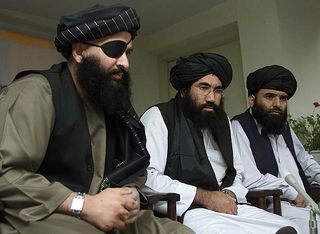
TalibanAfter eleven years of war the Taliban’s public declaration that they will hold talks with the United States in Qatar is a major breakthrough for the political process, for Afghanistan’s internal stability and for the relative peace that will be needed by the US and NATO in 2014 before they can exit Afghanistan in good order and without too much bloodshed.

The year-long clandestine talks brokered by the Germans, fostered by Qatar and eventually ending in direct meetings between US officials and Taliban representatives will hopefully lead to a major reconciliation with the Kabul regime. The Taliban’s present insistence that they will only talk with the Americans is not realistic in the long term, while Karzai’s recent policy flip-flops and contradictory statements belie the fact that he was kept in the loop every step of the way by the Germans. The talks will go ahead because there is no other alternative to ending the war.

The metrics of calculating how successful NATO forces have been on the ground combating the Taliban, despite heady announcements by NATO generals, are mired in considerable controversy and doubt. The ability of the Taliban, unlike al-Qaeda, to rebound from severe hits has proved them to be remarkably resistant to casualties, with a deep bench of commanders, logisticians, recruiters and administrators for their cause.

More here.

Thursday Poem

Old Lem

I talked to old Lem
and old Lem said:
“They weigh the cotton
They store the corn
We only good enough
To work the rows;
They run the commissary
They keep the books
We gotta be grateful
For being cheated;
Whippersnapper clerks
Call us out of our name
We got to say mister
To spindling boys
They make our figgers
Turn somersets
We buck in the middle
Say, “Thankyuh, sah.”
They don't come by ones
They don't come by twos
But they come by tens.
.

Read more »

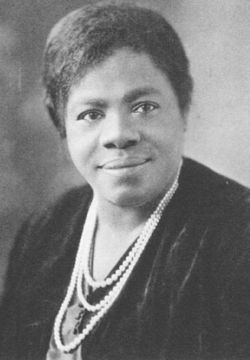
Mary McLeod Bethune: 1875 – 1955

From Divinecaroline:

Speech: Mary McLeod Bethune (1939)

Mary-mcleod-bethune1In 1906, a teacher named Mary Bethune built the Daytona Literacy and Industrial School for Training Negro Girls in Florida. Initially a one-woman operation, she enlisted the help of a few community members and sold baked goods to help raise funds for supplies and maintenance. After getting funding from one of the founders of Proctor and Gamble, the school joined forces with an all-boys school in Jacksonville and it became the Bethune-Cookman College. Later, she went on to found the National Council of Negro Women and worked with FDR on minority issues and youth policies.

Democracy is for me, and for 12 million black Americans, a goal towards which our nation is marching. It is a dream and an ideal in whose ultimate realization we have a deep and abiding faith. For me, it is based on Christianity, in which we confidently entrust our destiny as a people. Under God’s guidance in this great democracy, we are rising out of the darkness of slavery into the light of freedom. Here my race has been afforded [the] opportunity to advance from a people 80 percent illiterate to a people 80 percent literate; from abject poverty to the ownership and operation of a million farms and 750,000 homes; from total disfranchisement to participation in government; from the status of chattels to recognized contributors to the American culture. As we have been extended a measure of democracy, we have brought to the nation rich gifts. We have helped to build America with our labor, strengthened it with our faith, and enriched it with our song. We have given you Paul Lawrence Dunbar, Booker T. Washington, Marian Anderson, and George Washington Carver. But even these are only the first fruits of a rich harvest, which will be reaped when new and wider fields are opened to us. The democratic doors of equal opportunity have not been opened wide to Negroes. In the Deep South, Negro youth is offered only one-fifteenth of the educational opportunity of the average American child. The great masses of Negro workers are depressed and unprotected in the lowest levels of agriculture and domestic service, while the black workers in industry are barred from certain unions and generally assigned to the more laborious and poorly paid work. Their housing and living conditions are sordid and unhealthy. They live too often in terror of the lynch mob; are deprived too often of the Constitutional right of suffrage; and are humiliated too often by the denial of civil liberties. We do not believe that justice and common decency will allow these conditions to continue.

More here. (Note: In honor of African American History Month, we will be linking to at least one related post throughout February. The 2012 theme is Black Women in American Culture and History).

tollywood

Cn_image.size.tollywood

A picture-perfect replica of the Hollywood sign shines in the clear, cool sunlight, a helicopter beside it and, down below, a city of fake fronts with signs advertising “Greg’s Pistol Ship,” “Bala’s Inn Bed and Breakfast,” and “Yogi Bear Bounty Hunters.” Not far away, in a square that’s closed to the public, a mob of children dressed in school uniforms is dancing and lip-synching furiously behind a pair of pouting lovers as cameras roll. I’m surrounded by 11 Indian men in matching white baseball caps, five young women in saris, and a screeching child. We’re seated in a minivan with whirring fans above every row, offering the “air-conditioning” that is part of the $25 V.I.P. “Ramoji Star Experience” tour. In the past few minutes we’ve seen a “Sun Fountain” that would fit in at Versailles, a Japanese “Sayonara Garden,” and an intricate hedge maze; at this moment we’re passing an “Arizona Cactus Garden” across from a town that could sit in the shadow of the Himalayas. Now, in the bright late-monsoon-season morning, I watch young women in shalwar kameezes—and black cowboy hats—sauntering toward the “Wild Western Days Shooting Gallery.” An Islamic woman clad from head to toe in a burka is approaching the Gunsmoke restaurant.

more from Pico Ayer at Vanity Fair here.

sincerely, charles dickens

Harman_245765k

Among the dozens of Dickens publications connected with the bicentenary of the author’s birth on February 7, it is hard to imagine one more necessary than this, a one-volume, generously priced selection of his letters. The Pilgrim edition from which the text is derived (published in twelve mighty volumes by Oxford University Press and the British Academy between 1965 and 2002) was a landmark in scholarship that had the unfortunate effect of shutting Dickens’s letters away from normal readers; exhaustive, definitive and taking up two-and-a-half feet of shelf space, a used set costs around £3,000. Cutting such a vast body of work down to less than a thirtieth, some 450 letters, makes it impossible for an editor to represent the whole very accurately, but Jenny Hartley has attempted to do something of the kind, producing a “taster” selection rather than a series of epistolary knock-out blows (with which she could, surely, have filled several volumes). Hence she has included in her selection brief business notes to Dickens’s colleagues and collaborators, tender missives to intimates, letters to fans, autograph collectors and aspiring writers, formal complaints and petitions, set-piece travel descriptions, letters to The Times and other papers, along with the longer, more discursive letters that the novelist delighted in writing to his closest friends. This varied texture gives a fine sense of Dickens’s range of tone, purpose and acquaintance and shows what an integral part of his life letter-writing was.

more from Claire Harman at the TLS here.

religious art from nonbelievers

WK-BA759_Sighti_DV_20120202201648

Rarely have I seen a spectacle so disheartening as the cheerless, trash-strewn one-room flat that serves as the set for the Roundabout Theatre Company’s off-Broadway revival of John Osborne’s “Look Back in Anger.” In this production, reviewed elsewhere in today’s Journal, the only hint of beauty comes from the radio on which the play’s unhappy characters listen to Ralph Vaughan Williams’s radiant Fifth Symphony. Small wonder that it should offer them a glimpse of comfort and joy in the midst of their emotional turmoil. Like so much of Vaughan Williams’s music, the Fifth Symphony, which was composed during World War II, is deeply spiritual in tone, and it’s no surprise to learn that it was based on themes from his operatic version of “The Pilgrim’s Progress.” Here’s the surprise: Vaughan Williams was a lifelong agnostic. Now that the boutique atheism of such aggressive secularists as Richard Dawkins, Sam Harris and Christopher Hitchens has become chic, you might well ask yourself why any unbelieving artist would bother to turn his hand to the making of religious art. Indeed, most of the modern novelists who have placed matters of faith at the center of their work have been, like Graham Greene, C.S. Lewis, François Mauriac and Flannery O’Connor, believers of one sort or another. But in every other branch of art, great works of devotional art have been created by skeptics, not a few of whom were fire-breathingly militant about their doubt.

more from Terry Teachout at the WSJ here.

Using the body’s own immune system in the fight against cancer

From PhysOrg:

Shutterstock_46723585The immune system relies on an intricate network of alarm bells, targets and safety brakes to determine when and what to attack. The new results suggest that scientists may now be able to combine DNA sequencing data with their knowledge of the triggers and targets that set off immune alarms to more precisely develop vaccines and other immunotherapies for cancer.

“We already have ways to identify specific targets for immunotherapy, but they are technically challenging, extremely labor-intensive and often take more than a year to complete,” says senior author Robert Schreiber, PhD, the Alumni Professor of Pathology and Immunology at the School of Medicine and co-leader of the tumor immunology program at the Alvin J. Siteman Cancer Center at Barnes-Jewish Hospital and Washington University School of Medicine. “These difficulties have stood in the way of developing personalized immunotherapies for cancer patients, who often require immediate care for their disease. To our knowledge, this is one of the first studies to show that the faster methods provided by DNA sequencing can help. That opens up all kinds of exciting possibilities.” Scientists have long maintained that the immune system can recognize cancer as a threat either on its own or with the help of vaccines or other immunotherapeutic treatments, which help alert the immune system to the danger posed by cancers. Once the cancer is recognized, the immune system should develop the capacity to attack growing cancer cells until either the tumor is eradicated or the immune system's resources are exhausted. Schreiber and his colleagues have shown that interactions between the immune system and cancer are more complex. Their theory, called cancer immunoediting, suggests that some of the mutations in tumor cells are very easy for the immune system to recognize as a threat. If the immune system detects these mutations in cancer cells, it attacks until they are destroyed. At that point, the cancer may be eliminated. But it's also possible that the cancer can be “edited” by the immune system, resulting in the removal of all the cells containing the critical easily recognized mutations. The remaining tumor cells can continue to grow or enter into a period of dormancy where they are not destroyed but are held in check by the immune system.

More here.

Wednesday, February 8, 2012

Why economic inequality leads to collapse

Stewart Lansley in The Guardian:

ScreenHunter_17 Feb. 08 14.06During the past 30 years, a growing share of the global economic pie has been taken by the world's wealthiest people. In the UK and the US, the share of national income going to the top 1% has doubled, setting workforces adrift from economic progress. Today, the world's 1,200 billionaires hold economic firepower that is equivalent to a third of the size of the American economy.

It is this concentration of income – at levels not seen since the 1920s – that is the real cause of the present crisis.

In the UK, the upward transfer of income from wage earners to business and the mega-wealthy amounts to the equivalent of 7% of the economy. UK wage-earners have around £100bn – roughly equivalent to the size of the nation's health budget – less in their pockets today than if the cake were shared as it was in the late 1970s.

In the US, the sum stands at £500bn. There a typical worker would be more than £3,000 better off if the distribution of output between wages and profits had been held at its 1979 level. In the UK, they would earn almost £2,000 more.

The effect of this consolidation of economic power is that the two most effective routes out of the crisis have been closed. First, consumer demand – the oxygen that makes economies work – has been choked off. Rich economies have lost billions of pounds of spending power. Secondly, the slump in demand might be less damaging if the winners from the process of upward redistribution – big business and the top 1% – were playing a more productive role in helping recovery. They are not.

More here.

Wednesday Poem

One Day, Feeling Hungry

One day, feeling hungry, I swallowed the moon.
It stuck, like a wafer, to the top of my mouth,
dry as an aspirin. It slowly went down,

showing the gills of my vocal cords,
the folded wings in my abdomen,
the horrible twitch of my insect blood.

Lit from inside, I stood alone
(dark to myself) but could see from afar

the brightness of others who had swallowed stars.

by Gwyneth Lewis
from Zero Gravity
Bloodaxe Books, 1998

The crazy life and crazier death of Tycho Brahe, history’s strangest astronomer

Alasdair Wilkins in io9:

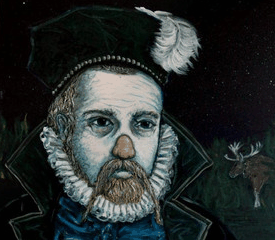
ScreenHunter_16 Feb. 08 12.56A solar eclipse in 1560 inspired Brahe to become an astronomer, and he quickly realized the burgeoning science could only progress if it had observations that were systematic, accurate, and, above all, nightly. To that end, he refined old instruments and built new ones, and spent the rest of his life assembling one of the largest bodies of astronomical data in human history…and more on that in a moment.

But Brahe was far from a dry scholar. In 1566 at the age of 20, he lost part of his nose in a duel with another Danish nobleman named Manderup Parsbjerg. The duel is said to have started over a disagreement about a mathematical formula. Because 16th century Denmark didn't have resources like the internet to figure out who was right, the only solution was to try to kill each other. For the rest of his life, Brahe wore a prosthetic nose. His fake nose was likely made of copper, although he probably also had gold and silver noses around for special occasions.

More here.

Spinoza’s Vision of Freedom, and Ours

Steven Nadler in the New York Times:

ScreenHunter_15 Feb. 08 12.43Spinoza approaches the issue of individual liberty from several perspectives. To begin with, there is the question of belief, and especially the state’s tolerance of the beliefs of its citizens. Spinoza argues that all individuals are to be absolutely free and unimpeded in their beliefs, by right and in fact. “It is impossible for the mind to be completely under another’s control; for no one is able to transfer to another his natural right or faculty to reason freely and to form his own judgment on any matters whatsoever, nor can he be compelled to do so.”

For this reason, any effort on the government’s part to rule over the beliefs and opinions of citizens is bound to fail, and will ultimately serve to undermine its own authority. A sovereign is certainly free to try and limit what people think, but the result of such a policy, Spinoza predicts, would be only to create resentment and opposition to its rule.

It can be argued that the state’s tolerance of individual belief is not a difficult issue. As Spinoza points out, it is “impossible” for a person’s mind to be under another’s control, and this is a necessary reality that any government must accept. The more difficult case, the true test of a regime’s commitment to toleration, concerns the liberty of citizens to express those beliefs, either in speech or in writing. And here Spinoza goes further than anyone else of his time: “Utter failure,” he says, “will attend any attempt in a commonwealth to force men to speak only as prescribed by the sovereign despite their different and opposing opinions … The most tyrannical government will be one where the individual is denied the freedom to express and to communicate to others what he thinks, and a moderate government is one where this freedom is granted to every man.”

More here.

Auntie, I simply Can’t Imagine It! Joining the Freedom Flotilla II To Gaza

Alice Walker in alicewalkersgarden:
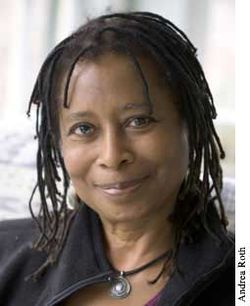
AlicewWhy am I going on the Freedom Flotilla II to Gaza? I ask myself this, even though the answer is: What else would I do? I am in my sixty-seventh year, having lived already a long and fruitful life, one with which I am content. It seems to me that during this period of eldering it is good to reap the harvest of one’s understanding of what is important, and to share this, especially with the young. How are they to learn, otherwise? Some of this narrative I have written before, but in the interest of completion, I will reiterate here: On December 27, 2008, one of my two sisters died, just as the Israeli military began massively bombing the Gaza strip, an assault that would continue for 22 days and nights. She was older than me, and had been sick practically all her life. Stress of many kinds had separated our spirits, though love remained. Even with so much distance between us I felt, when she died, as if I’d lost part of myself. It was amazing, the grief. And then I learned, that same day, of a woman in Gaza who had lost five of her daughters to the bombing; she herself was unconscious. Immediately I felt: I must go to her and tell her that even though I am an American and paid with my taxes for some of the grotesque weapons of mass destruction rained on her family, I did not sanction devastation of her life, or, if she survived, her grief.

That was my first trip to the Israeli dominated territories of Palestine.

What I found left me speechless and helped inspire a small book: OVERCOMING SPEECHLESSNESS: A POET ENCOUNTERS THE HORROR IN RWANDA, EASTERN CONGO, AND PALESTINE/ISRAEL. For months I found it impossible to talk about what it had felt like to walk among the rubble of what had been people’s homes, hospitals, libraries, and schools. I found old people sitting in the pulverized remains of homes they’d sacrificed generations of labor and love to create, and was told of people wounded so badly they were rotting (from the tungsten DIME contained in the bombs) from the inside out. The water system had been destroyed, the sewer system also. What remained of The American School was a mountain of rubble. I sat there in its ruins, in despair. Five things besides people and animals one must never assault, I believe, are: water, homes, schools, hospitals and the land. The Israeli military had deliberately destroyed or made impossible for the Palestinian people to use, all of these.

About a year later, I was on my way to Gaza a second time.

More here. (Note: In honor of African American History Month, we will be linking to at least one related post throughout February. The 2012 theme is Black Women in American Culture and History).

Higgs signal gains strength

From Nature:

HiggsToday the two main experiments at the Large Hadron Collider (LHC), the world’s most powerful particle accelerator, submitted the results of their latest analyses. The new papers boost the case for December’s announcement of a possible Higgs signal, but let’s not get too excited.

First, there’s no new data in there—the LHC stopped colliding protons back in November, and these latest results are just rehashes that earlier run. In the case of the Compact Muon Solenoid (CMS), physicists have been able to look at another possible kind of Higgs decay, and that allows them to boost their Higgs signal from 2.5σ to 3.1σ. Taken together with data from the other detector, ATLAS, Higgs overall signal now unofficially stands at about 4.3σ. In other words, if statistics are to be believed, then this signal has about a 99.996% chance of being right. It all sounds very convincing, but keep your hat on, because the fact is that statistical coincidences happen every day. Over at Cosmic Variance, Sean Carroll points out that there is a 3.8σ signal in the Super Bowl coin toss. Does that mean that they’ve discovered a super-partner to the bowl? No. (If you don’t get that joke, don’t worry, it was written only as punishment for those who would).

More here.

What’s Left Out of Black History Month Celebrations

Sean Thomas-Breitfeld in The Nation:

ScreenHunter_14 Feb. 08 09.53Last week marked the beginning of Black History Month. This year, we have twenty-nine days during which we will celebrate the many contributions of African-Americans to our nation’s history. This is a month when we make heroes of people who overcame real, systemic and often legal oppression. We lift up, in President Obama’s official proclamation, “a story of resilience and perseverance” to inspire and educate the public about a part of this nation’s history that wasn’t told a generation ago.

But in all of the celebration of a selective highlight reel of history, too often we overlook the reality of our present and how far we have yet to go to realize a better future where we all have enough to thrive—not just survive.

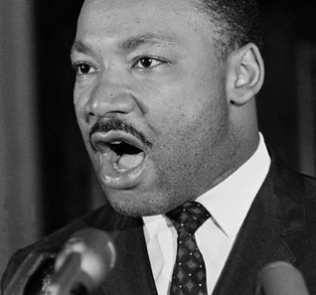
In his last book, Where Do We Go From Here, Martin Luther King Jr. wrote, “A society that has done something special against the Negro for hundreds of years must now do something special for him.” I don’t think Black History Month is what he had in mind.

He was probably taking a cold, hard look at our nation’s history and thinking of the terrible oppression and injustice that black people endured—first under slavery, and then under legally sanctioned segregation in the South and informal segregation everywhere else. The sad fact is that the vast majority of our nation’s history (from the Declaration of Independence right up until the legislative victories of the civil rights movement) constitutes that “something special against the Negro” that King mentioned. That long history of discrimination has a direct impact on the black community today.

More here.

how he writes

Viktor-shklovsky2

Goats wandering across the sands. Automobiles stuck in the salt flats for weeks on end. Camels pulling carts. Eagles soaring hundreds of feet overhead, ready to light on the telegraph poles, the only place to land in the desert. Out there they’re building the Turksib railroad. Hard work, necessary work. Out there it’s so hot the Kirghiz go dressed in felt boots, felt trousers, and felt caps. Where they’re not called Kirghiz, they’re called Kazakhs. Building a railroad is hard work. There isn’t much water. Bread has to be brought in. There has to be bread. Bread has to be stored somewhere. So many workers, all of them needing a roof over their heads. But they built it anyway. Good books come when we are forced to overcome our subject matter, when we are stalwart. This is also known as inspiration.

more (from a piece originally published in 1930) from Viktor Shklovsky at Context here.

the europe story

Hammar_220w

What is the function of culture in the EU? Mere window dressing? Or are people working in the cultural sphere truly given opportunities to practice their crafts and stimulate the public to think innovatively? The answer to both questions is “yes”. European Union cultural policy enables exciting projects to take off. It is also a showpiece of social engineering, fashioned with all the tools of conservatism and managed top-down, from somewhere on the right of centre. The discussion about European citizenship and “Fortress Europe” should be made part of the cultural policy debate. Culture is not a fenced-off zone. It is an ideological powerhouse, capable of influencing as well as being influenced by the issues surrounding citizenship. Arguably, it is not unreasonable to use culture as an instrument to create a European identity, intended to complement the national one. But it is disconcerting to see this done without debate. And on the basis of “classical European values”.

more from Erik Hammar at Eurozine here.

Tuesday, February 7, 2012

Awakening Benjamin

ElifriedlanderRichard Marshall interviews Eli Friedlander in 3 AM Magazine:

3:AM: Your philosophical interests seem to track a prevailing sense of existential crisis. Is this to do with your personality? When did you start recognising that you were interested in philosophical questions, and that these were the questions you wanted to pursue?

Eli Friedlander: Even though I wrote on the relation of philosophy and autobiography, or maybe because I wrote on that issue, I wouldn’t wish to move too directly from philosophical preoccupations to the space of life and personality. Without denying the personal dimension of my attachment to philosophical themes and even a degree of identification with the philosophers that concern me in my writing, I think that making that relation as oblique or roundabout as can be, is actually a virtue. The longer it takes to make the way from philosophy to life, the more significant their correlation becomes.

What most characterized my philosophical education is that I could not decide which were the questions that I wanted to pursue. I studied for my PhD at Harvard and at some point realized that I would not write the required one-topic dissertation. I availed myself of the option of writing three papers instead: on the relation of feeling and communication in Kant’s aesthetics, on personal exemplification in Rousseau’s Discourse on the Origins of Inequalities and on the limits of language in Wittgenstein’s Tractatus.

I have things to say, to myself and to others, about the connection between the three papers; for instance that they were various ways of developing a problematic of showing versus saying.