the sri lankan buddhist from new jersey

ID_PI_GOLBE_OLCOT_FT_001

Saddhu! Saddhu! they cried as they waved a thousand white flags in welcome. He was a stout man with a fluffy white beard that sat atop his vest like a platter of cotton balls. Often he would doff his three-piece suit and exchange it for a set of white pajamas and bare feet, looking part Sufi, part Santa. He traveled around from village to village in a homemade bullock cart cobbled from self-described Yankee ingenuity, a wonder cabinet of books and projecting drawers that was a kitchen and a bathing room, and could host a dinner party of eight. He pedaled freedom and enlightenment with the enthusiasm of a ringmaster. But Olcott never promised to save Sri Lanka on his own; he only wanted to help bring the Sinhalese back to themselves. The ignorance of the Sinhalese about Buddhism is shocking, Olcott wrote in his diary, though they were less ignorant than Olcott believed. But it was true that the Sinhalese relationship to Buddhism had become estranged. Buddhist practices and education had largely been outlawed by the British, and the education system was dominated by the Christian church. Missionaries had convinced the Sinhalese that Buddhism was nihilistic because it denied the existence of a personal God, Olcott wrote in The Life of the Buddha, and Sinhalese Buddhism had become corrupted by decadent, Western materialism.

more from Stefany Anne Golberg at The Smart Set here.

his rage is for the world, not against it

William_Gass_ftr

Deep inside his new collection of essays Life Sentences, in a discussion of mimesis, in the middle of a paragraph about the Pythagorean world of numbers and the differences between perfect Forms and imperfect appearances, William Gass throws down a challenge: “Put yourself in their place.” He’s referring to the place of the Forms—those poor, elusive abstractions that, according to Gass’s concise rendering of Plato’s theory, are damned to have reality but no animation, Being but no life. To understand them, we can’t do less than consider their predicament from their perspective. And once we’ve come this far, we have to pity them. Think about it: how utterly wretched it must be to exist as a Form, stuck for all eternity as a law of motion that does not move, or as an object of knowledge that “will never know what knowing is.” It might be tempting to strive for the symmetry of something as impeccable as an equilateral triangle, but it would be grim never to experience, or even to conceive as a delicious fantasy, “what it is like to be seen, longed for, touched, loved.” Existence as a law of motion? As a triangle that’s impossible to draw? Only William Gass would propose that the best way to appreciate the misery of an abstraction is to put yourself in its place. And only Gass could craft a paragraph that begins with a discussion of the conceptual relationship between Forms and appearances and ends with the terrifying prospect of living a life devoid of love.

more from Joanna Scott at The Nation here.

aristide at home

Aristide

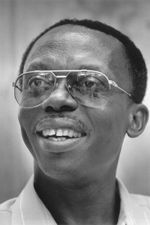
Last May I went to see Jean-Bertrand Aristide at his big white house in the suburbs of Port-au-Prince. I’d been there in March, when the former president had been back home only a week, and the place had the feel of a set under construction: workmen in overalls among the mango trees, the smell of new paint, a sputtering tap in the office bathroom. Now the Aristides’ boxes had arrived from Pretoria, where the family spent most of their seven-year exile, and Aristide’s office was dominated by a piece of scientific equipment, positioned – conspicuously, I thought – near the visitors’ couch. Its gleaming monitor was set to ‘on’ and displayed several jagged graphs. A thicket of bright-coloured electrodes dangled from a rack. Aristide explained that it was an electroencephalogram (EEG) machine and that he used it for his research. He had a PhD in African languages from the University of South Africa – his dissertation posited a ‘psycho-theological’ kinship between Zulu and Haitian Creole – and he was continuing his linguistics research, he said, though now from a biological perspective.

more from Pooja Bhatia at the LRB here.

Monday, March 12, 2012

Sunday, March 11, 2012

Is this how to start a new chapter in your love life?

From The Independent:

BookdatesYou are sitting on a train, and across the aisle someone is reading one of your favourite books. This person (clearly of taste) happens to be a tall, handsome man. As you stare he looks up, catches your eye and smiles – he asks for your number… Browsing in a bookshop you reach out to pick up a book; so does the person standing next to you. The person happens to be a tall, handsome man. He catches your eye and smiles – he asks if you would like to go for coffee… So run the fantasies of many a book-lover.

Which is why Literary speed-dating is such an exciting prospect for a bookish single. The conceit is that, rather than talk about yourself, you talk about a book you have brought along. It's run of the mill speed-dating made intellectual – more Granta than Hello!. The idea has already taken off across America and Canada, with speed-dating events held at such cultish venues as the Rare Book Room in New York's famous Strand bookstore (which holds an immensely popular literary speed-date every Valentine's Day). Inexplicably, though, literary speed-dating has yet to become commonplace here.

More here.

New type of extra-chromosomal DNA discovered

From PhysOrg:

DnaA team of scientists from the University of Virginia and University of North Carolina in the US have discovered a previously unidentified type of small circular DNA molecule occurring outside the chromosomes in mouse and human cells. The circular DNA is 200-400 base pairs in length and consists of non-repeating sequences. The new type of extra-chromosomal circular DNA (eccDNA) has been dubbed microDNA. Unlike other forms of eccDNA, in microDNA the sequences of base pairs are non-repetitive and are usually found associated with particular genes. This suggests they may be produced by micro-deletions of small sections of the chromosomal DNA.

Professor Anindya Dutta and colleagues pruified DNA taken from samples of mouse brain tissue and then digested away the linear DNA (which consists of millions of base pairs) to leave only circular DNA pieces, which they then sequenced using ultra-high-throughput sequencing. Circles were identified by a new bioinformatics program. They found the size of the circles was around the same length as the DNA on a nucleosome (a sub-unit of a chromosome). The small size of the circular DNA surprised them since extra-chromosomal DNA circles are larger. Their circular DNA was also dissimilar to the previously-known circles known as polydispersed DNA because the latter usually consist of repeating sequences of base pairs. Another interesting finding was that the circles are rich in the base pair GC (guanine-cytosine) with relatively little AT (adenine-thymine. The researchers repeated their experiments on other mouse tissues and on human cells.

More here.

Damien Hirst at the Gagosian

Jacob Mikanowski in The Point:

Hirstspot-690x406In its material expenditure and visual profligacy, Hirst’s work is a return to the Baroque. Looking at a survey of Hirst’s work is like strolling through collections of the Schloss Ambras, the castle in Innsbruck where the Habsburgs stored all their weird treasures: coral crucifixes and golden salt cellars, paintings of freaks, cripples and madmen, sculptures of skeletons wearing their rotting skin. This kind of collection was called a wunderkammer, or wonder-room. Two kinds of objects predominated: the memento mori or reminder of mortality, and the lusus naturae or joke of nature. The purpose of these collections was ostensibly pedagogical, but what they really did was exalt their owners’ fearlessness and mastery. This is the tradition Hirst’s practice comes out of, as distant from the strictures of high modernism as it is from the pieties of postmodernism. Perhaps by honoring power and reveling in cruelty it comes closer than either to the mood of our times.

Hirst has always benefited from the presumption that everything he did was ironic, but his work is really rooted in a kind of guileless belief disguised as cynicism. He was a rocker, not a mod. The Spot show is disappointing not because it is disingenuous, but because it’s tame. A few years ago, in a conversation with Hans Ulrich Olbrist, Hirst said he wanted to create a work of art that would kill you (think plutonium sculpture) or at the very least would punch you in the face. Now it looks like he’d settle for a kiss on the cheek.

More here.

Scientists Claim Brain Memory Code Cracked

From Science Daily:

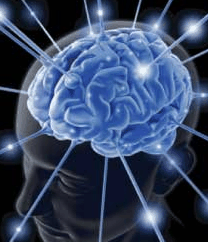
ScreenHunter_07 Mar. 11 21.09Despite a century of research, memory encoding in the brain has remained mysterious. Neuronal synaptic connection strengths are involved, but synaptic components are short-lived while memories last lifetimes. This suggests synaptic information is encoded and hard-wired at a deeper, finer-grained molecular scale.

In an article in the March 8 issue of the journal PLoS Computational Biology, physicists Travis Craddock and Jack Tuszynski of the University of Alberta, and anesthesiologist Stuart Hameroff of the University of Arizona demonstrate a plausible mechanism for encoding synaptic memory in microtubules, major components of the structural cytoskeleton within neurons.

Microtubules are cylindrical hexagonal lattice polymers of the protein tubulin, comprising 15 percent of total brain protein. Microtubules define neuronal architecture, regulate synapses, and are suggested to process information via interactive bit-like states of tubulin. But any semblance of a common code connecting microtubules to synaptic activity has been missing. Until now.

More here.

Back to His Roots

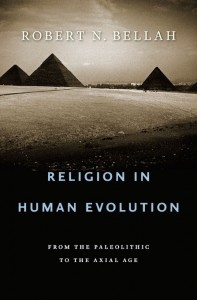
Religion-in-Human-Evolution-197x300Matteo Bortolini on Robert N. Bellah’s Religion in Human Evolution, over at The Immanent Frame [h/t: Jonathan VanAntwerpen]:

As the readers of Religion in Human Evolution know, for example, the book unexpectedly starts…from the start, that is, from the Big Bang and the origin of the universe. Even if the strictly non-sociological stuff fills barely 40 pages within a 700-page book, some critics have paid it a disproportionate degree of attention, often without trying to understand its place within the wider line of reasoning; one such critic is, regrettably enough, Alan Wolfe, who in his New York Times book review wrote: “I never thought I would read a work in the sociology of religion that contained a discussion of prokaryotes and eukaryotes. I now have.” In the book, Bellah vindicates his comprehensive and deep narrative out of a more general sense of universal connection, according to which “we, as modern humans trying to understand this human practice we call religion, need to situate ourselves in the broadest context we can, and it is with scientific cosmology that we must start.”

From the point of view of the sociology of ideas, this strategy might be seen as both a homage to a venerable sociological tradition—going all the way back to Auguste Comte and Herbert Spencer and the incredibly vast array of interests of 19th-century sociology—and as an attempt to bring Talcott Parsons’s work to a higher level of complexity and explicative power. Many may not know, but Parsons was a biology major and remained a voracious reader all his life, eager to make almost everything fit inside his signature “theory of social action.” Given Parsons’s charismatic personality and influence, these interests repeatedly impacted the members of his inner circle. Edward Tiryakian, who was a graduate student at Harvard in the mid-1950s together with Bellah, told me an anecdote about Parsons’s interest in decidedly non-sociological themes that I would like to share: “In one of his discussions… [Parsons] was talking about the evolution of species. So he looked at people and he said: ‘Do you realize the evolutionary significance of the worm having a hole from mouth to anus?’ And he looked at people. Now what do you do when Parsons looks at you? People just went,‘Wow!’” Twenty years later, when Bellah had found his own scholarly voice and only tangentially participated in the development of Parsonian theory, Parsons tried to make sense of the whole human condition devising a comprehensive AGIL (Adaptation, Goal Attainment, Integration, Latency) scheme covering almost everything from the ultimate ground of the “telic system” to the material (i.e. chemical and physical) bases of all living systems. This time the audience’s reaction was much different from Tiryakian’s “wow,” as Parsons had irreparably gone out of fashion and his more mature efforts went almost unnoticed outside the circle of his disciples and connoisseurs.

Parsons, however, was saying something of the utmost importance: reality is an almost endless succession of levels and layers, each one emerging from simpler ones—whatever “simpler” means in this context—and giving rise to more complex ones, which possess new, emerging properties. Likewise, Bellah’s point is that biological, psychological, social, and cultural structures combine without any clear causal primacy in creating new capacities upon which further changes build endlessly.

Female Trouble

Image.phpElizabeth Gumport in n+1:

Where Art Belongs, the title of Chris Kraus’s latest collection of essays, sounds corrective. As if, instead of in its proper place, art is elsewhere. It has been mislaid, like a cell phone. Or perhaps, like a vase, not so much lost as thoughtlessly positioned. Where is art, and who put it there?

Anyone who has read Kraus’s earlier work can guess who she’ll bring in for questioning. “Until recently,” Kraus wrote in her previous essay collection, 2004’s Video Green: Los Angeles Art and the Triumph of Nothingness, “there was absolutely no chance of developing an art career in Los Angeles without attending one of several high-profile MFA studio programs,” including ones at institutions where Kraus herself has taught. (Since the late 1990s, she has held teaching positions at a number of schools in California, including UC San Diego, UC Irvine, and Pasadena’s Art Center College of Design.) The MFA is a “two-year hazing process” “essential to the development of value in the by-nature elusive parameters of neoconceptual art. Without it, who would know which cibachrome photos of urban signage, which videotapes of socks tossing around a dryer, which neominimalist monochrome paintings are negligible, and which are destined to be art?”

Duly initiated in sock videos, artists graduate to a handful of galleries, where their advanced degrees reassure collectors intending to get their money’s worth. The MFA is a quality assurance stamp, certifying that no matter what a piece looks like on the surface, it is guaranteed to be full of art-historical references. Alternative exhibition spaces are “dead-end ghettos, where no one, least of all ambitious students, from the art world goes.” While curators and professors consider the continuum between MFAs and galleries a “plus”—“what makes LA so great,” chirps one gallery owner, “is that the school program is actually a vital part of the community”—Kraus had her doubts. What “community” were these people talking about? “It is bizarre,” she observed, “that here, in America’s second largest city, contemporary art should have come to be so isolated and estranged from the experience of the city as a whole.”

On the genre of “Raising Awareness about Someone Else’s Suffering”

9780307377999Aaron Bady in The New Inquiry [h/t: Meghant Sudan]:

4. Elliot Prasse-Freeman’s case study, “Be Aware: Nick Kristof’s Anti-Politics.” Serious and vicious. Kristof isn’t the problem, but he’s a walking embodiment of it.

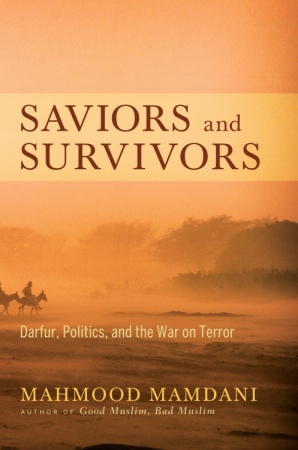
5. Mahmood Mamdani’s Saviors and Survivors, in which he argues that the War on Terror is the inescapable interpretive matrix through which to understand why American college students suddenly got so excited about Darfur, years after the violence had peaked and declined.

“One needs to bear in mind that the movement to Save Darfur – like the War on Terror – is not a peace movement: it calls for a military intervention rather than political reconciliation, punishment rather than peace…Iraq makes some Americans feel responsible and guilty, just as it compels other Americans to come to terms with the limits of American power. Darfur, in contrast, is an act not of responsibility but of philanthropy. Unlike Iraq, Darfur is a place for which Americans do not need to feel responsible but choose to take responsibility.”

If Mamdani’s book is controversial, it’s also indispensable (especially since a certain NGO working on the issue of the LRA got its start in the Save Darfur movement). But even if you ultimately answer “no” to the questions he asks, you still need to ask them. You need to think through this set of relations very carefully:  

“The similarities between Iraq and Darfur are remarkable. The estimate of the number of civilians killed over the past three years is roughly similar. The killers are mostly paramilitaries, closely linked to the official military, which is said to be their main source of arms. The victims too are by and large identified as members of groups, rather than targeted as individuals. But the violence in the two places is named differently. In Iraq, it is said to be a cycle of insurgency and counter-insurgency; in Darfur, it is called genocide. Why the difference? Who does the naming? Who is being named? What difference does it make?

The most powerful mobilisation in New York City is in relation to Darfur, not Iraq. One would expect the reverse, for no other reason than that most New Yorkers are American citizens and so should feel directly responsible for the violence in occupied Iraq. But Iraq is a messy place in the American imagination, a place with messy politics. Americans worry about what their government should do in Iraq. Should it withdraw? What would happen if it did? In contrast, there is nothing messy about Darfur. It is a place without history and without politics; simply a site where perpetrators clearly identifiable as ‘Arabs’ confront victims clearly identifiable as ‘Africans’.

 6. Teju Cole’s twitter feed, but particularly his thoughts on the banality of sentimentality.


Sunday Poem

Money Shot Through the Crane Glass Floor

The windows of Urban Outfiters were smashed

after Hova’s song about New York came on
the skateboard drive PA.

Nobody looted a thing.
(A few months later
hella goodbye Oakland Foot Locker.)

The crowd’s fissiparous dissolution came

as it neared the clock tower
and we wound up at the Red Room.
Liv was pissed. I don’t remember anyone
saying, “When the jewelry place
went down our Justice song was on.”

We had numbers. The homie Pat broke

up some fights. Don was there.

Homie’d been quoted in the Times.
Bonnano (in a cheap suit), Maya,
and I walked together, hurried (better),

as the black flag went up over the action.

Jo told me she didn’t want to get arrested.
When the bouncers at Motiv dragged Sam down,
a masked groupuscule freed him up.

Back at the neon red debrief nobody said much.
“We crossed this Burmese river” or,

“The Punjab is a land with five rivers.”

I drank from a glass of beer and remembered
the Alexander Kluge VHS

The Eiffel Tower, King Kong, and the White Woman.
The wind was blowing down trees
At the port of Long Beach,
a Mitsubishi crane un-stacked
a glow-blue sheet of wind.
I’ve been rolling around with a bunch of Fleetwood Macks.
We are the crisis.

.

by David Lau
from Armed Cell 1
August 2011

Saturday, March 10, 2012

People Who Eat People: on Cătălin Avramescu’s Intellectual History of Cannibalism

Steven Shapin in the Los Angeles Review of Books:

119594445Eating people is wrong. But why? People of different sorts, at different times, expressing their views in different idioms, have had different answers to that question. Right now, our culture isn’t obsessed with cannibalism, though we are still unwholesomely fascinated enough to buy books and go to movies about anthropophagy among the Uruguayan rugby team that ran out of food after their plane crashed in the Andes; or about “the Milwaukee cannibal,” Jeffrey Dahmer; or Armin Meiwes’s successful, internet-mediated search for a voluntary victim (and meal) in Germany in 2001; or, most famously, about the (still controversial) dietary practices of the Donner party stranded in the Sierra Nevada mountains in 1846.

Our modern idioms for disapproving of cannibalism are limited. There is a physical disgust at the very idea of eating human flesh, though it’s not clear that this is necessarily different from the revulsion felt by some people confronted with haggis, calf brains, monkfish liver, or sheep eyes, the rejection of which rarely requires, or receives, much of an explanation. It is widely thought that cannibalism is in itself a crime, but in most jurisdictions it isn’t. (It is criminal to abuse a corpse, so eating dead human flesh tends to be swept up under statutes mainly intended to prevent trading in human body parts or mutilating cadavers.)

Modern condemnations of cannibalism largely set aside questions of moral law or natural law, with their suppositions about the nature of human beings, and thus what is unnatural.

More here.

Why It’s OK to Let Apps Make You a Better Person

An ethicist considers the ramifications of using apps to improve our habits. And also whether willpower as we normally think about it even exists.

Evan Selinger in The Atlantic:

ScreenHunter_06 Mar. 10 17.33In article after article, one theme emerges from the media coverage of people's relationships with our current set of technologies: Consumers want digital willpower. App designers in touch with the latest trends in behavioral modification–nudging, the quantified self, and gamification–and good old-fashioned financial incentive manipulation, are tackling weakness of will. They're harnessing the power of payouts, cognitive biases, social networking, and biofeedback. The quantified self becomes the programmable self.

Skeptics might believe while this trend will grow as significant gains occur in developing wearable sensors and ambient intelligence, it doesn't point to anything new. After all, humans have always found creative ways to manipulate behavior through technology–whips, chastity belts, speed bumps, and alarm clocks all spring to mind. So, whether or not we're living in unprecedented times is a matter of debate, but nonetheless, the trend still has multiple interesting dimensions.

Let's start here: Individuals are turning ever more aspects of their lives into managerial problems that require technological solutions. We have access to an ever-increasing array of free and inexpensive technologies that harness incredible computational power that effectively allows us to self-police behavior everywhere we go. As pervasiveness expands, so does trust. Our willingness to delegate tasks to trusted software has increased significantly.

Individuals (and, as we'll see, philosophers) are growing increasingly realistic about how limited their decision-making skills and resolve are.

More here.

The President of the United States can order the killing of US citizens, far from any battlefield, without charges, a trial, or any form of advance judicial approval

David Cole in the New York Review of Books:

ScreenHunter_05 Mar. 10 17.26The President of the United States can order the killing of US citizens, far from any battlefield, without charges, a trial, or any form of advance judicial approval. That’s what Attorney General Eric Holder told a group of students at Northwestern Law School yesterday, in a much anticipated speech. The Constitution requires the government to obtain a judicial warrant based on probable cause before it can search your backpack or attach a GPS tracking device to your car, but not, according to Holder, before it kills you.

Holder’s speech marks a victory of sorts for those who have condemned the secrecy surrounding the administration’s aggressive targeted killing program. At a minimum, we now have a better basis for a debate about the extent to which a democratically elected leader should be entitled to single-handedly order the execution of those he represents. So those inside the Obama administration—including State Department Legal Adviser Harold Koh—who reportedly fought a pitched battle for this disclosure, deserve credit for the increased transparency it has brought.

But on the merits, the executive authority Holder asserted is deeply disturbing in the days of lethal strikes by unmanned drones. Garry Wills argued in Bomb Power that the nature of the Presidency was fundamentally altered with the introduction of the nuclear bomb; but in some ways, drones may ultimately mark an even more tectonic change. The nuclear bomb is so devastating that it cannot realistically be deployed (and has not been used since we dropped them on Hiroshima and Nagasaki in World War II, killing more than 200,000 people). The drone, by contrast, can be deployed, and has been, with increasing frequency.

More here.

David Chang Talks Honest Cooking, Thoreau, and Failure

Larissa MacFarquhar in The New Yorker:

There are two things the chef David Chang works very hard at and gets very, very anxious about, and in both cases the hard work and extreme anxiety have paid off. One is, obviously, his food, and the other is not becoming a pretentious idiot. Considering how much deserved acclaim has come his way—for his Momofuku restaurants, for his cookbook, and, most recently, for his magazine, Lucky Peach—it’s amazing that he has not permitted even a scrap of pretentious idiocy to stick to him. He’s not quite as neurotic as he was a few years ago, which is good, but he is still excellent company. If you’ve never seen him talk, you should, and here’s your chance: an interview on Paul Holdengraber’s new TV show (on YouTube’s The Intelligent Channel), in which Chang talks about failure, Thoreau, religion, and the honesty of cooking. Holdengraber is the impresario of the “Live” events at the New York Public Library, and when he thinks someone is worth interviewing, he’s always right.