
Helena Kudiabor & Mark Buchanan in Nature:
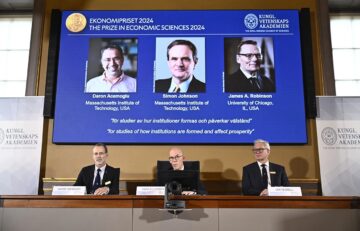 Why are some countries richer than others? The 2024 Sveriges Riksbank Prize in Economic Sciences in Memory of Alfred Nobel has been awarded to three researchers who have helped shed light on this fundamental question.
The income gap between the richest and the poorest nations has been widely documented. However, Daron Acemoglu and Simon Johnson, both from the Massachusetts Institute of Technology in Cambridge, and James A. Robinson from the University of Chicago in Illinois, have studied the evidence for why these inequalities persist.
The three economists, who will share the 11 million Swedish Kronor (US $1 million) prize for their findings, researched the impact of European colonization on various countries’ economies.
More here.
Enjoying the content on 3QD? Help keep us going by donating now.
 J
J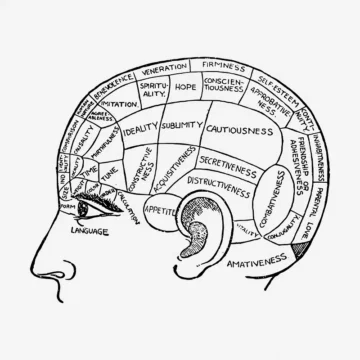 Foucault was greatly disturbed by modern psychiatry’s ability to draw definitive lines between the ‘reasonable’ and the ‘unreasonable’. He came to see it as another way for society to punish and marginalise its most troublesome subjects. Deploying the metaphor of a circulatory system, he conceived of psychiatrists as figures of ‘capillary’ power – unlike the conspicuous, beating heart of the state, these authorities functioned as more subtle, distal agents of the status quo. Writing in the 1960s and ’70s, Foucault saw the psychoanalytic therapists of his day as the latest technicians managing ‘one of the West’s most highly valued techniques for producing truth of one kind or another’ – the confession. This is the idea that disclosing one’s inner darkness leads to salvation, truth, self-actualisation. There is an important similarity between how this dynamic plays out in the church and the clinic: ‘bravely confront and share the ugly things inside you’ equally describes the task of the confessional booth as it does the therapist’s couch. In both cases, there is more at play here than simple unburdening: it is not just that ‘shared sorrow is half sorrow’, as in the case of confiding in a friend, but also that having an adversarial encounter with yourself can be fruitful in some way.
 Representing suffering—how to do it, when we should do it at all—has long been a subject of debate. At the center of that debate is the role of the audience: how do we, as readers and viewers, witness depictions of violence in images, films, plays, or literature?
 The Swedish Academy is not here to tell you what writers you might like. Greatness is not the same as popularity. It may even be the opposite of popularity. Great books are by definition not the books you read for pleasure — even if some of them turn out to be, and may even have been intended to be, fun — and great writers, being mostly dead, don’t care if they’re your favorites. The great books are the ones you’re supposed to feel bad about not having read. Great writers are the ones who matter whether you read them or not.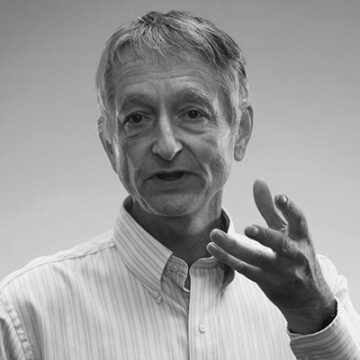
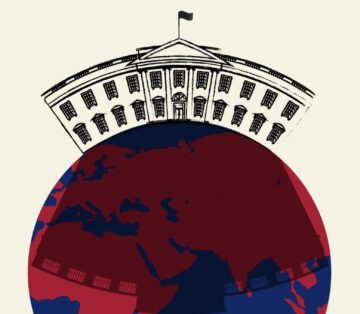 The U.S. presidential election is decided by American citizens in a handful of states, but its outcome reverberates internationally: the new president will have the power to shape trade, migration, security and rising authoritarianism across the world, as well as the wars in Gaza and Ukraine. The race is therefore a global event, the subject of countless newspaper articles, debates and calculations. We asked 12 writers, each from a different country, to share what the conversation sounds like where they live: What are politicians saying, and how is the press covering the race? What are the hopes for a Kamala Harris presidency, or a Donald Trump one — and what are the fears? Our writers describe widely divergent attitudes toward the election and its unknown conclusion, from apathy and disillusionment to anxiety, hope and glee.
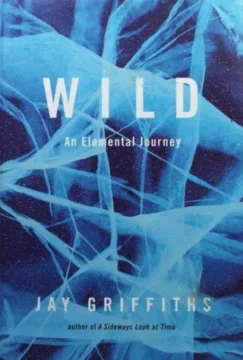 Jay Griffiths offers a mighty antidote in her 2006 masterpiece
 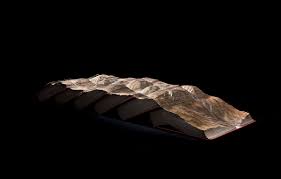 In 2012, at the age of 25, I quit my part-time jobs cooking and cleaning houses and, having dropped out during my first semester seven years earlier, went back to school. To help pay for the modest tuition at Indiana University Southeast in New Albany, Indiana, I took a work-study gig at the university library. The campus of IUS is small, and most students are commuters; the library was accordingly quiet, the work languid. So in the many slow periods between tasks, I read. Essays, stories, poems—whatever I could get my hands on. My reading was omnivorous and unstructured: like the critics in the first part of Roberto Bolaño’s 2666, I pursued knowledge like sleuths in a roman noir, or like the poet Juan García Madero from his Savage Detectives, for whom “every book in the world is out there waiting to be read by me.” I followed a friend onto Twitter—the early 140-character years, with few journalists and politicians and no blue checkmarks—and there I came into contact for the first time with the world of magazines, small and large, that constituted the internal chatter of the educated American upper-middle class.
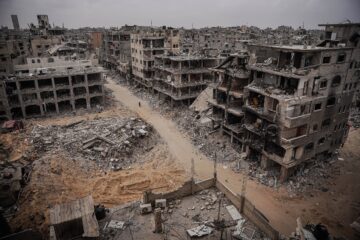 A year later, the 28-year-old is still documenting the lived experience of Palestinians in a place with scars
 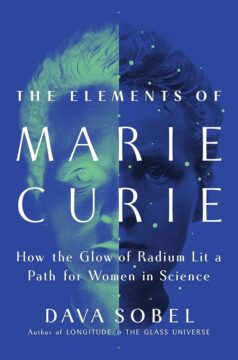 Marie Curie’s life was defined by professional triumph and personal tragedy. Ninety years after her death, she remains history’s most famous woman scientist. Curie was the first woman to receive a Nobel Prize – in 1903, she and her husband, Pierre, received the award for physics. In 1911, she was awarded a second Nobel Prize, this time for chemistry. She is still the only Nobel laureate to be garlanded in two scientific fields.