Camilo Ruiz Tassinari in Phenomenal World:
Lopezobradorismo is without a doubt the most significant political movement to have emerged in Mexico over the past three decades. Since 2018, it has reconstituted the country’s post-authoritarian political system. The movement’s new leader, Claudia Sheinbaum won the Presidency with 60 percent of the votes in early June. With a two-thirds majority in both houses of Congress, the Movement for National Regeneration (Morena) will have the power to completely rewrite the country’s constitutional compact.
The reach of Morena’s popularity—leading twenty-two out of thirty-two states with its allies—is astounding. For twenty years, Mexican politics was a three way game between the National Action Party (PAN) on the center-right, the Party of the Democratic Revolution (PRD) on the center-left, and a shape-shifting Institutional Revolutionary Party (PRI) which had ruled the country for most of the twentieth century. During those two decades presidents seldom had a majority in congress and any constitutional change required corrupt bargains between the parties’ grandees. That game is now over: the PRD has practically disappeared, the PRI has hollowed out as most of its leaders moved to Morena, and the PAN has shrunk into a local organization of socially conservative families in the Catholic center-north. Morena has gained more electoral support than any party throughout the country’s quarter century of democracy.
More here.
Enjoying the content on 3QD? Help keep us going by donating now.
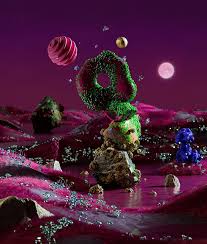 Across 15,000 generations, human beings have looked out at the sentinel stars and felt the pressing weight of myriad existential questions: Are we alone? Are there other planets also orbiting distant suns? If so, have any of these other worlds also birthed life, or is the drama of our Earth a singular cosmic accident? And what about other minds and civilizations? Have others in the universe, through their success as tool-builders and world-makers, also brought themselves to the brink of collapse?
 In Amrith’s view, all history is environmental history. And that includes both environmental effects on societies and those societies’ impacts on the environment. He cites evidence, for example, suggesting that a “medieval warm period” spanned most of Europe and parts of North America and western Asia through the 13th century. The period’s benign climate and rainfall, he argues, allowed societies to clear land, expand cultivation, build cities, and grow their populations. He also assesses the rise and fall of the Mongols, who swept across Asia quickly before being thwarted by limited grasses for their horses, intense snowstorms and earthquakes, and deadly plagues that the Mongolian expansion helped spread.
 I think of an essay as a realm for both the writer and the reader. When I’m working on an essay, I’m entering a loosely defined space. If we borrow Alexander’s terms again, the essay in progress is “the site”: “It is essential to work on the site,” he writes, in A Pattern Language: Towns, Buildings, Construction; “Work on the site, stay on the site, let the site tell you its secrets.” Just by beginning to think about an essay as such—by forming the intention to write on an idea or theme—I’m opening a portal, I’m creating a site, a realm. It’s a place where all my best thinking can go for a period of time, a place where the thoughts can be collected and arranged for more density of meaning. This place necessarily has structure, if it feels like a place. There’s a classic architecture book called Why Buildings Stand Up. We call any building, or part of a building, or thing like a building, a structure, if it succeeds in standing up. The structure is the system of elements in the building that make things go up—the load-bearing elements, walls and beams and columns, that counteract gravity. They counteract quote-unquote nothing, so empty space becomes a place.
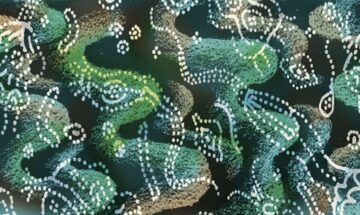 Recently, a team at Stanford University fished something new out of the vast, uncharted, and almost entirely unclassified world of genetic material sometimes known as biological dark matter. They called it an “obelisk,” a shell-less RNA of maybe 1,000 base pairs (shorter than any viral genome), which seems to self-organize into a rodlike shape. It appears to be the structural equivalent of a plant viroid or a fungal ambivirus, two other bits of self-replicating genetic material whose discovery widened the boundaries of what we know about microbiology. But the obelisks weren’t found in either plants or fungi. They were discovered in human intestines.
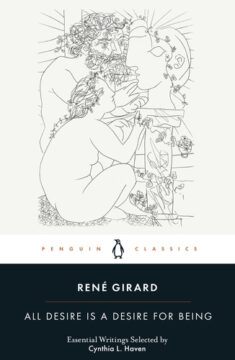 Interest in
  O
O I grew up on the north side of Chicago in a pretty diverse school district that had students with backgrounds hailing from all corners of the world. I remember hearing a classmate speak to his mom in Polish when she picked him up. Another classmate brought Pakistani Biryani his mom made for lunch. It was a quite riveting experience at a young age to have exposure to such a vibrant student body. Everyone had a story, a history, a culture, yet we were all American kids raised on a steady diet of pop culture and pop tarts. Nonetheless, these kids’ subtle yet unique cultural undertones first sparked my curiosity to know more about the world.
 An artificial-intelligence tool honoured by this year’s Nobel prize
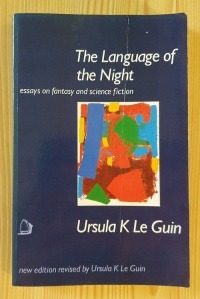 In ‘Dreams Must Explain Themselves’ (1973), Le Guin touches on the reference works that she consults for her writing (I’m a