
Jesse Green in The New York Times:
 Certainly Jacob McNeal, played by the formidable Robert Downey Jr., is more a data set than a character. A manly, hard-driving literary novelist of the old school, like Saul Bellow or Philip Roth, he is not at all the magnetic and personable man Akhtar describes in the script; rather, he is whiny, entitled and fatuous. (“At my simple best, I’m a poet,” he says.) About the only time he engages instead of repels is when, in the amusing opening scene, as his doctor (Ruthie Ann Miles) prepares to deliver bad news, he fails to get ChatGPT to tell him his chances of winning the Nobel Prize.
“I hope this was helpful,” the bot types.
“It was not, you soulless, silicon suck-up,” he replies.
We are meant to understand that McNeal is a man who wears his awfulness, in this case his vanity, as an adorable idiosyncrasy, as if it were a feathered hat. He flirts and philanders with equal obliviousness to moral implications. He aggressively asserts his anti-woke bona fides. While being interviewed by a New York Times journalist, who is Black, he asks if she was a “diversity hire.” And when she fails to take the bait, he adds, as a man of his sophistication would know enough not to, “Did I say something wrong?”
More here.
Enjoying the content on 3QD? Help keep us going by donating now.
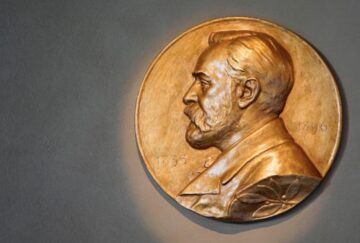 The 2024 Nobel Prize in Literature will be announced this Thursday, October 10. Who will win? As ever, no one knows. But everyone likes to guess…and bet. And because money talks, the betting odds can tell you a lot. Or a little. Or, something, anyway!
 “S
“S British computer scientist Professor Demis Hassabis has won a share of the Nobel Prize for Chemistry for “revolutionary” work on proteins, the building blocks of life.
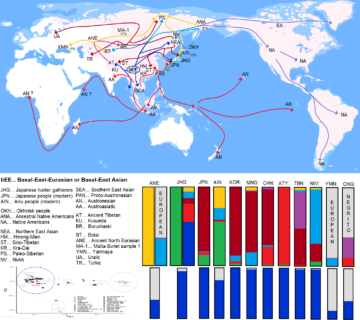 Over the past few years, the flimsy states and territories that cover the Eurasian continent as lightly as gauze have been getting pushed and pulled into a new way of being. In response to volatile oil prices, temperatures creeping ever higher,
 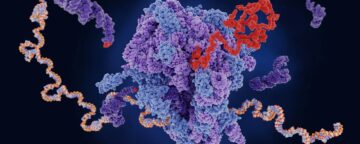 A
A On Thursday, the Swedish Academy will award the Nobel Prize in Literature, the pre-eminent — perhaps only — global arbiter of literary greatness.
 It was during the 1930s that Chartwell mattered most. Churchill was out of office. He had a flat in London but no official residence and, for much of the time, no particular reason to be in the capital. Chartwell was not, though, a retreat from the world. It was a kind of factory, filled with secretaries and research assistants who hammered Churchill’s literary and political productions into shape. It was also a meeting place – close enough to London for people to come down for lunch, dinner or an evening of conspiracy. It was, to a large extent, at Chartwell that Churchill plotted his political campaigns of the decade. Two of these were misguided. He sought to resist the limited reforms that the Baldwin government proposed to British rule in India and to defend Edward VIII during the crisis that sprang from the king’s insistence on marrying an American divorcée. Another campaign he led from there – against the appeasement of Nazi Germany and in favour of British rearmament – would, in retrospect, be seen as the most important in interwar British politics.
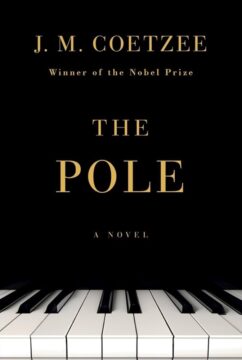 In ‘As a Woman Grows Older’, the second story in J.M. Coetzee’s very funny 2023 book The Pole and Other Stories, Elizabeth Costello complains to her son John:
 W
W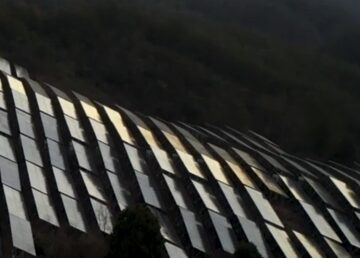 To make the solar cells that are projected to become the world’s biggest source of electricity by 2031, you first melt down sand until it looks like chunks of graphite. Next, you refine it until impurities have been reduced to just one atom out of every 100 million — a form of elemental silicon known as polysilicon. It’s so vital to the production of solar panels that it can be likened to crude oil’s role in making gasoline. The polysilicon is then drawn out into a vast crystal, resembling a Jeff Koons steel sculpture of a sausage, before being sliced into salami-thin wafers. These are then treated, printed with electrodes, and finally sandwiched between glass.
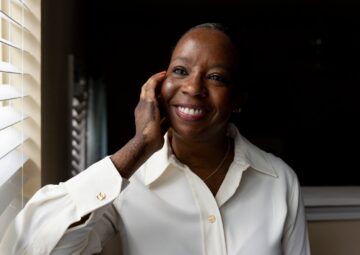 Marcella Townsend remembers looking around the kitchen in shock. In the silence just after the explosion, before the pain kicked in, she found herself almost in awe of the crushed stove and the caved-in cabinets.
 Latest estimates indicate that the number of patients affected by cancer will increase dramatically through the middle of the century across all regions of the world. At the same time, the innovation ecosystem that discovers, develops, and delivers breakthrough therapies in entire new areas of science is operating near peak levels. Rising incidence, increasing numbers of treated patients, and the resulting expected growth in spending in this area will trigger an array of complex challenges over the next several years that are reflected in the trends highlighted in this report.
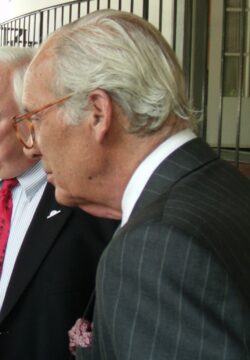 You only meet a few people in your life who, like stars, exert a pull so strong that they alter its trajectory completely. I was lucky enough to enter the orbit of the legendary editor and essayist Lewis Lapham. A week ago, I attended his memorial service. He