Harvard cracks DNA storage, crams 700 terabytes of data into a single gram

Sebastian Anthony in Extreme Tech:

ScreenHunter_40 Aug. 21 17.12Scientists have been eyeing up DNA as a potential storage medium for a long time, for three very good reasons: It’s incredibly dense (you can store one bit per base, and a base is only a few atoms large); it’s volumetric (beaker) rather than planar (hard disk); and it’s incredibly stable — where other bleeding-edge storage mediums need to be kept in sub-zero vacuums, DNA can survive for hundreds of thousands of years in a box in your garage.

It is only with recent advances in microfluidics and labs-on-a-chip that synthesizing and sequencing DNA has become an everyday task, though. While it took years for the original Human Genome Project to analyze a single human genome (some 3 billion DNA base pairs), modern lab equipment with microfluidic chips can do it in hours. Now this isn’t to say that Church and Kosuri’s DNA storage is fast — but it’s fast enough for very-long-term archival.

More here.
Certain to penetrate the foundations of modern philosophy

“From 2 years of break, PSY is finally coming back with his 6th album! The album's weighty title song 'Gangnam Style' is composed solely by PSY himself from lyrics to choreography. The song is characterized by its strongly addictive beats and lyrics, and is thus certain to penetrate the foundations of modern philosophy.”

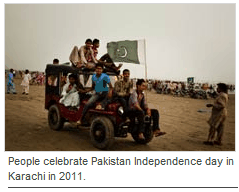
In the twilight zone: On Karachi

H. M. Naqvi in India Today:

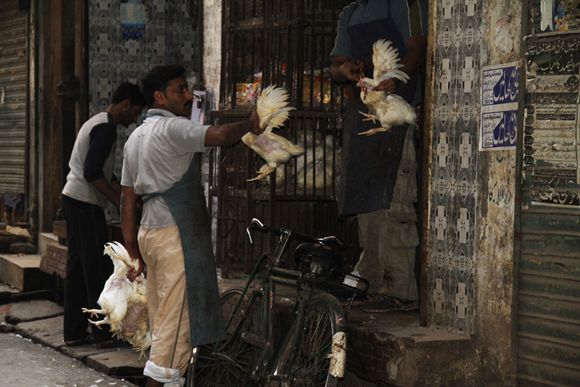
ScreenHunter_39 Aug. 21 16.27Unlike Lahore or Islamabad, Karachi is not pretty. It's a rough and tumble megalopolis like Sao Paulo, like Mumbai, that features a hardy, dynamic populace. Karachiwallahs make Karachi Karachi. The city is populated by thugs and humanitarians, businessmen and novelists. No other city in Pakistan (or say, Austria for that matter) could sustain something like the Karachi Literature Festival. No other city can boast weekly qawwalis and mushairas as well as art exhibitions and plays. Karachi has changed dramatically in three centuries and will continue changing at the same pace. Whether it will change for the better or worse is a matter best left to punters and political pundits. I need qawwali, a plate of nihari and the energy of a megalopolis.

Like my grandfather, I might not own any real estate in the city (or, for the record, anywhere else), but I have carved a life for myself here. As a storyteller, Karachi fascinates. There's a story under every stone.

More here.

100 novels everyone should read

Fromm The Telegraph:

Middlemarch_1239840c100 The Lord of the Rings by JRR Tolkein

WH Auden thought this tale of fantastic creatures looking for lost jewellery was a “masterpiece”.

99 To Kill a Mockingbird by Harper Lee

A child’s-eye view of racial prejudice and freaky neighbours in Thirties Alabama.

98 The Home and the World by Rabindranath Tagore

A rich Bengali noble lives happily until a radical revolutionary appears.

97 The Hitchhiker’s Guide to the Galaxy by Douglas Adams

Earth is demolished to make way for a Hyperspatial Express Route. Don’t panic.

96 One Thousand and One Nights Anon

A Persian king’s new bride tells tales to stall post-coital execution.

95 The Sorrows of Young Werther by Johann Wolfgang von Goethe

Werther loves Charlotte, but she’s already engaged. Woe is he!

94 Midnight’s Children by Salman Rushdie

The children of poor Hindus and wealthy Muslims are switched at birth.

93 Tinker, Tailor, Soldier, Spy by John le Carré

Nursery rhyme provides the code names for British spies suspected of treason.

92 Cold Comfort Farm by Stella Gibbons

Hilarious satire on doom-laden rural romances. “Something nasty” has been observed in the woodshed.

91 The Tale of Genji by Lady Murasaki

The life and loves of an emperor’s son. And the world’s first novel?

More here.

False Hope in the First Dawn

From The New York Times:

SunAlexander Kumar, a physician and researcher at Concordia Station, writes from Antarctica, where he conducts scientific experiments for the European Space Agency’s human spaceflight program.

Wednesday, Aug. 15

After three months of dreaming about the sun, I awoke early Sunday morning with a glow outside my window. I clambered out onto the roof and closed the hatch below me. The horizon beamed with light — the sun was bursting and breaking from the constraints of the long, dark, cold and lonely Antarctic winter. Change was afoot. I had programmed my iPod to play “Here Comes the Sun” by the Beatles. Disappointingly, in minus 100 degrees Fahrenheit, its batteries died from the cold before the end of the song — another consideration for future Mars missions, should they wish to listen to David Bowie’s “Life on Mars” as they build red sand castles, live and survive on the Red Planet. The most magnificent sunrise unfolded before me over the ice. It felt as if we had been frozen into the sea ice, the 360-degree panorama revealing what appeared to be a flat, frozen ocean in all directions.

More here.

Tuesday Poem

Frame, an Epistle

Most of the things you made for me—blanket-
chest, lapdesk, the armless rocker—I gave
away to friends who could use them and not
be reminded of the hours lost there,
not having been witness to those designs,
the tedious finishes. But I did keep
the mirror, perhaps because like all mirrors,
most of these years it has been invisible,
part of the wall, or defined by reflection—
safe—because reflection, after all, does change.
I hung it here in the front, dark hallway
of this house you will never see, so that
it might magnify the meager light,
become a lesser, backward window. No one
pauses long before it. But this morning,
as I put on my overcoat, then straightened
my hair, I saw outside my face its frame
you made for me, admiring for the first
time the way the cherry you cut and planed
yourself had darkened, just as you said it would.

by Claudia Emerson
from Poetry, Vol. 182, No. 4, July, 2003

Monday, August 20, 2012

Sunday, August 19, 2012

The sham “terrorism expert” industry

A highly ideological, jingoistic clique masquerades as objective scholars, all to justify US militarism.

Glenn Greenwald's last column for Salon before he moves to The Guardian:

ScreenHunter_36 Aug. 20 10.37There is no term more potent in our political discourse and legal landscape than “Terrorism.” It shuts down every rational thought process and political debate the minute it is uttered. It justifies torture (we have to get information from the Terrorists); due-process-free-assassinations even of our own citizens (Obama has to kill the Terrorists); and rampant secrecy (the Government can’t disclose what it’s doing or have courts rule on its legality because the Terrorists will learn of it), and it sends people to prison for decades (material supporters of Terrorism).

It is a telling paradox indeed that this central, all-justifying word is simultaneously the most meaningless and therefore the most manipulated. It is, as I have noted before, a word that simultaneously means nothing yet justifies everything. Indeed, that’s the point: it is such a useful concept precisely because it’s so malleable, because it means whatever those with power to shape discourse want it to mean. And no faction has helped this process along as much as the group of self-proclaimed “terrorism experts” that has attached itself to think tanks, academia, and media outlets. They enable pure political propaganda to masquerade as objective fact, shining brightly with the veneer of scholarly rigor. The industry itself is a fraud, as are those who profit from and within it.

More here. [Thanks to Kris Kotarski.]

Reality Is Flat. (Or Is It?)

Richardpolt75-thumbStandardRichard Polt follows up on his previous essay, in the NYT's The Stone:

In a recent essay for The Stone, I claimed that humans are “something more than other animals, and essentially more than any computer.” Some readers found the claim importantly or trivially true; others found it partially or totally false; still others reacted as if I’d said that we’re not animals at all, or that there are no resemblances between our brains and computers. Some pointed out, rightly, that plenty of people do fine research in biology or computer science without reducing the human to the subhuman.

But reductionism is also afoot, often not within science itself but in the way scientific findings get interpreted. John Gray writes in his 2002 British best seller, “Straw Dogs,” “Humans think they are free, conscious beings, when in truth they are deluded animals.” The neurologist-philosopher Raymond Tallis lambastes such notions in his 2011 book, “Aping Mankind,” where he cites many more examples of reductionism from all corners of contemporary culture.

Now, what do I mean by reductionism, and what’s wrong with it? Every thinking person tries to reduce some things to others; if you attribute your cousin’s political outburst to his indigestion, you’ve reduced the rant to the reflux. But the reductionism that’s at stake here is a much broader habit of thinking that tries to flatten reality down and allow only certain kinds of explanations. Here I’ll provide a little historical perspective on this kind of thinking and explain why adopting it is a bad bargain: it wipes out the meaning of your own life.

Consolation from Chaos

1345264271Jeffrey Tayler on Luigi Pirandello, in The LA Review of Books:

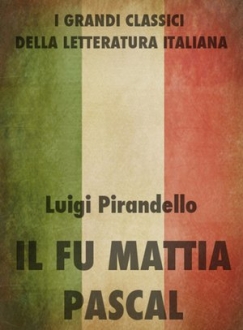
FOR MOST PEOPLE, the lyrical, lilting surname Pirandello probably elicits only vague remembrances of absurdist things past. “Six Characters in Search of an Author,” his existential 1921 masterwork, survives mostly in the world of headline writers who play off of existing titles, probably not the fairest legacy for one of Italy’s foremost dramatists (more than 50 plays), poets, novelists, and short-story writers. Yet for his “bold and ingenious revival of dramatic and scenic art,” Luigi Pirandello, born in Sicily in 1867, won the Nobel Prize for Literature in 1934. Despite continental fame — in 1932 Metro Goldwyn Mayer adapted of one of his comedies for the screen — that lasted until his death in 1936, Pirandello, outside Italy, has lapsed into obscurity partly because of where he was from: During its calamitous stint as a colonial power, Italy never possessed the international prestige of, say, Britain or France, so Italian was never widely spoken outside Italy (and Switzerland’s southern cantons). Also, the playwright’s tempestuous flirtation with, and support from, Benito Mussolini surely did nothing to help his reputation after World War II. (Pirandello broke with the Fascists in the late 1920s.) To this day, much of his voluminous oeuvre remains untranslated into English or, if translated, out of print.

This is a shame. His prose (the subject of this essay) brims with sympathetic, contemporary-seeming characters, some struggling to live true and maintain their dignity in straitened circumstances such as those now befalling so many in the West today. Others strive to get by in a society — usually Sicilian — suffocated by religion and reactionary attitudes toward women. A few begin their lives comfortably but find their dreams dashed by events beyond their control, their situations rendered suddenly precarious. His dramatis personae are invariably common folk, men and women beset by problems that we would find familiar today. If all this doesn’t make Pirandello relevant to us now, then what would?

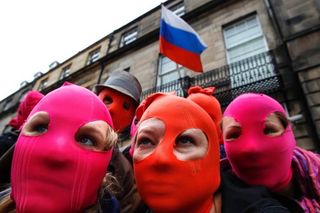
Pussy Riot, Modern Russian Women Trapped in Putin’s Time Machine

1345251238959.cachedMasha Gessen in The Daily Beast:

The cathedral had been virtually empty during the morning hours, and the protest lasted all of 40 seconds before the women were removed by security. But church staff members testified during the trial that they were deeply traumatized by observing the young women in brightly colored dresses and balaclavas lip-sync to a recording of what Pussy Riot calls its punk prayer: “Mother of God, cast Putin out.”

I listened to one of New York’s performance artists read a Pussy Riot manifesto sent from jail. “Patriarch Kirill [head of the Russian Orthodox Church] has repeatedly evangelized on behalf of the figure of Putin—clearly no saint—and continues to urge his parishioners not to participate in protest rallies…We respond to the political activity of the faithful, and counter the patriarch’s efforts to distort the truth on behalf of all believers. And we needed to sing it at the altar, not on the street in front of the temple—that is, in a place where women are strictly forbidden. The fact is, the church is promoting a very conservative worldview that does not fit into such values as freedom of choice, the formation of political identity, gender identity, or sexual identity, critical thinking, multiculturalism, or attention to contemporary culture. It seems to us that the Orthodox Church currently lacks all of these virtues.”

I suddenly realized these texts sounded better in English than they do in Russian. It wasn’t that the translators had improved the quality of the writing: the originals, which I had read in Russian, had been clear and cogent and surprisingly erudite for three very young women—they range in ages from 22 to 30—who had been known for staging radical actions, not for writing political commentary. The problem with the writing in Russian was that the women were speaking the language of the modern world in a country that is rapidly traveling backward in time.

The “Interpreter” in Your Head Spins Stories to Make Sense of the World

Michael Gazzaniga in Discover:

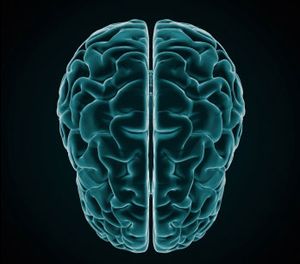
SplitbrainWe humans think we make all our decisions to act consciously and willfully. We all feel we are wonderfully unified, coherent mental machines and that our underlying brain structure must reflect this overpowering sense. It doesn’t. No command center keeps all other brain systems hopping to the instructions of a five-star general. The brain has millions of local processors making important decisions. There is no one boss in the brain. You are certainly not the boss of your brain. Have you ever succeeded in telling your brain to shut up already and go to sleep? Even though we know that the organization of the brain is made up of a gazillion decision centers, that neural activities going on at one level of organization are inexplicable at another level, and that there seems to be no boss, our conviction that we have a “self” making all the decisions is not dampened. It is a powerful illusion that is almost impossible to shake. In fact, there is little or no reason to shake it, for it has served us well as a species. There is, however, a reason to try to understand how it all comes about. If we understand why we feel in charge, we will understand why and how we make errors of thought and perception.

When I was a kid, I spent a lot of time in the desert of Southern California—out in the desert scrub and dry bunchgrass, surrounded by purple mountains, creosote bush, coyotes, and rattlesnakes. The reason I am still here today is because I have nonconscious processes that were honed by evolution. I jumped out of the way of many a rattlesnake, but that is not all. I also jumped out of the way of grass that rustled in the wind. I jumped, that is, before I was consciously aware that it was the wind that rustled the grass, rather than a rattler. If I had had only my conscious processes to depend on, I probably would have jumped less but been bitten on more than one occasion.

Conscious processes are slow, as are conscious decisions.

More here.

Sunday Poem

Straits of Malacca 24 Oct 1957

a.
Soft rain on the
gray ocean, a tern
still glides low over
whitecaps
after the ship is gone

b.
Soft rain on
……………….gray sea
.. .a tern
……….glides brushing
…………………….waves
The ship's silent
…………………wake

c. Fog of rain on
………………..water
……Tern glides
……Over waves,
………………the
……..wake

.

by Gary Snyder
from Left Out in the Rain
North Point Press, 1986

Is eating egg yolks as bad as smoking?

From CNN:

EggA new study suggests eating egg yolks can accelerate heart disease almost as much as smoking. The study published online in the journal Atherosclerosis found eating egg yolks regularly increases plaque buildup about two-thirds as much as smoking does. Specifically, patients who ate three or more yolks a week showed significantly more plaque than those who ate two or less yolks per week. It may seem harsh to compare smoking with eating egg yolks, but lead study author Dr. David Spence says researchers needed a way to put it into perspective since both eating cholesterol and smoking increase cardiovascular risks – but the general public believes smoking is far worse for your health. The issue is with the yolk, not the egg, says Spence, who is also a professor of neurology at the University of Western Ontario's Schulich School of Medicine & Dentistry. “One jumbo chicken egg yolk has about 237 milligrams of cholesterol.” Keeping a diet low in cholesterol is key, says Spence. Even if you are young and healthy, eating egg yolks can increase the risk of cardiovascular diseases later. “Just because you are 20 doesn't mean egg yolks aren't going to cause any trouble down the line,” he says.

Study: Egg yolk nearly as bad as smoking

For those patients with increased coronary risk, such as diabetics, eating an egg yolk a day can increase coronary risk by two to five-fold, he adds. Atherosclerosis, also called coronary artery disease, occurs when plaque builds up in the blood vessels leading to the heart, specifically the inner arterial wall, and limits the amount of blood that can pass through.

More here.

Saturday, August 18, 2012

Nadezhda Tolokonnikova’s Concluding Statement

Over at Business Insider, a video and partial transcript of the closing statement from one of the defendants in the Pussy Riot blasphemy trial [h/t: Justin Smith]:

On 30th July, the first day of the trial, we presented our response to the accusations. Prior to that we were in prison, in confinement. We can’t do anything there. We can’t make statements. We can’t make films. We don’t have the internet in there. We can’t even give our lawyer a bit of paper because that’s banned too. Our first chance to speak came on 30th July. The document we’d written was read out by defence lawyer Volkov because the court refused outright to let the defendants speak. We called for contact and dialogue rather than conflict and opposition. We reached out a hand to those who, for some reason, assume we are their enemies. In response they laughed at us and spat in our outstretched hands. “You’re disingenuous,” they told us. But they needn’t have bothered. Don’t judge others by your own standards. We were always sincere in what we said, saying exactly what we thought, out of childish naïvety, sure, but we don’t regret anything we said, even on that day. We are reviled but we do not intend to speak evil in return. We are in desperate straits but do not despair. We are persecuted but not forsaken. It’s easy to humiliate and crush people who are open, but when I am weak, then I am strong.

Listen to us rather than to Arkady Mamontov talking about us. Don’t twist and distort everything we say. Let us enter into dialogue and contact with the country, which is ours too, not just Putin’s and the Patriarch’s. Like Solzhenitsyn, I believe that in the end, words will crush concrete. Solzhenitsyn wrote, “the word is more sincere than concrete, so words are not trifles. Once noble people mobilize, their words will crush concrete.”

revealing our simian history

3e4d2262-4f6e-488b-b321-19c8e9277251

Although our brains have ballooned over the past million years or so, we still struggle to understand ourselves. Nowhere is this more obvious than in the study of our origins. That we evolved is considered by the scientific community to be established beyond reasonable doubt, yet at the same time there remain enormous gaps in our knowledge of how it happened. Some of the most fundamental details of our development – why our ancestors became bipedal, or why their brains tripled in size – remain unexplained. In different ways, all three of the books under consideration here wrestle with this problem. Taken together, they give a good overview of what we really know about our primate past and what we don’t. The gaps in our knowledge make life uncomfortable for those who are struggling to defend evolutionary theory against the dogma of creationism.

more from Stephen Cave at the FT here.

the way the world works

600

Baker, to be sure, has long practiced the art of indirection. His first novel, “The Mezzanine,” tells of a man buying shoelaces on his lunch break — although really, it’s about much more than that. “U and I” meditates on his fascination with John Updike by relying less on research than on memory: What, Baker asks, did Updike mean to him? Perhaps my favorite of his books, 2010’s “The Anthologist,” offers an extended monologue by a poet with writer’s block that becomes the very piece its narrator is unable to write. What these works share is a sense that how we think, our idiosyncratic dance with both experience and memory, defines who we are. This is a key to “The Way the World Works” as well.

more from David L. Ulin at the LA Times here.