Unafraid of Aging

From The New York Times:

MailThe signal public health achievement of the 20th century was the increase of the human life span. Now, as that achievement helps raise the proportion of the aged around the world, what once seemed an unalloyed blessing is too often regarded as a burden — a financial burden, a health care burden, even a social burden.

“It’s nuts,” said Dr. Linda P. Fried, an epidemiologist and geriatrician who is dean of the Mailman School of Public Health at Columbia University. “To assume defeat from what every one of us as individuals wants suggests we’re not asking the right questions.” Findings from the science of aging, Dr. Fried said, should “reframe our understanding of the benefits and costs of aging.” From her perch at Mailman, a position she has held for four years, Dr. Fried is pushing students, professors and a wider audience to ask the right questions and ponder the right policies for coping with an aging world population. Dr. Fried’s mandate is to lead a school that will give a new generation the tools to deal with global challenges to public health, including environmental degradation, climbing health care costs and the pressure of rapid urbanization. But she believes that research on aging and health changes “across the life course” are central to designing solutions to public health problems in the 21st century.

More here.

The United States is abandoning its role as the global champion of human rights

Jimmy Carter in the New York Times:

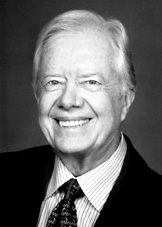
CarterRevelations that top officials are targeting people to be assassinated abroad, including American citizens, are only the most recent, disturbing proof of how far our nation’s violation of human rights has extended. This development began after the terrorist attacks of Sept. 11, 2001, and has been sanctioned and escalated by bipartisan executive and legislative actions, without dissent from the general public. As a result, our country can no longer speak with moral authority on these critical issues.

While the country has made mistakes in the past, the widespread abuse of human rights over the last decade has been a dramatic change from the past. With leadership from the United States, the Universal Declaration of Human Rights was adopted in 1948 as “the foundation of freedom, justice and peace in the world.” This was a bold and clear commitment that power would no longer serve as a cover to oppress or injure people, and it established equal rights of all people to life, liberty, security of person, equal protection of the law and freedom from torture, arbitrary detention or forced exile.

The declaration has been invoked by human rights activists and the international community to replace most of the world’s dictatorships with democracies and to promote the rule of law in domestic and global affairs. It is disturbing that, instead of strengthening these principles, our government’s counterterrorism policies are now clearly violating at least 10 of the declaration’s 30 articles, including the prohibition against “cruel, inhuman or degrading treatment or punishment.”

More here.

Obesity, the Other Gulf War Syndrome

Peter Savodnik at Businessweek:

ObesityAccording to surgeons like Al Sanea, the bariatric boom can be traced to the buildup to the 1991 Gulf War. That was when hundreds of thousands of U.S. troops descended on the Gulf nation, bringing with them Taco Bell (YUM), Hardee’s, Baskin-Robbins (DNKN), and Nathan’s Famous (NATH) hot dogs, among others. “The [war] was the demarcation line,” says Dr. Abdulwahab Naser Al-Isa, at the Department of Community Medicine & Behavioral Sciences at Kuwait University. Andrew Smith, the author of the Encyclopedia of Junk Food and Fast Food, says, “The American military went in, and obviously they wanted fast food. Therefore, the number of fast-food establishments expanded exponentially.” And Kuwaitis fell in love.

If war introduced fast-food joints to Kuwait City, peace made them a permanent fixture. Some 3,400 U.S. troops remained in Kuwait after the war, enforcing the no-fly zone over Iraq. McDonald’s (MCD) first opened in Kuwait in 1994, three years after the war ended. (In contrast, the U.S. withdrew its troops from Iraq late last year, and ongoing spurts of violence mean it’s unlikely that there will be a surge in U.S. restaurants there. In 2011, Pizza Hut, Cinnabon, and Burger King started closing locations in Iraq.)

Monday, June 25, 2012

The Winners of the 3QD Science Prize 2012

2012 Science prize WinnerScience2012Strange WinnerScience2012

Sean Carroll has picked the three winners:

1. Top Quark, $1000: Aatish Bhatia, The crayola-fication of the world: How we gave colors names, and it messed with our brains
2. Strange Quark, $300: Cosma Shalizi, In Soviet Union, Optimization Problem Solves You
3. Charm Quark, $200: Holly Dunsworth, Forget bipedalism. What about babyism?

Here is what Sean had to say about them:

I want to thank Abbas and all the 3QD crew for inviting me to judge this year's Science Prize. I can't help but thinking that after having Richard Dawkins, Steven Pinker, and Lisa Randall judge the previous years, a certain phase transition has occurred; but I'm happy to be associated with such an amazing group.

Let me start by saying something obvious but nevertheless true: the entries this year were of extraordinarily high quality. Some excellent blog posts among the initial nominees didn't even make the final nine, and any one of the nine finalists would have been a worthy choice for number one. But I will resist the temptation to declare a nine-way tie.

There is no simple and objective standard for what makes a blog post “the best.” “Blog is software,” as Bora Zivkovic likes to remind us — blogging is a medium, not a genre. Successful blog posts can be one word or ten thousand; a personal reflection or a rigorous analysis; an original idea or an insightful commentary; a devastating take-down or an inspirational message. But within these flexible parameter, there are certain aspects of blogging that make it special, and I looked for posts that took advantage of those unique capabilities. I wanted to choose posts that would be hard to imagine finding in any other medium, but whose quality measured up to the best of journalism or science writing. One frustrating aspect of a contest like this is that the prize is given to posts, rather than to blogs — for many of the most successful blogs, their charm comes from the accumulated effect of reading many posts over a long period of time. But okay, enough with the throat-clearing.

Without further ado:

First place this year goes to Empirical Zeal, for “The crayola-fication of the world: How we gave colors names, and it messed with our brains.” With many different criteria in mind, this post by Aatish Bhatia stood out among the rest. It's just about the perfect use of a blog. For one thing, it looks gorgeous: all those colorful images, each of which actually serves a purpose. The writing is playful and clever; once you see the mantis shrimp telling you “DEAR MORTAL, YOUR RAINBOW IS PUNY,” you're not likely to forget it. And most of all, the science is fascinating and important. To a physicist, there is a continuum of colors; but to our eyes and brains, “rainbows have seams,” and that affects how we think about the world. A completely deserving winner. (And don't forget that there is a Part II.)

Second place goes to Three-Toed Sloth, for “In Soviet Union, Optimization Problem Solves You” (cross-posted at Crooked Timber.) Cosma Shalizi doesn't bother with colorful pictures; he even uses a slightly gray font on a white background, presumably because black on white would come off as too florid. But this is a creative and original essay that brings the theory of computational complexity to bear on the practical problem of managing a planned economy. (Conclusion: it can't be done.) The flexibility of blogs doesn't just mean the ability to post videos; it also means the freedom to explore ideas outside traditional disciplinary comfort zones. Not a light read, but a true contribution to intellectual discourse. The kind of post that nudges the rest of us to be better bloggers.

Third place goes to The Mermaid's Tale, for “Forget bipedalism. What about babyism?” In another great use of the medium, Holly Dunsworth takes creative advantage of the blog format to make important points both about science and about how science is done. How much can we learn about a species just by studying a few bones in its feet? Does a particular anatomical feature represent a crucial adaptation to circumstances, or is it just an ancestral remnant? Also: adorable pictures of baby monkeys, as well as real data with error bars. Everybody wins.

In very different ways, these three posts serve as proud examples of what blogging can be at its best — feel free to share them with any of your friends who still remain skeptical. Yet, I cannot help but cheat just a little bit by offering two “honorable mentions.” At The Primate Diaries, Eric Michael Johnson's “Freedom to Riot: On the Evolution of Collective Violence” is a polished and fascinating look at natural selection and the behavior of human crowds. And at Quantum Diaries, Flip Tanedo's “Helicity, Chirality, Mass, and the Higgs” is an original take on explaining an abstract but central point in modern quantum field theory. All of these posts — as well as the other finalists! — are impressive achievements. My hat's off.

Congratulations also from 3QD to the winners (remember, you must claim the money within one month from today–just send me an email). And feel free, in fact we encourage you, to leave your acceptance speech as a comment here! And thanks to everyone who participated. Many thanks also, of course, to Sean Carroll for doing the final judging and for his charmingly erudite judging essay.

The three prize logos at the top of this post were designed by Sughra Raza, me, and me. The photograph used in the strange quark logo was taken by Margit Oberrauch. I hope the winners will display them with pride on their own blogs!

Details about the prize here.

perceptions

Hell-sarah raymond

Pieter Hugo. Sarah Raymond, Capetown. From the series There's a Place in Hell for Me and My Friends, 2011.

” In this series … the subjects are simply the photographer and his friends, who represent an array of ethnicities but are not particularly atypical, abnormal or 'unusual' in a genetic sense. Instead they are rendered unusually, portrayed in a heightened monotone with their skin transformed into a range of exaggerated black spots and dark tones. As Hugo explains it, 'The process used in making these pictures involves turning digital colour images black and white, while keeping the colour channels active. In this manner one can manipulate the colour channels and emphasise certain colours within the grey scale. Melanin, the pigment responsible for skin colour, appears in two forms: pheomelanin (which appears as red), and eumelanin (which appears as a very dark, yellowish brown). In the case of these images, the red and yellow colour channels were darkened to a point where nearly all of their information was rendered as blacks and dark greys, and they were therefore brought to prominence.' Hence, within these photographs even the slightest pigmentation in light skin is converted into charcoal tones.”

(Extract from 'Beholder', Aaron Schuman's essay in Pieter Hugo's monograph (Munich: Prestel, 2012) accompanying his retrospective opening at the Fotomuseum den Haag in March 2012.) from here.

More here, and here.

Sunday, June 24, 2012

Gordon Bowker’s ‘James Joyce’: Portrait of the author as a man

Michael Dirda in the Washington Post:

P14-110807-b1More than 100 years ago, on June 16, 1904, Mr. Leopold Bloom and young Stephen Dedalus separately wandered the streets of Dublin, crossing paths with teachers, priests, medical students, journalists, a woman in labor, publicans, bar maids, drunks, rabid Irish jingoists, sentimental babysitters and at least one adulterer, “Blazes” Boylan, not to overlook Stephen’s shiftless father, Simon, the mourners at Paddy Dignam’s funeral and the whores of the phantasmagoric Nighttown. Eventually, Mr. Bloom rescues Stephen from a Nighttown brawl, and the pair return to 7 Eccles St., where Mrs. Bloom — nee Marion Tweedy and known as Molly — will eventually fall asleep after, yes, the most famous stream-of-consciousness reverie in all of modern literature.

That, in a nutshell, is the action of “Ulysses” (1922), generally regarded as the greatest 20th-century novel in English. Of course, there’s a little more to the book than that, as generations of readers, critics, scholars and exegetes well know. Chapters loosely update episodes of Homer’s “Odyssey”; the language sings throughout; narrative conventions are ignored or revolutionized; literary and social taboos are violated (one scene takes place in an outhouse); and the whole book shifts constantly between interior monologue and outward events, between the starkest realism and the subtlest symbolism. “Ulysses” is arguably the most carefully wrought novel ever written — every word, down to its spelling, is there for an artistic reason.

More here.

Huge Ancient Civilization’s Collapse Explained

Charles Choi in Discovery News:

ScreenHunter_08 Jun. 25 00.24Nearly a century ago, researchers began discovering numerous remains of Harappan settlements along the Indus River and its tributaries, as well as in a vast desert region at the border of India and Pakistan. Evidence was uncovered for sophisticated cities, sea links with Mesopotamia, internal trade routes, arts and crafts, and as-yet undeciphered writing.

“They had cities ordered into grids, with exquisite plumbing, which was not encountered again until the Romans,” Giosan told LiveScience. “They seem to have been a more democratic society than Mesopotamia and Egypt — no large structures were built for important personalitiess like kings or pharaohs.”

Like their contemporaries in Egypt and Mesopotamia, the Harappans, who were named after one of their largest cities, lived next to rivers.

“Until now, speculations abounded about the links between this mysterious ancient culture and its life-giving mighty rivers,” Giosan said.

Now Giosan and his colleagues have reconstructed the landscape of the plain and rivers where this long-forgotten civilization developed. Their findings now shed light on the enigmatic fate of this culture.

“Our research provides one of the clearest examples of climate change leading to the collapse of an entire civilization,” Giosan said.

More here.

Just How Fat Are We?

ScreenHunter_07 Jun. 25 00.15

Ellen Fanning in The Global Mail:

Here's a pop quiz for you. What is the adult population of North America?

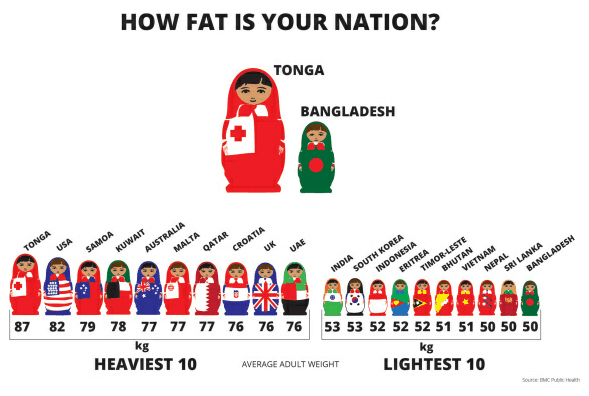
A few years ago, the official number was around 260 million. But the more accurate figure may be some 30 per cent higher — closer to 340 million. To be brutal, it's because so many of them are so fat.

London researchers have put the world's population on the scales and worked out that so many people are overweight or obese, they are effectively making the planet much more crowded.

If every nation's population was as fat as America's, they reckon, it would be the same as having about an extra billion bodies on earth.

That's equivalent to the population ofIndia. Bigger than Brazil. Three quarters of China.

More here.

When Chomsky wept

Fred Branfman in Salon:

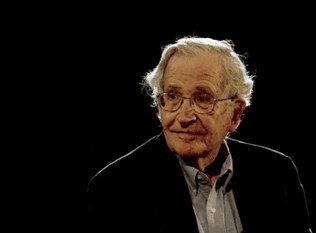
ScreenHunter_06 Jun. 25 00.08Forty-two years ago I had an unusual experience. I became friendly with a guy named Noam Chomsky. I came to know him as a human being before becoming fully aware of his fame and the impact of his work. I have often thought of this experience since — both because of the insights it gave me into him and, more important, the deep trouble in which our nation and world find themselves today. His foremost contribution for me has been his constant focus on how U.S. leaders treat so many of the world’s population as “unpeople,” either exploiting them economically or engaging in war-making, which has murdered, maimed or made homeless over 20 million people since the end of World War II (over 5 million in Iraq and 16 million in Indochina according to official U.S. government statistics).

Our friendship was forged over concern for some of these “unpeople” when he visited Laos in February 1970. I had been living in a Lao village outside the capital city of Vientiane for three years at that point and spoke Laotian. But five months earlier I had been shocked to my core when I interviewed the first Lao refugees brought down to Vientiane from the Plain of Jars in northern Laos, which had been controlled by the communist Pathet Lao since 1964. I had discovered to my horror that U.S. executive branch leaders had been clandestinely bombing these peaceful villagers for five-and-a-half years, driving tens of thousands underground and into caves, where they had been forced to live like animals.

More here.

Why Nigerian e-mail scams are so crude and obvious

Brad Plumer in Wonkblog:

PrincescamSo why don’t Internet scammers try to change up their tactics? Everyone knows about the Nigerian prince. It’s tired and cliched. Why don’t more scammers try to dupe us with the fake inheritances of a Kazakh prince instead, or with Greek bonds or fancy credit default swaps or something clever like that? Something we haven’t seen before?

A fascinating new paper (pdf) from Microsoft researcher Cormac Herley actually tries to answer this question. He notes that 51 percent of all e-mail scams still originate from Nigeria, even though this is the most obvious scam known to mankind. And Corley argues (with math and graphs) that it’s not because scammers are stupid. Most of them are actually quite clever. Rather, they’re explicitly trying to weed out everyone but the most gullible respondents:

Our analysis suggests that is an advantage to the attacker, not a disadvantage. Since his attack has a low density of victims the Nigerian scammer has an over-riding need to reduce false positives. By sending an email that repels all but the most gullible the scammer gets the most promising marks to self-select, and tilts the true to false positive ratio in his favor.

Scamming people, after all, costs time and money. Herley notes that everyone who responds to a scamming ploy “requires a large amount of interaction.” The worst thing that can happen, from the scammer’s point of view, is that a savvy person starts responding and toying with the scammer.

More here.

A Canopy of Man-Made Solar-Powered Supertrees Flourishes in Singapore

Via Good:

SingaporeThe man-made canopy, much like its natural counterparts, will serve as air venting ducts for nearby conservatories, collect rainwater, and provide shade to park tourists. Eleven of the Supertrees are adorned with photovoltaic cells that will harvest solar energy to light up the trees in the evening, providing energy and lighting, to conservatories throughout the park, and serving as air and temperature regulators.

More here.

“Effortless Perfection”

From Harvard Magazine:

PerfectThis past winter, a class of ’73 graduate asked me whether students still spend hours lingering over meals. He recalled his Harvard as heady and carefree, a place for reading great books and whiling away days in conversation. He had been saddened by an article in this magazine that chronicled the over-programmed lives of Harvard undergraduates today; among other alarums, it had mourned the death of the two-hour lunch. I looked up the piece (“Nonstop” ) and likewise found it upsetting. It painted Harvard undergraduates as so over-scheduled, they barely shower or sleep, let alone linger over lunch. But I knew it was not entirely accurate. At the very least, the article did not accurately reflect my Harvard experience. One of the greatest delights of my two years here has been dawdling in dining halls, listening, talking, and laughing with friends. I now realize the article bothered me in the same way I’m bothered by people who talk too much. I see in their annoying behavior a shade of something I fear I also do. Likewise, reading about Harvard’s “superstars” who “do it all” reminded me of a role I’d once tried to fill, now consciously refused, feared falling back into, and also was terrified of abandoning. I arrived at Harvard as a successful student who never slacked off. I liked to think my life well-balanced—I played sports, kept close friends, spent time with my family, and even slept. But as I outwardly checked off markers of a good, happy life, inside, I was all turmoil. That “carefree” lifestyle was a daily struggle, a purposeful act. I was terrified of “not doing everything right.” Schedule, schoolwork, social life, family, fitness, eating, clothes, even demeanor: everything had to be just so. Everyone believed I was happy-go-lucky (except maybe my parents, lone witnesses of biweekly meltdowns), and I was largely happy. But the harder I tried to be perfect, the more my perfectionism became torture.

Of course, in a sense it worked out. Affectation of effortless perfection got me into Harvard.

More here.

THE FALSE ALLURE OF GROUP SELECTION

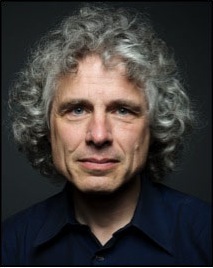
Steven Pinker in Edge:

PinkerHuman beings live in groups, are affected by the fortunes of their groups, and sometimes make sacrifices that benefit their groups. Does this mean that the human brain has been shaped by natural selection to promote the welfare of the group in competition with other groups, even when it damages the welfare of the person and his or her kin? If so, does the theory of natural selection have to be revamped to designate “groups” as units of selection, analogous to the role played in the theory by genes? Several scientists whom I greatly respect have said so in prominent places. And they have gone on to use the theory of group selection to make eye-opening claims about the human condition.[i] They have claimed that human morailty, particularly our willingness to engage in acts of altruism, can be explained as an adaptation to group-against-group competition. As E. O. Wilson explains, “In a group, selfish individuals beat altruistic individuals. But, groups of altruistic individuals beat groups of selfish individuals.” They have proposed that group selection can explain the mystery of religion, because a shared belief in supernatural beings can foster group cohesion. They suggest that evolution has equipped humans to solve tragedies of the commons (also known as collective action dilemmas and public goods games), in which actions that benefit the individual may harm the community; familiar examples include overfishing, highway congestion, tax evasion, and carbon emissions. And they have drawn normative moral and political conclusions from these scientific beliefs, such as that we should recognize the wisdom behind conservative values, like religiosity, patriotism, and puritanism, and that we should valorize a communitarian loyalty and sacrifice for the good of the group over an every-man-for-himself individualism.

More here.

Sunday Poem

Branch Library

I wish I could find that skinny, long-beaked boy
who perched in the branches of the old branch library.

He spent the Sabbath flying between the wobbly stacks
and the flimsy wooden tables on the second floor,

pecking at nuts, nesting in broken spines, scratching
notes under his own corner patch of sky.

I’d give anything to find that birdy boy again
bursting out into the dusky blue afternoon

with his satchel of scrawls and scribbles,
radiating heat, singing with joy.
.

by Edward Hirsch
from The Living Fire: New and Selected Poems
publisher: Knopf, 2010

President Obama Reflects on the Impact of Title IX

Via Newsweek:

Any parent knows there are few things Obamamore fulfilling than watching your child discover a passion for something. And as a parent, you’ll do anything to make sure he or she grows up believing she can take that ambition as far as she wants; that your child will embrace that quintessentially American idea that she can go as far as her talents will take her.

But it wasn’t so long ago that something like pursuing varsity sports was an unlikely dream for young women in America. Their teams often made do with second-rate facilities, hand-me-down uniforms, and next to no funding.

What changed? Well, 40 years ago, committed women from around the country, driven by everyone who said they couldn’t do something, worked with Congress to ban gender discrimination in our public schools. Title IX was the result of their efforts, and this week, we celebrated its 40th anniversary—40 years of ensuring equal education, in and out of the classroom, regardless of gender.

Saturday, June 23, 2012

Physics Community Afire With Rumors of Higgs Boson Discovery

Adam Mann in Wired:

ScreenHunter_05 Jun. 23 18.34One of the biggest debuts in the science world could happen in a matter of weeks: The Higgs boson may finally, really have been discovered.

tantalizing hints of the Higgs turned up in December at the LHC – CERN”>Large Hadron Collider, scientists there have been busily analyzing the results of their energetic particle collisions to further refine their search.

wrote mathematician Peter Woit on his blog, Not Even Wrong. According to Woit, there are rumors of new data that would be the most compelling evidence yet for the long-sought Higgs.

The possible news has a number of physics bloggers speculating that LHC scientists will announce the discovery of the Higgs during the International Conference on High Energy Physics, which takes place in Melbourne, Australia, July 4 to 11.

The new buzz is just the latest in the Higgs search drama. In December, rumors circulated regarding hints of the Higgs around 125 gigaelectronvolts (GeV), roughly 125 times the mass of a proton. While those rumors eventually turned out to be true, the hard data only amounted to what scientists call a 3-sigma signal, meaning that there is a 0.13 percent probability that the events happened by chance. This is the level at which particle physicists will only say they have “evidence” for a particle.

In the rigorous world of high-energy physics, researchers wait to see a 5-sigma signal, which has only a 0.000028 percent probability of happening by chance, before claiming a “discovery.”

The latest Higgs rumors suggest nearly-there 4-sigma signals are turning up at both of the two separate LHC experiments that are hunting for the particle.

More here.

I Never Owned Any Music To Begin With

When an NPR Music intern admitted to paying for almost none of the 11,000 songs in her iTunes library, David Lowery, of Cracker and Camper Van Beethoven fame and lecturer for the University of Georgia's music business program, took it as an opportunity to explain the ethics of a sustainable music industry, and the debate went viral. Here's the initial blog post, with links to the professor's response and NPR's coverage of the debate below.

NPRmusicdebateA few days before my internship at All Songs Considered started, Bob Boilen posted an article titled “I Just Deleted All My Music” on this blog. The post is about entrusting his huge personal music library to the cloud. Though this seemed like a bold step to many people who responded to the article, to me, it didn't seem so bold at all.

I never went through the transition from physical to digital. I'm almost 21, and since I first began to love music I've been spoiled by the Internet.

I am an avid music listener, concertgoer, and college radio DJ. My world is music-centric. I've only bought 15 CDs in my lifetime. Yet, my entire iTunes library exceeds 11,000 songs.

David Lowery's response and NPR's coverage.

Pervez Musharraf: “If you are weak, anyone can come and kick you”

Jemima Khan in New Statesman:

Mush-for-webGeneral Pervez Musharraf, former president of Pakistan, former chief executive of Pakistan, former army chief and former chairman of the joint chiefs of staff committee, is watching the England v West Indies Test series in his neat, unostentatious flat off the Edgware Road in west London. He has spent the past three years living between here and Dubai, in self-imposed exile, watching cricket, keeping fit, playing golf, giving lectures for large fees and plotting his return to Pakistani politics. There are no armed guards, no entourage and no fanfare. His private secretary, Anjum Choudhry, a friend I’ve known as “Jim” for many years, sits quietly and reads a paper at the dining room table as the general, in a brown suit and pink shirt, welcomes me into his home and invites me to ask him anything I want. Which, given the rumpus that resulted from my last interview with him (when, on the eve of the 2007 presidential election, he told me a number of things that he later regretted), is very trusting indeed. In this way, Musharraf differs from most politicians I have met. He is unguarded, forthcoming and at times appears disarmingly naive. He tells me of his imminent return to Pakistan to contest elections, as his housekeeper offers samosas, meethi (Pakistani sweets) and chai. “I think one can look after one’s security. There will be danger but not as much as all my family and all my friends think.” Already there have been many attempts on his life.

Musharraf thinks that politically he is in with a good chance. In October 2010, he launched a new party, the All Pakistan Muslim League, of which he is the president, and he plans to return to contest elections in Pakistan next year. He tells me that according to a recent, informal poll, conducted by a friend from Lahore, 91 per cent of respondents want him to be president and Imran Khan, the leader of Tehreek-e-Insaf (“Movement for Justice”), to be prime minister. “I strongly believe this is the feeling. Even my own supporters tell me Imran is the person who should be with us. I think we can turn the tables if we are together. If he is alone and if I am alone I don’t think we can turn the tables.”

I pass this on to Imran later. He laughs, and says: “And then did he wake up . . . ?”

More here.