How to Get Into and Out of an Economic Crisis…

Magnason_468wAndri Snær Magnason on Iceland's collapse and recovery, in Eurozine:

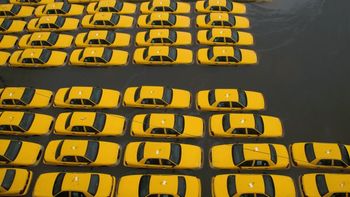
When the global recession crisis hit, Iceland suddenly made world news. The headlines were breathtaking. Collapse, national bankruptcy and demonstrations on the streets. In Vanity Fair you could read descriptions of burning Range Rover jeeps and people stocking up on groceries. Actually, neither story was true. One man was suspected of having set his luxury car on fire and Iceland continued to export fish. The collapse, however, was a fact. Iceland was one of the worst casualties of the global financial crisis. The Icelandic stock market, which at its peak had reached 9000 points, stood at 14 points after the collapse. This rollercoaster ride was as dramatic as the statistics.

In the five years between 2002 and 2008, Icelandic banks had gone from serving a small local market to operating as large international corporations. They grew tenfold and had become twelve times richer than the Icelandic gross national product. Their sights were set even higher: every single bank possessed drawings of new headquarters which were supposed to be ten times larger than those they had in 2007.

The banks employed a young generation full of confidence – they knew their way around the business districts of London, New York, Tokyo and Shanghai. They were highly educated with postgraduate degrees from Harvard, MIT and LSE. They spoke more languages than their parents and knew how to put together complicated financial transactions, forward contracts, derivatives and all those things ordinary people don't understand. This was the most highly educated generation in Icelandic history and the banks had an insatiable need for educated manpower. They became a black hole for talent, sucking in the best people.

Thursday, June 14, 2012

Patricia Churchland on What Neuroscience Tells Us About Morality

Over at Rationally Speaking, a discussion between Patricia Churchland and Massimo Pigliucci:

The Rationally Speaking podcast is proud to feature another certified genius: Patricia Churchland, a philosopher well known for her contributions to neurophilosophy and the philosophy of the mind, was professor at the University of California San Diego from 1984-2010, and won the MacArthur Genius Grant in 1991. In this episode, she, Massimo, and Julia discuss what philosophy has to say about neuroscience, what neuroscience has to say about philosophy, and what both of them have to say about morality.

The Adolescent Brain

Bk_598_blakemore630Sarah- Jayne Blakemore over at Edge:

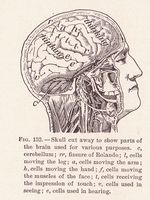
The reason I became interested in the adolescent brain is twofold. Firstly, we know that most adult mental disorder has its onset at some point during the teenage years, so if you look at disorders like anxiety disorders, depression, addictions, eating disorders, almost all of them will have their onset some time during the teenage years.

Schizophrenia, as you might know, is a very horrific psychiatric condition that's characterized by delusions, like being paranoid and thinking that people are out to get you, and hallucinations like imagining that people are talking to you inside your head, hearing voices. That has its onset at the end of adolescence, normally in the early 20s, on average. So that's one reason why I think it's really important to study the adolescent brain. The hypothesis is that something is going wrong in normal brain development to trigger these psychiatric and psychological disorders.

The second reason why adolescence is an interesting period of life to study is because unlike most other periods of life, the leading causes of death in adolescence are accidents. That's the number one leading cause of death during the period of adolescence, the second is suicide. The accidents are caused, generally, by risk taking. So we know that teenagers take more risks than either children or adults. The question is, why? Why is adolescence associated with this phenomenon like increased risk taking and especially when adolescents are with their peers, so peers become really influential in adolescence. Adolescents are driven towards impressing their peers, trying to seek approval of their peers, and becoming more and more independent from their parents. Social cognition, the social brain seems to change during the period of adolescence, and that's something that particularly interests me.

And finally, self-awareness; awareness of one's self, and consciousness of one's self. We all know, if you remember what it's like being a teenager, that feeling of heightened self-consciousness that seems to happen in early adolescence where you become easily embarrassed by things like your parents, or social situations where you're not seen as cool, and that kind of thing.

The War of Lies

Troepen_idfUri Avnery on the 30th anniversary of the Israeli invasion of Lebanon, in Gush Shalom (image from wikipedia):

Almost all wars are based on lies. Lies are considered legitimate instruments of war. Lebanon War I (as it was later called) was a glorious example.

From beginning to end (if it has ended yet) it was a war of deceit and deception, falsehoods and fabrications.

THE LIES started with the official name: “Operation Peace in Galilee”.

If one asks Israelis now, 99.99% of them will say with all sincerity: “We had no choice. They launched katyushas at the Galilee from Lebanon every day. We had to stop them.” TV anchormen and anchorwomen, as well as former cabinet ministers have been repeating this throughout the week. Quite sincerely. Even people who were already adults at the time.

The simple fact is that for 11 months before the war, not a single shot was fired across the Israeli-Lebanese border. A cease-fire was in force and the Palestinians on the other side of the border kept it scrupulously. To everybody’s surprise, Yasser Arafat succeeded in imposing it on all the radical Palestinian factions, too.

At the end of May, Defense Minister Ariel Sharon met with Secretary of State Alexander Haig in Washington DC. He asked for American agreement to invade Lebanon. Haig said that the US could not allow it, unless there were a clear and internationally recognized provocation.

And lo and behold, the provocation was provided at once. Abu Nidal, the anti-Arafat and anti-PLO master terrorist, sent his own cousin to assassinate the Israeli ambassador in London, who was grievously wounded.

In retaliation, Israel bombed Beirut and the Palestinians fired back, as expected. The Prime Minister, Menachem Begin, allowed Sharon to invade Lebanese territory up to 40 km, “to put the Galilee settlements out of reach of the katyushas.”

When one of the intelligence chiefs told Begin at the cabinet meeting that Abu Nidal’s organization was not a member of the PLO, Begin famously answered: “They are all PLO”.

Bonds for Well-Being: A (Protein) Social Network

From Harvard Magazine:

ProtJust about everything the body does depends on the interactions of proteins—the molecules encoded by genes that serve as the primary workers in cells. Without thousands of coordinating proteins, cells wouldn’t function properly; even subtle problems in these interactions can lead to disease.

Spyros Artavanis-Tsakonas, professor of cell biology at Harvard Medical School (HMS), believes that to better grasp what can go wrong with proteins, scientists need to understand how these molecules function together (not just in isolation) in healthy cells. In the October 28 issue of Cell, his team published a large-scale map that tracks the interactions of thousands of proteins in fruit flies (Drosophila melanogaster). Since then, the researchers have continued to expand the map and delve into these connections in more detail. The map was created through a painstaking process that Artavanis-Tsakonas compares to fishing. The scientists first randomly generated thousands of distinct proteins to serve as “bait,” and introduced these proteins into Drosophila cells. When they removed the baits, they could see which proteins had adhered to them, thanks to the application of a highly precise technique, mass spectrometry, carried out by HMS professor of cell biology Steven Gygi. The result: a vast “social network” of proteins.

More here.

Genetic sequence could solve mystery of why bonobos are more peaceful than other chimpanzees

From Nature:

Online81258190When the Congo River in central Africa formed, a group of apes was forever stranded on its southern banks. Two million years later, the descendants of these apes — the bonobos — have developed distinct social patterns. Unlike their chimpanzee relatives on the northern shore, they shun violent male dominance and instead forge bonds through food-sharing, play and casual sex. An 18-year-old female named Ulindi has now become the first bonobo (Pan paniscus) to have its genome sequenced. Scientists hope that the information gleaned will explain the stark behavioural differences between bonobos and common chimpanzees (Pan troglodytes) and help to identify the genetic changes that set humans apart from other apes.

Distant relatives

Humans, chimps and bonobos all share a common ancestor that lived about 6 million years ago in Africa, when the human lineage splintered off. By the time that our Homo erectus ancestors were roaming the African savannah 2 million to 1.5 million years ago, populations of the common ancestor of chimpanzees and bonobos had been separated by the Congo River. Little and probably no interbreeding has occurred since then, says Kay Prüfer, a bioinformatician at the Max Planck Institute for Evolutionary Anthropology in Leipzig, Germany, who led the sequencing study. Comparisons of the bonobo genome and sequences of chimps from various populations showed that chimps living just across the Congo River were no more closely related to bonobos than were populations living as far away as Côte d’Ivoire. That implies that the separation was quick and permanent, says Prüfer.

Easy-going apes

Once the ancestors of bonobos had been separated from those of chimpanzees, they may have found themselves in a very different ecological world. North of the Congo River, the ranges of chimpanzees and gorillas overlap, so those animals compete for food. But no gorillas live south of the river, so bonobos face much less food competition, says Victoria Wobber, a comparative psychologist at Harvard University in Cambridge, Massachusetts, who has worked with bonobos including Ulindi. In the absence of competition, the ancestors of bonobos may have been free to forage a wider range of foods in large groups, and share the spoils freely. “When food is more consistently available, a lot of the aggression you see in chimps, you don’t need anymore,” says Wobber. Bonobos also treat sex as casually as a handshake, earning them the nickname ‘hippie chimps’. The sex is often non-procreative and can occur between pairs of the same sex. Chimps tend to have sex only when females are in estrous. “Instead of resolving their disputes aggressively, maybe they’re resolving them with sex,” says Wobber. And whereas chimpanzee groups are dominated by hyper-aggressive males, bonobo groups are less hierarchical and are often headed by females. Genetic discrepancies between chimps and bonobos must be involved in these behavioural differences, says Prüfer.

More here.

the saving power of form?

Picasso_0

And to think about Picasso’s imagination is to find ourselves right back with Roger Fry and Virginia Woolf at the National Gallery, because there is no modern artist who has struggled more mightily than Picasso to reconcile the rival claims of sentiment and design. The impossible conflict of his years with Françoise Gilot was that try as he might, he could never find a structure compelling enough to crystallize her youthful beauty. Even his finest portraits of her—Richardson speaks of the Femme-fleur—feel programmatic, at least compared to his earlier responses to Fernande Olivier, Marie-Thérèse Walter, Dora Maar, or, later, to Jacqueline Roque. Perhaps the nearly endless transformations he wrecked on several lithographic studies of Françoise—the Gagosian show contains a large number of these states—suggest his unease, his inability to find a pictorial language to express his ardent emotions. Two of the finest works in this exhibition have little or nothing to do with the demands of portraiture. The 1953 painted wood assemblage, Femme portant un enfant, some five-and-a-half feet high, abstracts the mother-and-child relationship through the metaphor of a sculpture that is like something a child might dream up with building blocks. And the great 1950 Vallauris landscape, Paysage d’hiver, turns away from the affective dilemmas of portraiture entirely. Picasso had not been so fully committed to the art of landscape since his studies of the Spanish village of Horta, done in the early Cubist years.

more from Jed Perl at TNR here.

the Summer of Love

Cn_image.size.summer-of-love

Certain places, for unknowable reasons, become socio-cultural petri dishes, and between 1960 and 1964 the area of Northern California extending from San Francisco to Palo Alto was one of them. San Francisco’s official bohemia was North Beach, where the Beats hung out at Lawrence Ferlinghetti’s City Lights bookstore, and where espresso was sipped, jazz was worshipped, and hipsters did not dance. North Beach was not unique, however; it had strong counterparts, for example, in New York’s Greenwich Village, L.A.’s Venice Beach and Sunset Strip, and Cambridge, Massachusetts. What was unique was happening across town, where a group of young artists, musicians, and San Francisco State College students became besotted with the city’s past. “There was a huge romanticism around the idea of the Barbary Coast, about San Francisco as a lawless, vigilante, late-19th-century town,” says Rock Scully, one of those who rented cheap Victorian houses in a run-down neighborhood called Haight-Ashbury. They dressed, he says, “in old, stiff-collared shirts with pins, and riding coats and long jackets.” “Old-timey” became the shibboleth.

more from Sheila Weller at Vanity Fair here.

Thursday Poem

Untitled

The cliff is a wave of rock
that waits. Settled on top

is an albatross nestling, facing
the way its mother left at first light.

It will not move but to blink, adagio,
till she comes on the front of dusk.

You set me likewise on this rock
and ordered me to stay.

My heart a vessel
misemployed above the watermark,

the sea’s black pelt gleaming
in the light underneath.

Steady is the pulse of the promisee’s heart:
one beat mutinous; patient the other.
.

by L.K. Holt
from Patience, Mutiny
John Leonard Press, Melbourne, 2010

coolness

Filler_1-062112_jpg_470x466_q85

One of the more memorable encounters in the history of modern art occurred late in 1961 when the period’s preeminent avant-garde dealer, Leo Castelli, paid a call at the Upper East Side Manhattan townhouse-cum-studio of Andy Warhol, whose pioneering Pop paintings based on cartoon characters including Dick Tracy, the Little King, Nancy, Popeye, and Superman had caught the eye of Castelli’s gallery director, Ivan Karp, who in turn urged his boss to go have a look for himself. Warhol, eager to make the difficult leap from commercial artist to “serious” painter, decades later recalled his crushing disappointment when Castelli coolly told him, “Well, it’s unfortunate, the timing, because I just took on Roy Lichtenstein, and the two of you in the same gallery would collide.” Although Lichtenstein, then a thirty-eight-year-old assistant art professor at Rutgers University’s Douglass College in New Jersey, was also making pictures based on comic-book prototypes—an example of wholly independent multiple discovery not unlike such scientific findings as calculus, oxygen, photography, and evolution—he and Warhol were in fact doing quite different things with similar source material, as the divergent tangents of their later careers would amply demonstrate.

more from Martin Filler at the NYRB here.

Wednesday, June 13, 2012

Why Smart People Are Stupid

Jonah Lehrer in The New Yorker:

Intelligence-StvensonHere’s a simple arithmetic question: A bat and ball cost a dollar and ten cents. The bat costs a dollar more than the ball. How much does the ball cost?

The vast majority of people respond quickly and confidently, insisting the ball costs ten cents. This answer is both obvious and wrong. (The correct answer is five cents for the ball and a dollar and five cents for the bat.)

For more than five decades, Daniel Kahneman, a Nobel Laureate and professor of psychology at Princeton, has been asking questions like this and analyzing our answers. His disarmingly simple experiments have profoundly changed the way we think about thinking. While philosophers, economists, and social scientists had assumed for centuries that human beings are rational agents—reason was our Promethean gift—Kahneman and his scientific partner, the late Amos Tversky, demonstrated that we’re not nearly as rational as we like to believe.

When people face an uncertain situation, they don’t carefully evaluate the information or look up relevant statistics. Instead, their decisions depend on a long list of mental shortcuts, which often lead them to make foolish decisions. These shortcuts aren’t a faster way of doing the math; they’re a way of skipping the math altogether. Asked about the bat and the ball, we forget our arithmetic lessons and instead default to the answer that requires the least mental effort.

More here. And Tauriq Moosa adds some thoughts.

Wes Anderson: Whimsical Like a Fox

Austin Allen in Big Think:

One way to gauge Anderson’s achievement is to set him beside another celebrated auteur with the same initials. Critics who find Anderson’s work immature and Woody Allen’s sophisticated have things backward. (There are exceptions to this rule, but not many.) Anderson’s films are outwardly childlike but conceal mature emotional insight. Allen’s films play at urbane adulthood but are at heart sophomoric.

What has earned Allen his reputation as a sophisticate? Mainly scenes like the one in Manhattan in which he dictates, into a tape recorder, his list of things that make life “worth living”: Flaubert’s Sentimental Education, Mozart’s Jupiter symphony, Cézanne’s still lifes, and so on. This is allusion as name-checking, and falls terribly flat. Joan Didion mocked it as “the ultimate consumer report”; it strikes me more as an earnest undergraduate essay. I haven’t seen Allen’s latest, Midnight in Paris, but the conceit strikes me as equally literal-minded: a screenwriter is transported back in time to meet his literary heroes, whose pantheon he aspires to join. You see? It’s a literate film.

Anderson also harbors high-art ambitions, but mingles far more naturally with his influences. Allusion in his films is a background effect, assimilated in sly, organic fashion. It’s not necessary for him to tell us that J. D. Salinger’s spirit hovers overRushmore or that The Life Aquatic is a screwball Moby-Dick, because he simplyuses these materials and trusts his audience to understand.

More here.

Sartre, Camus and a woman called Wanda

From The Telegraph:

Jean-Paul Sartre, the great existentialist philosopher, had one big problem: he looked like something hanging off the outside of Notre Dame. This wouldn’t have been so much of a problem except that he was also a self-confessed Don Juan. His philosophy explained how to score even though ugly. It was like a self-help manual for ogres and losers. But then he had the misfortune to run into Albert Camus: another philosopher, another self-confessed serial seducer, but – and this was the key point – much, much better looking. Camus was a movie star among French philosophers. He had Resistance chic, and wore the collar of his trench coat turned up like Humphrey Bogart. He was a man Vogue wanted to photograph, who never really had to try too hard. Whereas Sartre had to try very hard. “Why are you going to so much trouble?” Camus, all laid-back cool, said to him one night when they were out drinking in some Left Bank bar and Sartre had been laboriously applying his chat-up routine. “Have you had a proper look at this mug?” Sartre replied. So when they fell out it was always about more than a woman. But it was definitely about a woman, too. Her name was Wanda.

In the middle of the Second World War, Sartre and Camus had their own private little war going. But Sartre’s relationship with Wanda went right back to before the war, pre-Camus. For years, Sartre had been obsessing over Wanda’s older sister, Olga Kosakiewicz, one of Simone de Beauvoir’s students. De Beauvoir seduced Olga to start with, then tried to pass her on to Sartre. But Olga wasn’t really up for it. De Beauvoir was a lot better looking than Sartre, and taller, too. So began Sartre’s fixation on the first of the half-Russian Kosakiewicz sisters. Olga got into his plays; she got into his novels. But one thing he could never quite pull off was getting her into his bed. She resisted without ever entirely pushing him away. She was Sartre’s unattainable object of desire, the “transcendental signifier”, as their friend Jacques Lacan, the psychoanalyst, would have said. I think Sartre managed to interpret all his sexual frustration as good for his existential soul.

More here.

How to Age Well

From Scientific American:

How-to-age-well-letting-regrets-go_1The poem “Maud Muller” by John Greenleaf Whittier aptly ends with the line, “For of all sad words of tongue or pen, The saddest are these: ‘It might have been!’” What if you had gone for the risky investment that you later found out made someone else rich, or if you had had the guts to ask that certain someone to marry you? Certainly, we’ve all had instances in our lives where hindsight makes us regret not sticking our neck out a bit more. But new research suggests that when we are older these kinds of ‘if only!’ thoughts about the choices we made may not be so good for our mental health. One of the most important determinants of our emotional well being in our golden years might be whether we learn to stop worrying about what might have been.

In a new paper published in Science, researchers from the University Medical Center Hamburg-Eppendorf in Hamburg, Germany, report evidence from two experiments which suggest that one key to aging well might involve learning to let go of regrets about missed opportunities. Stafanie Brassen and her colleagues looked at how healthy young participants (mean age: 25.4 years), healthy older participants (65.8 years), and older participants who had developed depression for the first time later in life (65.6 years) dealt with regret, and found that the young and older depressed patients seemed to hold on to regrets about missed opportunities while the healthy older participants seemed to let them go.

More here.

End of an era as ghazal maestro Mehdi Hassan dies

From Dawn:

After being unwell for a long period of time, ghazal maestro Mehdi Hassan passed away at a local hospital in Karachi on Wednesday.

Hassan had been battling paralysis, lung, chest and urinary tract disorder since the past many years. His health suddenly deteriorated for the worse early Wednesday, following which he passed away around 12:15 PM.

Mehdi Hasan’s body was transported to Karachi’s Gulberg area where family members as well as a large number of relatives, friends and fans has gathered. So far, no announcement has been made for the legendary singer’s funeral.

The undisputed ghazal king, who was born on July 18, 1927 in Rajasthan, had fans not only on both sides of the India-Pakistan border but throughout the world.

oscar wilde and the blue plaque scheme

Oscar_Wilde

The London blue plaque scheme began in 1866. There are over 850 plaques extant, of nearly a thousand total (the rest were on buildings since lost or demolished.) The first one commemorated Lord Byron’s birthplace in Holles Street. In order to be eligible to have a blue plaque put on the building in which you strove, suffered, were born or died, you must either have been dead for twenty years, or have passed the centenary of your birth, “whichever is earlier.” Then there is a long process, involving the submission of a complicated proposal to the Blue Plaques Team, then another hurdle in the panel review, a final detailed review by a historian, and finally, if you make the cut, consents are sought and granted by the building owner. Nine or so new plaques go up each year. So this whole procedure had been set in motion for Oscar Wilde’s famous house in Tite Street, in honor of the centenary of Wilde’s birth (1854), and Vyvyan Holland had written to Beerbohm in Italy in 1953 asking him to preside over the traditional plaque-unveiling ceremony, to take place the following year. Since Beerbohm couldn’t travel, in his response to Holland he suggested an alternate.

more from Maria Bustillos at The Awl here.

rilke in love

Rilkebanners

As a lover of famous correspondence, especially extraordinary love letters, and of Rainer Maria Rilke, I was instantly enamored with Rilke and Andreas-Salomé: A Love Story in Letters (public library)—a magnificent collection of letters exchanged between Rilke and the Russian-born writer, intellectual, psychoanalyst, and “muse of Europe’s fin-de-siècle thinkers and artists” Lou Andreas-Salomé, 15 years his senior. The relationship, which began when 21-year-old Rilke met the 36-year-old and married Salomé, commenced with the all-too-familiar pattern of one besotted lover, Rilke, flooding the resistant object of his desire with romantic revelations, only to be faced with repeated, composed rejection as Salomé claimed to wish she could make him “go completely away.”

more from Maria Popova at The Atlantic here.

caro … lbj

Cover00

Near the end of this thick volume, the fourth in his celebrated saga of Lyndon Baines Johnson, Robert A. Caro describes the War on Poverty as the most sincere and boldest initiative of a normally cynical and utterly practical politician. It did not matter that LBJ’s advisers warned him the plan to uplift the nation’s forty to fifty million poor would gain him no additional votes in the next election. “That’s my kind of program,” the new president insisted just a day after he took office in late November 1963. “I’ll find money for it one way or another.” As was typical of the man, a personal motivation led him to take a political stand. Caro recounts how, at the age of nine, Johnson had to pick cotton in the summer heat of central Texas and wore patched clothing after his father’s ranch went bankrupt. LBJ “hated poverty and illiteracy,” a childhood friend remembered. “He hated it when a person who wanted to work could not get a job.” So passionate was Johnson about the issue that he doubled, to a billion dollars, the annual amount his budget writers had earmarked for the “unconditional” War on Poverty and made the program the centerpiece of his first State of the Union address, which he delivered in January 1964. It was, gushes Caro, “a program with goals so new and ambitious that it was necessary to go back to Franklin Roosevelt’s New Deal to find, perhaps not an equal, but at least a comparison.”

more from Michael Kazin at Bookforum here.

A Philosopher of Small Things

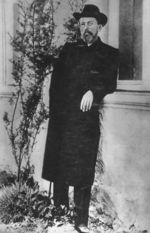
Shestov_060612_620pxA post for Morgan Meis. This one makes me happy; despite my intellectual proclivities, I have liked Lev Shestov (finding him less, er, high-pitched than Simone Weil) ever since I came across the piece on him (and Weil) by Milosz. David Sugarman in Tablet:

Lev Shestov, né Lev Isaakovich Schwarzmann, was born in 1866 into a prosperous merchant family in Kiev. His father was very knowledgeable about Jewish law and literature but was not religious or observant. Shestov married in 1896 and began his career as something of a man of letters in Russia, writing about Dostoevsky, Tolstoy, and Chekhov through the prism of Nietzsche’s philosophy. The tumult of the early decades of the 20th century, however, brought tragedy and instability into Shestov’s life: His son was killed serving in the Russian military, and the October Revolution in 1917 forced his family to flee the country. Shestov would spend the next few years in exile, journeying through Crimea and Switzerland, until 1921, when he would finally settle in France. He died in Paris in 1938.

Shestov’s first sustained work of original philosophy, The Apotheosis of Groundlessness (1905), explored what he termed the “groundlessness,” or irrationality and uncertainty, of man’s experience of the world. “We know nothing of the ultimate realities of our existence, nor shall we ever know anything,” he wrote. “Let that be agreed.” The world does not make sense, argues Shestov, and philosophy should not hope to find reason in it: “The business of philosophy is to teach man to live in uncertainty … it is not to reassure people, but to upset them.”

Shestov’s view that philosophy needed to proceed from an axiom of groundlessness, from an understanding of the human condition as essentially absurd and pointless, was argued in opposition to philosophers who emphasized reason—and the supposedly rational nature of human existence—above all else. Rational and logical thinking clearly help humans understand certain aspects of the world, Shestov acknowledged; “to discard logic completely would be extravagant,” he wrote. But Shestov also believed that rational thought was merely one human ability among many. If used in every sphere of life, he believed, reason would corrode man’s ability to connect to a more spiritual realm. Shestov thus advocated that faith and reason, theology and science, needed to be regarded as two distinct entities. “It seems to me,” Shestov wrote, “that it is enough to ask a man, ‘Does God exist?’ immediately to make it impossible for him to give any answer to this question.”

Recharting the Map of Social and Political Theory: Where is Government? Where is Conservatism?

220px-BastiatElizabeth Anderson on the overlap and disjunctures between liberalism and libertarianism, over at Bleeding Heart Libertarians (via Corey Robin):

Let’s start with my points of agreement with Tomasi’s refreshing Free Market Fairness. (1) Political justification is broadly contractualist: just principles must be endorsable by those living under them. (2) They would endorse principles of social justice in the neighborhood of Rawls’s principles of equal basic liberties and fair opportunities, and require that socially instituted inequalities redound to the benefit of all, especially the least advantaged. (3) We should try to arrange the rules of economic life such that just outcomes are largely produced as the byproducts of fair, general, impersonal rules of property, contract, taxation, etc., which are applicable to all. (4) Principles of justice should honor people’s concern for the self-respect they attain through their agency: that they not only enjoy certain outcomes, but do so through their own activities. (5) The economy is an important domain of agency. A just regime should arrange the rules of economic life to ensure a rich set of opportunities for people to engage in market activities according to their preferences, consistent with honoring the self-authorship of others. (6) This includes the freedom to create, own, and operate private productive enterprises. Tomasi argues that 4-6 constitute important amendments to, or perhaps distinctive market democratic interpretations of, “high liberal” principles of social justice. I’ll sign on.

Now for the disagreements.

Tomasi argues that rights to economic liberty should be constitutionalized, with economic regulations subject to a high level of judicial scrutiny. Considerations of social justice may sometimes override economic freedom—but only if judges approve. I don’t think this is a sensible way to limit economic regulation. Consider the contrast between the rights to freedom of religion and freedom of movement. In political philosophy, both rights are equally fundamental. Legally, however, virtually no regulations on freedom of religion are permissible, but courts rightly defer to the other branches of government with respect to virtually all general regulations of movement on public roads. You must signal a turn or a lane change, but a law requiring you to publicize your religious conversion would be unconstitutional. You must wait for green at a stop light, but a law requiring a waiting period before you could leave or join a church would be struck down. You can pray as fast as you want, even while drunk, but don’t try driving that way.

And here is a response by Jessica Flanigan.