Infinite Jest! Live! On Stage! One Entire Day Only!

Aaron Weiner at Slate reviews the first ever theater adaptapion of the DFW magnum opus, produced with over 12 writers, 3 directors, and 8 sets throughout Berlin in a day-long event. Caffeine was apparently provided. InfintiteJest

True to the novel, quite a few of the play’s scenes have gone on far too long. But length is half the point. This isn’t entertainment in the traditional sense. It’s Wallace-style capital-E Entertainment, whose primary purpose isn’t to bring enjoyment—though it can be enjoyable—but to captivate, to incapacitate, like the novel’s deadly eponymous film whose viewers are so thoroughly entertained that they cease to eat, drink, sleep and, eventually, live. There weren’t, as far as I could tell, any casualties the day I took this infinite theater tour, though a good number of my 150 fellow travelers dropped out before the sun came up. As with the novel, the play was very much a test of endurance.

But let’s not get ahead of ourselves. Taking it back to the start, then: The apprehensive masses gathered at the Rot-Weiss tennis club in far-west Berlin, a stone’s throw from the great concavity of the Grunewald forest, at 9:30 in the morning. We were told little. Wear sturdy shoes. The play will let out at 10 on Thursday morning in the Kreuzberg district. The performance will be in English and German. A care package with stimulants will be provided.

More here.

Love, Actually

Eva Illouz, via Guernica:

Love, actuallyOne of the fundamental changes in modernity has to do with the fact that social worth is performatively established in social relationships. Another way to say this is to suggest that social interactions—the ways in which the self performs in them—are a chief vector to accrue value and worth to the self, thus making the self crucially depend on others and on its interactions with others. While until the middle or late nineteenth century the romantic bond was organized on the basis of an already and almost objectively established sense of social worth, in late modernity the romantic bond is responsible for generating a large portion of what we may call the sense of self-worth. That is, precisely because much of marriage and romance was solidly based on social and economic considerations, romantic love did little to add to one’s sense of social place. It is precisely the disembedding of love from social frameworks that has made romantic love become the site for negotiating one’s self-worth.

Read the rest of the exerpt from her forthcoming Why Love Hurts: A Sociological Explanation here.

Wednesday Poem

“I feel very good about what we did.
I think it was the right thing to do.”
—Dick Cheney

The fruits of torture are alive with worms.
—Harold Pintali

State Witness
.
As state witness
I told the court
that the ones saying
they had been beaten
had done the beating
in Uzumba.
I have never been
to Uzumba.
They said if I didn’t
say what they told me
I would get more than
broken ribs.
Don’t call me a coward.
One held my hand,
the other held my other hand,
a third crushed a log into my ribs,
a fourth crushed my testicles for good measure.
As state witness
I told the court
that the ones saying
their buttocks had been burnt,
their homes torched
and their wives raped,
were the ones
who had had actually done those
horrible things.
.
by Mgcini Nyoni
publisher: PIW, 2010

Paul McCartney: 40 career highlights on his birthday

From The Christian Science Monitor:

BeatlesBeatle Paul is 70 this week. Will we still feed him? Not sure about that, but we sure as heck still need him. And what better time to celebrate “the cute one” with our own Magical McCartney Tour: His Top 40 career highlights. Tag along with us on this guided tour (in no particular order) through the McCartney treasure trove.

1. 'Twenty Flight Rock' (single, 1957, by Eddie Cochran)

A song Paul didn't write nevertheless qualifies as one of his shining moments. When he first met partner-to-be John Lennon at a Liverpool church fete, 15 year-old McCartney whipped out his guitar and played a flawless rendition of Eddie Cochran's “Twenty Flight Rock.” John was mightily impressed. “I dug him…. he's as good as me!,” Lennon is reported to have said. Paul was invited to join John's group the Quarrymen the very next day.

Oh well, I've got a girl with a record machine
When it comes to rockin' she's the queen
We love to dance on a Saturday night
All alone, I can hold her tight
But she lives in a twentiest floor up town
The elevator's broken down

So I walked one, two flight, three flight, four
Five, six, seven flight, eight flight more
Up on the twelfth I started to drag
Fifteenth floor I'm ready to sag
Get to the top, I'm too tired to rock

More here.

When Men Are Less Moral Than Women

From Scientific American:

ManWhat do Barry Bonds, Bernie Madoff, and James Murdoch have in common? They were all, in their respective areas, in it to win it – whatever the cost. Their appetite for success apparently disabled the moral compass that would have otherwise kept their dishonesty, greed, and hubris in check. The magnitude of these highly publicized ethical infractions may lead one to wonder whether folks like Barry, Bernie, and Jimmy were absent the day their kindergarten teachers talked about lying, cheating, and stealing. Recent research, however, suggests that ethical violations are somewhat predictable, that in fact there are specific circumstances, contexts, and individual characteristics that beckon us away from the moral high road.

One of the most notable risk factors for ethical laxity is one that all of the above offenders share: Being a man. A number of studies demonstrate that men have lower moral standards than women, at least in competitive contexts. For example, men are more likely than women to minimize the consequences of moral misconduct, to adopt ethically questionable tactics in strategic endeavors, and to engage in greater deceit. This pattern is particularly pronounced in arenas in which success has (at least historically) been viewed as a sign of male vigor and competence, and where loss signifies weakness, impotence, or cowardice (e.g., a business negotiation or a chess match). When men must use strategy or cunning to prove or defend their masculinity, they are willing to compromise moral standards to assert dominance.

More here.

cloud gate v. tilted arc

Beansnow-690x517

Anish Kapoor named his colossal sculpture Cloud Gate, but everyone in Chicago calls it the Bean. One hundred and ten tons of polished stainless steel, it seems to float above its cement plinth like a visitor from a distant and exciting future. In the five years since it was installed atop the AT&T Plaza in Millennium Park, it has become a Chicago icon. It receives more visitors than any destination besides Navy Pier, while voters in a Chicago Reader poll ranked it as the city’s best attraction—ahead of Wrigley field and Lake Michigan. Endlessly photographed, featured in movies and advertisements, lauded by critics and embraced by the public, Cloud Gate has become the city’s chosen mirror and the face it puts forward to the world. It might be the most popular work of contemporary art in America, the one work of abstract post-minimalist sculpture you would take your mom to see. The success of Cloud Gate is especially surprising given the fate of other major works of public art in recent decades, such as Rachel Whiteread’s House and Richard Serra’s Tilted Arc, both of which had to be torn down in the face of public opposition. So what is it about the Bean that makes it so different, so appealing?

more from Jacob Mikanowski at The Point here.

charlie kaufman the sitcom writer

Charliekaufman1

Could there be a project less suited for Kaufman then 1995’s Ned & Stacey? The ultra-generic sitcom centers on a couple named (wait for it) Ned and Stacey who have a sham marriage of convenience. The only thing they have in common? They irritate each other. And those last two sentences aren’t my purposefully hacky pitch of the show’s premise, that’s an actual quote from the voice-over that opens every single episode. (Every. Single. Episode.) It’s the ultimate mid-90s show, low on creative ambition but elevated by charismatic performances from leads Debra Messing and Thomas Haden Church. Kaufman was a producer on the show, but it’s not too hard to imagine that he was simply biding his time as the script for Being John Malkovich slowly gathered momentum. (Spike Jonze finally agreed to direct it in 1996.) Kaufman’s voice is nearly absent from Ned & Stacey, with one notable exception: The character of Ned’s best friend, Eric “Rico” Moyer.

more from Ben Josef at The Awl here.

jadak

1439160406.01.MZZZZZZZ

In Maraniss’ telling, the teenage Obama yearned for the stable identity being a member of the black community could have offered him, but in fact was a product of a mélange of cultures, white and Asian, Polynesian and American, Kenyan and Kansan. Barack Obama, Sr., a Kenyan foreign exchange student, sired the president during a brief affair with seventeen-year-old University of Hawaii freshman, Stanley Ann Dunham, and then promptly left for graduate school at Harvard a few months after his son’s birth. He only reappeared in young Barack’s life once, when he visited Hawaii for a month during his son’s fifth grade year, by which time the elder Obama was a broken man, an alcoholic who had already burned through three marriages and drank himself out of the kinds of leadership positions his intelligence and education entitled him to. Without a father, Obama lived a lonely and peripatetic childhood, bouncing between Jakarta, where his mother moved to live with her second husband, Lolo Soetoro, and Honolulu, where he lived with his grandparents after that marriage broke up and his mother remained in Indonesia. In Hawaii, where Obama attended the academically rigorous Punahou School along with the island’s mostly white elite, he joined the self-styled Choom Gang (“Choom is a verb,” Maraniss explains, “meaning ‘to smoke marijuana.’”) and spent his teen years getting high and trying to make the school’s varsity basketball team.

more from Michael Bourne at The Millions here.

The Twilight of The Elites

13151179Over at Crooked Timber, Aaron Swartz reviews Chris Hayes’ new book:

In his new book, The Twilight of the Elites: America After Meritocracy, Chris Hayes manages the impossible trifecta: the book is compellingly readable, impossibly erudite, and—most stunningly of all—correct. At the end, I was left with just two quibbles: first, the book’s chapter on “pop epistemology” thoroughly explicated how elites got stuff wrong without bothering to mention the non-elites who got things right, leaving the reader with the all-too-common impression that getting it right was impossible; and second, the book never assembled its (surprisingly sophisticated) argument into a single summary. To discuss it, I feel we have to start with remedying the latter flaw:

Our nation’s institutions have crumbled, Hayes argues. From 2000–2010 (the “Fail Decade”), every major societal institution failed. Big businesses collapsed with Enron and Worldcom, their auditors failed to catch it, the Supreme Court got partisan in Bush v. Gore, our intelligence apparatus failed to catch 9/11, the media lied us into wars, the military failed to win them, professional sports was all on steroids, the church engaged in and covered up sex abuse, the government compounded disaster upon disaster in Katrina, and the banks crashed our economy. How did it all go so wrong?

Hayes pins the blame on an unlikely suspect: meritocracy. We thought we would just simply pick out the best and raise them to the top, but once they got there they inevitably used their privilege to entrench themselves and their kids (inequality is, Hayes says, “autocatalytic”). Opening up the elite to more efficient competition didn’t make things more fair, it just legitimated a more intense scramble. The result was an arms race among the elite, pushing all of them to embrace the most unscrupulous forms of cheating and fraud to secure their coveted positions.

Tuesday, June 19, 2012

Call me the greatest American novel: Moby-Dick

Christopher Buckley in Salon:

Whalerct01-460x307Consider Ishmael’s new friend Queequeg, the extravagantly tattooed harpooneer, a prince of his forsaken South Sea island. The unlikely friendship between these two, begun accidentally in a shared bed at the Spouter Inn, is one of the great friendships in American, or any, literature. A few months ago at a pub in Chelsea, London, I looked up from my pint and saw chalked on the wall: “Better to sleep with a sober cannibal than a drunken Christian.” It’s from that chapter when they first meet; their friendship was nothing if not multicultural, a forerunner of the other great celebration of diversity that took place between Huck and Jim on the raft. Everyone in high school in my day read Herman Wouk’s novel “The Caine Mutiny.” The nutty captain in that book is, you’ll recall, named Captain Queeg. He takes after Captain Ahab, not the noble Queequeg. Consider, too, the chief mate of the Pequod, Starbuck. In a passage that never fails to bring tears to my eyes, the earnest Starbuck pleads with Ahab to abandon his blasphemous, vengeful quest for the white whale. It’s in that paragraph that we see Ahab’s mask slip, just long enough for a tear to roll down his scarred cheek and drop into the ocean. “… nor was there in all the vast Pacific more wealth than in that one drop.” Sorry. Where were we? Starbuck. Yes, well, I think you’ve heard that name, somewhere.

Lest I roll on like the sea 5,000 years ago, consider finally the great theme of the book: Man’s ontological struggle with God. As themes go, it’s the Big One. W.H. Auden wrote an amazing poem about Herman Melville. I’ll try quoting it from memory, too, but you’ll want to look up the whole poem for yourself. Trust me. It’s about how Melville could have played it safe and gone on writing popular adventure books in the style of “Typee” and “Omoo” …

… The storm that blew him past the Cape of Sensible Success that cries ‘This rock is Eden, shipwreck here,’
but deafened him with thunder and confused with lightning,
The maniac hero, hunting like a jewel the rare ambiguous monster
that had maimed his sex, hatred for hatred, ending in a scream.
The unexplained survivor, breaking off the nightmare.
All that was intricate and false, the truth was simple.

It’s a great poem, and a very good key to “Moby-Dick” and its author.

More here.

Tending the Body’s Microbial Garden

Carl Zimmer in The New York Times:

BiomeFor a century, doctors have waged war against bacteria, using antibiotics as their weapons. But that relationship is changing as scientists become more familiar with the 100 trillion microbes that call us home — collectively known as the microbiome. “I would like to lose the language of warfare,” said Julie Segre, a senior investigator at the National Human Genome Research Institute. “It does a disservice to all the bacteria that have co-evolved with us and are maintaining the health of our bodies.” This new approach to health is known as medical ecology. Rather than conducting indiscriminate slaughter, Dr. Segre and like-minded scientists want to be microbial wildlife managers.

No one wants to abandon antibiotics outright. But by nurturing the invisible ecosystem in and on our bodies, doctors may be able to find other ways to fight infectious diseases, and with less harmful side effects. Tending the microbiome may also help in the treatment of disorders that may not seem to have anything to do with bacteria, including obesity and diabetes. “I cannot wait for this to become a big area of science,” said Michael A. Fischbach, a microbiologist at the University of California, San Francisco, and an author of a medical ecology manifesto published this month in the journal Science Translational Medicine. Judging from a flood of recent findings about our inner ecosystem, that appears to be happening. Last week, Dr. Segre and about 200 other scientists published the most ambitious survey of the human microbiome yet. Known as the Human Microbiome Project, it is based on examinations of 242 healthy people tracked over two years. The scientists sequenced the genetic material of bacteria recovered from 15 or more sites on their subjects’ bodies, recovering more than five million genes.

More here.

American Exceptionalism: a short history

Uri Friedman at Foreign Policy:

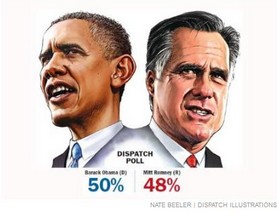
ScreenHunter_01 Jun. 19 10.53On the campaign trail, Mitt Romney contrasts his vision of American greatness with what he claims is Barack Obama's proclivity for apologizing for it. The “president doesn't have the same feelings about American exceptionalism that we do,” Romney has charged. All countries have their own brand of chest-thumping nationalism, but almost none is as patently universal — even messianic — as this belief in America's special character and role in the world. While the mission may be centuries old, the phrase only recently entered the political lexicon, after it was first uttered by none other than Joseph Stalin. Today the term is experiencing a resurgence in an age of anxiety about American decline.

More here.

The Disadvantage of Smarts

An interview from The Economist with Satoshi Kanazawa on intelligence and evolution:

What, if any, evolutionary advantage does intelligence give us? Kanazawa

Actually, less intelligent people are better at doing most things. In the ancestral environment general intelligence was helpful only for solving a handful of evolutionarily novel problems.

You mean our ancestors did not really have to reason?

Evolution equipped humans with solutions for a whole range of problems of survival and reproduction. All they had to do was to behave in the ways in which evolution had designed them to behave—eat food that tastes good, have sex with the most attractive mates. However, for a few evolutionarily novel problems, evolution equipped us with general intelligence so that our ancestors could reason in order to solve them. These evolutionarily novel problems were few and far between. Basically, dealing with any type of major natural disaster that is very infrequent in occurrence would require general intelligence.

More here.

A Debate on Plant Ethics

Thinking-plantOver at Columbia University Press, Gary Francione, author of Animals as Persons: Essays on the Abolition of Animal Exploitation, The Animal Rights Debate: Abolition or Regulation?, and several other titles, and Michael Marder, author of the forthcoming Plant-Thinking: A Philosophy of Vegetal Life debate the ethics of eating plant life:

Michael Marder: As I have pointed out, contemporary research in botany gives us ample reasons to believe that plants are aware of their environment in a nonconscious way—for instance, thanks to the roots that are capable of altering their growth pattern in moving toward resource-rich soil or away from nearby roots of other members of the same species. To ignore such evidence in favor of a stereotypical view of plants as thing-like is counterproductive, both for ethics and for our understanding of what they are.

When we, humans, use ourselves as a measuring stick against which everything else in world is evaluated, then an anthropomorphic image of sentience and intelligence comes to govern our ethics. True: the life of plants resembles our living patterns to a lesser extent than the life of animals. But to use this as a cornerstone of ethics and a justification for rejecting the moral claim plants have on us is a case of extreme speciesism.

Gary Francione: Speciesism occurs when the interests of a being are accorded less or no weight solely on the basis of species. To say that a being has interests is to say that the being has some sort of mind—any sort of mind—that prefers, desires, or wants. It is to say that there is someone who prefers, desires, or wants. You cannot act with speciesism with respect to a being that has no interests, such as a plant.

Your entire argument rests on your confusing a reaction with a response. If you put an electrical current through a wire that is attached to a bell, the bell will ring. The bell reacts; it does not respond. It is as absurd to say that a bell has a “nonconscious response” as it is to say a plant does.

Adina Roskies on Neuroscience and Free Will

Over at Philosophy Bites:

Recent research in neuroscience following on from the pioneering work of Benjamin Libet seems to point to the disconcerting conclusion that free will is an illusion. Adina Roskies of Dartmouth College is not convinced that this conclusion follows. In this episode of the Philosophy Bites podcast she explains to David Edmonds why the conclusion that free will is an illusion is far stronger than the evidence warrants.

Listen to Adina Roskies on Neuroscience and Free Will

the bradbury era

1339392584

Early in the spring of 1950, Ray Bradbury, a budding author working at a coin-operated typewriter in the UCLA library, managed — in 49 hours, at 20 cents an hour — to write the first draft of a prophetic novel that is still very much with us, half a century later. Originally, he called it The Fire Man. We know it now by the far more poetic and memorable title he coined before the finished book went to press in 1953: Fahrenheit 451. His tale’s premise is ironic, given that he was writing it in a library. His hero, Montag, is a fireman of the future — a municipal worker whose job is to burn books. Reading is a rebellious and even dangerous activity in the late 20th and early 21st centuries, as Bradbury envisioned them. (And here we are.) Reading leads to asking questions, and questions lead to thinking for oneself: a great crime in his nightmarish yet plausible future America. Books are torched like witches. The story hinges on Montag’s gradual conversion, as he discovers, by inexorable degrees, the life-giving power of what he is burning. He grows curious; he steals a book and smuggles it home, though to do so is to risk prison.

more from F.X. Feeney at the LA Review of Books here.

Hate Speech and Free Speech: Jeremy Waldron Responds to Criticisms

9780674065895Jeremy Waldron over at the NYT's Opinionator:

The issue of hate speech legislation is, in my view, a difficult one. There are good arguments on both sides and, among the respondents, the critics have flagged a number of important issues.

Of course some of the critics are just dismissive: “Is Waldron’s book … a joke?” asked Ron Hansing of Columbus, Mo. “God help us from this kind of thinking!” And Robert Cicero of Tuckahoe, N.Y., wrote: “Shame on the whole lot of you” for even discussing this; the discussion, he said, “is yet one more assault on the US Constitution.” Or as Paz from New Jersey put it, “What part of ‘shall not be infringed’ do you fail to understand?”

But even those who love the First Amendment should be interested in at least understanding the things that can be said on the other side, if only to reinforce their sense of what’s distinctive about this country’s commitments. A large proportion of the other advanced democracies in the world combine a commitment to free speech with rules prohibiting hate speech. Isn’t it worth considering how they do this? And why? No one is burning the constitution here. We’re just trying to think about it.

Democracies like Britain, France, Germany, Denmark, Canada and New Zealand all prohibit hate speech of various kinds. They do so for what they think are good reasons. It is worth thinking about those reasons. Are they good reasons that (from an American First Amendment perspective) are just not strong enough to stand up against our overwhelmingly powerful commitment to free speech? Or are they simply bad reasons?

I think some of the things people cite in favor of hate speech regulation are bad reasons — like trying to protect people from being offended and annoyed. I agree with Stanley Fish about that. But some of the reasons are about dignity, not offense — I spend a lot of time in the book thinking aloud about that distinction — and these reasons are worth taking seriously, even if ultimately we think they are trumped by the value of free speech.

a shift in war reporting

006_RGB

The civilians who had war brought to them: could there be a better encapsulation of the twentieth century’s trajectory of armed conflicts? “That statement shows a real clarity on Gellhorn’s part,” says Jon Lee Anderson, a reporter for The New Yorker who has covered wars in Central America, Iraq, and Syria. Statistics confirm Gellhorn’s insight: the Marxist historian Eric Hobsbawm, for instance, has estimated that in World War I, soldiers constituted 95 percent of casualties; in contemporary conflicts, most of which are intra-national, unarmed civilians account for 80 to 90 percent of casualties. In many of today’s wars, civilians are the deliberate—indeed, the primary—targets: think, for instance, of the Lord’s Resistance Army, the Ugandan group that enslaves children; of the militias in the Democratic Republic of Congo, who are systemic practitioners of mass rape and vaginal mutilation; of the Taliban’s bombings of schools and marketplaces; of Al Qaeda’s attacks on Iraqi mosques; of Al Shabaab’s assaults on medical students, teachers, and soccer fans; of the recent wars in Darfur, Colombia, Chechnya, Liberia, and Sierra Leone. Political theorist John Keane has dubbed these conflicts “uncivil wars” whose perpetrators practice “violence according to no rules except those of destructiveness itself—of people, property, the infrastructure, places of historical importance, even nature itself . . . Some of today’s conflicts seem to lack any logic or structure except that of murder on an unlimited scale.” Mary Kaldor of the London School of Economics has written that these new wars replace “the politics of ideas” with “the politics of identity” and cannot, therefore, be understood in conventional political terms.

more from Susie Linfield at Guernica here.

jones and apple

120625_r22308r22315_p465

Fiona Apple has always been in the process of breaking up, usually preëmptively—before you can ask, she will provide a list of reasons not to love her. On a brief tour this spring, she opened each night with the rollicking “Fast As You Can,” from 1999, which is her signature guarantee of interpersonal mayhem: “Oh, darling, it’s so sweet, you think you know how crazy, how crazy I am. You say you don’t spook easy, you won’t go, but I know, and I pray that you will.” Much has been made of her comments at the 1997 MTV Video Music Awards that the music world is “bullshit,” and of several instances of her leaving the stage mid-performance. These moments have become to Apple as bat-biting has been to Ozzy Osbourne—dramatic anecdotes that play well. But those stories have been replaced with a calmer narrative; by her own account, she’s spent much of the past few years doing little more than walking her dog, visiting the club Largo, near her house in Los Angeles, and working on small projects like filming hummingbirds. The stories do say something about obsession and control, and are indicative of how exacting an artist she is. After four albums in sixteen years, Apple has racked up maybe five bad songs, total. “Idler Wheel” is less crammed with detail than her last record, “Extraordinary Machine,” but it has the same effect: once heard, a song lodges in the mind, melodies take root, and words loop of their own accord. It is an astonishing album.

more from Sasha Frere-Jones at The New Yorker here.

Monday, June 18, 2012

3QD Science Prize 2012 Finalists

Hello,

Finalist 2012 scienceThe editors of 3QD have made their decision. The twenty semifinalists have been winnowed down to six, and three wildcard entries added. Thanks again to all the participants.

Once again, Carla Goller has provided a “trophy” logo that our finalists may choose to display on their own blogs. And if you like our site, please do add us to your blogroll!

So, here it is, the final list that I am sending to Sean Carroll, who will select the 1st, 2nd, and 3rd prize winners: (in alphabetical order by blog name here)

  1. Boing Boing: What Fukushima can teach us about coal pollution
  2. Empirical Zeal: The crayola-fication of the world: How we gave colors names, and it messed with our brains
  3. Quantum Diaries: Helicity, Chirality, Mass, and the Higgs
  4. Scientific American Guest Blog: Trayvon Martin’s Psychological Killer: Why We See Guns That Aren’t There
  5. The Mermaid's Tale: Forget bipedalism. What about babyism?
  6. The Primate Diaries: Freedom to Riot: On the Evolution of Collective Violence
  7. The Trenches of Discovery: The War of the Immune Worlds
  8. Three-toed Sloth: In Soviet Union, Optimization Problem Solves You
  9. viXra log: Higgs Boson Live Blog: Analysis of the CERN announcement

We'll announce the three winners on or around June 25, 2012.

Good luck!

Abbas

P.S. The editors of 3QD will not be making any comments on our deliberations, or the process by which we made our decision, other than to simply say that we picked what we thought were the best posts out of the semifinalists, and added three others which we also liked.