
Category: Recommended Reading
Rostropovich and Oistrakh
The Vision of Sin, part IV
Humor Contest winners announced
From The Washington Post:
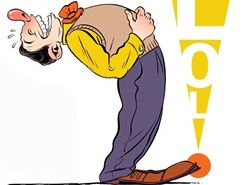
Memoir winner: A Stroke of Luck?
It must be hard to feel like a winner when you grow up with the name Homer. But my dad, Homer — son of Greek immigrants and whose brother was Aristotle — always felt like a winner. When you always see the good side of things, I guess you do feel like a winner — and he always saw the positive in everything. Whatever we had, it was the best. Whatever deal he made in his real estate career, it was the best deal around. It’s a great way to grow up and a great way to live. But when he had a stroke while we were vacationing in Ocean City when he was 75, it was hard to see the positive.
He woke up one morning and couldn’t talk.
More here.
Scientists read dreams
From Nature:

“We built a model to predict whether each category of content was present in the dreams,” says Kamitani. “By analysing the brain activity during the nine seconds before we woke the subjects, we could predict whether a man is in the dream or not, for instance, with an accuracy of 75–80%.”
More here.
Sunday Poem
Listening to Sun Ra, Birds Convene Outside my Window
A friend of mine likes to chide me
for what he calls my bourgeois proclivity
to listen only to music played in time.
So each time this afternoon I’ve put on
volume one of The Heliocentric Worlds
by Sun Ra, I’ve thought of that friend,
and wondered whether he would let this
qualify as sufficiently experimental,
though it isn’t the full recorded chaos
he often argues is the only moral
kind of music left. A silly pretense
of his, but one I can’t help sometimes
measuring myself against. And, I admit,
though there are stretches of incoherence
on this record that try my patience,
I can usually find a definite plotting,
particularly the sections where the bass
begins a walking line the other instruments
organize themselves around; making what
Sun Ra, in his own way chiding one critic’s
attempt to classify his compositions
as free jazz, more accurately dubbed
“phre” jazz: the ph signifying the definite
article, and though I don’t know how
in English to make that claim cohere,
it’s an assertion I’ll grant Sun Ra
not just because he may have meant
the definite article of some form of speech
not yet part of human understanding,
but also because it imbues everything
in his songs with purpose. There in the word,
Ra said, indicates the sun, so that his music
is the music of the sun. And really,
Saturday, October 20, 2012
cigarettes
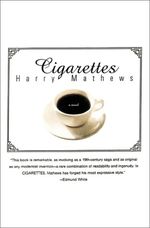
The characters in Cigarettes aren’t even going mad—a not-infrequent narrative terminus for Mathews’s manikins—save for the luckless, wonderful, hyperthyroidic Phoebe. And though there are enthusiasms in the book that verge upon the eccentric, these are pursued, so to speak, with sanity . . . Baron Charlus more than Casper Gutman (or Baron Charlus seeking an assignation with Casper Gutman). The characters of Cigarettes do not, by and large, allow whatever abstract systems they may have applied to their thoughts or habits or desires (a specialized vocabulary, a system of classification, installed out of a desire for order, or simply by whim) to impinge on their waking lives, crowding out the everyday situations that they had sought to improve. The opposite, in fact, obtains in Cigarettes. Idées fixes consume themselves here, leaving their survivors outside desire. In literary terms, by the end of the book, these personalities are no longer plotted. Though age and ill health and obsession take their toll on many, and our narrator must contend at last with a virtual army of what he calls the living dead—the shades with which our memories populate the world—the arc of the book is clear: It moves from moneyed decay—a “gabled house” looming over the reader-carrion “like a buzzard”—toward the astounding coda of “the immortal presence of that original and heroic actor who saw that the world had been given to him to play in without remorse or fear.”
more from Jeremy M. Davies at the Quarterly Conversation here.
“It’s the pictures that got small.”

It is one of the most famous one-liners in the history of cinema, which also turned out to be an inadvertent prophecy. “I am big,” says the slighted Norma Desmond in Sunset Boulevard (1950). “It’s the pictures that got small.” She had no idea. The past half-century has seen the pictures get smaller and smaller, to the point that we wonder if they can ever be big again. From television screen, to laptop, to smartphone, the ever-shrinking movies reach a greater part of the world than ever before. But what have we lost along the way? On a recent flight, I downloaded the relatively well-received Marvel spin-off The Avengers to watch on my iPhone. It was, of course, a ridiculous venture, this squeezing of monumental themes on to a miniaturist canvas, lacking in textural detail, atmosphere, communality of experience. But it was easily accessible, convenient and cheap. Is the trade-off worth it? And how does it affect us and the art form?
more from Peter Aspden at the FT here.
learning about mormons
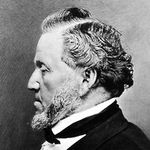
For a young religion, Mormonism seems to have more history than it knows what to do with. The church’s founding fathers were outsize, operatic characters: the prophet Joseph Smith, who believers claim received and translated “The Book of Mormon,” and his successor, Brigham Young, who “preserved a church and created a people,” according to this new biography by John G. Turner, an assistant professor of religious studies at George Mason University. But until he met Joseph Smith, Brigham — the Mormons, or Latter-day Saints, call both Smith and Young by their first names — was a 29-year-old transient nobody in upstate New York who “lived on the economic margins of his society,” and wasn’t particularly religious. He relished the sense of community he found among the Mormons and was much moved by his early encounters with Smith (“He took heaven . . . and brought it down to earth,” Young recalled).
more from Alex Beam at the NY Times here.
Shut Up About the Jews Already…
Eric Alterman in The Nation:

To unravel the confusion, one first has to get a few facts straight. Self-identifying American Jews constitute just 1.7 percent of the voting population, according to the Pew Forum on Religion & Public Life. This compares with 51.3 percent Protestant, 23.9 percent Roman Catholic and 16.1 percent “no religion.” Of the tiny percentage of American voters who are Jewish, roughly 7 percent put Israel at the top of their list of political concerns. So, overall, 7 percent of 1.7 percent—or pretty close to 0 percent—say they vote on the basis of policies related to Israel. And of this minuscule percentage, many are hawkish, but many others are dovish, and still others are in between or change their minds depending on the situation. Jews, you may have heard, have been known on occasion to disagree with one another, and even with themselves. But more than 80 percent of Jews polled share the view that the United States should play “an active role in helping the parties to resolve the Arab-Israeli conflict”—roughly the same number who agree that a “two-state solution is necessary to strengthen Israeli security.”
And yet it’s nearly impossible to find a story in a mainstream media outlet that reflects this reality. Almost without exception, one reads of the danger to Obama of losing Jewish voters, with the reason being their alleged unhappiness with his (equally alleged) lack of sympathy for Israel. But Obama is not losing Jewish voters to Mitt Romney: they continue to support him, in every significant poll, at the rate of approximately 70 percent. And if they didn’t, it wouldn’t be because of Israel, and it wouldn’t matter anyway. The numbers are just too tiny.
More here.
ABORTION, FREE SPEECH, AND THE LEFT
Kenan Malik in Pandaemonium:

Abortion is one of those rare political issues on which left and right seem to have swapped ideologies: right-wingers talk of equality, human rights and “defending the innocent”, while left-wingers fetishise “choice”, selfishness and unbridled individualism.
To pose the issues in this fashion is, as Mehdi Hasan must know, to distort the debate almost to meaninglessness. Yes, pro-abortionists talk about ‘choice’, but in slating ‘selfishness and unbridled individualism’ Hasan is willfully confusing the promotion of consumer choice and free market policies with the (collective) struggles that women have had to wage to win the right to make basic decisions about their own bodies. And yes, the right often talks of ‘equality’ and ‘human rights’ but it is striking that such equality and rights seemingly apply in this case only to the fetus and not to the woman.
More here.
Angelina Jolie: We All Are Malala
Angelina Jolie in The Daily Beast:
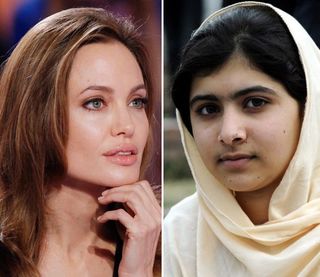
After reading the article, I felt compelled to share Malala’s story with my children. It was difficult for them to comprehend a world where men would try to kill a child whose only “crime” was the desire that she and others like her be allowed to go to school.
Malala’s story stayed with them throughout the day, and that night they were full of questions. We learned about Malala together, watching her interviews and reading her diaries. Malala was just 11 years old when she began blogging for the BBC. She wrote of life under the Taliban, of trading in her school uniform for colorless plain clothes, of hiding books under her shawl, and eventually having to stop going to school entirely.
Our 8-year-old suggested that the world build a statue for Malala, and fittingly create a reading nook near it.
More here.
Kongar-ol Ondar throat singing on Letterman
Mukhtar Mai
From New Statesman:
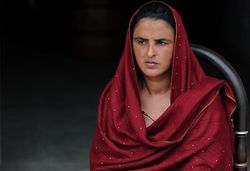
There has been a huge public response in Pakistan to the shooting of Malala Yousafzai. What do you make of it?
I feel so good about the response to Malala. She’s a young girl, a child, and yet she’s fought for a nation, not just for her school. Malala is a beacon. Her light has been shone on all corners of the country, in the heart of the nation. When they shot her, it was not just Malala who fielded the bullet, thousands of Malalas were wounded. Today it was her turn for the bullet; tomorrow it could be some other. It could be me. I pray for her. May the poor child be completely healed.
Do you think Malala’s quest is similar to yours?
Yes, but look, the start of my journey was different. It was a very painful path. My wound is one that can never heal – it injured me beyond the body. Thankfully, Malala’s wound, though very serious, is physical. God willing, hers will heal.
More here.
Saturday Poem
Land
his approach
to love he said
was that of a farmer
most love like
hunters and like
hunters most kill
what they desire
he tills
soil through toes
nose in the wet
earth he waits
prays to the gods
and slowly harvests
ever thankful
by Suheir Hammad
from ZaatarDiva
Rattapallax Press, 2006
Inside the Box
From The New York Times:
The most despairing image in Chris Ware’s magnificent new graphic novel, “Building Stories” — and there are plenty of candidates — depicts a dumpy middle-aged couple, naked in their bedroom. She’s just dropped her clothes to the floor; he’s lying on the bed, oblivious to her, his face and chest illuminated by the iPad propped on his belly. You will never be able to read “Building Stories” on a digital tablet, by design. It is a physical object, printed on wood pulp, darn it. It’s a big, sturdy box, containing 14 different “easily misplaced elements” — a hard-bound volume or two, pamphlets and leaflets of various dimensions, a monstrously huge tabloid à la century-old Sunday newspaper comics sections and a folded board of the sort that might once have come with a fancy game. In which order should one read them? Whatever, Ware shrugs, uncharacteristically relinquishing his customary absolute control. In the world of “Building Stories,” linearity leads only to decay and death.
Arguably, the box’s central nugget of story is a sequence Ware serialized in The New York Times Magazine in the mid-2000s, which appears here in something that approximates the dimensions and binding of a Little Golden Book. The chief protagonist of “Building Stories,” a sad, lonely florist with a prosthetic leg (Ware never gives her a name), lives on the third story of a 98-year-old building in Chicago. She’s a former art student who eventually gave up on creating anything: as she explains in a pseudo-gag cartoon on the edge of the box (!), she was “just art curious.”
More here.
Friday, October 19, 2012
Measuring Inequality of Opportunity
From The Economist:
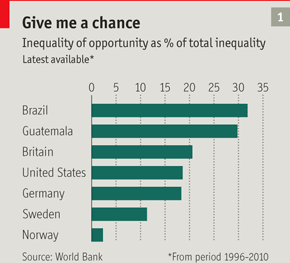
Economists also gauge equality of opportunity by measuring disparities in children’s access to basic services that will influence their prospects, such as education or running water. The World Bank is developing indices which adjust overall access to such services by a measure of the inequality in that access. South Africa, for instance, has the same overall rate of access to sanitation as Nicaragua. But once you adjust for race disparities, its “Human Opportunity Index” for sanitation is much lower.
More here.
How Things Fell Apart
In an excerpt from his long-awaited memoir, the inventor of the post-colonial African novel in English discusses his origins as a writer and the seeds of revolt against the British Empire.
Chinua Achebe in Guernica:
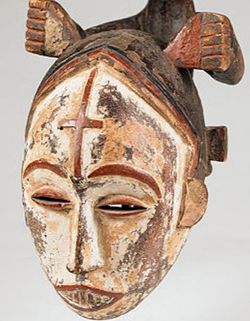
Crossroads possess a certain dangerous potency. Anyone born there must wrestle with their multiheaded spirits and return to his or her people with the boon of prophetic vision; or accept, as I have, life’s interminable mysteries.
My initiation into the complicated world of Ndi Igbo was at the hands of my mother and my older sister, Zinobia, who furnished me with a number of wonderful stories from our ancient Igbo tradition. The tales were steeped in intrigue, spiced with oral acrobatics and song, but always resolute in their moral message. My favorite stories starred the tortoise mbe, and celebrated his mischievous escapades. As a child, sitting quietly, mesmerized, story time took on a whole new world of meaning and importance. I realize, reminiscing about these events, that it is little wonder I decided to become a storyteller. Later in my literary career I traveled back to the magic of the storytelling of my youth to write my children’s books: How the Leopard Got His Claws, Chike and the River, The Drum, and The Flute: A Children’s Story (Tortoise books).
When I think about my mother the first thing that comes to my mind is how clearly the description “the strong, silent type” fit her.
More here.
LE BLOG DE JEAN-PAUL SARTRE
Bill Barol in The New Yorker:
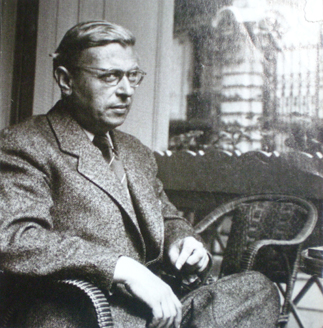
I am awake and alone at 2 A.M.
There must be a God. There cannot be a God.
I will start a blog.
Sunday, 12 July, 1959: 9:55 A.M.
An angry crow mocked me this morning. I couldn’t finish my croissant, and fled the café in despair.
The crow descended on the croissant, squawking fiercely. Perhaps this was its plan.
Perhaps there is no plan.
More here.