A Basketball Fairy Tale in Middle America

Okc_game-slide-Q1J2-articleLargeSam Anderson in the NYT Magazine:

N.B.A. scoring champions are, as a rule, weirdos and reprobates and in some cases diagnosable sociopaths. Something about dominating your opponent, publicly, more or less every day of your life, in the most visible aspect of your sport, tends to either warp your spirit or to be possible only to those whose spirits are already warped. Michael Jordan, when he wasn’t busy scoring, was busy punching a teammate in the face and gambling away small fortunes. Allen Iverson, in his spare time, recorded an aesthetically and morally terrible rap album and gave an iconic speech denigrating the very notion of practice. Kobe Bryant is and shall forever be Kobe Bryant. Wilt, Shaq, Pistol Pete, Dominique, McGrady, McAdoo, Rick Barry — it’s a near-solid roster of dysfunction: sadists, narcissists, malcontents, knuckleheads, misanthropes, womanizers, addicts and villains. While it’s true that plain old N.B.A. superstars do occasionally manage to be model citizens (cf. Tim Duncan, Grant Hill, Steve Nash), there is something irredeemable about a scoring champion.

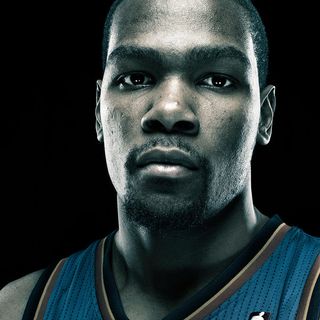
Kevin Durant, the star of the Oklahoma City Thunder, is the youngest scoring champion in N.B.A. history. At 24, he has led the league in scoring for three consecutive seasons, and all signs point to him keeping that up for the foreseeable future. It follows, then, that Durant should also be a prodigy of a head case. He should have been arrested for reckless driving at around age 9, broken his hand in a strip-club brawl at age 12 and accidentally shot his chauffeur no later than age 15.

Instead, Durant has a reputation roughly on par with Gandhi.
Totalitarianism, Famine and Us

Samuel Moyn in The Nation:

Tumblr_lw0vvuxerB1qh4kgso1_500The worst human tragedies of the twentieth century were certainly most deadly when sponsored or at least unleashed by totalitarian regimes, and food was a crucial element of their politics. Several years ago, the German journalist and scholar Götz Aly showed in books such as Architects of Annihilation (2003) the role of food in the horrors of National Socialist imperialism. More recently, Timothy Snyder has made the conquest of more productive agricultural territory—especially the Ukrainian “breadbasket”—an essential factor in the episodes of mass death occurring in what he calls the “bloodlands.” Soviet and Nazi planners both sought to occupy the region for the sake of food, and their macabre policies dictated that those on the home front would eat before the occupants of the newly conquered territory, who were deemed too numerous to feed with limited resources. In The Taste of War(2011), Lizzie Collingham has offered an accessible survey of how deeply the origins and course of World War II followed from the difficulty—real or perceived—of provisioning humanity. Even Americans soon became aware that the fight against totalitarianism in postwar Asia depended on filling empty stomachs at least as much as on winning hearts and minds, a policy that Nick Cullather, author of The Hungry World: America’s Cold War Battle Against Poverty in Asia (2010), has elsewhere called “the foreign policy of the calorie.”

But the famines caused by totalitarian regimes can easily become a sensationalized distraction from considering the other causes of mass starvation. After all, mass hunger is older than totalitarianism, and in the most ancient records of human hunger, cannibalism is a depressingly common response to famine. In his already classic book Famine: A Short History (2009), Cormac Ó Gráda, the greatest contemporary historian of the topic, cites a Chinese woodblock from an 1870s famine that tells of a man who sells his daughter to avoid eating her; and many cases of cannibalism were reported in prior and later famines in China, under the rule of emperors and republicans alike.

More here.

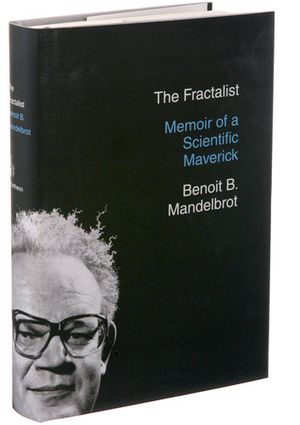
‘The Fractalist,’ Benoit B. Mandelbrot’s Math Memoir

Dwight Garner in the New York Times:

Altbook-popup“When I find myself in the company of scientists,” W. H. Auden wrote, “I feel like a shabby curate who has strayed by mistake into a drawing room full of dukes.” Benoit B. Mandelbrot (1924-2010) had the kind of beautiful, buzzing mind that made even gifted fellow scientists feel shabby around the edges. Mandelbrot is said to have revitalized visual geometry and coined the term “fractal” to refer to a new class of mathematical shapes that uncannily mimic the irregularities found in nature.

He prized roughness and complication. “Think of color, pitch, loudness, heaviness and hotness,” heonce said. “Each is the topic of a branch of physics.” He dedicated his life to studying roughness and irregularity through geometry, applying what he learned to biology, physics, finance and many other fields.

He was never easy to pin down. He hopscotched so frequently among disciplines and institutions — I.B.M., Yale, Harvard — that in his new memoir, “The Fractalist,” he rather plaintively asks, “So where do I really belong?” The answer is: nearly everywhere.

More here.

Nate Silver Ascendant

A7Ery-hCYAAykAw

Jennifer Ouellette in her blog at Scientific American:

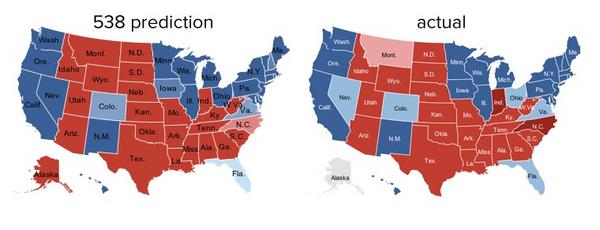
Boo-yah! Behold the data, for it is mighty! Silver correctly predicted 50 states out of 50, and even nailed the popular vote within a few tenths of a percentage point. When the graphic above hit Twitter, Alaska’s returns hadn’t been recorded, but it went, as predicted, to Romney. The sole genuine toss-up state, Florida — which Silver had at 50/50 odds — is still technically not final (as of 5 PM EST on Wednesday, November 7), waiting on votes from Miami-Dade county, which heavily favors Obama, who already holds a slight lead. It’s expected Florida will also land in Obama’s column, so Silver’s controversial last-minute switch of Florida from light pink to light baby blue was justified.

More here.

Thursday Poem

Night Song

Beside you,
lying down at dark,
my waking fits your sleep.

Your turning
flares the slow-banked fire
between our mingled feet,

and there,
curved close and warm
against the nape of love,

held there,
who holds your dreaming
shape, I match my breathing

to your breath;
and sightless, keep my hand
on your heart's breast, keep

nightwatch
on your sleep to prove
there is no dark, nor death.
.

by Philip Booth,
from Lifelines
Viking Press, 1999

Wednesday, November 7, 2012

Hillary Clinton vs Chris Christie: The race for the White House in 2016

From New Statesman:

HillThe 2012 presidential election is over; let the 2016 election begin! Without skipping a beat, the endless electoral process in the US has started over. It is the American equivalent of: “The king is dead. Long live the king.” It is why political junkies across the world love American politics. It never ends. So what do we know about the next race? With Barack Obama still in the White House and unable to run again due to term limits, both parties are looking for a new candidate. In the Republican Party, it used to be that if you didn’t win the presidency one year, you could put yourself forward the next. Richard Nixon lost to John F Kennedy in 1960 but bounced back in 1968 to beat Hubert Humphrey. Now voters are so fickle and campaigns so punishing that you only get one shot. Americans don’t like losers and the electoral battlefield is strewn with the corpses of failed presidential candidates who overnight became unpersons. So bye-bye, Mitt. Missing you already. As F Scott Fitzgerald observed, there are no second acts in American lives.

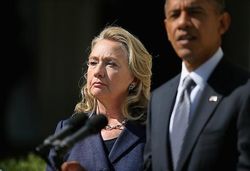
Yet politicians who merely fail to win their party’s nomination can keep plugging away. Hillary Clinton was beaten to the punch by Obama in 2008 but is expected to run in 2016. That explains why Bill Clinton has been going hoarse urging voters to back Obama. With Romney in the White House, Hillary would find it hard to unseat him. So, she needed Romney to lose and there was no better way to ensure that than to set her husband on to him. Having loyally served Obama as secretary of state, Hillary expects the president to repay the compliment and back her bid. The general view among Democrats is that if Hillary wants the nomination, it’s hers. They feel that her impeccable performance as senator for New York, then at the state department, has repaired the reputation for divisiveness and aggression that she acquired when she was first lady. She will be 69 in 2016.

More here.

Faiz For Dummies

Faiz2Bilal Tanweer in Caravan [h/t: Chapati Mystery]:

THE CORE STEPS: HOW TO DISCOVER FAIZ

STEP 1: Get yourself born into a middle-class family in Karachi where books are considered the least useful of all forms of pulped wood—including pulped wood itself. Ensure that your father, who used to read Jasoosi Digest until a few years ago, now reads only Aurad-o Waza'if (Book of Daily Devotions and Prayers). Ideally, your mother should be an expert on all kinds of waza'if, big and small.

STEP 2: To really get going, however, you need even more discouragement. Pick an inauspicious moment, such as right after your parents' shouting match over your mother's shopping habits. Ask your father with great trepidation if he has a book of Faiz's verse. Hear him tell you flatly: “Beta yeh sha'iri to bhand, mirasiyo'n aur kanjaro'n ka kaam hai; tumhara iss se kya lena dena?” (“Son, poetry is for wags and pimps—what do you have to do with it?”) Please note that while saying this, he will have his gaze fixed on a handsome saas on TV conniving against her sexy bahu.

STEP 3: Now go to the nearest bookstore (which also sells cheap plastic toys and boardgames to keep the business on lubricated tracks) and ask the bookstore owner—a man most accurately described as a talking heap of flab piled on a chair, reeking of paan—if he has Faiz's book of verse.

In himself he was a lost soul

Gray_11_12

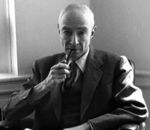
Practically everyone who has written about Oppenheimer has noted his elusiveness, but until now no one has convincingly explained how he came to be this way. As Ray Monk shows in this superb new life, one reason is to be found in Oppenheimer’s schooling. Born in 1904, he began attending the Ethical Culture School on Central Park West in New York in 1911. His father – an immigrant from Germany who would make his fortune in the textile trade – married Ella Friedman, a painter who had taught art at Barnard College, in a service conducted by Felix Adler, the founder of the Ethical Culture Society, of which the school was an offshoot. In some ways the Society shaped the course of Oppenheimer’s life. Claiming to derive its precepts from Judaism but in fact promoting a secular version of Kant’s idea of moral law, Adler’s humanist creed was a formative influence on Oppenheimer. Insisting that the moral life had to be severed from religion, it shut him off from the spiritual traditions of Judaism. At the same it promoted the development of ‘spiritual personality’, a nebulous ideal that left Oppenheimer unsatisfied. Learning Sanskrit in the 1930s in order to read the Hindu scriptures in the original, he embarked on an enduring but ultimately unrewarding engagement with mysticism.

more from John Gray at Literary Review here.

From triumph to trauma

Zhurzhenko_heroes_220w

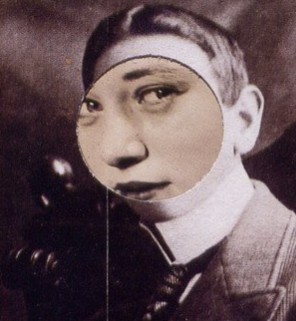
The Soviet “empire of memory” was an integral part of the Cold War geopolitical order and it is no surprise that it collapsed along with that order. As Jan Werner Müller has written, after 1989 “memories of the Second World War were ‘unfrozen’ on both sides of the former Iron Curtain [….] liberated from constraints imposed by the need for state legitimation and friend-enemy thinking associated with the Cold War”.[14] The disintegration of the Soviet bloc (and later the USSR) might even to some extent have been a result of the subversive victimhood narratives entering the public space as well as domestic and international politics. Think about the narratives of the Katyn massacre and of the Great Famine, which undermined the legitimacy of the Soviet regime at the end of perestroika. Or consider the Baltic republics, where demands to reveal the truth about the Molotov-Ribbentrop pact and the new meta-narratives on Soviet deportations and repressions helped restore and legitimize national independence. One can find many explanations of the Soviet collapse in academic literature, but one is rarely discussed: the Soviet empire collapsed under the burden of historical guilt. If narratives of suffering proved to be so effective in dissolving the Soviet empire and enabling the former Soviet republics to achieve national independence, no wonder that political actors still find them still useful today – for example, in containing Russia’s geopolitical ambitions in eastern Europe.

more from Tatiana Zhurzhenko at Eurozine here.

Wish List Progressives should Press on President Obama

Juan Cole in Informed Consent:

ScreenHunter_21 Nov. 07 10.35Clearly, Obama does not have progressive instincts, and prefers to rule from the center. This impulse is wrong-headed, since the center didn’t man his campaign offices or make phone calls for him. Ruling from the center means taking his base for granted while reaching out to relatively conservative constituencies. This tactic is why we don’t have a single-payer health insurance plan. It is why Wall Street reform has consisted of half-measures. It is why we are imposing a financial blockade on Iran that could easily spiral into a war. When it comes to the arch-conservatives, for the most part, Obama has never learned to just say ‘no.’

It does not help that Obama will face virtually the same, obstructionist Tea Party House of Representatives that stymied him for the past two years. Instead of going to them and asking how he could make them happy, he has to threaten to make an all-out push to turn them out of office in 2014 if they continue to say ‘no’ to everything.

Progressives will have to push Obama to the left if we are to get what we want.

More here.

Sexual assault essay raises questions about anonymity, invention

David L. Ulin in the Los Angeles Times:

ScreenHunter_20 Nov. 07 10.25What is the relationship of truth and invention in literary nonfiction? Over at TriQuarterly, an anonymous post called “The Facts of the Matter” frames the issue in a fascinating way. Presented as a personal essay, written by a middle-aged male author who, as an undergraduate at Yale, sexually assaulted “a girl I liked,” it is a meditation on revelation, narrative and construction, raising questions about the interplay of fact and narrative by admitting to a brutal truth.

Or is it? An editor’s note suggests that something else may be at work. “When we received this anonymous nonfiction submission,” it reads, “it caused quite a stir. One staff member insisted we call the New Haven, Ct., police immediately to report the twentieth-century crime it recounts. But first, we figured out by the mailing address that the author was someone whose work had been solicited for TriQuarterly. Other questions remained. What animal was this? A memoir? Essay? Craft essay? Fictional autobiography? Should we publish it with an introduction, a warning — and what should we say? The author later labeled it ‘meta-nonfiction.’ We thought it was worth publishing for the issues it raises.”

And what issues are those? First, I think, is anonymity, which puts a barrier between writer and reader that belies the intentions of the form. A key faith of the personal essay, after all, is its intimacy, the idea that we are in the presence of a writer, working under his or her own name and in his or her own voice, as something profound is explored.

More here.

A Tale of Tales

Michael Bérubé in American Scientist:

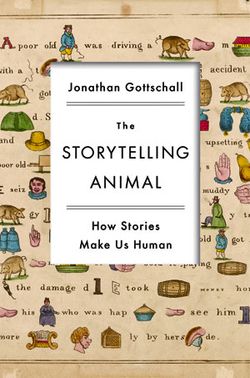
Gottschall_storytelling_animalOnce upon a time there was a group of literary critics who got very excited about neuroscience. They especially liked what neuroscience seemed to be able to offer their field: a good, hard-science foundation for the importance of their work. For the neuroscientists were telling people that Homo sapiens sapiens is hardwired for storytelling. And these scientists weren’t telling just-so stories, either; they had clear evidence that human brains universally make up narratives, ranging from religions to sports to memoirs to dreams to delusions to conspiracy theories, and they could even point to the specific areas of the brain that light up when certain stories are told. Now, thought the literary critics, we can finally live happily ever after. And Steven Pinker will be our friend!

The only problem was that it wasn’t clear what neuroscience could offer the study of literature other than the claim that humans are hardwired for storytelling. It didn’t seem to have anything very interesting to say about specific stories, nor did it evince any great interest in getting into the textual details of those stories—or the various interpretive disputes about those stories—that make up so much of the work of literary criticism. In On the Origin of Stories (2009), which I covered in an earlier review for American Scientist, Brian Boyd tried to make neuroscience the basis for the study of literature, and although his account of neuroscience was compelling, he couldn’t come up with anything to say about literary works other than that their creators devised various storytelling techniques to hold our attention. And as Laurent Dubrueil wrote in an essay in Diacritics, Boyd “seemingly believe[s] language to be a diabolical invention of ‘Theory,’” which, Boyd complained, “cuts literature off from life by emphasizing human thought and ideas as the product of only language, convention, and ideology.” Unfortunately for this branch of literary criticism, it turns out to be very difficult to talk or write about extralinguistic matters.

More here.

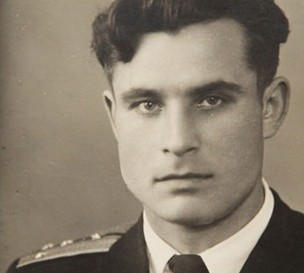
Thank you Vasili Arkhipov, the man who stopped nuclear war

Fifty years ago, Arkhipov, a senior officer on the Soviet B-59 submarine, refused permission to launch its nuclear torpedo.

Edward Wilson in The Guardian:

ScreenHunter_19 Nov. 07 10.03If you were born before 27 October 1962, Vasili Alexandrovich Arkhipov saved your life. It was the most dangerous day in history. An American spy plane had been shot down over Cuba while another U2 had got lost and strayed into Soviet airspace. As these dramas ratcheted tensions beyond breaking point, an American destroyer, the USS Beale, began to drop depth charges on the B-59, a Soviet submarine armed with a nuclear weapon.

The captain of the B-59, Valentin Savitsky, had no way of knowing that the depth charges were non-lethal “practice” rounds intended as warning shots to force the B-59 to surface. The Beale was joined by other US destroyers who piled in to pummel the submerged B-59 with more explosives. The exhausted Savitsky assumed that his submarine was doomed and that world war three had broken out. He ordered the B-59's ten kiloton nuclear torpedo to be prepared for firing. Its target was the USS Randolf, the giant aircraft carrier leading the task force.

If the B-59's torpedo had vaporised the Randolf, the nuclear clouds would quickly have spread from sea to land. The first targets would have been Moscow, London, the airbases of East Anglia and troop concentrations in Germany. The next wave of bombs would have wiped out “economic targets”, a euphemism for civilian populations – more than half the UK population would have died. Meanwhile, the Pentagon's SIOP, Single Integrated Operational Plan – a doomsday scenario that echoed Dr Strangelove's orgiastic Götterdämmerung – would have hurled 5,500 nuclear weapons against a thousand targets, including ones in non-belligerent states such as Albania and China.

More here.

Tuesday, November 6, 2012

Why 40 percent of Americans won’t vote

From MSNBC:

VoteThe United States may be an iconic democracy, but every year many Americans don't bother voting at all — regardless of lower turnout caused by events like Hurricane Sandy. The United States ranks 120th of the 169 countries for which data exists on voter turnout, falling between the Dominican Republic and Benin, according to a January 2012 study from the Institute for Democracy and Electoral Assistance. (Not all countries ranked were democracies, a factor that could skew the results.) About 60 percent of eligible voters will likely cast ballots Tuesday, a lower percentage than in most other Western democracies, said Michael McDonald, a political scientist at George Mason University. [ The Strangest Elections in US History ] Experts say the low turnout results from how often Americans conduct elections, the inconvenience of voting and the reality that each individual vote doesn't count for much.

Voting inconvenient
“Part of the issue is we have too much democracy,” McDonald said. “We're just voting a lot in the U.S.” With state, local and national races, as well as mid-term elections, most Americans have a chance to cast a ballot about once every year. Other Western democracies may only have an election every five years, McDonald told LiveScience. That frequency makes voting a hassle, he said.

More here.

Are your political views hardwired

From Smithsonian:

Brain-and-voting-largeA vote in tomorrow’s presidential election could be viewed one of two ways. It’s either the culmination of months of weighing the arguments on countless issues and making a choice based on a commingling of knowledge and personal principle. Or you voted Republican or Democratic because, to paraphrase accidental pundit Lady Gaga, you were born that way. Okay, in the spirit of punditry, the latter is a bit of an oversimplification, but it does reflect the thinking of an emerging field called political neuroscience. Its focus has been on using brain scans to see if people of different political persuasions are different all the way done to their genes. Or put more bluntly, do their brains work differently?

Right brain, left brain

The latest research came out last week, a study at the University of South Carolina that concluded that the brains of self-identified Democrats and Republicans aren’t hard-wired the same. Specifically, the scientists found more neural activity in areas of the brain believed to be linked with broad social connectedness in Democrats (friends, the world at-large) and more activity in areas linked with tight social connectedness in the Republicans (family, country). This was in line with what previous studies have suggested, that people who say they’re Democrats tend to take a more global view on issues while those who call themselves Republicans tend to see things through more of an American filter. But the findings also ran counter to previous research suggesting Democrats are, by biological nature, more empathetic souls than Republicans. Not so, according to the South Carolina study; it’s just that Republicans are more likely to focus their empathy on family members or people they know.

More here.

How Other Animals Choose Their Leaders

You think our elections are tough? Tell it to the wolves.

Rob Dunn in Slate:

ScreenHunter_18 Nov. 06 16.19It is hard to escape the sensation that our electoral process is broken. Too much money. Too much bullshit. Perhaps we should turn to nature for insight, remedy, or just salve. The Book of Proverbs implored believers to go to the ant and consider her ways when it came to wisdom and industriousness. Can we also turn to the ant for lessons on democracy?

The idea that ants, honeybees, or other social animals might do a thing or two better than we do is ancient. The Bible, Torah, and Quran all invoke insect societies. In the Amazon, Kayapo children were once advised to follow the brave, social ways of the ant (and to eschew the more vulgar ways of the termite).

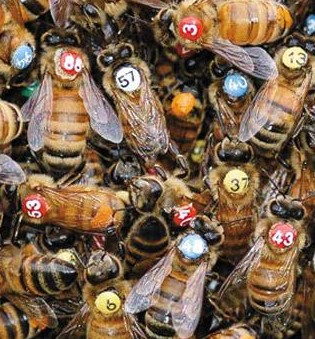
Most recently, Cornell University entomologist Tom Seeley has written a lovely and compelling book titled Honeybee Democracy which suggests we turn to the bees to see how they make decisions. Thanks to the work of Seeley and his collaborators, it is now clear that honeybee hives really are democratic. When it’s time to look for a new nest, options are weighted by the evaluations of many different bees about a site’s qualities—its size, its humidity, the density of surrounding flowers. Individual bees vote with dances, and when the number of dances in favor of some particular site is high enough, the masses are swayed. Together, citizen bees choose, if not perfection, the best possible option.

More here.