Connecting yesterday’s thinkers

600

“It is tempting to compare Plato with Marx,” he writes in one early discussion; “indeed, I have done so. Like Plato, Marx looked forward to a future in which the state, law, coercion, and competition for power had vanished and politics been replaced by rational organization. But we must not press the comparison.” Here, we see his method: to look for threads, connections, while at the same time considering each thinker on his or her own. Context, for Ryan, means two things: how his subjects echo one another, and the way they reflect their times. Thus, his take on Plato begins with a portrait of the philosopher as an aristocrat with ties to the oligarchy that “briefly replaced the Athenian democracy at the end of the Peloponnesian War,” a position that influences “The Republic” and its sense of social hierarchy. “He assumes as a premise,” Ryan writes, “that we are naturally suited to different sorts of social roles, and that one of many things wrong with democratic Athens is that the wrong people end up occupying positions of power.”

more from David L. Ulin at the LA Times here.

Jefferson and his use of power

1111-Abramson-articleInline

It is easy to see why such a life, with its grand sweep and many events so central to American history, took up so many volumes by Henry Adams and then Dumas Malone. Meacham wisely has chosen to look at Jefferson through a political lens, assessing how he balanced his ideals with pragmatism while also bending others to his will. And just as he scolded Jackson, another slaveholder and champion of individual liberty, for being a hypocrite, so Meacham gives a tough-minded account of Jefferson’s slippery recalibrations on race, noting, “Slavery was the rare subject where Jefferson’s sense of realism kept him from marshaling his sense of hope in the service of the cause of reform.” In 1814 Jefferson wrote, “There is nothing I would not sacrifice to a practicable plan of abolishing every vestige of this moral and political depravity.” This wasn’t true. Jefferson “was not willing to sacrifice his own way of life, though he characteristically left himself a rhetorical escape by introducing the subjective standard of practicability,” Meacham observes. In fact, his slaves were his most valuable possessions. He also believed emancipation would precipitate a race war. The only solution was for free blacks to be exiled to another country. These were the reasons, or excuses, that underlay Jefferson’s justifications of slavery, though they were not his ideas alone. Lincoln, too, considered expatriation a viable solution to the slavery problem.

more from Jill Abramson at the NY Times here.

Friday, November 9, 2012

One test may ‘find many cancers’

From BBC News:

CancerTargeting just one chemical inside cancerous cells could one day lead to a single test for a broad range of cancers, researchers say. The same system could then be used to deliver precision radiotherapy. Scientists told the National Cancer Research Institute conference they had been able to find breast cancer in mice weeks before a lump had been detected. The same target chemical was also present in cancers of the lung, skin, kidney and bladder, they said. The team, at the Gray Institute for Radiation Oncology and Biology at Oxford University, were looking for a protein, called gamma-H2AX, which is produced in response to damaged DNA. This tends to be one of the first steps on the road to a cell becoming cancerous.

The scientists used an antibody that is the perfect partner to gamma-H2AX and able to seek it out in the body. This was turned into a cancer test by attaching small amounts of radioactive material to the antibody. If the radiation gathered in one place it would be a sign of a potential tumour. The researchers trialled the test on genetically modified mice, which are highly susceptible to forming tumours. Prof Katherine Vallis said lumps could be felt when the mice were about 120 days old, but “we detected changes prior to that at 90 to 100 days – before a tumour is clinically apparent”. She told the BBC that gamma-H2AX was a “fairly general phenomenon” and it “would be the dream” to develop a single test for a wide range of cancers.

More here.

Amazing Close-Ups of Seeds

From Smithsonian:

SeedAbout an hour south of London, in Sussex, scientists at the Royal Botanic Gardens, Kew, are preparing seeds for storage. Researchers at 48 partner institutions in 16 countries collect seeds and send them to Kew, where the specimens are cleaned, dried for about a month and then stored for perpetuity in an underground vault, kept at a chilly -20 degrees Celsius. The Millennium Seed Bank, as it is called, was founded in 2000 as an effort to stock away viable seeds, now, should we need them to restore plant populations in the future. Nearly 100,000, or about one quarter, of the world’s plant species, are currently threatened. “We can’t afford to let these plants, and the potential they hold, die out,” says Kew, on its Web site. The Millennium Seed Bank is a global seed garden of epic proportions. By 2010, the project had amassed about 10 percent of the world’s 400,000 plant species, and the trajectory is to reach 25 percent by 2020. Wouldn’t you like to see it? The vault itself, of course, is hidden from the public eye. But, MSB’s seed morphologist Wolfgang Stuppy and visual artist Rob Kesseler have come up with a clever workaround.

More here.

Fungus that controls zombie-ants has own fungal stalker

From Nature:

Zombie-ant-fungus-parasite_1An unsuspecting worker ant in Brazil's rainforest leaves its nest one morning. But instead of following the well-worn treetop paths of its nest mates, this ant stumbles along clumsily, walking in aimless circles, convulsing from time to time. At high noon, as if programmed, the ant plunges its mandibles into the juicy main vein of a leaf and soon dies. Within days the stem of a fungus sprouts from the dead ant's head. After growing a stalk, the fungus casts spores to the ground below, where they can be picked up by other passing ants.

This strange cycle of undead life and death has been well documented and has earned the culprit the moniker: “zombie-ant” fungus—even in the scientific literature. But scientists are just learning the intricacies of this interplay between the Ophiocordyceps parasitic fungus and the Camponotini carpenter ants that it infects. Fossil evidence implies that this zombifying infection might have been happening for at least 48 million years. Recent research also suggests that different species of the fungus might specialize to infect different groups of ants across the globe. And close examination of the infected ant corpses has revealed an even newer level of spooky savagery—other fungi often parasitize the zombie-ant fungus parasite itself. “We have advanced a great deal in understanding how the fungus controls ant behavior,” David Hughes, an assistant professor of entomology and biology at The Pennsylvania State University, says. Every few months scientists are discovering yet another peculiar trait that, added together, make this parasite one of the most insidious infections—or perhaps that honor goes to the parasite that ultimately kills the killer parasite.

More here.

Orhan Pamuk: By the Book

From The New York Times:

PamIf you could recommend one book to the American president, what would it be? To the prime minister of Turkey?

Many years before he was elected president, I knew Obama as the author of “Dreams From My Father,” a very good book. To him or to any American president, I would like to recommend a book that I sometimes give as a gift to friends, hoping they read it and ask me, “Why this book, Orhan?” “Zen and the Art of Motorcycle Maintenance: An Inquiry Into Values” is a great American book based on the vastness of America and the individual search for values and meaning in life. This highly romantic book is not a novel, but does something every serious novel should do, and does it better than many great novels: making philosophy out of the little details of daily life.

I respected the Turkish prime minister’s politics of pushing the army away from politics and back to the barracks, though I am not happy about going to courts for my political opinions like many, many others during his reign. He sued a cartoonist for picturing him as a cat, though as anyone who comes here knows we all love cats in Istanbul. I am sure Erdogan would enjoy the great Japanese writer Natsume Soseki’s book “I Am a Cat,” a satirical novel about the devilish dangers of too much Westernization, narrated by a smart cat.

More here.

The Passion of the Critic: On Hoberman, Kracauer, and the Future of Film

1352165449

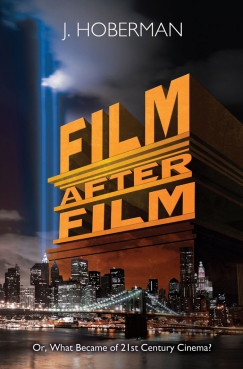
Phillip Maciak on Film After Film: or, What Became of 21st Century Cinema? and Siegfried Kracauer’s American Writing:

“Films mirror our reality. Let us look in the mirror.”

– Siegfried Kracauer

1.

There are two film critics. Each is in exile. Each makes his living review to review, lecture to lecture, amongst the journalistic hurlyburly of New York City. Each, in the prime of his intellectual life, writes a long, messy, virtuosic polemic about film and politics. The first traces how the political landscape of fear, paranoia, and violent nationalism in the critic’s homeland arose out of the aesthetic of popular cinema. The second, conversely, traces how the aesthetic of popular cinema arose out of the political landscape of fear, paranoia, and violent nationalism in the critic’s homeland. The first is Siegfried Kracauer’s From Caligari to Hitler: A Psychological History of the German Film(1947), and the second is J. Hoberman’s new Film After Film, or What Became of 21stCentury Cinema?

Admittedly, there’s a certain fuzziness to this comparison. For one thing, Kracauer, an elegant and path-breaking critic of film and mass culture, was in exile from Nazi Germany when he wrote his epic tome. He is rightly heralded, along with Andre Bazin, as one of the prime movers of modern film theory; his writings on German Expressionism still influence the way we think about Weimar film and culture, and he is one of the oldest standards for passionate cultural criticism of the cinema.

Hoberman, for his part, is merely in exile from The Village Voice. After almost 30 years as the paper’s senior film editor and columnist, he was laid off in January of this year, eliciting a collective cry from thousands of film buffs who had been introduced to a broad swath of international art cinema by Hoberman’s writing. (It is notable, however, that this cry was not reprised when Alan Scherstuhl replaced him as film editor earlier this fall.) While Hoberman has settled comfortably at venues like Tablet, Artinfo, and theNew York Review of Books (not to mention his day job as a professor at NYU) and is not, as far as we know, fleeing violent persecution, his displacement has, for a certain kind of cinephile, taken on the flavor of an existential crisis. If Hoberman is not at The Village Voice, then where are we?

Season 2, Episode 1 of the Podcast for Social Research

The_master_paul_thomas_anderson18-227x300

Over at the Brooklyn Institute for Social Research, long but interesting, especially the section on P.T. Anderson’s ‘The Master’ starting at 01:00:46:

This is the first episode of the second season of our podcast series, “The Podcast for Social Research.” We recorded this episode on Friday, October 23 with an eye towards relevance to the upcoming election, and also to return to film criticism to inaugurate our second season, much as we began our first.  As such, this was recorded long before any of us realized that by this weekend, with a mere 4 days till the election, most of our city’s attention would be focused on displaced people, power outages, destroyed infrastructure, climate change, and the politics of crisis response. However, there is still an election on Tuesday, and there is still a place for discussion even in a crisis. So whether you are stuck at home because of the subways or heading out to Far Rockaway, Staten Island, Red Hook, or any of the other neighborhoods still in critical need, or anywhere else in the world, we hope you enjoy our discussion of political movements and elections and our friendly critique of Paul Thomas Anderson’s “The Master.” As always, please see our Notations section after the jump for some references, asides, and more. Although we have a bibliography in our customary style, our own time constraints to post this before the election will keep this episode’s Notations largely without time stamps. We promise to return to our full, thorough style of Notations for next episode. Until then, share, enjoy, stay safe, and warm.

(You can download here by right-clicking and “save as” or look us up on iTunes)

five years of immanent framing

Secular_age

Perhaps the closest predecessor for Taylor’s arguments is Max Weber, though Taylor’s differences with Weber are still major. Like Weber, Taylor argues that the Reformation attempted to obliterate the difference between the religious (in the sense of monastic) life and daily life by giving the latter a profound religious meaning in the doctrine of the calling—an effort that, to the extent that it succeeded, ended up undermining the very tension that the Reformation itself generated. But he diverges from Weber in maintaining that the success of the drive toward Reformation, mirrored to more than a small degree by the Counter-Reformation initiative, gave rise to new problems. On the one hand, the very success of these efforts seemed to imply that their religious underpinnings were no longer necessary—that secular “progress” could take over from religious impulses. Yet, as the book’s Part III shows, the new secularity produced its own problems, sometimes but not necessarily leading to a retrieval of religious belief. What we have now is a situation in which neither belief nor unbelief can be taken for granted and where ever more numerous examples of both continue to appear on the scene.

more from Robert Bellah on Charles Taylor in the first essay published at The Immanent Frame 5 years ago here.

China’s National Congress explained

201211681840114580_20

China’s Communist Party is the world’s largest political party, with more than 80 million members. With its unmatched reach, the party is the most influential instrument in contemporary Chinese society. Its influence extends across cities, towns, villages, universities, schools and workplaces. Members of the party include government officials, army officers, farmers, workers and employees of state-owned companies. China is a one-party state, so all political participation must occur through the Chinese Communist Party. Dissent or difference of opinion can invite severe consequences. The party has a pyramid structure, with village members at the bottom and Beijing-based decision-making bodies at the top. Party members choose delegates to attend the National Congress.

more from Al Jazeera (with helpful video) here.

Justin E. H. Smith responds to the article below: A Tasty Treat for the Slime-Mold: More Inane Reporting on Animal Cognition

Justin E. H. Smith in his blog:

ScreenHunter_25 Nov. 09 15.09It's been a busy few weeks for announcements about how smart non-human life-forms are. First there was the talking beluga in California, then there was the elephant in Korea who could articulate a few words, then, finally, the report on a lowly slime mold's ability to make sophisticated decisions. All three of these reports repeated many of the conventional tropes for talking about animal intelligence; both trumpeted as wholly new and unheard-of the sort of data that have long been a staple of science reporting; and both are sure to leave everything exactly the same: with anti-anthropocentrists shouting see! See!, and with those who believe that human beings are something special in the cosmic scheme insisting that anything they are shown can be explained in terms of mimicry, stimulus, and other automatisms.

The irrelevance of empirical data for deciding the matter, in fact, long precedes the very existence of science journalism: it defines a clear rift already in 17th-century philosophy, while the 'new' discoveries themselves are for the most part only variations of what was already well documented in Aristotle's Historia animalium. And yet, the journalists always report as if until yesterday we were all fully committed to a hardcore version of the bête-machine doctrine. At the same time, however, they ensure that the topic will remain perpetually new by reinforcing, willy-nilly, the very doctrine their news item is supposed to be calling into question.

What do I mean by this? Consider the report from the New York Daily News, in which Koshik the Korean elephant is described as 'parroting' human speech.

More here.

How Brainless Slime Molds Redefine Intelligence

Ferris Jabr in Scientific American:

Something scientists have come to understand is that slime molds are much smarter than they look. One species in particular, the SpongeBob SquarePants–yellowPhysarum polycephalum, can solve mazes, mimic the layout of man-madetransportation networks and choose the healthiest food from a diverse menu—and all this without a brain or nervous system. “Slime molds are redefining what you need to have to qualify as intelligent,” Reid says.

In the wild, P. polycephalum rummages through leaf litter and oozes along logs searching for the bacteria, fungal spores and other microbes that it envelops and digests à la the amorphous alien in the 1958 horror film The Blob. Although P. polycephalum often acts like a colony of cooperative individuals foraging together, it in fact spends most of its life as a single cell containing millions of nuclei, small sacs of DNA, enzymes and proteins. This one cell is a master shape-shifter. P. polycephalumtakes on different appearances depending on where and how it is growing: In the forest it might fatten itself into giant yellow globs or remain as unassuming as a smear of mustard on the underside of a leaf; in the lab, confined to a petri dish, it usually spreads itself thin across the agar, branching like coral. Biologists first brought the slime mold into the lab more than three decades ago to study the way it moves—which has a lot in common with they way muscles work on the molecular level—and to examine the way it reattaches itself when split. “In the earliest research, no one thought it could make choices or behave in seemingly intelligent ways,” Reid explains. That thinking has completely changed.

More here.

Time-lapse video: Secret life of the beetles

Watch a time-lapse video showing the Natural History Museum's smallest workers, flesh-eating beetles, preparing the skeletons of a great green macaw, tawny owl and mountain peacock-pheasant for our collections. Chemical preparation of skeletons can cause damage to the bones so a special beetle species, Dermestes haemarrhoidalis, is used to strip off the flesh while leaving the bones and collagen untouched.

In the face of deep prejudice and persecution, the Ugandan gay rights movement has crafted a surprising victory

Graeme Wood in Aeon:

ScreenHunter_24 Nov. 09 14.50For a while, it might well have seemed to outsiders as if anti-gay pogroms were imminent. But with the deft sidestep of a martial artist, the gay rights movement in Uganda has used that moment of ghastly bigotry to raise its public profile, and some of the more extreme elements of the anti-homosexuality brigade have retreated into strategic silence. The situation is still volatile, but the roles have switched in an unpredictable way. I came to Uganda to find out why.

I arrived in Kampala with the recommendations and introductions of Malika Zouhali-Worrall and Katherine Fairfax Wright, who made Call Me Kuchu, the latest and best of the documentaries about gay life in Uganda. Their film has debuted in festivals and cinemas across Europe and the United States, and the gay activists whom it features have often been present to introduce it to the audience in person. ‘Kuchu’ is slang for ‘gay’, and a term that gay Ugandans have appropriated for themselves — something like the word ‘queer’. On 19 June 2012, it premiered at the Castro Theatre in San Francisco — the centre of gay cinematic culture in the US — and the Ugandan guest at the event was Longjones.

When I met him later, back in Uganda, I heard a voice familiar from the film (and, I later realised, from a gay-bar scene in the BBC documentary, too). It was a soft tenor with a Fozzie Bear tone, very hard to mistake. The Castro Theatre audience moved him profoundly, he told me. ‘They gave me standing applause, and I cried and cried.’

More here.

Blasphemy laws are darkening Pakistan’s skies

A Lahore girls' school has been burned to the ground and an astronomer's family arrested because of this tool of intolerance.

Salman Hameed in The Guardian:

ScreenHunter_23 Nov. 09 14.31…on 31 October the school was burned to the ground by a crowd who had heard it was accused of blasphemy. Lab equipment and computers were looted. Hundreds of library books – obviously with little use to the mob – tossed into the fire. Some even tried to pull the marble tiles off the floor.

The blasphemy accusations are not related to astronomy. Instead, they centre on a teacher at the school, Arfa Iftikhar. In a rush for the start of the Eid holiday, she accidentally missed a page while copying a homework assignment for the class. Her mistake merged a line about the prophet of Islam with the lines of a chapter on beggars. A parent of one of the students in her class noticed it, and the chatter of blasphemy spread quickly.

It did not matter that this was an unintentional mistake. In the current climate, it is comically easy to accuse someone of blasphemy in Pakistan. In fact, in this instance, the blame was also extended to the school administrators, including Asim.

The accused teacher is now in hiding and the police have arrested the 77-year-old principal of the school.

More here. More information at Salman Hameed's blog here.

Thursday, November 8, 2012

sex, death, money, illness, holidays, accidents, the weather and marriage proposals

Jane-austen

‘The whole pleasure of marriage’, according to G K Chesterton, ‘is that it is a perpetual crisis.’ He had no time for David Copperfield’s second wife, Agnes – an embodiment of lifeless perfection to be rated far below David’s charming, domestically incompetent first love: David Copperfield and Dora quarrelled over the cold mutton; and if they had gone on quarrelling to the end of their lives, they would have gone on loving each other to the end of their lives; it would have been a human marriage. But David Copperfield and Agnes would agree about the cold mutton. And that cold mutton would be very cold. Jane Austen, no fan of novelistic paragons either, wrote to her niece that ‘pictures of perfection … make me sick & wicked’. One of the many pleasures of John Mullan’s absorbing new book on Austen is how it handles the affectionate contempt of ordinary married life. Take Charles and Mary Musgrove in Persuasion: they bicker endlessly in public, but their quarrels also serve to unite them.

more from Freya Johnston at Literary Review here.

Women: The Silent Majority?

Women_obama_ap_img

Jessica Valenti in The Nation:

Women sent an unequivocal message to politicians on Tuesday. The gender gap was a whopping 18 percent; significantly higher than 2008’s twelve-point gap. Women made up a majority of the electorate, and unmarried women were 23 percent of voters.

There’s no doubt that an upswing in feminist activism had a demonstrable impact on the election. From the Komen/Planned Parenthood controversy to transvaginal ultrasounds to “binders of women”—the vociferous energy surrounding women’s issues is indisputable. But there’s an argument to be made that women’ssilence also contributed to Democrats’ resounding wins on Tuesday.

Despite the media and feminist focus on “war on women” this election season, women remain largely mum around their personal experiences with abortion and sexual violence. Feminists have long fought to end the stigmas surrounding rape and abortion—urging women to tell their stories. After all, more than one-third of American women will have an abortion in her lifetime. More than 600,000 adult women were raped in the United States in 2010. Still, most American women don’t talk about ending their pregnancies or being assaulted. Though this silence is not necessarily the best tactic for feminism or for women themselves, it may have been the final nail in the GOP’s coffin.

No Intuitions No Relativism

Hermancappelen

Richard Marshall interviews Herman Cappelen in 3:AM Magazine:

Herman Cappelen is mounting a fierce defence of his armchair against the crazyist gang over at X-phi – although he doesn’t want his counter-attack to be just about X-phi. He expects it to run and run. He writes about when language talks about language. He thinks analytic relativism a mistake and that truth is monadic. He thinks talk of possible worlds is the path to many errors. He thinks Kripke original, deep and almost entirely true. He thinks Lewis original deep and almost entirely false (but dangerously seductive because his errors are hidden). All in all this is one groovaciously pugnacious philosophical dude.

3:AM: What made you become a philosopher? Was it something you always felt affinities with, or was it something you came to from elsewhere?

Herman Cappelen: I’ve always felt an affinity with philosophy. Put a bit pretentiously, philosophers think deeper and wider than anyone else and that’s intellectually liberating, satisfying, and of course endlessly frustrating at the same time. When thinking philosophically comes natural to you, then what’s puzzling and slightly bizarre is to not do philosophy. Whatever topic you’re thinking about, you’re never more than two to three ‘Why?’s away from a philosophical question. I’m always puzzled when someone lacks the curiosity to ask those two to three why-questions. Anyone who’s intellectually curious will care about the foundations of what they’re doing and those foundations are invariably, in part, philosophical. So I’m one of those who don’t think philosophising requires much of an explanation, excuse, or justification – lack of philosophical curiosity always strikes me as a pretty reliable sign of intellectual shallowness.

I was also lucky to be around good philosophers while growing up. As a teenager in Norway,Arne Naess was an inspiring role model and as an undergraduate at Balliol in Oxford, I hadJonathan Barnes as tutor for most of my courses. Barnes was an important influence – though I remember asking him whether it was worth going on with philosophy professionally and he said, ‘Only if there’s absolutely nothing else you can see yourself doing and you think you can do it better than anyone else’. I worked hard to ignore that advice or put severe restrictions on the domain of ‘anyone.’ That said, I think he was right.