Jack Gross and Dylan Saba interview Fathi Nimer in Phenomenal World:
On August 28, Israel launched its largest military assault on the West Bank since the Second Intifada more than two decades ago. Targeting Jenin, Tulkarem, and Tubas—three cities in the north of the territory—“Operation Summer Camps” has killed thirty-nine Palestinians. The military also injured 150 people, arrested dozens more, and demolished critical infrastructure. Stretches of roads were torn up, storefronts were bulldozed, and water and electricity lines were destroyed.
Statements from Israeli security officials indicating that the raids might be the beginning of a protracted military operation have given way to their withdrawal from some of the northern cities. Meanwhile, troops remain active, with raids and arrests reported over the weekend in Nablus and Hebron. (The Israeli military also killed an American-Turkish activist at a demonstration in a village south of Nablus last Friday by shooting her in the head.)
The latest dramatic ground operation and aerial bombardments are less an opening of a new front alongside Gaza and the Lebanese border, and more of an escalation of Israel’s military activity in the territory. Israeli forces enter the occupied West Bank at will, often with the stated objective of targeting Palestinian resistance fighters. Since October 7, over 650 Palestinians have been killed in the West Bank and East Jerusalem, over 150 of whom were children. Just days before Operation Summer Camps was launched, settler-soldiers attacked Wadi Rahal, a village near Bethlehem, and killed a Palestinian man; two weeks before his murder, settlers waged a pogrom in the village of Jit—burning homes and murdering another man. Before October, 2023 was already the deadliest year on record for Palestinians in the West Bank.
More here.
Enjoying the content on 3QD? Help keep us going by donating now.
 I
I T
T Around Christmas Eve 1955,
  Genetic analysis of a Neanderthal fossil found in France reveals that it was from a previously unknown lineage, a remnant of an ancient population that had remained in extreme isolation for more than 50,000 years. This finding sheds new light on the final phase of the species’ existence.
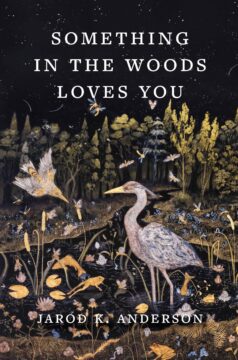 I have difficulty interpreting the nature of my own life, a thing I feel intimately and continuously, so it’s not surprising that we can’t all agree on the nature of herons.
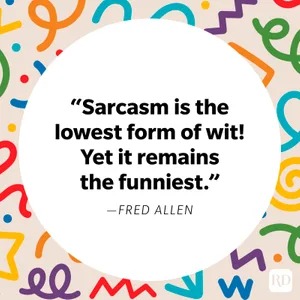 Love ’em or hate ’em, there’s a reason sarcasm quotes are all over the internet. Like funny sayings, sarcasm quotes play with the interpretation of words and tone in a way that can stretch your brain if you’re not expecting it. To use sarcasm, you have to say something that’s the opposite of what you mean (kind of like uttering a
 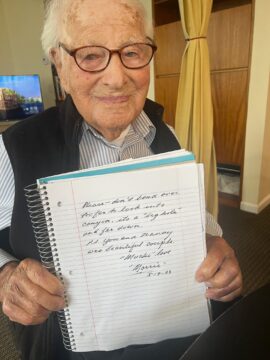 About a month ago, Judith Hansen popped awake in the predawn hours, thinking about her father’s brain.
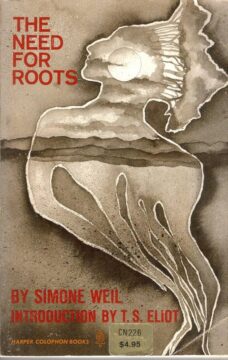 The French philosopher Simone Weil was a soul at odds with herself and with a world of affliction. The causes she espoused as a social activist and the faith she professed as a mystic were urgent to her and, as she saw it, to humanity. Little of her work was published in her lifetime, but since her death, at thirty-four, in 1943, it has inspired an almost cultlike following among readers who share her hunger for grace, and for what she called “decreation”—deliverance from enthrallment to the self.
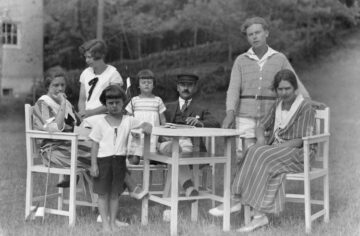 When history is about to take an abrupt turn, is there something in people’s eyes or in their secret longings that pre-announces it somehow—and that minds of a particular cast (poets and visionaries or perhaps psychiatrists) can read clearly and even put into words? If the world were to end next year, who would know about it today, and how? When we look back on the past, we say sometimes that there were “clear signs” that this or that event would happen, that the “writing was on the wall.” But how many of these signs were really there, and how many are projected back by hindsight? The problem is of special importance to historians. How can the historian single out a past event, focus on it exclusively, and pretend not to know what came after? How can a scholar fake ignorance?