
Enjoying the content on 3QD? Help keep us going by donating now.
Category: Recommended Reading
Review of “Nature, Culture, and Inequality” by Thomas Piketty
Jonathan Portes in The Guardian:
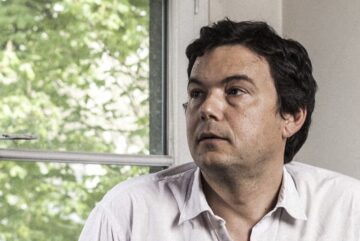 Thomas Piketty has come a long way. He first captured public attention in 2014 with his wildly ambitious, 704-page updating of Marx’s Das Kapital, entitled Capital in the Twenty-First Century. Part of its appeal – it became both an international bestseller and an academic sensation – was the simplicity of its basic thesis. Although packed with history and statistics, its fundamental proposition, that if the return on capital exceeds the growth rate of the economy, wealth will become increasingly concentrated, could be reduced to one simple equation: r>g.
Piketty’s latest book is almost exactly the opposite. Not only is it much shorter, based on a lecture given to the Société d’Ethnologie in his native France, its key message is: “It’s a lot more complicated than that.” Like Capital, it discusses the evolution of income and wealth inequality over history. But it emphasises historical contingency and, most of all, the role of politics and of collective mobilisation.
Piketty rejects the thesis – implicit in the way economics is often taught in our universities, and explicit in the way some economists and many conservative politicians and commentators discuss policy issues – that very large inequalities are the inevitable outcome of a well-functioning market economy.
More here.
Enjoying the content on 3QD? Help keep us going by donating now.
My Roman Year – Memento amore
Chris Power in The Guardian:
‘ We were elsewhere people,” André Aciman writes in this memoir of the year he spent in Rome in the mid-1960s. Aged 15, he left Egypt with his deaf mother and younger brother while his father remained in Alexandria to sell whatever they couldn’t take. Aciman’s Jewish family were part of diaspora forced to leave during Gamal Abdel Nasser’s two decades in power, refugees who attempted to start again in Europe and the US.
When they arrive in Rome, the Acimans must rely on the generosity of André’s great-uncle Claude. “I’m no ogre,” he protests (never a good sign), while keeping a record of every lira he gives them. He installs the family in a flat in the working-class Appio-Tuscolano district, previously one of his brothels, and sets about finding a school for André and his brother.
More here.
Enjoying the content on 3QD? Help keep us going by donating now.
An Overlooked Nucleotide Recycling Pathway Fuels Tumor Growth
Alejandra Manjarrez in The Scientist:
 Purine nucleotides are essential for cell growth and function as they serve as nucleic acid building blocks, signaling molecules, and energy carriers. Treatments that inhibit their synthesis offer a powerful strategy to hinder cancer cell growth, but patients may sometimes develop resistance to these drugs. Researchers hope that a better understanding of the purine production pipeline will lead to the development of novel treatments.
In a recent study published in Cell, researchers reported that tumor cells in mice may recover circulating molecules to maintain their purine pools.1 Furthermore, the authors found that feeding the animals a nucleotide-rich diet accelerated tumor growth. The findings could help refine cancer therapies that target nucleotide metabolism and guide dietary recommendations for patients with cancer.
More here.
Enjoying the content on 3QD? Help keep us going by donating now.
Sunday, September 22, 2024
Knife at the Throat
T.J. Clark in the LRB [h/t: Leonard Benardo]:
Frantz Fanon is a thing of the past. It doesn’t take long, reading the story of his life – the Creole childhood in Martinique, volunteering to fight for the Free French in the Second World War, his career in Lyon as arrogant young psychiatrist, the part he played in the war in Algeria, the encounters with Nkrumah and Lumumba, his death at the age of 36 – to realise that his is a voice coming to us from a vanished world. ‘Annihilated’ might be more accurate. Yet the voice breaks through to the present. Its distance from us – the way its cadence and logic seem to shrug aside the possibility of a future anything like ours – is transfixing. Its arguments are mostly disproved, its certainties irretrievable. The writer is trapped inside a dialectical cage. That’s why we read him.
Fanon’s prose defies translation: even his titles are obscure. Les Damnés de la terre doesn’t mean The Wretched of the Earth. Not really. Not unless you know what ‘la terre’ signifies to the French (too much, alas) and where the whole phrase fits in the history of class struggle:
Debout! les damnés de la terre
Debout! les forçats de la faim
La raison tonne en son cratère,
C’est l’éruption de la fin.
Du passé faisons table rase
Foule esclave, debout! debout!
Le monde va changer de base
Nous ne sommes rien, soyons tout!Arise! Damned of the earth
Arise! Prisoners of hunger
Reason thunders in its crater
It is the eruption of the end.
Let’s make a tabula rasa of the past
Slave crowd, arise! arise!
The world is going to change its basis
We are nothing, let us be everything!
How the British and Americans have struggled with Eugène Pottier’s great hymn.
More here.
Enjoying the content on 3QD? Help keep us going by donating now.
Problem-solving matter
David C Krakauer in Aeon:
What makes computation possible? Seeking answers to that question, a hardware engineer from another planet travels to Earth in the 21st century. After descending through our atmosphere, this extraterrestrial explorer heads to one of our planet’s largest data centres, the China Telecom-Inner Mongolia Information Park, 470 kilometres west of Beijing. But computation is not easily discovered in this sprawling mini-city of server farms. Scanning the almost-uncountable transistors inside the Information Park, the visiting engineer might be excused for thinking that the answer to their question lies in the primary materials driving computational processes: silicon and metal oxides. After all, since the 1960s, most computational devices have relied on transistors and semiconductors made from these metalloid materials.
If the off-world engineer had visited Earth several decades earlier, before the arrival of metal-oxide transistors and silicon semiconductors, they might have found entirely different answers to their question. In the 1940s, before silicon semiconductors, computation might appear as a property of thermionic valves made from tungsten, molybdenum, quartz and silica – the most important materials used in vacuum tube computers.
And visiting a century earlier, long before the age of modern computing, an alien observer might come to even stranger conclusions. If they had arrived in 1804, the year the Jacquard loom was patented, they might have concluded that early forms of computation emerged from the plant matter and insect excreta used to make the wooden frames, punch cards and silk threads involved in fabric-weaving looms, the analogue precursors to modern programmable machines.
But if the visiting engineer did come to these conclusions, they would be wrong. Computation does not emerge from silicon, tungsten, insect excreta or other materials. It emerges from procedures of reason or logic.
This speculative tale is not only about the struggles of an off-world engineer. It is also an analogy for humanity’s attempts to answer one of our most difficult problems: life. For, just as an alien engineer would struggle to understand computation through materials, so it is with humans studying our distant origins.
More here.
Enjoying the content on 3QD? Help keep us going by donating now.
A History of Prejudice
David Feldman in The Ideas Letter:
Over the last 100 years, the struggle against antisemitism and the struggle against racism have at times appeared inextricably connected, firmly allied in a single fight against bigotry. Today, it is the disconnections that appear most visible.
The standoff is now stark, thanks to divergent responses to Oct. 7, 2023 and its aftermath — to Hamas’s attack on Israel and the killing of civilians and hostage-taking, and to Israel’s ongoing war on Gaza and the death, displacement, and privation it has brought. These events have not only had grievous consequences for Palestinians and Israelis; they have also been divisive globally. And they have accelerated and amplified a split between anti-racism and anti-antisemitism that was already advanced.
For some, the attack of October 7 was an act of specifically antisemitic terror. “What is this, some pogrom in Lithuania?” asked Amit Halevi, the chairman of Be’eri, a kibbutz that lost 10 percent of its civilian population in the massacre. Others have drawn connections between October 7 and the Holocaust, finding “the antisemitism of extermination” expressed by Hamas today, as it was by the Nazis before.
Yet much of the anti-racist Left presents these events in a different key. In Britain, the Palestine Solidarity Campaign reacted immediately, on Oct.7: “The offensive launched from Gaza today can only be understood in the context of Israel’s ongoing, decades long, military occupation and colonisation of Palestinian land and imposition of a system of oppression that meets the legal definition of apartheid.” Amnesty International denounced Hamas’s attacks on civilians, but it located the roots of the violence in Israel’s 16-year blockade of Gaza and the discriminatory system it imposes on all Palestinians.
More here.
Enjoying the content on 3QD? Help keep us going by donating now.
Zig and Zag
Samuel Moyn in The Nation:
In the chilling speech he gives at the end of the film Margin Call, Jeremy Irons says that no one should say they believe in equality, because no one really thinks it exists: The very idea camouflages the endurance of hierarchy in an essentially unchanging form. “It’s certainly no different today than it’s ever been,” he explains to an underling. “There have always been and there always will be the same percentage of winners and losers….
Yeah, there may be more of us than there’s ever been, but the percentages? They stay exactly the same.”
For many others, the response to the 2008 financial crisis was very different from Irons’s cynical response. The crisis led to more consciousness and criticism of inequality than had been seen in the past 50 years. Starting with Occupy Wall Street in 2011, large numbers of Americans concerned about the ascendancy of the “1 percent” eventually consolidated around Bernie Sanders’s presidential campaigns in 2016 and 2020. During these years, the French economist Thomas Piketty provided the reading public with evidence that vindicated the movement: In Capital in the Twenty-First Century, published in English in 2014, he confirmed that economic inequality had been rising across the North Atlantic world. Piketty also showed that the situation was simultaneously worse and better than the way Irons had characterized it in Margin Call: Capitalism’s inherent dynamics generally increased inequality, he argued, but political mobilizations could bring about its reduction.
Capital in the Twenty-First Century became a surprise bestseller, and inequality became a signature concern of the new century, analyzed and complained about (and, more rarely, justified) in a deluge of articles, books, and tweets. But a decade later, historians, economists, and political theorists are pondering a different set of questions: not about the causes or continued existence of our age of inequality, but about where the moral imperative for its opposite—equality—came from in the first place.
More here.
Enjoying the content on 3QD? Help keep us going by donating now.
Elias Khoury (1948 – 2024) Novelist And Critic
Enjoying the content on 3QD? Help keep us going by donating now.
While Brad Pitt and George Clooney Settle Into Silver-Fox Charm, Their Female Peers Are the True Stars of the Season
Stephanie Zacharek in Time Magazine:
 The pleasures of writer-director Jon Watts’ crime caper Wolfs are numerous: George Clooney and Brad Pitt play dueling fixers called in to clean up the accidental death of a young, adorable student—prior to his demise, occasioned by his jumping on a hotel bed, he’d been picked up by high-powered district attorney Amy Ryan in a bar. Clooney and Pitt have reached the age where they know it’s useless to pretend they’re something they’re not. Their faces look handsomely lived in; the whispers of gray in their artfully sculpted chin stubble feel honest and earned. Like Lucy and Ethel in the throes of a falling out, they’re fun to watch as they bicker and crab at one another, leaning heavily on their silver-fox charm. Still, what they’re offering feels as comfy as the worn-in leather jackets they wear. And in this late-2024 movie season, if you find yourself wishing for something more—for another view of what actors in the 50-to-60-ish age bracket can do—look to the women, who insist on pushing themselves out of the comfort zone rather than settling into it.
More here.
Enjoying the content on 3QD? Help keep us going by donating now.
Isabella Hammad: ‘I heard Edward Said speak when I was seven’
Anthony Cummins in The Guardian:
 Isabella Hammad, 33, was born in London to a Palestinian father and British-Irish mother. Named last year as one of Granta’s best young British novelists, she is the author of The Parisian (2019) and Enter Ghost, which was shortlisted for this year’s Women’s prize. Her new book, Recognising the Stranger, began as a lecture last autumn at Columbia University to commemorate the Palestinian-American scholar Edward Said, an annual event whose previous speakers include Noam Chomsky and Daniel Barenboim. Hammad’s talk, given nine days before 7 October, explored “narrative turning points”, with a particular focus on the story of Palestine. She spoke to me from Manhattan, where she currently has a fellowship at the New York Public Library.
As a novelist, do you hesitate to write nonfiction?
I don’t think of myself as an essayist, and I haven’t written many essays; when I have, they’ve been like this lecture, a creative act involving literary criticism, not straight journalism. I’m a novelist and that’s how I feel comfortable in the world. But there have been times where, under the pressure of my rage, I’ve written because I just need to say something. You know, you work on a novel for years – it’s a different kind of speech act, it’s not making any arguments and you don’t have to inhabit your own opinions. Obviously, there’s a genocide right now: that’s why I’ve been moved to write [nonfiction], just as a person and a human in the world who has felt that need.
More here.
Enjoying the content on 3QD? Help keep us going by donating now.
Sunday Poem
Samuel Johnson’s Other Life
Thirty years after his father had asked him
to watch the bookstall, his family’s only livelihood,
and Sam being seventeen, too in love with sneering,
had refused, the author of arguably the greatest
dictionary ever, returned to his native village and in
a downpour so heavy no one sensible even thought of
going outside, and with no covering for his head, stood
on the square in the exact site where his father’s
bookstall had been, and out of grief and penance,
language’s surest foundation, stared down the
townsfolk’s mockery, and let the rain teach him
a lesson as only it could.
by Walter R. Rawlings
from The First Inhabitants of Arcadia
The University of Arkansas Press, 2006
Enjoying the content on 3QD? Help keep us going by donating now.
J.D. Souther (1945 – 2024) Singer/Songwriter
Enjoying the content on 3QD? Help keep us going by donating now.
Billy Edd Wheeler (1932 – 2024) Singer/Songwriter
Enjoying the content on 3QD? Help keep us going by donating now.
Friday, September 20, 2024
Review of “Living on Earth: Life, Consciousness and the Making of the Natural World” by Peter Godfrey-Smith
Leon Vlieger in The Inquisitive Biologist:
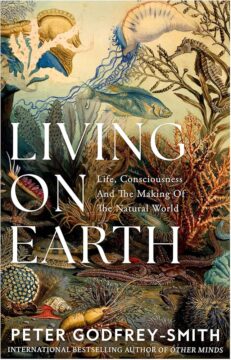 In 2016, scuba-diving philosopher Peter Godfrey-Smith made a huge splash with his book Other Minds in which he explored the evolutionary origins of a mind quite unlike ours, that of the octopus. In 2020, he followed this up with the altogether more cerebral Metazoa in which he explored the evolution of animal minds more broadly. I reviewed both books favourably. Now, another four years later, Living on Earth is presented retrospectively as the conclusion to this trilogy exploring the origins of intelligence. In a book that is never less than thoughtful, Godfrey-Smith examines how life shapes, and has been shaped by, its environment.
Godfrey-Smith tackles the above theme in three parts. Before delving in, his first chapter provides an additional evocative angle on what he wants to examine: “The history of life is not just a series of new creatures appearing on the stage; the new arrivals change the stage itself” (pp. 6–7). Through their actions, organisms modify their environment and, in more formal terms, he considers “organisms as causes, rather than evolutionary products” (p. 7). To my surprise, despite the fascinating concept, Living on Earth did not impress me as much as the previous two books. In part, the bar has been put so high that I went in with elevated expectations; in part, it wanders quite widely into subjects that seem only tangentially related to its core theme.
More here.
Enjoying the content on 3QD? Help keep us going by donating now.
A Mystery in the Shape of a Book
Philip Graham in The Millions:
 I opened the library’s glass door and placed a fresh copy of my latest novel, What the Dead Can Say, on the bottom shelf. Then I returned to the car. For months my wife and I had been driving around the country, dropping off free copies of What the Dead Can Say in hundreds of Little Free Libraries. Now, we turned back on to the main road and headed down to Colorado, in search of more.
What the Dead Can Say is my eighth book. Over the course of my career, I’ve published books with Random House and Scribner, and fiction in the New Yorker. But for this most recent novel, I was no longer interested in chasing the prestige that such literary icons confer, no longer wished to jump through traditional publishing’s increasingly narrowing hoops. Instead, I decided to privately print a 1,000-copy limited edition run—then undertake a 10,000-mile journey through 28 states to give away every copy.
More here.
Enjoying the content on 3QD? Help keep us going by donating now.
Murray Gell-Mann recalls Einstein’s open fly
Enjoying the content on 3QD? Help keep us going by donating now.
Pager attack on Hezbollah was a sophisticated ‘booby-trap’ operation − it was also illegal
Mary Ellen O’Connell in The Conversation:
 The operation that used pagers and walkie-talkies to kill members of the Lebanese militant group Hezbollah was ingenious – but was it legal?
Certainly, there are those who will argue that it was. That thinking goes like this: Hezbollah has been attacking Israel with rockets, and the pagers and radios purchased by Hezbollah could be expected to be used by the same people involved in decisions to send those missiles. As such, the killings, if carried out by Israel as is widely believed, would appear to be targeted and warranted. While some bystanders may die or be injured, they would likely be associated with Hezbollah, according to this line of thinking.
But that is not the right assessment, according to international law. Under law I have taught for over 40 years, hiding explosives in everyday objects makes them booby traps – and in almost every case, using a booby trap designed to kill is a crime.
More here.
Enjoying the content on 3QD? Help keep us going by donating now.
Right-Hegel Meets Left-Hegel
David Goldman in Tablet:
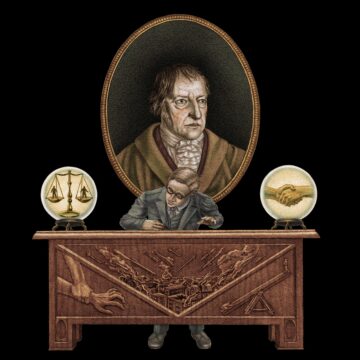 No idea has fallen flatter than the “end of history,” popularized by political philosopher Francis Fukuyama in his eponymous 1993 book. Few still believe that all human beings will accept liberal democracy and free market capitalism as the final forms of society and are uninterested in any alternative. But like many truly awful ideas, the end of history had its 15 minutes, or in this case 15 years, of fame, as a catchall motivation for America’s misguided attempt to export democracy to Afghanistan and Iraq.
…The notion that history has an end begins with Isaiah’s prophecy of a messianic era in which the lion will lie down with the lamb (although the lamb won’t get much sleep, in Woody Allen’s qualification). Belief in the coming of the Messiah is a fundamental principle of Jewish faith in the list of 13 formulated by Maimonides, who added, “though he tarry.” Jewish heresies frequently take the form of “forcing the Messiah,” that is, claiming that human action rather than unknowable divine will can bring about the end of history. Forcing the Messiah pops up in Jewish history in countless guises, from Karl Marx’s proletarian revolution to the belief of some ultra-Orthodox Jews that a certain density of Torah study will persuade God to send the Messiah. The German émigré philosopher Eric Voegelin derided political messianism as “immanentizing the Eschaton,” or asserting this-worldly control of matters reserved for Providence.
More here.
Enjoying the content on 3QD? Help keep us going by donating now.
Do AI models produce more original ideas than researchers?
Gemma Conroy in Nature:
 An ideas generator powered by artificial intelligence (AI) came up with more original research ideas than did 50 scientists working independently, according to a preprint posted on arXiv this month1.
The human and AI-generated ideas were evaluated by reviewers, who were not told who or what had created each idea. The reviewers scored AI-generated concepts as more exciting than those written by humans, although the AI’s suggestions scored slightly lower on feasibility. But scientists note the study, which has not been peer-reviewed, has limitations. It focused on one area of research and required human participants to come up with ideas on the fly, which probably hindered their ability to produce their best concepts.
There are burgeoning efforts to explore how LLMs can be used to automate research tasks, including writing papers, generating code and searching literature. But it’s been difficult to assess whether these AI tools can generate fresh research angles at a level similar to that of humans. That’s because evaluating ideas is highly subjective and requires gathering researchers who have the expertise to assess them carefully, says study co-author, Chenglei Si. “The best way for us to contextualise such capabilities is to have a head-to-head comparison,” says Si, a computer scientist at Stanford University in California.
More here.
Enjoying the content on 3QD? Help keep us going by donating now.