William Dalrymple: a life in writing

From The Guardian:

William-Dalrymple-010On page 493 of William Dalrymple's new narrative of Britain's calamitous 1839 invasion of Afghanistan, he draws this present-day parallel: the west's “fourth war in the country looks certain to end with as few political gains as the first three, and like them to terminate in an embarrassing withdrawal after a humiliating defeat, with Afghanistan yet again left in tribal chaos and quite possibly ruled by the same government which the war was originally fought to overthrow”. That isn't how the government sees the situation, I tell him when we meet in London just before Christmas: the prime minister is with the troops in Helmand and defence secretary Philip Hammond has just told the Commons that the planned reduction of British troops in April “is possible because of the success of the Afghan national security forces in assuming a lead role”.

How could you write such an off-message book, I ask Dalrymple. Even though he's travelled overnight from his farm outside Delhi to his publisher's offices in Bloomsbury, and left his wallet in India, he giggles amiably. “We have a very good record of defence secretaries saying clever things about Afghanistan. 'They won't even have to shoot a single bullet' – remember that? John Reid. I was on a panel with him last year and reminded him.” He laughs again, and admits that the timing of the publication of Return of a King: The Battle for Afghanistan is not entirely fortuitous. “There was an element of calculation that this could happen – that they could withdraw some troops.”

More here.

A Cat’s 200-Mile Trek Home Leaves Scientists Guessing

From The New York Times:

CatNobody knows how it happened: an indoor housecat who got lost on a family excursion managing, after two months and about 200 miles, to return to her hometown. Even scientists are baffled by how Holly, a 4-year-old tortoiseshell who in early November became separated from Jacob and Bonnie Richter at an R.V. rally in Daytona Beach, Fla., appeared on New Year’s Eve — staggering, weak and emaciated — in a backyard about a mile from the Richters’ house in West Palm Beach. “Are you sure it’s the same cat?” wondered John Bradshaw, director of the University of Bristol’s Anthrozoology Institute. In other cases, he has suspected, “the cats are just strays, and the people have got kind of a mental justification for expecting it to be the same cat.”

But Holly not only had distinctive black-and-brown harlequin patterns on her fur, but also an implanted microchip to identify her. “I really believe these stories, but they’re just hard to explain,” said Marc Bekoff, a behavioral ecologist at the University of Colorado. “Maybe being street-smart, maybe reading animal cues, maybe being able to read cars, maybe being a good hunter. I have no data for this.” There is, in fact, little scientific dogma on cat navigation. Migratory animals like birds, turtles and insects have been studied more closely, and use magnetic fields, olfactory cues, or orientation by the sun.

More here.

Tuesday Poem

Red Glove Thrown in a Rosebush

If our bodies weren’t so beautiful.
Even rabbits are made of firecrackers
so tiny they tickle your hand.
If only the infirmities,
blocked neural pathways, leg braces
and bandages didn’t make all these bodies
look like they’re dancing.
Breathing will destroy us, hearts
like ninja stars stuck into the sternums
of granite caesars. Should I worry
people have stopped saying how skinny
and pale I am? Paul may destroy the kitchen
but he’s the best cook I know.
Seared tuna, pesto risotto – where
did he get those tomatoes? –what a war
must be fought for simplicity!
Even the alligator, flipped over,
is soft as an eyelid. Hans, the trapezist,
got everyone high on New Year’s Eve
with a single joint, the girl he was with
a sequin it was impossible not to want
to try to catch without a net.
Across the bay, fireworks punched
luminous bruises in the fog.
If only my body wasn’t borrowed from dust!
.
.
by Dean Young
from Bender: New and Selected Poems

Monday, January 21, 2013

Sunday, January 20, 2013

THE NORMAL WELL-TEMPERED MIND

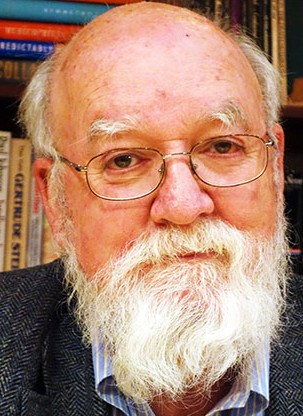
Daniel Dennett in Edge.org:

ScreenHunter_105 Jan. 20 18.53I'm trying to undo a mistake I made some years ago, and rethink the idea that the way to understand the mind is to take it apart into simpler minds and then take those apart into still simpler minds until you get down to minds that can be replaced by a machine. This is called homuncular functionalism, because you take the whole person. You break the whole person down into two or three or four or seven sub persons that are basically agents. They're homunculi, and this looks like a regress, but it's only a finite regress, because you take each of those in turn and you break it down into a group of stupider, more specialized homunculi, and you keep going until you arrive at parts that you can replace with a machine, and that's a great way of thinking about cognitive science. It's what good old-fashioned AI tried to do and still trying to do.

The idea is basically right, but when I first conceived of it, I made a big mistake. I was at that point enamored of the McCulloch-Pitts logical neuron. McCulloch and Pitts had put together the idea of a very simple artificial neuron, a computational neuron, which had multiple inputs and a single branching output and a threshold for firing, and the inputs were either inhibitory or excitatory. They proved that in principle a neural net made of these logical neurons could compute anything you wanted to compute. So this was very exciting. It meant that basically you could treat the brain as a computer and treat the neuron as a sort of basic switching element in the computer, and that was certainly an inspiring over-simplification. Everybody knew is was an over-simplification, but people didn't realize how much, and more recently it's become clear to me that it's a dramatic over-simplification, because each neuron, far from being a simple logical switch, is a little agent with an agenda, and they are much more autonomous and much more interesting than any switch.

More here.

Charles Darwin’s ecological experiment on Ascension isle

Howard Falcon-Lang in BBC News:

_48935355_cloudforestotherTwo hundred years ago, Ascension Island was a barren volcanic edifice.

Today, its peaks are covered by lush tropical “cloud forest”.

What happened in the interim is the amazing story of how the architect of evolution, Kew Gardens and the Royal Navy conspired to build a fully functioning, but totally artificial ecosystem.

By a bizarre twist, this great imperial experiment may hold the key to the future colonisation of Mars.

The tiny tropical island of Ascension is not easy to find. It is incredibly remote, located 1,600km (1,000 miles) from the coast of Africa and 2,250km (1,400 miles) from South America.

Its existence depends entirely on what geologists call the mid-Atlantic ridge. This is a chain of underwater volcanoes formed as the ocean is wrenched apart.

Ascension is one of a number of volcanic islands in the South Atlantic

However, because Ascension occupies a “hot spot” on the ridge, its volcano is especially active. A million years ago, molten magma explosively burst above the waves.

A new island was born.

More here.

The March on Washington

From Life:

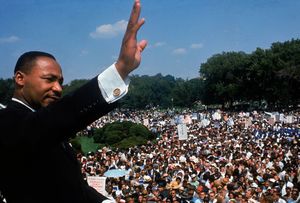
KingSo many scenes from the August 28, 1963, March on Washington are now familiar to so many of us — and the cadence of Martin Luther King Jr.’s “I Have a Dream” speech is so much a part of the national consciousness — it’s easy forget that for the hundreds of thousands of people who marched and rallied that day, the event was wholly, thrillingly new. There had been, of course, other civil rights protests, marches and demonstrations. But none had been so large (estimates range anywhere from 200,000 to 300,00 people) and none garnered so much attention before, during and, especially, after the event itself. The landmark 1957 Prayer Pilgrimage for Freedom, for example, which also took place in the nation’s capital, had shown everyone — segregationists and civil rights proponents, alike — that large, peaceable rallies in the heart of Washington were not only possible, but in fact were necessary if the movement was ever going to achieve its central, early goals of desegregation and voting rights reform. But the 1963 March on Washington for Jobs and Freedom was on a scale so much larger than anything that had come before that it is rightly recalled as a touchstone moment: a single event so significant that the history of the movement can, in a sense, be measured in terms of Before the March, and After the March. The day, meanwhile, is remembered almost exclusively for MLK’s “Dream” speech, famously delivered to the throngs from the steps of the Lincoln Memorial. (“I Have a Dream” itself was, in a way, a work in progress; King had delivered a speech to 25,000 people in Detroit several months before, for example, that included several sections and phrases that he would include, verbatim, in his magisterial address in August 1963.)

Here, five decades later, on Martin Luther King Day, LIFE.com presents a selection of pictures — most of which never ran in LIFE magazine — commemorating that day. But what is especially moving about so many of these pictures (those shot “on the ground” by Paul Schutzer, in particular) is that they illustrate the scene as witnessed not by those who led and organized the event, but by those in the crowd. There is huge emotion here, and excitement and pride — but above and beyond everything else, these photos evince a near-palpable sense of inclusion and, if only for a moment, a suggestion that power was, at last, passing to the people.

More here.

Source of All Joy: On Alina Szapocznikow

From The Paris Review:

FaceThe Polish sculptor Alina Szapocznikow made a career of disassembling the body, of exposing its weaknesses, its many vulnerabilities, whether through the uses and abuses it’s been put to in the abattoir of twentieth-century history or at the mercy of the more mundane, if no less fatal, everyday mortality. If that sounds like a bit of a downer, worry not: Szapocznikow managed to keep a sly tongue firmly in cheek, and her work, for all its startling beauty, its nearly unbearable intimacy, its sublime evocation of pain and disease and suffering, is witty, even funny.

Her sculptures—on display, through January 28, at the Museum of Modern Art, where they are presented as part of a retrospective entitled “Alina Szapocznikow: Sculpture Undone, 1955–1972”—indulge in the darkest shade of black humor, extracting their punch lines from abysmal pockets of human experience. Take, for example, her Lampe-bouche (Illuminated Lips) (1966), a series of resin casts of a female mouth set atop metal stands and wired to work as lamps. These resonate as blazoned bits of romantic poetry, the celebration of the mistress’s body through its reduction to component parts, but also as morbid enactment of the apocryphal human-skin lampshades made by the Nazis. Here is the human body, desecrated and unmade, and it is glorious to look at, an illuminated, illuminating display of power and its subversion. Something similar is at work in Petit Dessert I (Small Dessert I) (1970–1971), the lower half of a woman’s face, done up in colored polyester resin, sumptuously melting beyond a glass saucer, like an over-scooped sundae breaching the borders of moderation. And there is Cendrier de Célibataire (The Bachelor’s Ashtray) (1972), which transforms the female visage into a vessel for cigarette butts.

That Szapocznikow was a Holocaust survivor helps contextualize her concern with abjection, with how easy it is to destroy other bodies, how difficult to control and maintain the integrity of one’s own.

More here.

Why Has Climate Legislation Failed? An Interview with Theda Skocpol.

Superstorm.JPEG-062b6

Brad Plumer in the Washington Post's Wonkblog:

Brad Plumer: You spend a lot of time dissecting the U.S. Climate Action Partnership, the big collaboration between greens and businesses to push for a cap-and-trade bill that could win support from Republicans. It wasn’t a crazy strategy—cap-and-trade had picked up a fair bit of bipartisan support between 2003 and 2007. So why did it ultimately fail?

Theda Skocpol: The whole USCAP strategy was based on this very reasonable idea that you’d get Republicans in Congress to go along with Democrats. But by the time we get to 2009, Republicans just weren’t going to be there. And I don’t think environmentalists were able to see the shifting ground at the time.

BP: But was there really that big a shift among Republicans? I mean, even in the 2008 campaign, John McCain was in favor of cap-and-trade.

TS: One of the things that really surprised me in my research came from pulling together scores from the [League of Conservation Voters]. And you see a clear pull on politicians from grassroots conservative opinion around 2006 and 2007. Climate-change denial had been an elite industry for a long time, but it finally penetrated down to conservative Republican identified voters around this time. That created new pressures on Republican officeholders and candidates. And I don’t think most people noticed that at the time.

Even John McCain. I have this figure that shows him moving up on LCV scores for most of the last decade [i.e., casting more pro-environmental votes] and then pulling back suddenly to the lowest level starting in 2007.

Can Neanderthals Be Brought Back from the Dead?

Image-447620-breitwandaufmacher-innm

An interview with George Church in Spiegel:

SPIEGEL: Setting aside all ethical doubts, do you believe it is technically possible to reproduce the Neanderthal?

Church: The first thing you have to do is to sequence the Neanderthal genome, and that has actually been done. The next step would be to chop this genome up into, say, 10,000 chunks and then synthesize these. Finally, you would introduce these chunks into a human stem cell. If we do that often enough, then we would generate a stem cell line that would get closer and closer to the corresponding sequence of the Neanderthal. We developed the semi-automated procedure required to do that in my lab. Finally, we assemble all the chunks in a human stem cell, which would enable you to finally create a Neanderthal clone.

SPIEGEL: And the surrogates would be human, right? In your book you write that an “extremely adventurous female human” could serve as the surrogate mother.

Church: Yes. However, the prerequisite would, of course, be that human cloning is acceptable to society.

SPIEGEL: Could you also stop the procedure halfway through and build a 50-percent Neanderthal using this technology.

Church: You could and you might. It could even be that you want just a few mutations from the Neanderthal genome. Suppose you were too realize: Wow, these five mutations might change the neuronal pathways, the skull size, a few key things. They could give us what we want in terms of neural diversity. I doubt that we are going to particularly care about their facial morphology, though (laughs).

Trickster and Tricked

Yogi

“All gurus try to undermine their followers' egos and expectations, so does it matter if the teacher is a real fraud?” Erik Davis tries to answer the question in Aeon:

To say that we live in a post-secular era does not mean that we are done with the disenchantments of modernity, or that religion – goddess forbid – will regain its previous hold over human affairs. True, many of the convictions and clarities that once undergirded modern secular society have dissolved, leaving many things — including our rational selves — up for grabs. But while radical atheists can rant all they want, the resonant claims of religion and the insistent calls of the spirit remain far from ‘behind’ us.The major religions are not leaving the world stage anytime soon, and what is more the largely secular zone that the global elites now inhabit plays host to a wide array of spiritual identities and transformative practices, of which yoga, meditation, and some manner of Buddhism are only the most visible.

Religion (and its shadowy ally, the occult) has always managed the boundaries between things — life and death, order and chaos, self and world, novelty and tradition, the knowable and the infinite. It is absurd to imagine that the force of such preoccupations should dissipate at a time of cultural crisis and confusion such as ours. Many of those ever-fluctuating boundaries, once patrolled by religion, have erupted into border wars, just as the very notion of a border has been dissolving. It's easy to take up a simplistic position when we try to appreciate how spirituality and the secular, belief and scepticism, dance their tango, but surely it's far better to pay attention to how and when these boundaries get drawn — and what happens when they dissolve, or turn out to be not what they seem.

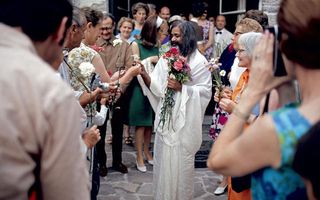
This is what makes Vikram Gandhi’s trickster documentary Kumaré(2011) — for all its considerable problems — one of the more thought-provoking and unexpected takes on the dynamics of modern spirituality I’ve come across in many a moon. I’m happy that the film is now available for digital download after a year or so of touring the festival circuit to rather mixed — and sometimes puzzled — reception.

Saturday, January 19, 2013

metamorphoses

20ORR-articleInline

Poetry has always been the handmaiden of ­mythology, and vice versa. Sometimes poets are in the business of collecting and tweaking existing myths, as with Ovid’s “Metamorphoses” and the Poetic Edda. Other times poetry applies a mythological glamour to stories and characters from history, legend or even other myths (the hero of the “Aeneid” is a minor character from the “Iliad”). Then there are poets who equate the idea of myth with the supposedly irrational essence of poetry itself. Here is Robert Graves in 1948: “No poet can hope to understand the nature of poetry unless he has had a vision of the Naked King crucified to the lopped oak, and watched the dancers, red-eyed from the acrid smoke of the sacrificial fires, . . . with a monotonous chant of ‘Kill! kill! kill!’ and ‘Blood! blood! blood!’ ” Which might sound more like a strip club picnic gone badly awry, but you get the idea.

more from David Orr at the NY Times here.

he became what he despised

Christopher-Hitchens-005

“To be able,” wrote the late Christopher Hitchens, “to bray that ‘as a liberal, I say bomb the shit out of them,’ is to have achieved that eye-catching, versatile marketability that is so beloved of editors and talk-show hosts. As a life-long socialist, I say don’t let’s bomb the shit out of them. See what I mean? It lacks the sex appeal, somehow. Predictable as hell.” That was in 1985. In 2002, he took a different view of the matter. As long as the bombs were hitting the bad guys, then “it’s pretty good because those steel pellets will go straight through somebody and out the other side and through somebody else … They’ll be dead, in other words.” Predictable as hell or not, this transfiguration placed Hitchens (pictured in 1978) in a recognisable category: the left-wing defector with a soft-spot for empire.

more from Richard Seymour at The Guardian here.

The Afghanistan massacre on the roof of the world

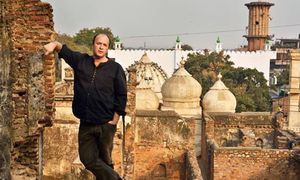
William Dalrymple in The Telegraph:

Afghan_2455618bAt the end of Kim, Kipling has his eponymous hero say, “When everyone is dead, the Great Game is finished. Not before.” In the 1980s, it was the Russians’ withdrawal from their failed occupation of Afghanistan that triggered the beginning of the end of the Soviet Union. Less than 20 years later, in 2001, British and American troops arrived in Afghanistan, where they proceeded to begin losing what was, in Britain’s case, its fourth war in that country. As before, in the end, despite all the billions of dollars handed out, the training of an entire army of Afghan troops and the infinitely superior weaponry of the occupiers, the Afghan resistance succeeded again in first surrounding then propelling the hated Kafirs into a humiliating exit.

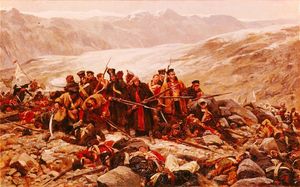
On my extended visits to Afghanistan to research my new book, in 2009 and 2010, I was keen to see as many of the places and landscapes associated with the First Afghan War as was possible. I particularly wanted to retrace the route of the British forces’ retreat of January 1842 and get to Gandamak, the site of the British last stand. The route of the retreat backs on to the mountain range that leads to Tora Bora and the Pakistan border, the Ghilzai heartlands that have always been – along with Quetta – the Taliban’s main recruiting ground. I had been advised not to attempt to visit the area without local protection, so eventually set off in the company of a regional tribal leader who was also a minister in Karzai’s government: a mountain of a man named Anwar Khan Jagdalak, a former village wrestling champion and later captain of the Afghan Olympic wrestling team, who had made his name as a Jamiat-e-Islami Mujahideen commander in the jihad against the Soviets in the 1980s.

More here.

ON KILLING ANIMALS

Gary Francione in The Point:

ScreenHunter_104 Jan. 19 16.31Every year, the Virginia Department of Agriculture and Consumer Services releases data on the number of animals killed at the Commonwealth’s animal shelters, including the facility operated by People for the Ethical Treatment of Animals (PETA), located in Norfolk, Virginia. And every year, peta kills a higher percentage of animals than are killed at most of the “kill” shelters located throughout the country.

The 2011 numbers were certainly disturbing. peta reported that out of the 2,050 animals that it took in (1,214 cats; 778 dogs; 58 “other” companion animals), it killed 1,965 (1,198 cats; 713 dogs; 54 “others”). That’s an overall kill rate of almost 96 percent, with 91 percent for dogs and almost 99 percent for cats. According to the American Society for the Prevention of Cruelty to Animals, the national kill rate at shelters is 60 percent for dogs and 70 percent for cats.

PETA’s kill rate would be high if it were a traditional “kill” shelter. But it promotes itself as an animal rights group; indeed, it claims to be “the largest animal rights organization in the world, with more than 3 million members and supporters” and states that it “has always been known for uncompromising, unwavering views on animal rights.”

How can an animal rights group kill any animals, much less kill more animals than plain-vanilla shelters that have no pretense to being animal rights organizations?

More here.

Steven Pinker: The Real Risk Factors For War

Steven Pinker in Edge.org:

Bk_760_steven_pinkerToday the vast majority of the world's people do not have to worry about dying in war. Since 1945, wars between great powers and developed states have essentially vanished, and since 1991, wars in the rest of the world have become fewer and less deadly.

But how long will this trend last? Many people have assured me that it must be a momentary respite, and that a Big One is just around the corner.

Maybe they're right. The world has plenty of unknown unknowns, and perhaps some unfathomable cataclysm will wallop us out of the blue. But since by definition we have no idea what the unknown unknowns are, we can't constructively worry about them.

What, then, about the known unknowns? Are certain risk factors numbering our days of relative peace? In my view, most people are worrying about the wrong ones, or are worrying about them for the wrong reasons.

Resource shortages. Will nations go to war over the last dollop of oil, water, or strategic minerals? It's unlikely. First, resource shortages are self-limiting: as a resource becomes scarcer and thus more expensive, technologies for finding and extracting it improve, or substitutes are found. Also, wars are rarely fought over scarce physical resources (unless you subscribe to the unfalsifiable theory that allwars, regardless of stated motives, are really about resources: Vietnam was about tungsten; Iraq was about oil, and so on.) Physical resources can be divided or traded, so compromises are always available; not so for psychological motives such as glory, fear, revenge, or ideology.

Climate change. There are many reasons to worry about climate change, but major war is probably not among them. Most studies have failed to find a correlation between environmental degradation and war; environmental crises can cause local skirmishes, but a major war requires a political decision that a war would be advantageous. The 1930s Dust Bowl did not cause an American Civil war; when we did have a Civil War, its causes were very different.

More here.

western

E737b828-610b-11e2-b85b-00144feab49a

American mythology was forged in the early part of the 20th century, in the overlapping years between the final days of the Wild West and the beginnings of Hollywood. Some of the west’s most fabled characters realised that the overlap could be fruitful: the famous lawman and Nietzsche-lookalike Wyatt Earp was a deft handler of his own public relations, while Buffalo Bill’s stage show, which the bison-hunting showman took to London and Paris in the 1880s, was an object lesson in how to dramatise the life of a cowboy, and an inspiration for early film-makers, whose uncomplicated take on subjects such as the Great Train Robbery found mass appeal. It is both a boon and a curse for American civilisation to be the only one mythologised in modern popular culture. In a fledgling nation, this art form immediately resonated with a public anxious to establish an ethical code. The frontier: beautiful metaphor, scary place. America needed its heroes to be better, and badder, than the baddest guys in town. It needed expert gunslingers to persuade people that their future prosperity should not depend on guns. In that respect, the cowboy was a self-destructive hero, which doubly ennobled him.

more from Peter Aspden at the FT here.