
Patrick Jack in Inside Higher Ed:
 Large numbers of biomedical scientists have tried and failed to replicate their own studies, with many not publishing their findings, a survey suggests.
Authors of the study warn that researchers’ failure to approach their own work rigorously creates “major issues in bias” and hampers innovation in science.Their survey, of about 1,600 authors of biomedical science papers, found that 72 percent agreed there was a reproducibility crisis in their field. Participants suggested a variety of factors, but the leading cause that most participants indicated always contributes to irreproducible research was the pressure to publish. The study found that just half (54 percent) of participants had tried to replicate their own work previously. Of those, 43 percent failed. Of those who had tried to replicate one of their own studies, just over a third (36 percent) said they had published the results, according to findings published in PLOS Biology on Nov. 5.
More here.
Enjoying the content on 3QD? Help keep us going by donating now.
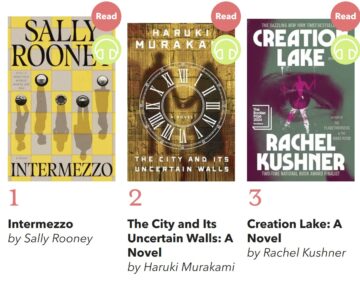 Well, the most obvious answer to this question is Sally Rooney’s latest novel, Intermezzo. Every Rooney book is a major publishing event, and this latest offering—which centres on the fraught relationship between two Irish brothers—has received rave reviews almost across the board. NPR
  Last week, technology giants Google and Amazon both unveiled deals supporting ‘advanced’ nuclear energy, as part of their efforts to become carbon-neutral.
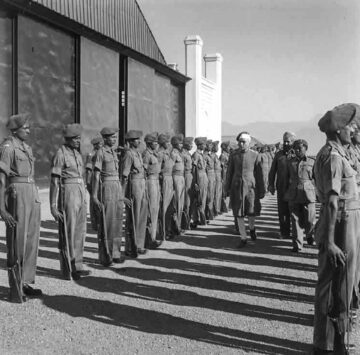 Even as Nehru proclaimed the moral superiority of India for taking a stance against colonialism in all forms, he oversaw India’s colonial occupation of Kashmir. In Kashmir, Nehru said, ‘democracy and morality can wait’.
 I
I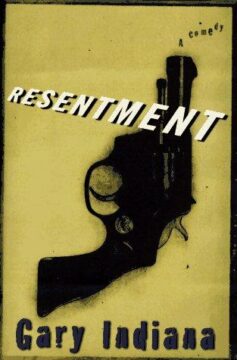 LAST FALL, I was rereading Resentment: A Comedy (1997) on the train on the way to a screening of Sweet Smell of Success (1957), the most perverted Hays Code movie I know, and came upon a passage I knew was coming, where a man is, to put it mildly, fisted to death by the novel’s stuttering psychopath. I began to feel physically ill. I made it through an hour of Sweet Smell before having to head home because I was still feeling ill. Probably it was just something I ate, I told myself, willfully ignoring how deeply the viciousness, the casual cruelty Indiana put on display, had scared me.
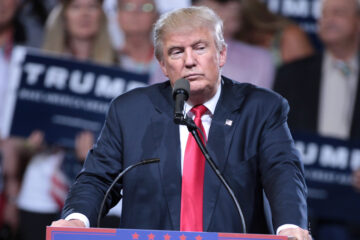 Hadn’t it been dimming for years? Last weekend the Atlantic ran a juicy piece about the chaos and despair inside the Trump campaign. It should have reminded me more than it did at the time of the hundreds of similar articles published during his first term and during the 2024 campaign. He’s really cracking up this time, he’s lashing out at everyone in his orbit, he’s lost the thread. And then his defeat in 2020, his exile and prosecution after January 6, his increasing incoherence and paranoia, flagged even by his former staff. (“Once Top Advisers to Trump, They Now Call Him ‘Liar,’ ‘Fascist,’ and ‘Unfit’” went the title of the Times’s collection of interviews with the likes of John Kelly, James Mattis, and Mike Pence.) The pattern is so clear in retrospect: these cycles of marginalization and humiliation would have defeated anyone else, but Trump—through some combination of unprecedented luck and intuitive political genius—kept reemerging, impossible to count out no matter how outré the misdeed. Yesterday was a triumph greater than 2016. It wasn’t a fluke. Trump is America’s choice.
 Political scientists have thought carefully about the kind of situation we’re in. Back in 2011, Daron Acemoglu and James A. Robinson, who just won the Nobel Prize in Economics, wrote a paper together with Ragnar Torvik titled “
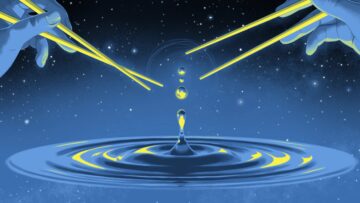 Detecting a graviton — the hypothetical particle thought to carry the force of gravity — is the ultimate physics experiment. Conventional wisdom, however, says it can’t be done. According to one infamous estimate, an Earth-size apparatus orbiting the sun might pick up one graviton every billion years. To snag one in a decade, another
  Back in 2016, the whiff of aberration hung over Trump’s success. His opponents could claim that his victory was some strange historical fluke. They could put it down to foreign interference or to Russian hackers. Political scientists confidently pronounced that he represented the final, Pyrrhic victory of a declining electorate—the last, desperate stand of the old, white man.
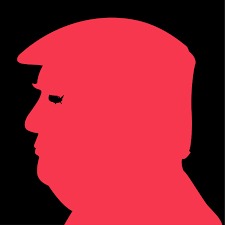 Electing Donald J. Trump once could be dismissed as a fluke, an aberration, a terrible mistake—a consequential one, to be sure, yet still fundamentally an error. But America has now twice elected him as its President. It is a disastrous revelation about what the United States really is, as opposed to the country that so many hoped that it could be. His victory was a worst-case scenario—that a convicted felon, a chronic liar who mismanaged a deadly once-in-a-century pandemic, who tried to overturn the last election and unleashed a violent mob on the nation’s Capitol, who calls America “a garbage can for the world,” and who threatens retribution against his political enemies could win—and yet, in the early morning hours of Wednesday, it happened.
 P
P We’re living at an exceptional moment in history. And this year’s US election is the most consequential I have witnessed since I became aware of American elections in 1980. Reagan’s two victories were critical to reviving American unity of purpose, breathing life into the economy and accelerating the demise of the Soviet Union.
 Adam Przeworski, a political scientist, left his native Poland a few months before the 1968 Prague Spring uprising and found he could not return home. To avoid being arrested as a dissident by the Communist government, he accepted a job abroad at a university in Santiago, Chile — only to watch his adopted country collapse into autocracy a few years later. In 1973, a violent coup installed a military dictatorship, led by Gen. Augusto Pinochet, wiping out Chilean democracy in one brutal stroke. “Nobody expected that it would be as bloody as it was,” Przeworski told me. “Or that it would last for 17 years.”