Saturday Poem

If you want to rule the world
set the poor against the poor
……………… —R. Bob

Libertad! Igualdad! Fraternidad!

You sullen pig of a man
you force me into the mud
with your stinking ash-cart!

Brother!
–if we were rich
we'd stick our chests out
and hold our heads high!

It is dreams that have destroyed us.

There is no more pride
in horses or in rein holding.
We sit hunched together brooding
our fate.

Well–
all things turn bitter in the end
whether you choose the right or
the left way
and–
dreams are not a bad thing.
.

by William Carlos Williams

Friday, February 15, 2013

Genetic system performs logic operations and stores data in DNA

Roland Pease in Nature:

ScreenHunter_106 Feb. 15 17.10Synthetic biologists have developed DNA modules that perform logic operations in living cells. These ‘genetic circuits’ could be used to track key moments in a cell’s life or, at the flick of a chemical switch, change a cell’s fate, the researchers say. Their results are described this week in Nature Biotechnology1.

Synthetic biology seeks to bring concepts from electronic engineering to cell biology, treating gene functions as components in a circuit. To that end, researchers at the Massachusetts Institute of Technology (MIT) in Cambridge have devised a set of simple genetic modules that respond to inputs much like the Boolean logic gates used in computers.

“These developments will more readily enable one to create programmable cells with decision-making capabilities for a variety of applications,” says James Collins, a synthetic biologist at Boston University in Massachusetts who was not involved in the study.

Collins developed the genetic ‘toggle switch’ that helped to kick-start the field of synthetic biology more than a decade ago2. A wide range of computational circuits for cells have been developed since…

More here.

Gollum’s Mother

1360736613

IT’S DIFFICULT, even a century after her literary career began its decline, to talk about Marie Corelli without succumbing to a battery of adjectives. Often condemned as a hack and praised as a saint, Corelli was something altogether more interesting, a sort of Oscar Wilde in reverse. If Wilde’s lampoons show a certain tenderness toward human hypocrisy, the joke being that most everyone is terrible, Corelli’s satire, while no less affectionate, sides always with the angels. Hers is a sincere sarcasm. She was a flamboyant puritan, an antisuffragist cryptofeminist, and a defender of traditional morals who lived all her life with another woman. On a wall above the mantel in one of the main halls of Mason Croft, the house she shared with her lifelong companion Bertha Vyver, both women’s initials appear encircled by a wreath. The caption underneath reads “Amor Vincit.” (All-conquering love notwithstanding, it’s likely that Corelli’s relationship with Vyver remained platonic.)

more from Lili Loofbourow at the LA Review of Books here.

sacks on drugs

Oliver-Sacks

In the 1960s, Sacks extended his neurophenomenological explorations by taking a variety of recreational drugs; not only amphetamines but also pot and, of course, LSD. The results were occasionally ecstatic, sometimes merely strange and often terrifying. Conversations with a friendly spider – with whom, after an opening exchange of pleasantries, he discussed whether Bertrand Russell had irreversibly damaged Frege’s system of thought with his famous paradox – and studying key moments from the battle of Agincourt enacted on his dressing gown sleeve, were not atypical episodes in the pharmacological dramas unfolding in his head. He fought off panic by carefully transcribing the “craziness” inside himself, writing “for dear life” as “wave after wave of hallucination” rolled over him. These were not quite as crazy as the experience of the student Daniel Breslaw, a subject in a formal study of LSD, who, entering an elevator, passed “a floor every hundred years” and, when back in his room, swam “through the remaining centuries of the day. Every five eons or so a nurse arrives (in the aspect of a cougar, a differential equation, or a clock radio) and takes my blood pressure”. As if this were not enough, Breslaw experienced synaesthesia, or a fusion between the senses, reporting such gems as “the smell of a low B flat, the sound of green”.

more from Raymond Tallis at the TLS here.

Because we are Syrians

130312_mainimg

We in the Middle East have always had a strong appetite for factionalism. Some attribute it to individualism, others blame the nature of our political development or our tribalism. Some even blame the weather. We call it tasharthum and we loathe it: we hold it as the main reason for all our losses and defeats, from al-Andalus to Palestine. Yet we love it and bask in it and excel at it, and if there is one thing we appreciate it is a faction that splinters into smaller factions. Yet even by the measure of previous civil wars in the Middle East, the Syrians seem to have reached new heights. After all, the Palestinians in their heyday had only a dozen or so factions, and the Lebanese, God bless them, pretending it was ideology that divided them, never exceeded thirty different factions. In Istanbul I asked a Syrian journalist and activist why there were so many battalions. He laughed and said, ‘Because we are Syrians,’ and went on to tell me a story I have heard many times before.

more from Ghaith Abdul-Ahad at the LRB here.

the real west bank

Wnv-Hebron_1-2

As we made our way among the winding, shoddy roads that Palestinians are allowed to drive on, the settlements were everywhere—on hilltops, around every turn, connected by their own sumptuous superhighways. I convened a contest among the other riders on our Freedom Bus about what science fiction terminology best described the settlements we kept seeing. “Death Star” or “Coruscant” from Star Wars seemed appropriate to their looming effect, but not their actual appearance. So I settled on, simply, “moon base.” A moon base is, essentially, the perfect suburb. In contrast to its hostile surroundings, it is supposed to be clean, orderly, functional, and white. Every inch is planned. Its inhabitants work together for a higher purpose. I imagine that life in the matching apartment buildings and townhouses and houses of the settlements is like that too. I imagine that there are a lot of recycling bins. Space eventually leads one to time. They are closer than we think, and one doesn’t make sense without the other; light-years measure distance, and timezones dictate the hour. On the map of the West Bank, too, I began noticing traces of my own country’s history.

more from Nathan Schneider at Killing the Buddha here.

Fairies Forever!

LittleRedRidingHood1927-205x300

“Once upon a time there was . . .”: The very opening formula of fairy tales suggests quaintness, the patina of the long-ago, the flavor of the outmoded. If fairy tales, as a genre, are the opposite of modernity, why is it, then, that they have survived thousands of years? One answer is that they deal with things that are timeless and universal, basic aspects of the human condition – offering the reader, in Tolkien’s words, consolation, the recovery of a clear view, and the chance to escape the bleakness of the quotidian. Another is that, being originally transmitted orally, they have no definite shape and are thus infinitely adaptable to the needs and interests of their specific audiences. We tend to forget this, since the most successful recorders of fairy tales, men like Charles Perrault, Antoine Galland, Jacob and Wilhelm Grimm, Hans Christian Andersen or Joseph Jacobs, have given their tales permanent shapes, turning what once were protean entities into classical texts with a canonical status. Nevertheless, fairy tales have of course continued to be re-told, adapted, transformed, modernized. Seen from this angle, there is little unusual about the collection of modernized fairy tales to be reviewed here. What makes it particularly interesting is the fact that The Fairies Return Or, New Tales for Old, which was recently published with an introductory essay by the renowned folklorist Maria Tatar, is really a reprint of a collection that first appeared in 1934.

more from Dieter Petzold at The Berlin Review of Books here.

romanticism, the video game

Shadow-header

In Romanticism, Romantic Irony is paradoxically counterbalanced by an opposite tendency, which Larmore calls ‘Authenticity’, “a very different and essentially non-reflective way of being an individual, unabsorbed by a sense of belonging” (83). The habit of brooding, the sullen, introspective sensibility of some Romantic thinkers, was answered with a fiery impulsiveness in others, a rejection of the rational and structured self-possession of the Age of Reason. When the Romantics weren’t cloudy, they were stormy, acting out their passions, asserting their individuality, defending their homelands, and taking up the standards of their ideals, no matter the cost. This alternate mode of Romantic behavior is reflected in Shadow of the Colossus‘s other mode of gameplay, which I call the encounter. This is the combat, a ritual slaying of each Colossus in turn, which Wander undertakes to appease the demigod Dormin. In these battles, Wander isn’t just being practical, acting in patient pursuit of his calculated agenda. As the player gets lost in the excitement of the battle and each successive rush of triumph, so Wander loses himself in the emotional rush of catharsis. He releases himself to his passions, acting out his love for Mono and his resentment at her death.

more from Jesse Miksic at Berfrois here.

Margaret Garner Incident (1856)

From BlackPast:

Garner_Margaret_Best known as the inspiration for Toni Morrison’s award winning novel, Beloved, The Margaret Garner Incident of 1856 contains one of the most ground breaking fugitive slave trials of the pre-Civil War era. Margaret Garner was born into slavery on June 4, 1834 on Maplewood plantation in Boone County, Kentucky. Working as a house slave for much of her life, Garner often traveled with her masters and even accompanied them on shopping trips to free territories in Cincinnati.

After marrying Robert Garner in 1849, Margaret bore four children by 1856. The 1850s were also a period in which the Underground Railroad was at its height in and around Cincinnati, transporting numerous slaves to freedom in Canada. The Garners decided to take advantage of such an opportunity to escape enslavement. On Sunday January 27, 1856, they set out for their first stop on their route to freedom, Joseph Kite’s house in Cincinnati. The Garners made it safely to Kite’s home on Monday morning, where they awaited their next guide. Within hours, the Garners master, A.K. Gaines, and federal marshals stormed Kite’s home with warrants for the Garners. Determined not to return to slavery, Margaret decided to take the lives of herself and her children. When the marshals found Margaret in a back room, she had slit her two year old daughter’s throat with a butcher knife, killing her. The other children lay on the floor wounded but still alive.

More here. (Note: At leas t one daily post throughout February will be devoted to African American History Month)

Anti-anxiety drug found in rivers makes fish more aggressive

From Nature:

FishTiny amounts of a common anti-anxiety medication — which ends up in wastewater after patients pass it into their urine — significantly alters fish behaviour, according to a new study. The drug makes timid fish bold, antisocial and voracious, researchers have found. Oxazepam belongs to the class of drugs called benzodiazepines, the most widely prescribed anxiety drugs, and is thought to be highly stable in aquatic environments. It acts by enhancing neuron signals that damp down the brain's activity, helping patients to relax.

An article in Science this week now places the drug on a growing list of pharmaceutical products that escape wastewater treatment unscathed and may be affecting freshwater communities1. A chemical found in contraceptive pills, known as 17-β-estradiol, and the antidepressant drug fluoxetine (Prozac) have been shown to alter behaviour in the fathead minnow (Pimephales promelas), and the popular anti-inflammatory drug ibuprofen reduces courtship behaviour in male zebrafish (Danio rerio). Taken together, the evidence suggests that tests of possible pollutants must go beyond merely cataloguing fatal or highly toxic doses, says Todd Royer, an ecologist at Indiana University in Bloomington. “This study really highlights the importance of non-lethal effects,” he says. Even if a drug doesn't kill or cause acute toxicity, it could be altering “community structure and other ecosystem processes”, he explains.

More here.

Commenting problems at 3 Quarks Daily

Hello,

ScreenHunter_105 Feb. 15 11.49For the last few days, many legitimate comments are being mistakenly caught as spam by Typepad's automated filter and being quarantined in a spam folder. I have written to Typepad about this and they have replied saying:

We're moving to a new anti-spam service and in the process, you may see some issues with the current anti-spam features. We're aware of those issues and we're working as quickly as possible to get everything running smoothly. We apologize for any inconvenience in the meantime.

In the meantime, I will be checking the spam folder as often as I can and publishing any legitimate comments I find there. So, if you leave a comment and don't see it appear immediately, please be patient. I will get to it eventually.

Sorry about this and thanks for your patience.

Yours,

Abbas

Thursday, February 14, 2013

The Restoration Of Faith: Striving for a Broader Understanding of Retribution

Pic4_0001

Amitava Kumar in Caravan:

ON A RECENT WEEKEND I picked up the New York Times that is delivered in a blue polythene bag outside my door each morning, and read a story about a young man who had fatally shot his girlfriend during a fight. The young man’s name was Conor McBride and the victim’s name was Ann Margaret Grosmaire. Both were 19 when this happened, in March 2010, in Tallahassee, Florida.

The reporter, Paul Tullis, introduced an early note about what made the story unusual. Ann’s father, Andy Grosmaire, standing next to his “intubated and unconscious” daughter in hospital, heard her say before her death, “Forgive him.” Conor, when he was booked, was asked to provide the names of five people who could visit him in jail. He included the name of Ann’s mother, Kate Grosmaire. Talking to the reporter who had written the story, Kate explained her desire to go and see Conor in prison, “Before this happened, I loved Conor. I knew that if I defined Conor by that one moment—as a murderer—I was defining my daughter as a murder victim. And I could not allow that to happen.”

The state attorney’s office had charged Conor McBride with first-degree murder; this meant that he was likely to spend the rest of his life in prison. (As the case didn’t have any aggravating circumstances, like prior convictions or the victim being a child, the prosecutors were probably not likely to seek the death penalty.) But Ann’s parents told the assistant state attorney that they didn’t want Conor to spend the rest of his life in prison. The concept that the Grosmaires had embraced, together with Conor’s parents, Julie and Michael McBride, was that of “restorative justice”, a not very widely known practice based on the idea of victim–offender dialogue.

Ronald Dworkin, 1931-2013

Ronald-Dworkin-008

Godfrey Hodgson in The Guardian:

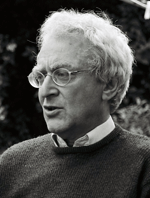
Ronald Dworkin, who has died aged 81, was widely respected as the most original and powerful philosopher of law in the English-speaking world. In his books, his articles (especially for the New York Review of Books) and in his teaching, in London and New York, he developed a powerful, scholarly exegesis of the law, and expounded issues of burning topicality and public concern – including how the law should deal with race, abortion, euthanasia and equality – in ways that were accessible to lay readers. His legal arguments were subtly presented applications to specific problems of a classic liberal philosophy which, in turn, was grounded in his belief that law must take its authority from what ordinary people would recognise as moral virtue.

Dworkin studied philosophy (under Willard Van Orman Quine at Harvard University and, informally, with JL Austin at Oxford University) and law at both Oxford and the Harvard Law School. He worked as clerk to the great US judge and legal scholar Billings Learned Hand and as a practising associate in the great Wall Street law firm Sullivan & Cromwell, before teaching law at the Yale and later the New York University law schools, as well as at Oxford and later University College London.

This broad education and training, sharpening the analytical skills of a quite exceptionally powerful intellect, enabled him, even as a precocious young man, to challenge the most eminent figures in the world of law and jurisprudence, including Hand and HLA Hart, the great exponent of legal positivism at Oxford. Perhaps Dworkin's greatest achievement was his insistence on a rights-based theory of law, expounded in his first and most influential book, Taking Rights Seriously (1977), in which he proposed an alternative both to Hart's legal positivism and to the newly minted theories of the Harvard philosopher of law John Rawls.

Dworkin spent much of his life in legal and philosophical controversy, in which he proved himself a capable and sometimes acerbic champion, defending his ideas with a sharpness that could surprise those who knew him personally as a gentle and affectionate husband, father and friend.

He remained an unapologetic, indeed proud, liberal Democrat, unshaken in his loyalty to the New Deal tradition set by his hero Franklin D Roosevelt, even as such ideas became less and less widely held. It is possible that this shifting of the political centre of gravity under him deprived him of a more prominent career as a public intellectual. Within his own field, where law and philosophy meet, his reputation was unsurpassed, and almost unrivalled.

container urbanism

Schwarzer-container-5_525

Here I would like to contrast two moments of container urbanism. The first arose within late modernism, from around 1960 to the early 1970s, when a nascent container urbanism movement, epitomized by the Japanese Metabolists and the British group Archigram, sought to break up the mass and method of those vast and monotonous building ensembles which were then reengineering urban existence. Proliferating technological systems — from elevators to electric wiring — were amalgamated into gigantic fixed infrastructures that supported individual (and presumably mobile) containerized units. Then, around the new millennium, a second phase of container urbanism, including the DIY phenomenon, veered to a design stance more in tune with our age of citizen participation, global commerce and miniaturized technology. Instead of attempting to construct an ideal and self-contained urban ensemble , container urbanisms are learning to make use of existing infrastructure and disused industrial artifacts, like the shipping box — fostering a vision of the city as fresh as the latest tweet and as august as a caravan marketplace.

more from Mitchell Schwarzer at Design Observer here.

assholes we have known

Images

Perhaps controversially, James also questions the belief that assholes are always men. Received opinion has it that a female who betrays asshole qualities is, by simple linguistic convention, referred to as a ‘bitch’. Not so – he cites as an example the rabid right-wing ‘commentator’, the spittle-flecked horror Ann Coulter. The difference? ‘The bitch betrays you behind your back. The asshole fails to recognize [your justifiable complaints] to your face.’ The thrust of James’s thesis is timely. We live under what he terms asshole capitalism: a proposition with which few would argue. The entitlement, the deafness, the ruinous depradations of the group we refer to, in shorthand, as ‘the bankers’ are all too visible; the annulment of Fred Goodwin’s knighthood is only one tiny cough of disapproval, and I bet Goodwin, in his inner asshole, feels affronted and hard done by. It’s not new, and it’s not confined to the powerful. James was moved to draw up his theory by the sight of asshole surfers who screw things up for everyone else because they feel entitled to. And the Romans had no shortage of assholes, as anyone who has read Juvenal, Martial, Petronius or Horace will know.

more from Michael Bywater at Literary Review here.

the failed evangelizer

Lede_art_pope

Ratzinger has long spoken in stark terms about the dire implications of Europe’s shrinking faith. In a much-quoted interview in 2001—when he already wielded enormous influence within the Vatican of John Paul II—Ratzinger posed radical questions about the sustainability of Europe’s Christian identity, citing the German city of Magdeburg, where only 8 percent of the population claimed affiliation to any Christian denomination whatsoever. Beyond force of habit, he asked, what sense did it make to continue claiming that Europe, was still a Christian society? And what implications did that weakening have for the Church as a whole? But he did not advocate despair. Yes, he said, “the mass Church may be something lovely, but it is not necessarily the Church’s only way of being.” Europe’s future church “will be reduced in its dimensions,” he admitted—but the rise of humanism, relativism, and atheism, he added, ought to be seen as a reason for Christianity on the continent “to start again.” It was imperative that Christianity not be abandoned, though it did need to be re-booted.

more from Philip Jenkins at TNR here.

W.E.B. DuBois and the Making of the Encyclopedia Africana, 1909-1963

Kwame Anthony Appiah in Blackpast:

Dubois_web_0Between 1909 and his death in 1963, W E. B. Du Bois, the Harvard trained historian, sociologist, journalist, and political activist, dreamed of editing an “Encyclopaedia Africana.” He envisioned a comprehensive compendium of “scientific” knowledge about the history, cultures, and social institutions of people of African descent: of Africans in the Old World, African Americans in the New World, and persons of African descent who had risen to prominence in Europe, the Middle East, and Asia. Du Bois sought to publish nothing less than the equivalent of a black Encyclopaedia Britannica, believing that such a broad assemblage of biography, interpretive essays, facts, and figures would do for the much denigrated black world of the twentieth century what Britannica and Denis Diderot's Encyclopedie had done for the European world of the eighteenth century. These publications, which consolidated the scholarly knowledge accumulated by academics and intellectuals in the Age of Reason, served both as a tangible sign of the enlightened skepticism that characterized that era of scholarship, and as a basis upon which further scholarship could be constructed. These encyclopedias became monuments to “scientific” inquiry, bulwarks against superstition, myth, and what their authors viewed as the false solace of religious faith. An encyclopedia of the African diaspora in Du Bois's view would achieve these things for persons of African descent.

But a black encyclopedia would have an additional function. Its publication would, at least symbolically, unite the fragmented world of the African diaspora, a diaspora created by the European slave trade and the turn of the century “scramble for Africa.” Moreover, for Du Bois, marshalling the tools of “scientific knowledge,” as he would put it in his landmark essay, “The Need for an Encyclopedia of the Negro” (1945), could also serve as a weapon in the war against racism: “There is need for young pupils and for mature students of a statement of the present condition of our knowledge concerning the darker races and especially concerning Negroes, which would make available our present scientific knowledge and set aside the vast accumulation of tradition and prejudice which makes such knowledge difficult now for the layman to obtain: A Vade mecum for American schools, editors, libraries, for Europeans inquiring into the race status here, for South Americans, and Africans.”

More here. (Note: At least one daily post throughout February will be devoted to African American History Month)

Rough Draft Valentines

Kelly Stout in The New Yorker:

Valentines-day-shoutsSome drafts of Valentine’s Day cards that perhaps I shouldn’t be sending in the first place:

To the man my roommate is dating:

Love lifts us up where we belong! For you, that’s in your own apartment at least a couple of nights a week.

To the receptionist at my gym:

You and the whole team at BodyBlast Fourteenth Street make me feel like my heart is about to explode. Hope to see more of you this winter than last! XOXO

To my landlord:

Roses are red, violets are blue, I’ve had a cat for three months, and his bowl is in plain view. Pursuant to the New York State Tenants’ Rights Guide, you can’t evict me.

To the cute undergraduate who sold me a used bike on Craigslist:

Although we only met briefly, I loved hearing about how you make your own kombucha, and how you had to get back to the short film you’re working on for your senior thesis. I’m not so much older than you that I couldn’t feel the spark. Besides, isn’t love supposed to be uncomfortable? P.S. Loving the bike.

More here.

Bill Gates’s 2013 Annual Letter

Bill Gates at the website of the Bill and Melinda Gates Foundation:

ScreenHunter_104 Feb. 14 11.57Over the holidays I read The Most Powerful Idea in the World, a brilliant chronicle by William Rosen of the many innovations it took to harness steam power. Among the most important were a new way to measure the energy output of engines and a micrometer dubbed the “Lord Chancellor,” able to gauge tiny distances.

Such measuring tools, Rosen writes, allowed inventors to see if their incremental design changes led to the improvements-higher-quality parts, better performance, and less coal consumption-needed to build better engines. Innovations in steam power demonstrate a larger lesson: Without feedback from precise measurement, Rosen writes, invention is “doomed to be rare and erratic.” With it, invention becomes “commonplace.”

Of course, the work of our foundation is a world away from the making of steam engines. But in the past year I have been struck again and again by how important measurement is to improving the human condition. You can achieve amazing progress if you set a clear goal and find a measure that will drive progress toward that goal-in a feedback loop similar to the one Rosen describes. This may seem pretty basic, but it is amazing to me how often it is not done and how hard it is to get right.

More here.