How Nature Resets Our Minds and Bodies

From The Atlantic:

Nature%20tree%20mainJust before the dawn of the twentieth century, William James, one of the early giants of modern psychology, explained that human attention comes in two different forms. The first is directed attention, which enables us to focus on demanding tasks like driving and writing. Reading a book also requires directed attention, and you'll notice that you start to zone out when you're tired, or when you've been reading for hours at a time. The second form is involuntary attention, which comes easily and doesn't require any mental effort at all. As James explained, “Strange things, moving things, wild animals, bright things, pretty things, words, blows, blood, etc., etc., etc.” all attract our attention involuntarily.

Nature restores mental functioning in the same way that food and water restore bodies. The business of everyday life — dodging traffic, making decisions and judgment calls, interacting with strangers — is depleting, and what man-made environments take away from us, nature gives back. There's something mystical and, you might say, unscientific about this claim, but its heart actually rests in what psychologists call attention restoration theory, or ART. According to ART, urban environments are draining because they force us to direct our attention to specific tasks (e.g., avoiding the onslaught of traffic) and grab our attention dynamically, compelling us to “look here!” before telling us to instead “look over there!” These demands are draining — and they're also absent in natural environments. Forests, streams, rivers, lakes, and oceans demand very little from us, though they're still engaging, ever changing, and attention-grabbing. The difference between natural and urban landscapes is how they command our attention. While man-made landscapes bombard us with stimulation, their natural counterparts give us the chance to think as much or as little as we'd like, and the opportunity to replenish exhausted mental resources.

More here.
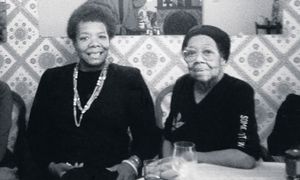
Maya Angelou: my terrible, wonderful mother

From The Guardian:

The first decade of the 20th century was not a great time to be born black and poor and female in St Louis, Missouri, but Vivian Baxter was born black and poor, to black and poor parents. Later she would grow up and be called beautiful. As a grown woman she would be known as the butter-coloured lady with the blowback hair.

Maya-Angelou-with-her-mot-006My mother, who was to remain a startling beauty, met my father, a handsome soldier, in 1924. Bailey Johnson had returned from the first world war with officer's honours and a fake French accent. They were unable to restrain themselves. They fell in love while Vivian's brothers walked around him threateningly. He had been to war, and he was from the south, where a black man learned early that he had to stand up to threats, or else he wasn't a man. The Baxter boys could not intimidate Bailey Johnson, especially after Vivian told them to lay off. Vivian's parents were not happy that she was marrying a man from the south who was neither a doctor nor lawyer. He said he was a dietician. The Baxters said that meant he was just a negro cook. Vivian and Bailey left the contentious Baxter atmosphere and moved to California, where little Bailey was born. I came along two years later. My parents soon proved to each other that they couldn't stay together. They were matches and gasoline. They even argued about how they were to break up. Neither wanted the responsibility of taking care of two toddlers. They separated and sent me and Bailey to my father's mother in Arkansas. I was three and Bailey was five when we arrived in Stamps, Arkansas. We had identification tags on our arms and no adult supervision. I learned later that Pullman car porters and dining car waiters were known to take children off trains in the north and put them on other trains heading south.

Save for one horrific visit to St Louis, we lived with my father's mother, Grandmother Annie Henderson, and her other son, Uncle Willie, in Stamps until I was 13. The visit to St Louis lasted only a short time but I was raped there and the rapist was killed. I thought I had caused his death because I told his name to the family. Out of guilt, I stopped talking to everyone except Bailey. I decided that my voice was so powerful that it could kill people, but it could not harm my brother because we loved each other so much. My mother and her family tried to woo me away from mutism, but they didn't know what I knew: that my voice was a killing machine. They soon wearied of the sullen, silent child and sent us back to Grandmother Henderson in Arkansas, where we lived quietly and smoothly within my grandmother's care and under my uncle's watchful eye.

More here.

Saturday, March 30, 2013

THE FACTS, THE MYTHS AND THE FRAMING OF IMMIGRATION

Kenan Malik in Pandaemonium:

ScreenHunter_161 Mar. 30 21.25At the heart of the current debate about immigration are two issues: the first is about the facts of immigration, the second about public perception of immigration.

The facts are relatively straightforward. Immigration is a good and the idea that immigrants come to Britain to live off benefits laughable. Immigrants put more money into the economy than they take out and have negligible impact on jobs or wages. An independent report on the impact of immigrationcommissioned by the Home Office in 2003, looked at numerous international surveys and conducted its own study in Britain. ‘The perception that immigrants take away jobs from the existing population, or that immigrants depress the wages of existing workers’, it concluded, ‘do not find confirmation in the analysis of the data laid out in this report.’ More recently studies have suggested that immigration helps raise wages except at the bottom of the jobs ladder where it has a slightnegative impact. That impact on low paid workers matters hugely, of course, but is arguably more an issue of labour organization than of immigration.

Immigrants are less likely to claim benefits than British citizens. According to the Department for Work and Pensions, of the roughly 1.8 million non-British EU citizens of working age in this country, about 90,000, or around 5%, claim an ‘out of work benefit’, compared with around 13% of Britons. Migrants from outside the EU are also much less likely to claim benefits.

More here.

It’s a part of my paleo fantasy, it’s a part of my paleo dream

David Gorski in Science-Based Medicine:

9324290-natural-medicineThere are many fallacies that undergird alternative medicine, which evolved into “complementary and alternative medicine” (CAM), and for which the preferred term among its advocates is now “integrative medicine,” meant to imply the “best of both worlds.” If I had to pick one fallacy that rules above all among proponents of CAM/IM, it would have to be either the naturalistic fallacy (i.e., that if it’s natural—whatever that means—it must be better) or the fallacy of antiquity (i.e., that if it’s really old, it must be better). Of course, the two fallacies are not unrelated. In the minds of CAM proponents, old is more likely to have been based on nature, and the naturalistic fallacy often correlates with the fallacy of antiquity. Basically, it’s a rejection of modernity, and from it flow the interest in herbalism, various religious practices rebranded as treatments (thousands of years ago, medicine was religion and religion was medicine—the two were more or less one and physicians were often priests as well), and the all-consuming fear of “toxins,” in which it is thought that the products of modernity are poisoning us.

Yes, there is a definite belief underlying much of CAM that technology and pharmaceuticals are automatically bad and that “natural” must be better. Flowing from that belief is the belief that people were happier and much healthier in the preindustrial, preagricultural past, that cardiovascular disease was rare or nonexistent, and that cancer was seldom heard of. Of course, it’s hard not to note that cancer and heart disease are primarily diseases of aging, and life expectancy was so much lower back in the day that a much smaller percentage of the population lived to advanced ages than is the case today. Even so, an implicit assumption among many CAM advocates is that cardiovascular disease is largely a disease of modern lifestyle and diet and that, if modern humans could somehow mimic preindustrial or, according to some, even preagricultural, lifestyles, that cardiovascular disease could be avoided.

More here.

Bitcoin May Be the Global Economy’s Last Safe Haven

Paul Ford in Bloomberg Businessweek:

Or1413__01__630x420One of the oddest bits of news to emerge from the economic collapse of Cyprus is a corresponding rise in the value of Bitcoin, the Internet’s favorite, media-friendly, anarchist crypto-currency. In Spain, Google (GOOG) searches for “Bitcoin” and downloads of Bitcoin apps soared. The value of a Bitcoin went up to $78. Someone put out a press release promising a Bitcoin ATM in Cyprus. Far away, in Canada, a man said he’d sell his house for BTC5,362.

Bitcoin was created in 2009 by a pseudonymous hacker who calls him or herself Satoshi Nakamoto (and who might be several people). It’s a form of virtual cash used to buy goods and services online. Even by Web standards, it’s a strange and supergeeky phenomenon. This is what happens when software and networks meet the concept of currency, when you take peer-to-peer networks and advanced cryptography and ask, “How can I make a new economy?”

There are 10,952,975 Bitcoins in circulation. (With a digital currency you can be specific.) Bitcoin isn’t about to replace hard currency—with a market cap of $864 million, all of it is worth less than what Facebook (FB) paid for Instagram—but it’s bigger than anyone expected. And many people will tell you that the emergence of a virtual global money supply beyond the reach and control of any government is very real and that it’s time we take it seriously. As long as the Internet remains turned on, Bitcoin will be there—to its adherents, it’s the Platonic currency.

More here.

Can Honeybees Lead To A Better Treatment For Myelodysplastic Syndromes?

Azra Raza in The MDS Beacon:

ScreenHunter_158 Mar. 30 20.59Honeybees have a fantastic story, one that may provide insight into myelodysplastic syndromes, aging, and a number of other conditions.

The drones and worker bees exist to work. Their various jobs include nursing the ever-hatching brood, visiting flowers to bring back nectar, constructing wax combs, serving as cleaners and guards for the hive, and literally living to serve the queen.

The queen bee, on the other hand, looks different and is larger than the other bees. She is fed and groomed by a hoard of attendants, does not work a day in her life, and her only job is to lay eggs that can amount to as many as 2,000 on a good summer day. She produces a pheromone called “queen substance” that informs the colony that a viable queen is present.

The greatest difference between the queen and her subjects, however, is that the workers have a life span of two to four weeks while the queen can live up to eight years.

The real kicker is that drones and the queen bee share the exact same set of genes. What accounts for the dramatic physical differ­ences is therefore not the genes but their relative expression (i.e., how much of each gene’s corresponding protein the body makes).

In the case of bees, it seems that the diet they are fed as larvae and beyond controls which genes are turned on to be translated into protein. Bees’ rich and nutritious diet, called royal jelly, is produced in the mouth glands of nursing bees and fed to all hatching larvae; however, the workers are soon weaned off the royal jelly and given nectar and pollen, while the queen bee is bathed in the royal jelly into adulthood.

What is the magic substance in royal jelly?

More here.

The Immortal Life of Henrietta Lacks, the Sequel

Rebecca Skloot in the New York Times:

24GENOME-articleInlineLast week, scientists sequenced the genome of cells taken without consent from a woman named Henrietta Lacks. She was a black tobacco farmer and mother of five, and though she died in 1951, her cells, code-named HeLa, live on. They were used to help develop our most important vaccines and cancer medications, in vitro fertilization, gene mapping, cloning. Now they may finally help create laws to protect her family’s privacy — and yours.

The family has been through a lot with HeLa: they didn’t learn of the cells until 20 years after Lacks’s death, when scientists began using her children in research without their knowledge. Later their medical records were released to the press and published without consent. Because I wrote a book about Henrietta Lacks and her family, my in-box exploded when news of the genome broke. People wanted to know: did scientists get the family’s permission to publish her genetic information? The answer is no.

Imagine if someone secretly sent samples of your DNA to one of many companies that promise to tell you what your genes say about you. That report would list the good news (you’ll probably live to be 100) and the not-so-good news (you’ll most likely develop Alzheimer’s, bipolar disorder and maybe alcoholism). Now imagine they posted your genetic information online, with your name on it. Some people may not mind. But I assure you, many do: genetic information can be stigmatizing, and while it’s illegal for employers or health insurance providers to discriminate based on that information, this is not true for life insurance, disability coverage or long-term care.

More here.

An Interactive Scale of Everything in the Universe

From Scientific American:

The-scale-of-the-universe_502914ce8338dThis infographic may look modest, but it is nothing short of exceptional. A few days ago, I posted it to Twitter and it seems at least the Twittersphere agrees. Now the graphic is up on Visual.ly with an embed button, so of course I had to pass it along! Truly an awesome graphic in scope and execution. Go directly to the full interactive version and sail from the boundaries of the universe to stars, planets, people, ants, atoms, quarks and beyond. There’s a slightly more colorful version as well, but I miss the icons on the slider that provide a road map for where you’re going vs. where you’ve been.

More here. (Note: Do try the interactive version…fascinating!)

Saturday Poem

Kyrie

At times my life suddenly opens its eyes in the dark.
A feeling of masses of people pushing blindly
through the streets, excitedly, toward some miracle,
while I remain here and no one sees me.

It is like the child who falls asleep in terror
listening to the heavy thumps of his heart.
For a long, long time till morning puts his light in the locks
and the doors of darkness open.

by Tomas Tranströmer.
from The Half-Finished Heaven
Swedish translation by Robert Bly, 2001

Graywolf Press, St. Paul, Minnesota

Vow: A Memoir of Marriage (And Other Affairs)

From The Telegraph:

Wilson_f_main_2516111bWendy Plump had been married for 18 years when she found out about the Other Woman. Susan lived, apparently, a mile down the road in a house that Plump’s husband, Bill, had bought for her; and living there also was their eight-month-old baby boy. “The news fell into place,” Plump writes, “with an almost audible click. Like a bullet revolving in its cylinder and lining up with the chamber.” Plump uses this image because it describes the “kind of violence that I lived with later on”, but the marriage between Wendy and Bill had been a crime scene from the start. Vow is not the kind of memoir usually written by a bruised wife bent on revenge, but then Plump was not the usual kind of wife, and it is not revenge that she is after. For a start, she had affairs of her own (three in all: honesty is what Plump does best), all of them in the early years. By the time Bill met Susan, the Plumps had a “360-degree view of infidelity. We knew it from every angle.” Wendy was unfaithful because she was young and excited and wanted something inexpressible. She just wanted, and wanting, she says, puts a terrible strain on marriage vows. What Plump didn’t want was for her marriage to end; she loved her husband and she liked their life. But she was hungry, and as W H Auden reminds us in the epigraph to the book, “Hunger allows no choice”.

…Like all books which take an aim at the truth, Vow may change the way you see yourself; it will at least change your marriage. This is not because it is a morality tale or an account of infidelity that will scare you enough not to give it a go. It would be easy to produce this kind of book, and Plump doesn’t take the easy way through anything. What makes Vow so powerful is that she dissects not only the carcass of her own marriage, but the drive that propels so many otherwise sane people to destroy, for the sake of a moment of wanting, the bullet-proof world they have tried to create. Plump, who is now as wise as a serpent and as harmless as a dove, suggests that monogamous couples – at whom she gawps as though they were animals in a zoo – are committed less to their spouses than they are to themselves. Fidelity “has to do with their own honour”.

More here.

Friday, March 29, 2013

Goodfriday, 1613. Riding Westward

Starza_Smith_333972h

As in so much of Donne’s devotional verse, “Goodfriday” is structured around a “collision of the liturgy with the ego”, as Kirsten Stirling has put it. The speaker expresses guilt about travelling west on the day commemorating Christ’s crucifixion in the east, fulfilling personal obligations when he ought to be performing religious duties. However, awed by his contemplation of the crucifixion he reasons that he is facing the right way, and the direction of travel therefore directly enables the poem’s devotional climax. First, the poem explores the overwhelming nature of the crucifixion vision itself. To witness God’s death on earth would lead to a kind of paradoxical death difficult even to imagine (and Donne rhymes “dye” with “dye” at this point to powerful effect). How could a human being behold hands which could encompass infinity, or comprehend the “endlesse height” of heaven “Humbled below”? Given these visual impossibilities, the back of the head – said by Galen to be the seat of the memory – offers the more appropriate means of contemplation.

more from Daniel Starza Smith at the TLS here.

goodbye boris

Image-1

Berezovsky wasn’t just an oligarch: he was the first oligarch. He is sometimes referred to slightingly as a “former used car salesman”—this is a kind of joke. In fact Berezovsky was an accomplished mathematician, a corresponding member of the Soviet Academy of Sciences, with a specialization in game theory. In the late 1980s, as free enterprise began to be introduced in the USSR, piecemeal and with every possible loophole for corruption, the other future oligarchs began to go into “business”: Mikhail Prokhorov, future owner of Norilsk Nickel and then the New Jersey Nets, sold acid-washed jeans at the local market; Vladimir Gusinsky, future owner of Most-Bank and the country’s first independent television channel, NTV, became an event planner; Mikhail Khodorkovsky, future owner of the country’s largest oil company, now in prison for a decade, opened a cafe. Berezovsky, a generation older than these others, had an in at the Avtovaz factory in Togliatti, in central Russia; he had helped them set up their computer systems, and for years had been picking up hard-to-get auto parts there and reselling them in Moscow (so he was a bit of used car salesman—but they were new parts). As the USSR fell apart, Berezovsky saw that the country was moving from a barter economy to a cash economy.

more from Keith Gessen at n+1 here.

the hard life of deconstruction

Derrida-magnum-2_jpg_230x691_q85

It’s hard to say what’s more remarkable: that the so-called father of deconstruction was already hatching his apostasy while just barely out of his teens, or that the undertaking involved so much suffering. Peeters’ Derrida is a nervous wreck: “a fragile and tormented man,” prone to nausea, insomnia, exhaustion, and despair. By the summer of 1960, after failing to get a promised post as a maître assistant at the Sorbonne and having spent the year teaching in a provincial capital instead, he was on Anafranil, one of the original anti-depressants, which had just appeared on the market. During another bout of the blues, he wrote to a friend from his infirmary bed, “I’m no good for anything except taking the world apart and putting it together again (and I manage the latter less and less frequently).” That’s not a bad description of deconstruction, an exercise in which unraveling—of meaning and coherence, of the kind of binary logic that tends to populate philosophical texts—is the path to illumination. In Derrida’s reading, Western philosophers’ preoccupation with first principles, a determination to capture reality, truth, “presence,”—what he called in reference to the phenomenologist Edmund Husserl “the thing itself”—was doomed. He traced this impulse in thinkers from Aristotle to Heidegger, famously arguing, for example, that a tendency to favor the immediacy of speech over the remoteness of writing was untenable.

more from Emily Eakin at the NYRB here.

Study: Eat Protein in the Morning

From Atlantic:

BreakPROBLEM: Skipping breakfast is strongly correlated with weight gain. “Start your day off right,” right? Still, young people eat nearly half of their daily calories between 4 p.m. and midnight. So, eat breakfast, but what's best?

METHODOLOGY: A small experiment out of the University of Missouri involved 20 overweight or obese females, aged 18 to 20, who identified as infrequent breakfast eaters. Each morning for a week, the researchers had the participants eat either 350 calories of cereal (13 grams of protein), 350 calories of eggs and beef (35 grams of protein), or skip breakfast entirely. Dietary fat, fiber, sugar, and energy density were kept constant across all of their breakfasts.

Participants adjusted to their diets for six days. On the seventh day, they were kept in a lab so that researchers could track/control their behavior. They had them fill out questionnaires about their hunger levels and cravings. They took repeated blood samples. They hooked them up to an fMRI while showing them pictures of food. These tests were repeated on three different Saturdays.

On lab days, the participants were all given a standard 500-calorie lunch; for dinner they were given cut-up pieces of microwaveable pizza pockets and told to eat until they were full. They were then sent home with coolers packed with 4,000 calories worth of snacks: cookies, cakes, granola bars, candy (in its hard, chocolate, and gummy forms), chips, popcorn, crackers, pretzels, microwaveable mac and cheese, string cheese, fruits and veggies, single servings of ice cream, beef jerky, yogurt, and more microwaveable pizza pockets. This was meant to simulate the overexposure to and wide availability of snacks typical of the “modern food environment.”

RESULTS: Eating any breakfast was associated with increased feelings of fullness, a reduced desire to eat, and lower levels of ghrelin (a hunger-stimulating hormone) throughout the morning. But meaty, eggy breakfast was associated with these benefits over the course of the entire day. Participants who had a lot of protein in the morning also had reductions in their “cravings-related” brain activity, and increased levels of a hormone associated with satiety. They snacked less on fatty foods in the evening, as compared to those who ate cereal or nothing.

More here.

True Fame Lasts Longer Than 15 Minutes

From Smithsonian:

In 1968, Andy Warhol—already famous in his own right—further added to his celebrity by creating a lasting cliché: “In the future, everyone will be world-famous for 15 minutes.”

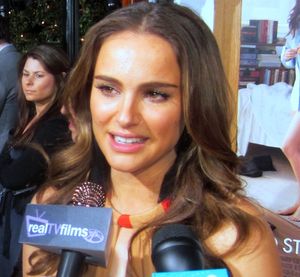
Natalie-portmanPrescient as Warhol might have been, it seems we haven’t reached that future quite yet, at least according to science. A new study, published today in the American Sociological Review, finds that true fame lasts a good deal longer than 15 minutes. In an analysis of the celebrity journalism nationwide, researchers found that the most famous (and most often-mentioned) celebrities stick around for decades. To come to the finding, a number of sociologists each spent a multi-year sabbatical meticulously combing the “Stars: They’re Just Like Us” feature of UsMagazine. Several reportedly declined to return to the field of academia, apparently taking their talents to the analytical departments of the glossy magazine industry full-time. Just kidding! In all seriousness, the sociologists, led by Eran Shor of McGill University and Arnout van de Rijt of Stony Brook University, used an automated search took a random sample of roughly 100,000 names that appeared in the entertainment sections of 2,200 daily American newspapers published between 2004 and 2009. Their sample didn’t include every single name published, but rather a random selection of names published at all different frequencies—so it wouldn’t be useful for telling you who was the most often-mentioned celebrity overall, but would be illustrative of the sorts of trends that famous (and not-so-famous) names go through over time. The ten most frequently-mentioned names in their sample: Jamie Foxx, Bill Murray, Natalie Portman, Tommy Lee Jones, Naomi Watts, Howard Hughes, Phil Spector, John Malkovich, Adrien Brody and Steve Buscemi. All celebrities, they note, were relatively famous before the year 2000, in some cases decades earlier (Howard Hughes rose to fame in the 1920s). All ten names, additionally, are still fairly well-known today. Overall, 96 percent of the most famous names in the sample (those mentioned more than 100 times over the course of a given year) had already been frequently featured in the news three years earlier, further dispelling the 15 minutes cliché. Furthermore, if a name was mentioned extremely often in its first year of appearing, it stood a greater chance of sticking around for an extended period of time.

There is, however, some truth to 15-minutes idea: Names of lesser fame (those less frequently mentioned to start) exhibit significantly higher amounts of turnover from year to year. The researchers say these names mostly fall into the category of people involved in newsworthy events—such as natural disasters and crimes—rather than people who readers find newsworthy in their own right. As an example, Van de Rijt mentions Chelsey Sullenberger, the US Airways pilot who briefly achieved celebrity after successfully executing an emergency landing on the Hudson River in 2011, but is now scarcely frequently mentioned in the press.

More here.

Friday Poem

The Underground

There we were in the vaulted tunnel running,
You in your going-away coat speeding ahead
And me, me then like a fleet god gaining
Upon you before you turned to a reed

Or some new white flower japped with crimson
As the coat flapped wild and button after button
Sprang of and fell in a trail
Between the underground and Albert Hall

Honeymooning, mooning around, late for the Proms,
Our echoes die in that corridor now
I come as Hansel came on the moonlit stones
Retracing the path back, lifting the buttons

To end up in a draughty lamplit station
After the trains have gone, the wet track
Bared and tense as I am, all attention
For your step following and damned if I look back

by Seamus Heaney
from Station Island
Faber, 1984

Thursday, March 28, 2013

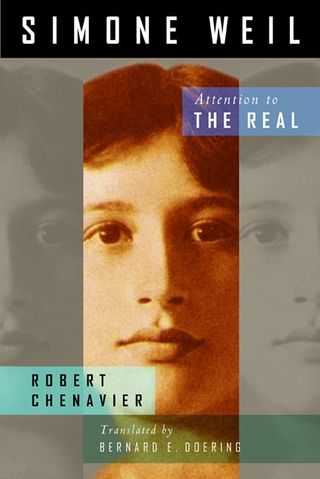
A Review of Simone Weil: Attention to the Real

978-0-268-02373-7-frontcover

Mark Shiffman reviews Robert Chenavier's Simone Weil: Attention to the Real, in Notre Dame Philosophical Reviews:

Robert Chenavier's comprehensive and judicious précis of Simone Weil's thought is the fruit of years as a student and editor of Weil's oeuvre, as president of the French Weil Society and editor of the journal devoted entirely to her thought. A testimony to the very loving attention that is its theme, Attention to the Real is, by the same token, an almost entirely uncritical intellectual and spiritual hagiography — but one that is sufficiently lucid to provide the critical reader with the outlines of Weil's thought required for fruitful engagement.

The introduction identifies and situates Weil's central philosophical objective: “to reduce the opposition between a Plato whose theory of knowledge would have integrated the domain of work and a Marx who would have developed the most precious elements of his materialism by preserving the reality of the supernatural.” For Weil, work, as an engagement of the body and soul with the necessities and limits of matter, plays a crucial role in bringing us to a truthful encounter with the real. It is one dimension of an orientation toward encountering the real on all its levels, including that which surpasses our grasp while it draws us to itself: the supernatural. This sketch provides the itinerary for the subsequent chapters: (1) an overview of Weil's life, emphasizing her engagements with reality on its different levels; (2) an examination of her early philosophical studies and efforts to assess the real possibilities for labor reform; (3) the terms of Weil's attempt to surpass Marxist thought “from within”; (4) Weil's religious awakening and its consequences for her understanding of the ultimate reality that must be the reference point of a genuine humanism; (5) the various paths by which we must open our lives to this ultimate reality.

Weil's early engagement with the labor movement and socialist groups impels her in 1932 (at the age of 23) to travel to Germany to see for herself what the realities on the ground presage for the dreams of a workers' revolution. The vitriolic reaction of French socialists to her sober and pessimistic assessment, and subsequently to her honest, lucid critique of the Soviet government, reveals how determined the leaders of the labor movement are to remain wrapped in illusion. To gain the clarity they lack about the real challenges to reform, she goes to work in a factory, where she learns that the very character of the labor demanded is dehumanizing and deadening.

Games of a Last Chance: Chris Marker’s Olympics

1364400760

Jonathan Cushing in the LA Review of Books:

Looking back over a filmmaker’s early works for stylistic, aesthetic, or conceptual consistencies can be a fool’s errand, even if its draw seems irresistible. To construct an idea of who Marker was as a filmmaker and thinker is to impose the present upon a uniquely heterogeneous past. In projecting the faculties of the time-traveler from the year 4001 in Sans soleil onto the films themselves, we want Marker’s oeuvre to remember itself perfectly and to register a consistent authorial voice, even as it dramatizes the imperfection of memory.

But by the end of Olympia 52, there is indeed a moment that betrays Marker’s later concern with memory as a problem that emerges in both time and art. It is here that we begin to find some justification for our snooping:

And so the Olympic stadium emptied. The flame went out. The place of so many shouts retreated into silence. On the abandoned playing grounds, on the deserted tracks, we had come to seek out our ever-fleeting emotions, like childhood memories. For it is in some sense the world of childhood that had lived there again, among the eight broken world records, almost all Olympic records broken or equaled, the celebration in the city, the battle in the stadium, the two greats — the United States and the USSR — sharing the majority of the victories. It was certainly childhood, with its pure combats and its confidence in life. Athletically speaking, these games had been the most remarkable in Olympic history. We also saw them as the Games of a last chance [les Jeux de la dernière chance]. Before they began, we had called them the Games of the Cold War but, in reality, we almost forgot war there.

Bob Costas this is not, and not just because of its contemplative tone. Marker describes — perhaps even creates — a world, as opposed to a collection of individual acts. It is not about an athlete being the first from his or her country, gender, or race to achieve any singular feat. Individual athletes and spectators are subsumed under nations and geopolitical events, as well as under an even grander, classical force.

The Games return us, Marker suggests, to a childhood that is immediately transformed into a seemingly distant memory. In the moment, they appear to offer a respite from war but, outside of the present, they are identified with it. The naiveté of the “last chance” is the hope that sports can somehow transcend the contexts from which they emerge.