Saturday Poem

Love in the Time of Chain-link Fences

I watched. There was a chain-link fence, a
tear falling from her face. The echo of a car
door slamming. It was Saturday. Believe me
when I tell you I fell in love. Not with her, but
with her tears. It was Saturday & the sun
was a fat globe in the sky. I'd been staring
at it, trying to fix my eyes, when she pulled
into the parking lot. The driver's side door
slammed my fantasies into a question mark.
Dave's sister. She visited twice a month. Her
hair the color of the back of my hand. I dreamed
about her for weeks & wrote her letters.
She cried when she walked to the car and hour
after walking in, ashamed at her brother in
chains. I wanted her to be ashamed of me.

by Reginald Dwayne Betts
from Shahid Read His Own Palm
Alice james Books, 2010

Friday, March 22, 2013

Disfluency

Alter630

A conversation with Adam Alter over at Edge:

Adam Alter is interested in examining the concrete ways in which we are affected by subtle cues, such as symbols, culture, and colors. Why are Westerners easily fooled by the Müller-Lyer illusion of two lines with different arrows at their ends, while Bushmen from southern Africa are not? Why do certain colors have a calming effect on the intoxicated? Why is it that people with easy-to-pronounce names get ahead in life?

In this conversation, we get an overview of Alter's current line of work on how we experience fluent and disfluent information. Fluency implies that information that comes at a very low cost, often because it is already familiar to us in some similar form. Disfluency occurs when information is costly–perhaps it takes a lot of effort to understand a concept, or a name is unfamiliar and therefore difficult to say. His work has interesting implications in the realms of market forces (stocks with pronounceable ticker codes tend to do better when they first enter the market than those that don't, for instance) and globalization, and is highly relevant in a world where cultures continue to meet and to merge.

Jennifer Jacquet

The basic idea here is that when you have a thought, any thought, it falls along a continuum from fluent to disfluent. A fluent thought is one that feels subjectively easy to have. When you speak English and you come across a common English name, like John, or Tom, or Ted, it's very, very easy to process that name. There's no difficulty in reading the name and in making sense of the name.

At the other end of the spectrum you might come across a foreign name or a novel name that you've never seen before or perhaps a name that you've seen before, but spelled very differently. In that case it's going to be much more difficult to process the name. Then it will be disfluent or subjectively difficult to process. It will feel more difficult to process. There's not only the content, what the name happens to be, and what it's like to store that information, but also what it's like to have the thoughts of processing the name, of making sense of the name.

This is a topic that I've been very interested in, and I've been interested in the concept of fluency and how that might affect a whole lot of different judgments that we make, and the way we process the world. The most basic effects in fluency research are pretty straightforward, and the idea is that when something is fluent, you feel differently about it from how you would feel if it were more difficult to process. I'll give you a few examples from my own research.

Washed Away

24STRAYED-articleInline

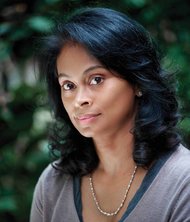
Cheryl Strayed reviews Wave by Sonali Deraniyagala (photo by Ann Billingsley), in the NYT Sunday Book Review:

Sonali Deraniyagala’s extraordinary memoir, “Wave,” opens on the morning of Dec. 26, 2004, as the author putters around a Sri Lankan beach-side hotel with her family. By chapter’s end she’s pantless, half-drowned, bleeding, bruised and numbly resistant to what she’ll soon be forced to know: The five people she loves most in the world are dead. Her two young sons. Her husband. Her parents. All of them killed by a force she can’t yet comprehend, though she was caught up in it and nearly killed by it too. She only knows that “something came for us.” It was, as she and the world will soon learn, a tsunami of epic scale that took an estimated 230,000 lives across a dozen countries.

So begins the most exceptional book about grief I’ve ever read. In prose that’s immaculately unsentimental and raggedly intimate, Deraniyagala takes us deep into her unfathomable loss. In the months after the tsunami, she lives in her aunt’s house in Colombo — the city she grew up in — huddling beneath the covers of her cousin’s bed, attempting to imprint the phrase they are dead on her consciousness. She fights off sleep because it only means she will have to relearn the truth in the morning.

She doesn’t allow herself to think of her home in London, her career as an economist or even to open the curtains in her borrowed bedroom. She wants to kill herself as soon as possible, but her relatives foil her plans by locking away the knives and uncovering her hidden accumulation of sleeping pills. Still she tries. She stabs herself with a butter knife and puts out cigarettes on her hands. “An army of family and friends” begin to watch over her day and night.

She resolves to never go outside again; how could she when outside is where she went with her sons, Vikram and Malli? She asks herself, “How can I walk without holding on to them, one on each side?” When she finally works up the courage to do so, she’s devastated by everything she sees — a child, a ball, a bird, a 100-rupee note in a man’s hand. “The last time I saw one of those,” she writes, “I had a world.”

participate!

JeremyDeller-BattleOfOrgreave-IndependentCuratorsIntl-Flickr-UnderCC-BY-NC-ND-2-0-LicenseNoncommercialUse1-300x199

Hal Foster has complained that “contemporary exhibitions often feel like remedial work in socialization: come and play, talk, learn with me.”[3] Moreover, Foster claims, the collective endeavour involved in such artworks no longer has any political meaning: “today simply getting together sometimes seems to be enough.” The architect and writer Markus Miessen has also questioned the associations frequently drawn between participation and empathy, consensus and democracy. For Miessen, “Any form of participation is already a form of conflict.”[4] A similar desire for conflict – for art that provokes and disrupts, is abrasive and perverse rather than soothing and consensual – is the driving force behind Claire Bishop’s Artificial Hells: Participatory Art and the Politics of Spectatorship (2012). Bishop’s book is exactly the kind of historically aware and politically sophisticated study that participatory art so badly requires. She assesses the current vogue for collaboration and participation in the context of the many attempts made during the twentieth century to rethink the role of the spectator, the artist and the artwork. Despite her initial caveats about the study’s scope, which is mainly limited to Europe, but which also includes work from Argentina, Cuba and North America, she includes a fascinating array of examples, each thoughtfully considered and skilfully summarised (no easy feat given that so many participatory projects involve a lengthy back-story). She is especially generous, but by no means uncritical, towards artistic intentions and the range of meanings provoked by individual works. This is part of a broader commitment to aesthetics. Bishop laments “the paucity of our ability to defend the intrinsic value of artistic experiences today,” which means that participatory art is often justified, rather lamely, for its apparent social benefits.

more from Richard Martin at Berlin Review of Books here.

Britten himself was torn

Britten1_332213h

The premiere of Gloriana has gone down in operatic history as a famous disaster, and the critical reception was not much better. Only in the twilight of the second Elizabeth’s own reign, sixty years on, will this difficult masterpiece be returning to its birthplace, with a new production at Covent Garden in 2013. Heather Wiebe’s subtle account of Gloriana in her fascinating study, Britten’s Unquiet Pasts: Sound and memory in postwar reconstruction, underlines the difficulty of the task which Britten undertook, and his anomalous position after the war, somehow straddling the old, pacifist Left of the 1930s, where he had started his career, and the revived upper-class society with which he now broke bread. One of Britten’s closest friends, Marion Stein, the daughter of his publisher Erwin Stein (an old associate of Schoenberg’s in pre-Anschluss Vienna), had married the Earl of Harewood, and it was in discussions with Harewood – a cousin of the Queen, but also a vigorous and innovative cultural impresario – that the notion of a “national opera” to match Italy’s Aida, Czechoslovakia’s Bartered Bride or France’s Manon was conceived. This was, Kildea suggests, “a slightly anachronistic idea for mid-twentieth-century Britain, a country without any of the nineteenth-century opera traditions and historical reformations that gave rise to the genre on the Continent”.

more from Ian Bostridge at the TLS here.

Surrealism anew

Schwartz_1-040413_jpg_470x739_q85

Surrealism’s chief artistic invention is probably the “exquisite corpse” drawing. It is created when a group of people pass around a piece of paper, and each participant, unaware of how the folded sheet has been handled by the previous person, adds his or her own contribution and sends it along. (The name “exquisite corpse” comes from a line in a poem that, made in the same group fashion, began with these words.) That most exquisite corpse drawings, including those in this exhibition, end up showing weird but not brilliantly weird standing figures has never dampened the game’s allure. The often could-be-better-next-time results may be why the Surrealists, we are told, found the game “addictive” and why we still like playing it. The corpse drawings on hand are certainly no match for the other kinds of works on display. They include collages, automatic drawings—doodles, essentially, in which the doodler goes as far as he or she can—and calligrams, or word drawings, comprised solely of words, letters, or made-up words in a made-up script. There are works of frottage, formed by putting a piece of paper over a textured surface of some sort and rubbing it with a pencil, say, to bring up that surface.

more from Sanford Schwartz at the NYRB here.

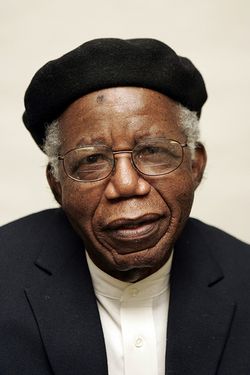
Renowned Nigerian author Chinua Achebe dies

From NewsDay:

Chinua-achebeNigeria’s literary icon and publisher of several novels, Chinua Achebe, is dead.

A source close to the family said the professor had been ill for a while and was hospitalised in an undisclosed hospital in Boston.

The source declined to provide further details, saying the family would issue a statement on the development later today.

Contacted, spokesperson for Brown University, where Mr. Achebe worked until he took ill, Darlene Trewcrist, is yet to respond to our enquiries on the professor’s condition.

Until his death, the renowned author of Things Fall Apart was the David and Marianna Fisher University Professor and Professor of Africana Studies at Brown.

The University described him as “known the world over for having played a seminal role in the founding and development of African literature.”

“Achebe’s global significance lies not only in his talent and recognition as a writer, but also as a critical thinker and essayist who has written extensively on questions of the role of culture in Africa and the social and political significance of aesthetics and analysis of the postcolonial state in Africa,” Brown University writes of the literary icon.

Mr. Achebe was the author of Things Fall Apart, published in 1958, and considered the most widely read book in modern African Literature. The book sold over 12 million copies and has been translated to over 50 languages worldwide.

More here. And the New York Times obituary is here.

Mohsin Hamid’s electrifying new novel

From The Telegraph:

BookHamid has already staked out this fast-changing world as his literary territory. His first novel, Moth Smoke (2000), is the riches-to-rags story of Daru Shezad, a Pakistani financier, who descends through the circles of Lahore society when he loses his job, falls in love with his best friend’s wife, and becomes addicted to heroin. The novel was widely acclaimed as the first fictional portrait of a new, vibrant, grungy Pakistan: a far cry from the genteel poeticism of much South Asian literature. In his Man Booker Prize-shortlisted second novel, The Reluctant Fundamentalist (2007), Hamid turned his attention to the changing relationship – before and after 9/11 – between this new Pakistan and the West. The novel is narrated by a Princeton graduate originally from Lahore, who once worked for a high-powered consultancy firm in New York; he addresses his story, in a kind of dramatic monologue, to an American man who may be a tourist, but on the other hand might be a CIA agent come to rendition him, since his decision to leave his job and return to Lahore has aroused suspicion. The Reluctant Fundamentalist is brilliantly structured and is written in a prose style of lapidary beauty; it was a massive international hit, and established Hamid as one of the most auspicious new voices in world literature. (A film adaptation is being released in May.) Changez, the narrator of The Reluctant Fundamentalist, comes from a privileged background (his father is a lawyer), but he is conscious of the shifting class structures of his society: his family looks “with a mixture of disdain and envy upon the rising class of entrepreneurs – owners of businesses legal and illegal – who power through the streets in their BMW SUVs”. It is this “rising class” that is the subject of Hamid’s new novel.

“You” are born in rural poverty, in a compound where food is cooked over a fire and water is drunk slightly upstream of the same channel used for washing and sewage, but your family soon moves to the city in search of better opportunities. You find after-school work delivering pirated DVDs on your bicycle, and through your job you meet the pretty girl, an aspiring actress who wants to learn more about films. She seduces you, and being the sort of man who believes that “the first woman you make love to should also be the last” you are smitten. But she soon leaves the neighbourhood with a producer who tells her he can help her career. Because you are the youngest child, you are able to finish school (your brother is sent out to work and your sister is married off) and, being clever, you obtain a scholarship to the university. There you join a “political organisation” (which seems more like a religious organisation), in order to secure some influence for yourself. But you realise that if you are ever to re-enter the pretty girl’s orbit – she is now a successful model, her face visible on billboards all around the city – you will have to make some money. You find a job selling expired goods to small vendors, before setting up your own business: bottling boiled water and selling it on as mineral water. This grows and grows until you are filthy rich. The pretty girl eventually comes back into your life; but the path to true happiness, the novel suggests, can’t be dictated by a 12-point plan. The second person voice allows Hamid to move around his hero’s life – and sometimes to move away from it altogether – much more nimbly than would be possible in a traditional first- or third-person narrative. The self-help device also allows him to dispense nuggets of genuine wisdom: love “dampens the fire in the steam-furnace of ambition”; nepotism “is not restricted to swaggering about in its crudest, give-my-son-what-he-wants form. It frequently assumes more cunning guises, attire, for example, or accent.” If the conceit is ultimately a bit gimmicky, Hamid’s style rescues it from becoming irritating. His sentences have a beguiling formality, but are always underscored by warmth and wit. The novel is filled with crisp images: after a riot, “broken glass and bits of rubble rest like five o’clock shadow on the city’s smooth concrete”.

More here.

Friday Poem

What We Have

Our men do not belong to us. Even my own father, left one afternoon, is not mine. My brother is in prison, is not mine. My uncles, they go back home and they are shot in the head, are not mine. My cousins, stabbed in the street for being too—or not—enough, are not mine.

Then the men we try to love, say we carry too much loss, wear too much black, are too heavy to be around, much too sad to love. Then they leave and we mourn them too. Is that what we’re here for? To sit at kitchen tables, counting on our fingers the ones who died, those who left and the others who were taken by the police, or by drugs, or by illness or by other women. It makes no sense. Look at your skin, her mouth, these lips, those eyes, my God, listen to that laugh. The only darkness we should allow into our lives is the night, and even then, we have the moon.
.

by Warsan Shire
from Poetry Review, 2012

How would you like to invest in immortality?

From Fortune:

Big_857941The 2045 Initiative is a complex and expensive research project, but its goals are fairly straightforward. First, by 2020 scientists will figure out how to control robots via brain-machine interfaces (read: mind control). By 2025 the goal is to place a human brain into a working robot and have that person's consciousness (memories, personality, and everything else that makes up the “self”) transfer along with it. After that things tip very seriously over into the realm of science fiction, as the later stages of the project aim to create robots with artificial brains to which human consciousness can be uploaded (by 2035) and, finally, completely disembodied consciousness that is something like a hologram version of a person's mind. If this all sounds a little crazy, Itskov says, that's because it is. But it's certainly not impossible. He likens the initiative to the U.S. space program, whose ultimate achievements seemed impossible in 1939, three decades prior to the moon landing. And, as with the space program, Itskov sees the 2045 Initiative as an engine for technological and economic development, one that will drive discovery in neuroscience, robotics, artificial intelligence—even spirituality. When Itskov begins leafing through slides on his laptop highlighting very real, very sophisticated brain-machine interface technologies that already exist in research labs today, the first phase of his project suddenly feels more realistic. The later phases of the 2045 Initiative still seem to border on the impossible, but Itskov is completely confident that technology will evolve to conquer these seemingly insurmountable challenges.

He's not the only one. Speakers at this year's Global Future 2045 Congress in New York City—the second annual event put on by the 2045 Initiative—include legendary futurist and investor Ray Kurzweil, former X PRIZE Foundation chairman and entrepreneur Dr. Peter H. Diamandis, and Dr. George Church, the molecular biologist who helped initiate the Human Genome Project, as well as a long list of influential thought leaders in business, robotics, neuroscience, and spirituality. (Itskov has even met with the Dalai Lama, who was intrigued by the project.. Several of these backers, including Kurzweil and Diamandis, recently signed a letter sent to UN Secretary General Ban Ki-moon inviting him to join the 2045 Congress when it convenes in June to talk about the future of both humanity and the 2045 Initiative.

More here.

Thursday, March 21, 2013

The revival of an extinct species is no longer a fantasy. But is it a good idea?

Carl Zimmer in National Geographic:

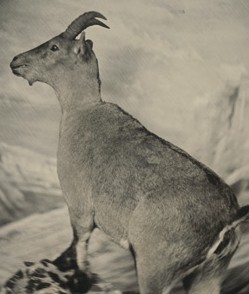
ScreenHunter_147 Mar. 22 10.55On July 30, 2003, a team of Spanish and French scientists reversed time. They brought an animal back from extinction, if only to watch it become extinct again. The animal they revived was a kind of wild goat known as a bucardo, or Pyrenean ibex. The bucardo (Capra pyrenaica pyrenaica) was a large, handsome creature, reaching up to 220 pounds and sporting long, gently curved horns. For thousands of years it lived high in the Pyrenees, the mountain range that divides France from Spain, where it clambered along cliffs, nibbling on leaves and stems and enduring harsh winters.

Then came the guns. Hunters drove down the bucardo population over several centuries. In 1989 Spanish scientists did a survey and concluded that there were only a dozen or so individuals left. Ten years later a single bucardo remained: a female nicknamed Celia. A team from the Ordesa and Monte Perdido National Park, led by wildlife veterinarian Alberto Fernández-Arias, caught the animal in a trap, clipped a radio collar around her neck, and released her back into the wild. Nine months later the radio collar let out a long, steady beep: the signal that Celia had died. They found her crushed beneath a fallen tree. With her death, the bucardo became officially extinct.

But Celia’s cells lived on, preserved in labs in Zaragoza and Madrid. Over the next few years a team of reproductive physiologists led by José Folch injected nuclei from those cells into goat eggs emptied of their own DNA, then implanted the eggs in surrogate mothers.

More here.

Iraq—Ten Years Later: A Symposium

Iraq-getty-mario-tama

Anne-Marie Slaughter, Paul Berman, Leon Wieseltier, Michael Ignatieff, David Greenberg, James P. Rubin, David Rieff, and John B. Judis in TNR:

ANNE-MARIE SLAUGHTER: “If I could re-roll the film, I would stop the invasion.”

Ten years ago, the day after the U.S. invaded Iraq, I published an op-ed in The New York Times with the completely inaccurate headline: “Good Reasons for Going Around the U.N.” I did not think that the U.S. had good reasons for going around the U.N.; indeed, I was politically naïve enough to believe right down to the last minute that the Bush administration would not act without U.N. approval. Once the invasion was underway, however, I argued that although illegal, it could still be made legitimate if: 1) U.S. troops found weapons of mass destruction; 2) the Iraqi people greeted the troops as liberators; and 3) the U.S. then went back to the U.N. Security Council and sought a post-hoc approval of the action by majority vote, as NATO did after the intervention in Kosovo.

None of these three conditions were met; the Iraq war is thus both illegal and illegitimate in the eyes of the vast majority of nations. Looking back, it is hard to remember just how convinced many of us were that weapons of mass destruction would be found. Had I not believed that, I would never have countenanced any kind of intervention on purely humanitarian terms. Many dictators brutalize their populations; they have to conduct the equivalent of active war against their own citizens to reach the threshold of the responsibility to protect doctrine. Nor is it permissible to use military force to establish a democracy, even assuming such an outcome were likely or even possible. But if you did think that Saddam Hussein had an illegal WMD program, then the terror and torture that many Iraqi civilians suffered served as an additional justification for using force.

I now see the decision to invade Iraq as cynical, tragic, immoral, and irresponsible to the point of folly. I do not think that the thousands of U.S. and allied lives lost were lost in vain: Only time can tell what Iraq will become; how the Iraqi people will look back on the toppling of Saddam Hussein and the ensuing ten years of violence; and what role Iraq will play in the larger Middle East. It is very difficult to imagine any transition from Saddam to post-Saddam without some violence and political upheaval in a nation as fractured religiously and ethnically as Iraq. But in hindsight, the U.S. decision to spend tens of billions of U.S. dollars; to ignore all knowledge, planning, and expertise about Iraq with regard to what should happen when the bullets stopped flying; and to ignore the opposition of many of our closest allies in deciding when and how to take action is virtually indefensible.

Social Democracy for Centrists

1363708593nordicsocialdemocracy

Joseph M. Schwartz in Dissent:

The Economist, long identified with libertarian economic ideals, lauded the “Nordic model” in a cover story last month as a “centrist” economic path for global capitalism. Long hostile to “tax-and-spend” social democracy, the publication’s change in tack arises from its recognition that austerity policies are deepening the economic crisis and that the inequality and declining social mobility of “free-market,” Anglo-American capitalism threatens the very legitimacy of the capitalist system that the Economist holds dear.

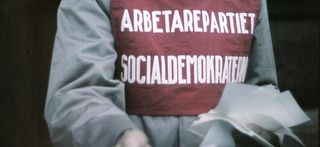
The magazine praises Denmark, Sweden, Finland, and Norway for accomplishments often touted by social democrats—low poverty rates, egalitarian distribution, and efficient public services. But the magazine argues that these are now “centrist” societies because they balance their budgets, allow for consumer “choice” within their public services, and nurture risk-taking entrepreneurs. The Economist sheepishly admits that these countries funnel over 50 percent of their GDP through the public sector (versus a meager 30 percent in the United States and 36 percent in Great Britain). But Adrian Woolridge’s “special report” places inordinate emphasis on how the Nordic nations’ have trimmed their (still) generous paid leave, sick day, and disability benefits, while touting Sweden’s switch from a defined-benefit to defined-contribution public pension plan.

The Economist never once mentions that the Nordic economic model of growth-with-equity derives from the continued existence of a powerful labor movement (union density is above 70 percent in each country, versus 11.3 percent in the United States and 17 percent in Great Britain). Nor does it tell us that the historical dominance of social democracy means that Nordic conservative parties resemble Obama-style Democrats. Even as social democratic parties move in and out of government, the “Nordic model” draws heavily upon the egalitarian values of its labor movement and social democratic parties.

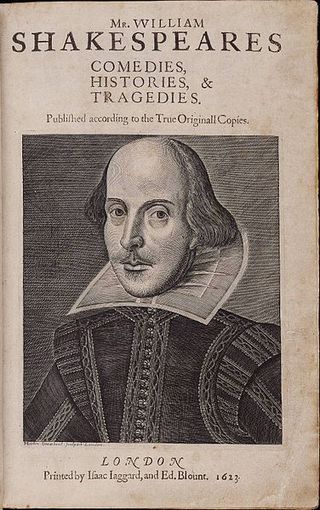
Who wrote Shakespeare’s plays? Stanford professor lets you decide

Shakespeare_news

Paul Gabrielsen in Stanford News (via Jennifer Ouellette):

Poor William Shakespeare is having an identity crisis.

Most people are content to accept that an Englishman with that name was born in 1564, died in 1616 and wrote plays, sonnets and poems in the interim that changed English literature forever.

Some, however, see things differently. They don't doubt that the man from Stratford-upon-Avon existed, or that the plays attributed to Shakespeare are foundational and sublime. But elements of the Shakespeare canon are incompatible with his known biography, they say. An intimate knowledge of court affairs. Fluency in French. Familiarity with Italy. Shakespeare, they claim, was not written by Shakespeare.

Both sides hold heated opinions in the centuries-old debate, but in the absence of definitive physical evidence, the decision is up to you, says Stanford University's Peter Sturrock.

In his new book, AKA Shakespeare: A Scientific Approach to the Authorship Question, Sturrock explores the argument through the eyes of four fictional characters, each with a different perspective on the debate. They voice their opinions on 25 pieces of evidence, but Sturrock invites readers to weigh in as well and arrive at their own conclusion.

Sturrock, 88, is a professor emeritus of applied physics and an eminent astrophysicist. While writing his 2009 memoir, A Tale of Two Sciences, he revisited his early pastime of writing poetry.

“The only poem I could remember was a parody of that famous sonnet, 'Shall I compare thee to a summer's day?' My parody began, inevitably, 'Shall I compare thee to a winter's night?' and it went on from there.”

This led him to re-read all 154 of the Bard's sonnets, which he felt were autobiographical.

“But once you start asking what the sonnets are all about, you are automatically led to the question: Who was the author anyway?”

The authorship question, he reasoned, could be addressed by a scientific approach. Years before, while studying pulsars, Sturrock devised a new method to process information using statistics. His method was based on a statistical concept known as Bayes' theorem, which states that probabilities change depending on the information you have.

costumes and conflict

Jnhereros01

A friend and I decided to buy motorbikes and ride across Southern Africa after college. I took my old film camera not quite knowing what I would find to photograph and more or less stumbled into Namibia and across the Hereros during that trip. I was spellbound. I was not expecting to see deserts, ghost towns, Bavarian architecture, First World War relics, or tribes wearing Victorian-era dresses. I felt as if I was on a Wild West movie set where they had ordered all the wrong people and props. I photographed both the Herero and Himba people on that trip, but always had it in the back of my mind to return and make a more accomplished body of work on the Herero.

more from Jim Naughten’s photographic project at The Morning News here.

the childhood of jesus

Coetzeecoverjpg.jpeg.size.xxlarge.letterbox

The Childhood of Jesus achieves Coetzee’s usual trick of being at once austere and voluptuous, eloquent and inscrutable. It sits in your hand like a meteorite or a shard of obsidian. Its relevance to Jesus seems tangential and inexact (but then Joyce didn’t like Ulysses being tethered too tightly to Homer, either). The boy is awkward, passionate, and reluctant to engage with conventions of number and language because he has devised his own ways of thinking. He asks penetrating questions, as children do. He makes up his own version of Don Quixote, like the titular character in Borges’s short story ‘Pierre Menard, Author of the Quixote’ (Menard, incidentally, deplored ‘those parasitic books that set Christ on a boulevard’). He blithely allows himself to be the epicentre of a series of seismic upheavals in people’s lives, happy in his princely role (as children are). But I don’t quite buy him as the Messiah – even if he is, at times, a very naughty boy. In fact the New Testament character I was most often reminded of was Joseph, a clear avatar for Simón (not that there’s been a Vie de Josèphe to my knowledge). There is also a sense of trouble over the sea, of a coldly indifferent world beyond a small pool of familial warmth and safety, and a constant readiness to flee that evoke the Flight into Egypt as depicted in another like-titled work, Berlioz’s oratorio L’enfance du Christ.

more from Keith Miller at Literary Review here.

a vanished world

Vishniac_3_525

Roman Vishniac is not a household name, but it probably should be. As a new retrospective at the International Center of Photography, curated by Maya Benton, makes plainly evident, Vishniac was one of the more versatile photographers of the twentieth century, and the breath of his accomplishment and legacy is only now beginning to come clear. He is best known, today, for his photographs of impoverished shtetl and ghetto Jews, taken primarily in Germany, Poland, and Russia during the 1930s, and published in the postwar years in the landmark book, A Vanished World. As Benton demonstrates, these images were commissioned by Jewish relief organizations, and the fact that they came to represent Jewish life in Eastern Europe as a whole during that period is somewhat deceptive. In fact, Vishniac himself captured a wide range of Jewish experience — his own family was quite well off — his images giving not just a window onto the lost world of the most impoverished cases, but the urban bourgeoisie.

more from Mark Lamster at Design Observer here.

Does Spelling Matter?

From New Statesman:

SpellIn this captivating and scholarly book, which as well as describing the evolution of spelling is also a neat primer on the history of the English language, Simon Horobin explains why our spelling is so odd. More than that, he gives a good account of why it should remain that way. He is right to argue that the ability to spell correctly is not a sign of intelligence – we all know some truly bovine people who can spell perfectly and some allegedly brilliant ones who can’t. Yet he does write that making an effort to learn how to spell (for most people, other than those who have learning difficulties or are dyslexic, it is all about effort) is a good idea, because of the aid that correct spelling gives to communication.

Horobin clearly has little sympathy with those who would write another person off because of a propensity to make spelling mistakes but he also reflects on the inevitability of others making such a judgement. His subtle and persuasive argument in favour of rigorous learning is the perfect antidote to those academic linguists from the “anything goes” school of grammar and spelling, whose advice is ideal until one has to write a job application that will be read by someone with more traditional views.

More here.