ANNE-MARIE SLAUGHTER: “If I could re-roll the film, I would stop the invasion.”
Ten years ago, the day after the U.S. invaded Iraq, I published an op-ed in The New York Times with the completely inaccurate headline: “Good Reasons for Going Around the U.N.” I did not think that the U.S. had good reasons for going around the U.N.; indeed, I was politically naïve enough to believe right down to the last minute that the Bush administration would not act without U.N. approval. Once the invasion was underway, however, I argued that although illegal, it could still be made legitimate if: 1) U.S. troops found weapons of mass destruction; 2) the Iraqi people greeted the troops as liberators; and 3) the U.S. then went back to the U.N. Security Council and sought a post-hoc approval of the action by majority vote, as NATO did after the intervention in Kosovo.
None of these three conditions were met; the Iraq war is thus both illegal and illegitimate in the eyes of the vast majority of nations. Looking back, it is hard to remember just how convinced many of us were that weapons of mass destruction would be found. Had I not believed that, I would never have countenanced any kind of intervention on purely humanitarian terms. Many dictators brutalize their populations; they have to conduct the equivalent of active war against their own citizens to reach the threshold of the responsibility to protect doctrine. Nor is it permissible to use military force to establish a democracy, even assuming such an outcome were likely or even possible. But if you did think that Saddam Hussein had an illegal WMD program, then the terror and torture that many Iraqi civilians suffered served as an additional justification for using force.
I now see the decision to invade Iraq as cynical, tragic, immoral, and irresponsible to the point of folly. I do not think that the thousands of U.S. and allied lives lost were lost in vain: Only time can tell what Iraq will become; how the Iraqi people will look back on the toppling of Saddam Hussein and the ensuing ten years of violence; and what role Iraq will play in the larger Middle East. It is very difficult to imagine any transition from Saddam to post-Saddam without some violence and political upheaval in a nation as fractured religiously and ethnically as Iraq. But in hindsight, the U.S. decision to spend tens of billions of U.S. dollars; to ignore all knowledge, planning, and expertise about Iraq with regard to what should happen when the bullets stopped flying; and to ignore the opposition of many of our closest allies in deciding when and how to take action is virtually indefensible.
Category: Recommended Reading
Social Democracy for Centrists
Joseph M. Schwartz in Dissent:
The Economist, long identified with libertarian economic ideals, lauded the “Nordic model” in a cover story last month as a “centrist” economic path for global capitalism. Long hostile to “tax-and-spend” social democracy, the publication’s change in tack arises from its recognition that austerity policies are deepening the economic crisis and that the inequality and declining social mobility of “free-market,” Anglo-American capitalism threatens the very legitimacy of the capitalist system that the Economist holds dear.
The magazine praises Denmark, Sweden, Finland, and Norway for accomplishments often touted by social democrats—low poverty rates, egalitarian distribution, and efficient public services. But the magazine argues that these are now “centrist” societies because they balance their budgets, allow for consumer “choice” within their public services, and nurture risk-taking entrepreneurs. The Economist sheepishly admits that these countries funnel over 50 percent of their GDP through the public sector (versus a meager 30 percent in the United States and 36 percent in Great Britain). But Adrian Woolridge’s “special report” places inordinate emphasis on how the Nordic nations’ have trimmed their (still) generous paid leave, sick day, and disability benefits, while touting Sweden’s switch from a defined-benefit to defined-contribution public pension plan.
The Economist never once mentions that the Nordic economic model of growth-with-equity derives from the continued existence of a powerful labor movement (union density is above 70 percent in each country, versus 11.3 percent in the United States and 17 percent in Great Britain). Nor does it tell us that the historical dominance of social democracy means that Nordic conservative parties resemble Obama-style Democrats. Even as social democratic parties move in and out of government, the “Nordic model” draws heavily upon the egalitarian values of its labor movement and social democratic parties.
Who wrote Shakespeare’s plays? Stanford professor lets you decide
Paul Gabrielsen in Stanford News (via Jennifer Ouellette):
Poor William Shakespeare is having an identity crisis.
Most people are content to accept that an Englishman with that name was born in 1564, died in 1616 and wrote plays, sonnets and poems in the interim that changed English literature forever.
Some, however, see things differently. They don't doubt that the man from Stratford-upon-Avon existed, or that the plays attributed to Shakespeare are foundational and sublime. But elements of the Shakespeare canon are incompatible with his known biography, they say. An intimate knowledge of court affairs. Fluency in French. Familiarity with Italy. Shakespeare, they claim, was not written by Shakespeare.
Both sides hold heated opinions in the centuries-old debate, but in the absence of definitive physical evidence, the decision is up to you, says Stanford University's Peter Sturrock.
In his new book, AKA Shakespeare: A Scientific Approach to the Authorship Question, Sturrock explores the argument through the eyes of four fictional characters, each with a different perspective on the debate. They voice their opinions on 25 pieces of evidence, but Sturrock invites readers to weigh in as well and arrive at their own conclusion.
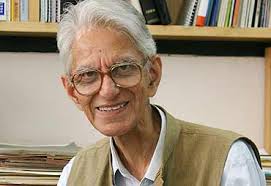
Sturrock, 88, is a professor emeritus of applied physics and an eminent astrophysicist. While writing his 2009 memoir, A Tale of Two Sciences, he revisited his early pastime of writing poetry.
“The only poem I could remember was a parody of that famous sonnet, 'Shall I compare thee to a summer's day?' My parody began, inevitably, 'Shall I compare thee to a winter's night?' and it went on from there.”
This led him to re-read all 154 of the Bard's sonnets, which he felt were autobiographical.
“But once you start asking what the sonnets are all about, you are automatically led to the question: Who was the author anyway?”
The authorship question, he reasoned, could be addressed by a scientific approach. Years before, while studying pulsars, Sturrock devised a new method to process information using statistics. His method was based on a statistical concept known as Bayes' theorem, which states that probabilities change depending on the information you have.
costumes and conflict
A friend and I decided to buy motorbikes and ride across Southern Africa after college. I took my old film camera not quite knowing what I would find to photograph and more or less stumbled into Namibia and across the Hereros during that trip. I was spellbound. I was not expecting to see deserts, ghost towns, Bavarian architecture, First World War relics, or tribes wearing Victorian-era dresses. I felt as if I was on a Wild West movie set where they had ordered all the wrong people and props. I photographed both the Herero and Himba people on that trip, but always had it in the back of my mind to return and make a more accomplished body of work on the Herero.
more from Jim Naughten’s photographic project at The Morning News here.
the childhood of jesus
The Childhood of Jesus achieves Coetzee’s usual trick of being at once austere and voluptuous, eloquent and inscrutable. It sits in your hand like a meteorite or a shard of obsidian. Its relevance to Jesus seems tangential and inexact (but then Joyce didn’t like Ulysses being tethered too tightly to Homer, either). The boy is awkward, passionate, and reluctant to engage with conventions of number and language because he has devised his own ways of thinking. He asks penetrating questions, as children do. He makes up his own version of Don Quixote, like the titular character in Borges’s short story ‘Pierre Menard, Author of the Quixote’ (Menard, incidentally, deplored ‘those parasitic books that set Christ on a boulevard’). He blithely allows himself to be the epicentre of a series of seismic upheavals in people’s lives, happy in his princely role (as children are). But I don’t quite buy him as the Messiah – even if he is, at times, a very naughty boy. In fact the New Testament character I was most often reminded of was Joseph, a clear avatar for Simón (not that there’s been a Vie de Josèphe to my knowledge). There is also a sense of trouble over the sea, of a coldly indifferent world beyond a small pool of familial warmth and safety, and a constant readiness to flee that evoke the Flight into Egypt as depicted in another like-titled work, Berlioz’s oratorio L’enfance du Christ.
more from Keith Miller at Literary Review here.
a vanished world
Roman Vishniac is not a household name, but it probably should be. As a new retrospective at the International Center of Photography, curated by Maya Benton, makes plainly evident, Vishniac was one of the more versatile photographers of the twentieth century, and the breath of his accomplishment and legacy is only now beginning to come clear. He is best known, today, for his photographs of impoverished shtetl and ghetto Jews, taken primarily in Germany, Poland, and Russia during the 1930s, and published in the postwar years in the landmark book, A Vanished World. As Benton demonstrates, these images were commissioned by Jewish relief organizations, and the fact that they came to represent Jewish life in Eastern Europe as a whole during that period is somewhat deceptive. In fact, Vishniac himself captured a wide range of Jewish experience — his own family was quite well off — his images giving not just a window onto the lost world of the most impoverished cases, but the urban bourgeoisie.
more from Mark Lamster at Design Observer here.
Does Spelling Matter?
From New Statesman:
In this captivating and scholarly book, which as well as describing the evolution of spelling is also a neat primer on the history of the English language, Simon Horobin explains why our spelling is so odd. More than that, he gives a good account of why it should remain that way. He is right to argue that the ability to spell correctly is not a sign of intelligence – we all know some truly bovine people who can spell perfectly and some allegedly brilliant ones who can’t. Yet he does write that making an effort to learn how to spell (for most people, other than those who have learning difficulties or are dyslexic, it is all about effort) is a good idea, because of the aid that correct spelling gives to communication.
Horobin clearly has little sympathy with those who would write another person off because of a propensity to make spelling mistakes but he also reflects on the inevitability of others making such a judgement. His subtle and persuasive argument in favour of rigorous learning is the perfect antidote to those academic linguists from the “anything goes” school of grammar and spelling, whose advice is ideal until one has to write a job application that will be read by someone with more traditional views.
More here.
Engineered immune cells battle acute leukaemia
From Nature:
Genetically engineered immune cells can drive an aggressive type of leukaemia into retreat, a small clinical trial suggests. The results of the trial — done in five patients with acute lymphoblastic leukaemia — are published in Science Translational Medicine1 and represent the latest success for a 'fringe' therapy in which a type of immune cell called T cells are extracted from a patient, genetically modified, and then reinfused back. In this case, the T cells were engineered to express a receptor for a protein on other immune cells, known as B cells, found in both healthy and cancerous tissue.
When reintroduced into the patients, the tricked T cells quickly homed in on their targets. “All of our patients very rapidly cleared the tumour,” says Michel Sadelain, a researcher at the Memorial Sloan-Kettering Cancer Center in New York and an author of the study. The treatment “worked much faster than we thought”. The technique has already shown promise against chronic leukaemia, but there were doubts about whether it could take on the faster-growing acute lymphoblastic leukaemia, a tenacious disease that kills more than 60% of those afflicted. Carl June, an immunologist at the University of Pennsylvania in Philadelphia and a pioneer in engineering T cells to fight cancer, says that he is surprised that the method worked so well against such a swift-growing cancer. The next step, he says, is to move the technique out of the ‘boutique’ academic cancer centres that developed it and into multicentre clinical trials. “What needs to be done is to convince oncologists and cancer biologists that this new kind of immunotherapy can work,” he says.
More here.
Wednesday, March 20, 2013
Is This Where the Third Intifada Will Start?
Ben Ehrenreich in the New York Times Magazine:
From most south-facing windows in Nabi Saleh, you can see the red roofs of Halamish, the Israeli settlement on the hilltop across the valley. It has been there since 1977, founded by members of the messianic nationalist group Gush Emunim, and growing steadily since on land that once belonged to residents of Nabi Saleh and another Palestinian village. Next to Halamish is an Israeli military base, and in the valley between Nabi Saleh and the settlement, across the highway and up a dirt path, a small freshwater spring, which Palestinians had long called Ein al-Qaws, bubbles out of a low stone cliff. In the summer of 2008, although the land surrounding the spring has for generations belonged to the family of Bashir Tamimi, who is 57, the youth of Halamish began building the first of a series of low pools that collect its waters. Later they added a bench and an arbor for shade. (Years after, the settlers retroactively applied for a building permit, which Israeli authorities refused to issue, ruling that “the applicants did not prove their rights to the relevant land.” Recently, several of the structures have been removed.) When Palestinians came to tend to their crops in the fields beside it, the settlers, villagers said, threatened and threw stones at them.
It took the people of Nabi Saleh more than a year to get themselves organized. In December 2009 they held their first march, protesting not just the loss of the spring but also the entire complex system of control — of permits, checkpoints, walls, prisons — through which Israel maintains its hold on the region. Nabi Saleh quickly became the most spirited of the dozen or so West Bank villages that hold weekly demonstrations against the Israeli occupation. Since the demonstrations began, more than 100 people in the village have been jailed.
More here.
Flavour in malt whisky is attributable to the malt specification, to brewing and distilling practices and to wood-ageing regimes
Andrew Jefford in the Financial Times:
An uneasy conflict troubles the collective conscience of those involved in the creation of Scotch malt whisky. The imagery with which it is communicated stresses the purity of its wild water and its malted barley, and the beauty, peace and loneliness of the surroundings in which it comes into being. The implication is clear: if the whisky tastes delicious, these ingredients and surroundings are causal.
The customary divisions of the Scotch malt world, moreover, are regional: lowland, highland, Speyside, Islay and the islands, Campbeltown. The malts of each group are said to have a different character, deriving in some unspecified way from that location. All this makes beguiling sense – for a set of consumers who are already familiar with the concept of terroir in the wine world. This notion of a link between whisky and its place of origin provides a useful scaffold for the climb into complication and connoisseurship.
But as whisky scientists point out, it’s not really like that. Water has no influence on malt whisky flavour; barley can come from anywhere, provided that it delivers satisfactory spirit yield; and, in many cases, the newly made spirit is taken by tanker from its beautiful, peaceful, lonely distillery surroundings within a couple of weeks of distillation. It’s then aged in uglier, less peaceful but more logistically sensible locations in central Scotland.
Flavour in malt whisky, those troublesome researchers insist, is essentially attributable to the malt specification, to brewing and distilling practices and to wood-ageing regimes.
More here.
The End of Overeating: Taking Control of the Insatiable American Appetite
[Thanks to Zaneb Khan Beams.]
time to argue about culture
Today, in European cultures, and in other cultures that have borrowed it, science per se is strictly peripheral at best. It is not only inseparable from technology; it is all but completely divorced from philosophy. This is a far cry from the Middle Ages. The centrality of science in all spheres of Western European culture was ensured when the crucial elements — all of them — were borrowed during the Crusades, more or less simultaneously, from Classical Arabic civilization. There, science had never become integrated into Islamic culture, but was considered “foreign” to Islam, and so fell to the onslaught of anti-intellectualism that swept the Islamic world at its peak in the Middle Ages. By contrast, Western Europeans were enthralled by science from the 13th century down to the 20th, when Humanism — now redefined specifically as a collection of ‘non-scientific fields’ — replaced science as the default mode of higher education. Science has come under attack not only by fundamentalists, but even by philosophers and other scholars, who seem not to understand science. What happened?
more from Christopher Beckwith at Berfrois here.
who is Katherine Mansfield?
It has been a lively afterlife. In the ninety years since Mansfield’s death, her work has never been out of print; the same stories repeatedly reedited and reissued in newer, more “authentic” editions. Biographies have multiplied, clamoring for validation like conspiracy theorists. Scholars have greedily rummaged through this particular portmanteau, each emerging with quite irreconcilable portraits of the author. One of the most dedicated treasure-hunters has been Dr. Gerri Kimber, a British scholar, who dug up “a little gem” just last month at the Alexander Turnbull Library, in Wellington, New Zealand. The unearthed manuscripts contained one “complete piece” inspired by an erotic pantomime and signed Katharina Mansfield. Kimber rhapsodized about the significance of the find: the writer and the woman “go hand in hand,” she said; the discovered draft could tell us much about the life; the writing was a cathartic exercise for the woman. Kimber is working on a four-volume Mansfield extravaganza (letters, diaries, stories, poems); when it is published, a new “complete” version of Mansfield will join all the others.
more from Kirsten O’Regan at Paris Review here.
ice-age art
How much power or importance the Ice Age makers and users attributed to their sculpture is again a matter of guesswork. There are interesting new data, from attempts to reproduce the artefacts using the tools and techniques most probably involved, on how long the figures and more elaborate patterns took to make. Scores of hours, it looks like. This leads to the question of quality. Archaeologists (and right-thinking art historians, by the way) are reluctant to trust their powers of judgment here, but my ‘modern mind’, as it moved through the rooms in the show, was soon reeling from the huge disparities of skill and aesthetic complexity obvious from piece to piece. How fabulously, ruthlessly brilliant the best craft performances were, and how pathetic and negligible the worst! The social anthropologists tell us that ‘symbolic thought entails consciousness of the aesthetic.’ Nice to know. Whoever it was made the Lespugue Venus, or carved the fish-patterns on the tusk from Eliseevitchi (but the fish-scale analogy undersells the weird multiplicity of the rhythms and sizes of mark in play), or imagined the torque of the bison’s neck from Zaraysk – well, they knew that their mastery-mystery would soon set the fireside chattering. Just as surely as the scratchers of the mammoth scrawl from La Madeleine or the listless ptarmigan from Isturitz or the lavatory-wall woman from Courbet Cave couldn’t have cared less. Consciousness of the aesthetic has never necessarily meant competence; or even, most often, the wish to compete. A lot of the time, any old visualisation will do.
more from T.J. Clark at the LRB here.
Wednesday Poem
Between Poles
Between the poles of the conscious and the unconscious,
there has the mind made a swing:
Thereon hang all beings and all worlds,
and that swing never ceases its sway.
Millions of beings are there:
the sun and the moon in their courses are there.
Millions of ages pass, and the swing goes on.
All swing! the sky and the earth and the air and the water;
and the Lord Himself taking form:
And the sight of this has made Kabîr a servant.
.
Chain Ghazal
From The Guardian:
There's always a wealth of interesting new writing in Gene Doty's online quarterly, The Ghazal Page, reflecting the editor's welcoming and creative approach to the classical form (a ghazal is a kind of oriental lyric). This week's poem, Chain Ghazal: Chickens by Esther Greenleaf Mürer, comes from the latest issue and nicely blends innovative and traditional approaches. It's guaranteed to put a spring in your step, even if the March weather doesn't. Originally, in the Persian ghazal, the couplet, or sher, was a single line divided by a caesura, and each sher formed a small, separate poem. Agha Shahid Ali, the ghazal's first “ambassador” in America, describes the couplet as “a stone from a necklace”. A mono-rhyme (the qafia), declared in the first couplet, and picked up by the second line of each succeeding one, brings unity to the diversity of the whole poem. The refrain, or radif, has a similar function, and follows the qafia in the same pattern. The last couplet traditionally includes the poet's name. Readers in the UK will know Mimi Khalvati's many fine and tender love poems in the form. The challenge for the anglophone poet lies both in rhyming skill and tonal balance. The repetition of qafia and radif suggests polysyllabic rhyme, and the latter, in English, tends towards comic verse. Mürer's poem is open to the comic spirit, but also uses the rhyme scheme's potential for generating serious ideas – and narrative. The choice of linked quatrains thickens the plot. Mürer triples the mono-rhyme in each stanza, and each first line of a new stanza recovers, with minor variations, the refrain from the last line of the previous one: hence, the “chain” effect. That repetition, although it crosses the stanza break, gives a rather “bluesy” feel to this ghazal. In fact, the fourth stanza talks about the “blues”, including the word in its trio of rhymes, and about how walking cures them. It's almost as if the poem spliced two genres: the ghazal and the blues. Even without that direct reference, you'd hear the slightly mournful undertone to the jauntiness.
…Chain Ghazal: Chickens
I never count my chickens when crossing the road.
I always run like the dickens when crossing the road.
When I let go of expectations I'm always amazed
at how the plot thickens once I have crossed the road.
When preparing to cross the road I gird up my loins.
Before I pick up a toad I gird up my loins.
And thus I train myself in poetic practice:
When fixing to write an ode I gird up my loins.
First I gird up my loins and then I put on my shoes.
Fill my pockets with coins before I put on my shoes.
It will never do to arrive back home with bare feet;
can't go to Des Moines until I've put on my shoes.
More here. (Note: The picture shows one of my favorite ghazals by the great Urdu poet Ghalib)
How Your Language Affects Your Wealth and Health
From Scientific American:
Does the language we speak determine how healthy and rich we will be? New research by Keith Chen of Yale Business School suggests so. The structure of languages affects our judgments and decisions about the future and this might have dramatic long-term consequences. There has been a lot of research into how we deal with the future. For example, the famous marshmallow studies of Walter Mischel and colleagues showed that being able to resist temptation is predictive of future success. Four-year-old kids were given a marshmallow and were told that if they do not eat that marshmallow and wait for the experimenter to come back, they will get two marshmallows instead of one. Follow-up studies showed that the kids who were able to wait for the bigger future reward became more successful young adults.
Resisting our impulses for immediate pleasure is often the only way to attain the outcomes that are important to us. We want to keep a slim figure but we also want that last slice of pizza. We want a comfortable retirement, but we also want to drive that dazzling car, go on that dream vacation, or get those gorgeous shoes. Some people are better at delaying gratification than others. Those people have a better chance of accumulating wealth and keeping a healthy life style. They are less likely to be impulse buyers or smokers, or to engage in unsafe sex. Chen’s recent findings suggest that an unlikely factor, language, strongly affects our future-oriented behavior. Some languages strongly distinguish the present and the future. Other languages only weakly distinguish the present and the future. Chen’s recent research suggests that people who speak languages that weakly distinguish the present and the future are better prepared for the future. They accumulate more wealth and they are better able to maintain their health. The way these people conceptualize the future is similar to the way they conceptualize the present. As a result, the future does not feel very distant and it is easier for them to act in accordance with their future interests.
More here.
The First Step Toward Mapping Human Thoughts
Robert Gonzalez in io9:
Today we are closer than ever to understanding the biological basis of human thought. In a major first for neuroscience, researchers have produced an image showing almost an entire vertebrate brain at work — down to the level of individual neurons. Soon we'll have a human brain “activity map” which reveals how electrical impulses in the brain correlate to thought patterns, biological processes, and more.
The neurons in question belong to a zebrafish embryo, and the researchers come from HHMI's Janelia Farm Research Campus. In the video up top, the activity of individual neurons appear as flashes, detonating across the fish's entire larval brain. And while the brain of a zebrafish only contains about 100,000 neurons (compared to the tens of billions in the human brain), it represents an important step along the path to creating a Brain Activity Map for us apes, a project into which the Obama administration may soon funnel billions of dollars.
According to findings published in the latest issue of Nature Methods, microscopist Phillip Keller and neurobiologist Misha Ahrens have modified an existing imaging technique (called light sheet microscopy) in such a way that enables them to record neuronal activity from the entire volume of the zebrafish's brain. They did this while the embryo was alive, and with a temporal resolution of 0.8 Hz (meaning they were recording activity about once every second). All told, Keller and Ahrens were able to capture “more than 80% of all neurons at single-cell resolution.“
Tuesday, March 19, 2013
A Letter to Paul Wolfowitz occasioned by the tenth anniversary of the Iraq war
Andrew J. Bacevich in Harper's Magazine:
Dear Paul,
I have been meaning to write to you for some time, and the tenth anniversary of the beginning of the Iraq war provides as good an occasion as any to do so. Distracted by other, more recent eruptions of violence, the country has all but forgotten the war. But I won’t and I expect you can’t, although our reasons for remembering may differ.
Twenty years ago, you became dean of the Johns Hopkins School of Advanced International Studies and hired me as a minor staff functionary. I never thanked you properly. I needed that job. Included in the benefits package was the chance to hobnob with luminaries who gathered at SAIS every few weeks to join Zbigniew Brzezinski for an off-the-record discussion of foreign policy. From five years of listening to these insiders pontificate, I drew one conclusion: people said to be smart — the ones with fancy résumés who get their op-eds published in the New York Times and appear on TV — really aren’t. They excel mostly in recycling bromides. When it came to sustenance, the sandwiches were superior to the chitchat.
You were an exception, however. You had a knack for framing things creatively. No matter how daunting the problem, you contrived a solution. More important, you grasped the big picture. Here, it was apparent, lay your métier. As Saul Bellow wrote of Philip Gorman, your fictionalized double, in Ravelstein, you possessed an aptitude for “Great Politics.” Where others saw complications, you discerned connections. Where others saw constraints, you found possibilities for action.
More here.
Pakistan’s Extremist Democracy
Ahmed Rashid in the New York Review of Books:
This spring was supposed to open a new chapter in Pakistan’s tenuous embrace of inclusive democracy. At midnight on March 17, following constitutional rules, the Pakistan government of Asi Ali Zardari stepped down and the national assembly was dissolved, in preparation for national elections in May, which will mark the first time the country passes from one elected leadership to another. And yet a terrifying escalation of extremist attacks against religious minorities and aid workers since the start of the year has shown the government and the security forces’ utter failure to deal with a festering culture of intolerance.
Sectarian killings in three very disparate parts of the country—Quetta, in the western province of Balochistan, Karachi, in the south, and Lahore, in the Punjab heartland—are just the latest incidents of large-scale violence. In Quetta in January and February, the Sunni extremist organization Lashkar-e-Jhangvi killed nearly two hundred Shias of the Hazara ethnic group in two separate bomb attacks. For days after the second attack, outraged members of the Hazara community refused to bury their dead, blocking roads with coffins, while others said they were ready to flee the country. On March 3, in the heart of Karachi, Lashkar-e-Jhangvi militants killed another fifty Shias in a truck bombing that did extensive damage to a Shia neighborhood. In other incidents, Shia naval officers have been gunned down and Shia doctors have been targeted in major cities. The total number of Shias killed this year already approaches the more than four hundred killed in all of 2012, a figure that was itself a dramatic rise from previous years.
Nor have other groups been spared.
More here.