
Category: Recommended Reading
L’Orage
arracombe wood
Sunday Poem
This Kid No Goat
Where have
all the angry young men gone?
Gone to the Island of Lament for Sharpville.
Gone overseas on scholarship.
Gone up North to milk and honeyed uhuru.
Gone to the dogs with the drink of despair.
Yesterday I met one in the bookstore:
he was foraging for food of thought
from James Baldwin, Amiri Baraka
Albet Camus, Jean-Paul Sartre.
He wore faded jeans and heavy sweater,
he saluted me with a
“Hi Brother!”
He was educated in the country mission school
where he came out clutching a rosary
as an amulet against
“Slegs vir blankes – For Whites Only!”
He enrolled at Life University
whose lecture rooms were shebeens,
hospital wards and prison cells.
He graduated cum laude
with a thesis in philosophy:
“I can’t be black and straight
In this crooked white world!
“If I tell the truth
I’m detestable.
“If I tell lies
I’m abominable.
“If I tell nothing
I’m unpredictable.
“If I smile to please
I’m nothing but an obsequious sambo.
“I have adopted jazz as my religion
with Duke Ellington, Count Basie,
Louis Armstrong as my High Priests.
“No more do I go to church
where the priest has left me in the lurch.
“His sermon is a decaying pulpit tree
to be swept away
by violent gusts of doubt and skepticism.
“My wife and kids can worship there:
They want to go to heaven when they die.
“I don’t want to go heaven when I’m dead.
“I want my heaven now,
here on earth in Houghton and Parktown;
a mansion
two cars or more
and smiling servants.
Isn’t that heaven?”
by Mbuyiseni Oswald Mtshali
from Sounds of a Cowhide Drum
Jacana Media, Johannesburg, 2012
translation: Mbuyiseni Oswald Mtshali
publisher: Renoster, Johannesburg, 1971
It is the Fifth Anniversary of the Death of Ahmad Faraz
To commemorate the occasion, I am reposting a remembrance of Faraz Sahib by my sister Atiya B. Khan:
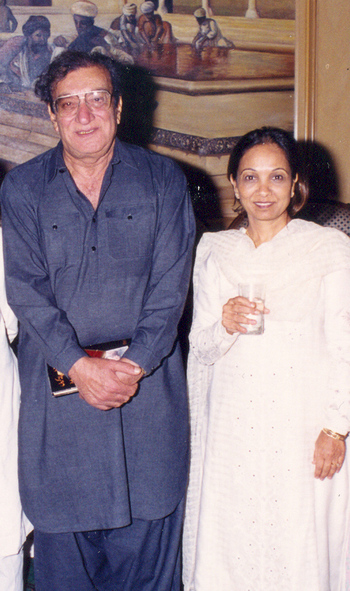
As far as Urdu poetry goes, none of his contemporaries could touch Faraz Sahib, or even come close. The superiority of his poetry owes much to his personal qualities: the boldness of his thought, his willingness to fight oppression and his very costly (to himself) political activism, his rebellious nature, and of course his romantic worldview.
More here. And a bonus article on the plight of Urdu here, thanks to Tunku Varadarajan.
America still has a dream
From The Telegraph:
The address that Martin Luther King delivered from the steps of Washington’s Lincoln Memorial on August 28 1963 is still known simply as the Dream Speech, after the “I have a dream” phrase that he repeated, with his preacher’s cadence, to paint his hopes for a future of racial equality.
…That warm August day, the crowds, perhaps a quarter of them white, poured into the nation’s capital by bus, train and car from across America, from the poorest cotton-share-cropping districts of the South and the slums of the North, to affluent enclaves of New England. The march also attracted a slew of celebrities, including Marlon Brando, Charlton Heston, Harry Belafonte, Burt Lancaster, Paul Newman, Joan Baez and Bob Dylan. Some flew in despite being “advised” on the orders of FBI director J Edgar Hoover to withdraw support from the “Communist-organised” march. Many were nervous as they arrived, fearful of warnings that the protest would turn into a riot. There were dark predictions that white women would be raped, government buildings attacked, shops looted and burned. Instead, America witnessed a stunning and peaceful demonstration of racial unity, a defining moment in the civil rights movement. The year was the 100th anniversary of Abraham Lincoln’s abolition of slavery, with the Emancipation Proclamation that ordered the freeing of slaves in the Confederacy. A century later, protests were sweeping the same Southern states, against the Jim Crow laws that forced blacks to live as second-class citizens.
…In a landmark that not even the most ambitious dreamers in 1963 could have imagined, an African-American was elected president in 2008. Now into his second term, Barack Obama has a framed programme of the March on Washington on the wall of the Oval Office. The progress has been striking. But, as tens of thousands gathered at the Lincoln Memorial yesterday to mark the 50th anniversary of the march, the talk was as much about unfinished business as celebrating a momentous day. For one thing, the full name of the 1963 gathering was the March on Washington for Jobs and Freedom, a title that emphasised the organisers’ focus on economic as well as racial equality. For all the strides of the intervening half-century, the so-called “opportunity gap” between races remains stubbornly wide, with blacks almost twice as likely to be unemployed as whites. From the same steps where Dr King spoke, Mr Obama will address a “Let Freedom Ring” ceremony on Wednesday, alongside Bernice King, the clergywoman daughter of Dr King.
More here.
Saturday, August 24, 2013
Math Experts Split the Check
Ben Orlin in Math With Bad Drawings:
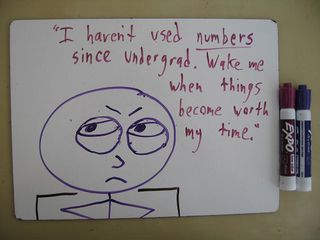
Economist: No! That’s so inefficient. Let’s each write down the amount we’re willing to put in, then auction off the remainder at some point on the contract curve.
Physicist: Huh?
Mathematician: Like most economics, that’s just gibberish with the word “auction” in it.
Engineer: Look, it’s simple. Total your items, add 8% tax, and 18% tip.
Mathematician: Sure. Does anybody know 12 plus 7?
Computer Scientist: You don’t?
Mathematician: What do I look like, a human calculator? Numbers are for children, half-wits, and bored cats.
More here. [Thanks to Alon Levy.]
Secret Reports on Nazi Germany by Neumann, Marcuse and Kircheimer
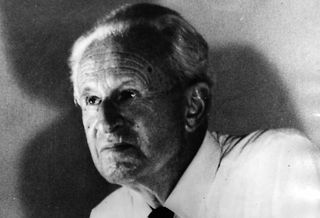
John Bew in New Statesman:
Franz Neumann, Herbert Marcuse and Otto Kirchheimer – leading figures in the creation of Marxist “critical theory” and, in Marcuse’s case, a “rock star” of the 1960s radical left – were Jewish émigrés who fled Germany for the US in the 1930s. Between 1942 and 1944, the three friends were headhunted from posts in American universities by General William “Wild Bill” Donovan, the leader of the OSS, and reunited in the service of the US government. The reports they prepared on Nazi Germany, first declassified in the mid-1970s, have now been collated and published for the first time, edited by the Italian academic Raffaele Laudani. Together they form a rich and multilayered collection of political essays that will be of enduring interest to students of military intelligence, Marxism, Nazi Germany and the Allied effort in the Second World War.
The Frankfurt group was housed in the central European section of the research and analysis branch of the OSS – a huge and eclectic organisation with a staff of more than 1,200. United in the successful prosecution of the war effort, it was perhaps the world’s greatest ever think tank and contained in its ranks some of the foremost intellectuals of 20th-century America – historians, economists and social scientists from across the political spectrum such as Felix Gilbert, Walt Rostow and Arthur Schlesinger.
In a foreword to the book, the Cambridge philosopher Raymond Geuss suggests that such “toleration of intellectual deviancy”, in which the ideas of Marxism could be harnessed in the defeat of fascism, stands in contrast to the “politics of myopic intellectual conformism” of the Anglo-American world in the 21st century. One might add that war produced a generation of academics willing to get their hands dirty and adjust their tradecraft in order to serve a greater cause.
Stanley Fish Turned Careerism Into a Philosophy
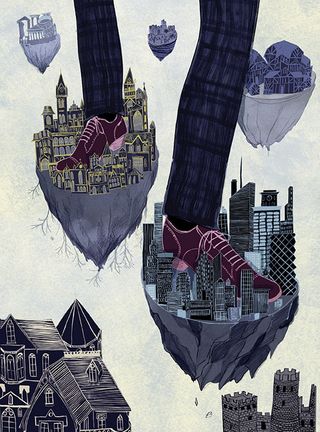
Russell Jacoby in TNR:
It is hardly surprising that Fish passionately defends professionalization. Everything in his method celebrates the professional scholar-critic and his or her happy world. The anti-professionals trade in “essences—a commitment to the centrality … of transcendent truths and values.” Fish is past all of that. His view is the standard denunciation that the profession has succumbed to careerism, mindless specialization, and trivial research—and that, worse, the profession foolishly supposes “a truth that exists independently of any temporal or local concern.” On one side, the disinterested critic apparently taps into a shining truth. “On the other side,” this truth is “continually threatened by the contingent, the accidental, the merely fashionable, the narrowly political, the superficial, the blindly interested, the inessential, the merely historical, the rhetorical, by everything that seems to so many to be the content of professionalism once it has been divorced from or has forgotten the higher purposes and values.” For Fish, the “higher purposes and values” are bunk—or, at least, they can only be approached through the profession and its realities.
Fish proudly defends “the merely fashionable, the narrowly political, the superficial, the blindly interested.” Whatever objections arise against the ills of professionalism take place within it. “In short, the alternative to anti-professionalist behavior … is behavior of the kind we are already engaged in. One could call it business as usual.” For Fish “business as usual” does not necessarily mean complete acquiescence. “'Business as usual’ is understood to include looking around … to see conditions … that are unjust or merely inefficient.” It means also to understand that, whatever disputes emerge, all the parties are “agents embedded in different organizational settings with different priorities and interests” and that none “will be acting purely, that is, with no ax to grind.”
The Dumb White Chick vs Creepy Indian Lecher Debate
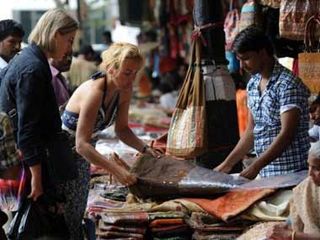
Lakshmi Chaudhry on the CNN essay by University of Chicago student RoseChasm in First Post:
The reality is that the average Indian woman — many of whom are poor, lower caste or rural — is far more unsafe in our country than any white person. For starters, much of this sexual violence is routine and unreported. When a Swiss tourist is raped in Madhya Pradesh, it makes blaring headlines but the rape of a tribal or Dalit woman or maid may — on a slow news day — get a tiny paragraph tucked away on page 12. No policeman would think of refusing to file an FIR if a foreigner were to arrive at the thana to file a complaint. And unlike the maid or the farm labourer, the average Western woman has the luxury of choosing safer methods and times of travel. Webb complains about stares and comments, whereas Indian women travel in buses where they are routinely groped and grabbed.
We Indians are no less clueless, however, when we react by blaming Western women for their own harassment. A number of Indian friends automatically assume that white female tourists are assaulted because they are too dumb to either cover up or stay safe — and have said so about RoseChasm. My question to them: Would they call the many Indian women who are routinely assaulted dumb, as well? The fact is that any woman who has to take public transportation, walk on the streets (and not just in the nicer parts of town), or even take an auto to get home at night cannot be assured of her own safety. Then there are the countless village women who have to walk miles to get water or to the field who can hardly afford to “stay safe.”
The uglier reality is that while rape may be considered a crime, we live in a culture where sexual harassment is so routine as to be unremarkable. Indian women are so used to the heckling, ogling and grabbing, we accept it as the price of leaving the house. And the privileged among us who preach safety to white women are so accustomed to our home-car-office-restaurant prison that we no longer notice our gilded cage; we are so inured to the head-down-no-eye-contact existence, we view it as “normal”, even “smart” behaviour. Worse, we smugly use this misognystic lakshman rekha as a stick to beat up on tourists who do not abide by its prohibition.
This ugly and entirely abnormal state of affairs is not a “cultural” norm that tourists ought to just lump as price of being in Rome. And let’s not use it to condemn all Indian men as lustful and violent, either. Let’s see it as what it is: the most visible symptom of a society without the rule of law.
Why, and What, You Should Know About Central Asia
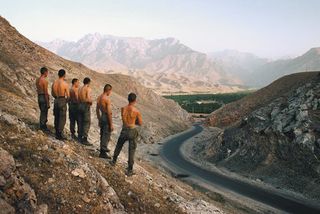
Ahmed Rashid reviews a number of new books on the region including 3QD friend and occasional contributor Alex Cooley's Great Games, Local Rules: The New Great Power Contest in Central Asia, in the NYRB:
Central Asia has reached a turning point and what comes next really worries it. Will the Taliban return to conquer Afghanistan and open the way for the Central Asian Islamist groups that are closely linked to al-Qaeda and have increased their forces while based in Pakistan? Will populist riots reminiscent of the Arab Spring sweep through the region? They have already done so twice in Kyrgyzstan, in March 2005 and April 2010, bringing down two presidents.
Will the weaker states, lacking economic resources, become hostage to China or Russia? Will the most important regional organization they all belong to—the Chinese-led Shanghai Cooperation Organization (SCO)—help them overcome instability or will it continue to help them avoid making serious reforms?
None of the works under review provides the full answers to these questions, although Alexander Cooley’s book, Great Games, Local Rules, comes closest. They all agree on the unprecedented rise of China’s influence in Central Asia. Marlène Laruelle and Sébastien Peyrouse, scholars at George Washington University in Washington, D.C., demonstrate in The Chinese Question in Central Asia that China is already the dominant economic power in the region.
China has also taken care of one vital strategic interest since 1991: making sure that the Uighurs, China’s largest Muslim ethnic group who live in the western province of Xinjiang, do not seriously threaten to become independent and that the hundreds of thousands of Uighurs who live in Central Asia do not help them do so. During the 1950s large numbers of Uighurs fled the Maoist regime to seek shelter in Soviet Central Asia where they were relatively well treated.
strauss’ legacy
Like all serious teachers, Strauss developed followers, and like all disciples these have split over the meaning of their teacher’s work. Was Strauss on the side of the ancients or the moderns? Was he a defender of biblical revelation or philosophical rationality? Was he, as he often said, a “friend of liberal democracy” or its most severe critic? What we are experiencing, to cite Harry V. Jaffa’s witty paraphrase of Lincoln, is nothing less than a “crisis of the Strauss divided.” Jaffa is almost single-handedly the creator of what has become known as West Coast Straussianism, so called because its epicenter is Claremont McKenna College in California. At the core of the West Coast doctrine is the study of the American regime, a topic to which Strauss devoted little explicit attention, but to which Jaffa and his followers have given primacy. The West Coasters have created a synthesis of Strauss’s defense of the classical doctrine of natural right — the view that there is a single immutable standard of justice — with the wisdom of the American founding fathers, supplemented by Lincoln and Churchill (recently names like Calvin Coolidge and Clarence Thomas have been added to the list). Contra Strauss, the West Coasters have developed their own theory of American exceptionalism, arguing that the framers uniquely combined features of classical prudence with biblical morality.
more from Steven B. Smith at the LA Times here.
multiples
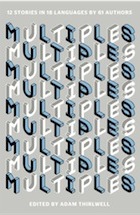
Too often translation is discussed in terms of loss. What hasn’t come through? How is the translation inferior to the original? Multiples, refreshingly, does the opposite: it asks, instead, what is it that survives? And in particular, can something like “style”, which we attach so closely to the specificities of linguistic activity, survive being wrenched out of a language entirely and remade in another? Novelist Adam Thirlwell devised an experiment to put these questions to the test. The outcome is this impossible, fascinating book. The idea in brief: get a story translated several times in series (Russian to French, to English, to Dutch …) and as the distance from the original increases, watch what changes and what remains. To put extra strain on the original’s integrity, Thirlwell invited novelists to do the translating. Many hadn’t translated before. Some possessed – it transpired – only the ropiest understanding of the source language. And novelists are expected to have styles of their own (unlike us translators, who aren’t allowed), so might struggle to avoid incorporating their particular stylistic distortions. How could an original survive?
more from Daniel Hahn at The Guardian here.
A dream deferred
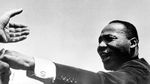
Now that the US has elected – twice – a black president, one could well wonder why the March on Washington is still relevant. Younge provides a few reasons: de facto segregation in American schools; black child poverty nearly triple that of whites; black unemployment double that of whites. “These are problems which, while conditioned by Jim Crow, do not vanish upon its demise” – an ever-timely observation by Rustin, quoted by Younge. As a society we have conflated the end of legal segregation with the end of racism and inequality. We have achieved the former but allow the latter to go increasingly unchallenged. I cannot imagine that King, were he to walk that corridor of homeless men in the Philadelphia of my youth, would have felt his dream had been realised. I do not believe he could look at the current state of America’s prisons, or its schools, and feel his work was complete. Our drowning working class and the rising poverty across the nation continue to belie America’s promise. We have been gifted with his legacy. On this auspicious anniversary we must be reminded, to borrow King’s words, “of the fierce urgency of now”.
more from Ayana Mathis at the FT here.
Egypt after the revolution: curfew nights and blood-stained days
Ahdaf Soueif in The Guardian:

Finally
Everywhere the binary that the revolution so roundly rejects is being restated: the police state or the Islamists. We continue to reject it. I've always written that the police state is the enemy. Now I know that the Brotherhood, too, is the enemy. Their ideology, their world vision – as it stands – cancels out my existence. They will have it so; they will not make room for anyone else, they will exclude me in every way possible – even if it means killing me. They have already excluded me from the kingdom of heaven. You will probably think I'm exaggerating. That's what I used to think when I heard words like these. Till I tried to work with them. Meeting after meeting during 2011 to try to hammer out agreements about the basic shape of the Egyptian constitution – meetings that always mysteriously collapsed. I once asked Dr Mohamed el-Beltagy (interviewed in this paper on Wednesday) why people were so wary of the Muslim Brotherhood: “What is it you're planning to do to us when you come to power?” He shrugged, spread out his hands: “As you see, what can we possibly do?” Well, they started by surrounding parliament with militias to beat protesters with belts and sticks. Their year in power was a push to take over and develop Mubarak's hated economic and security policies. They abandoned the revolution and the people and courted their enemy: an unreformed and unrepentant interior ministry. And now they've fallen out with each other. They're killing each other, while the liberals, who have always hated the Muslim Brotherhood, are rehabilitating the police state, are egging it on and providing it with a justifying discourse.
The revolution – the revolution of 25 January 2011 that we all fell in love with – needs to not get caught in the war between its two enemies. The police state and the Brotherhood are both hierarchical, patriarchal, militarised, centralist, dogmatic, conformist, exclusionary organisations. Both are built on obedience. Both hate critical thinking and debate. Their wars are not ours. And yet the revolution is not, and cannot, be silent in the face of the killings. Our regard for life and dignity cannot be compartmentalised. The personal is also my unending respect for our activist lawyers, our medics, our journalists and writers who continue to act and speak with humanity and professionalism, in the spirit of the revolution, through these terrible times.
More here.
Likely to Succeed
Annie Murphy Paul in The New York Times:

…In reporting her book, Ripley made the canny choice to enlist “field agents” who could penetrate other countries’ schools far more fully than she: three American students, each studying abroad for a year. Kim, a restless 15-year-old from rural Oklahoma, heads off to Finland, a place she had only read about, “a snow-castle country with white nights and strong coffee.” Instead, what she finds is a trudge through the cold dark, to a dingy school with desks in rows and an old-fashioned chalkboard — not an iPad or interactive whiteboard in sight. What Kim’s school in the small town of Pietarsaari does have is bright, talented teachers who are well trained and love their jobs. This is the first hint of how Finland does it: rather than “trying to reverse engineer a high-performance teaching culture through dazzlingly complex performance evaluations and value-added data analysis,” as we do, they ensure high-quality teaching from the beginning, allowing only top students to enroll in teacher-training programs, which are themselves far more demanding than such programs in America. A virtuous cycle is thus initiated: better-prepared, better-trained teachers can be given more autonomy, leading to more satisfied teachers who are also more likely to stay on.
Kim soon notices something else that’s different about her school in Pietarsaari, and one day she works up the courage to ask her classmates about it. “Why do you guys care so much?” Kim inquires of two Finnish girls. “I mean, what makes you work hard in school?” The students look baffled by her question. “It’s school,” one of them says. “How else will I graduate and go to university and get a good job?” It’s the only sensible answer, of course, but its irrefutable logic still eludes many American students, a quarter of whom fail to graduate from high school. Ripley explains why: Historically, Americans “hadn’t needed a very rigorous education, and they hadn’t gotten it. Wealth had made rigor optional.” But now, she points out, “everything had changed. In an automated, global economy, kids needed to be driven; they need to know how to adapt, since they would be doing it all their lives. They needed a culture of rigor.”
More here.
Saturday Poem
.
The sheep move off.
The sky gets heavier.
The birds grow lighter.
The wind stands up and stretches.
The trees bend over to pick up the old leaves.
The horizon folds in half, then half again.
The sound of a train drags rough words across the hills.
The hills slowly empty of colour.
He sits down on a stone.
He moves his left hand in circles,
circles that narrow in upon themselves.
His skin crawls with flies.
He makes no attempt to drive the end
of the day away from his bare chest.
He throws his left hand against the wind.
He throws the earth far away from beneath his feet.
There is a tightness in his side again.
A tightness where his faith should be.
by Kobus Moolman
from Left Over
Dye Hard Press, Johannesburg, 2013
.
.
from Left Over
Dye Hard Press, Johannesburg, 2013
.
.
Friday, August 23, 2013
More On World Lit: N+1 Responds to Critics
The editors, over at n+1:
Rajaram and Griffith also level the more serious charge that the Intellectual Situation authors would consign third-world writers to a kind of political ghetto. “Why are these anaerobic literary litmus tests (Marxist or otherwise) mysteriously over-applied to third world writers? And why refuse aesthetic considerations to these writers? . . . Michael Ondaatje crafts beautiful prose, not political pamphlets. Is Ondaatje (or any of the other writers the editors attack) required to do something that other writers are not? Must artists from outside the US and UK be doggedly political while Brooklynites enjoy the free-for-all of conceptual play? Is Brooklyn social and aesthetic and the rest of the world only political?”
These are good questions. For the record, they impute a position to us that is the exact opposite of our position.
The subject of the essay was World Literature, both an object of academic study and a particular prestige category as imagined by New York publishing houses and critics, and whose apotheosis is the annual PEN World Voices Festival, also in New York. As we said in the first paragraph, we were not talking about all the literature published in the world. That would have been a different sort of essay (even longer, for one). So the fact that Shobhaa Dé and Anuja Chauhan are “flourishing bestsellers in India” but not known in the sphere of World Literature conjured by the West means that they aren’t at all what we mean to talk about. “The editors simply do not account for work that hasn’t been translated, that speaks to local contexts (anti-caste literature, for example) or is out of tune with the tectonics of the global market.” That’s (almost) exactly right, because that’s not what “World Lit” is.
Rival Economists in Public Battle Over Cure for India’s Poverty
Gardiner Harris in the NYT:
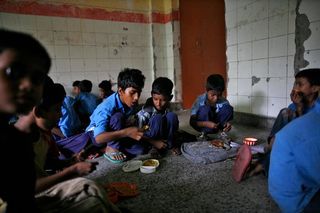
India’s inability to pull Kamlesh and hundreds of millions of others out of desperate poverty despite decades of robust economic growth has been one of history’s great governance failures and economic mysteries.
Does India simply need more time for growth to work its magic, or is there something fundamentally wrong with its formula? Do improvements in health and literacy create growth or simply derive from it? And would India’s people have better lives if the government focused on improving workers’ skills or on bettering investors’ opportunities?
Those are some of the questions behind an unusually nasty fight between two of this nation’s greatest economists. It is a fight that has echoes in poor countries across the globe.
The battle between Amartya Sen, a Nobel Prize winner and Harvard professor, and Jagdish Bhagwati, an eminent professor at Columbia University, has broken out just as India’s economy seems to be coming undone. The rupee has plunged to historical lows against the dollar, and extraordinary efforts by the government to stem the slide, including limits on investments abroad by Indian companies, appear to be having little effect. Growth has fallen to 5 percent annually, and Prime Minister Manmohan Singh recently admitted that it was unlikely to snap back soon. Foreign investors are turning away, and the nation’s stock market has recently swooned.
Into this combustible mix came Mr. Sen and Mr. Bhagwati.
Nikil Saval reviews books by Mo Yan
In the London Review of Books:

Last year the Academy did indeed give Mo Yan the prize. But this time the Nobel’s literature-politics mix came out all wrong. Rather than taking it as a targeted affront, as it had with the Peace Prize awarded to Liu Xiaobo two years earlier, the Chinese Communist Party was ecstatic. Li Changchun, minister of propaganda, wrote to congratulate Mo Yan on a victory that ‘reflects the prosperity and progress of Chinese literature, as well as the increasing national strength and influence of China’. Mo Yan’s dissident reputation in the West, it turned out, was false. He was an established figure in Chinese literary officialdom. He had been a member of the Communist Party since 1979. He was vice chairman of the China Writers’ Association. He had participated in a public ceremony in which he copied out several Chinese characters from Mao’s Zhdanovite ‘Talk at the Yan’an Forum on Literature and Art’, a text which declared the subservience of literature to the class struggle. And in Stockholm before receiving the prize, Mo Yan spoke up in favour of censorship: it was, he said, a bit like airport security. The cadres were already moving swiftly to turn his ancestral village into a literary theme park.
More here.