
Tom Lathan in The Guardian:
 Sixty-six million years ago, an asteroid struck Earth, causing the extinction of around 75% of all species. This event was so significant that we now use it to define the boundary between the Mesozoic and Cenozoic eras. There had only been four extinction events of this magnitude up until then; today, we are living through the sixth – and we are its cause.
News of the sixth mass-extinction often comes in the form of statistics – 1 million species threatened with extinction; extinctions now occurring up to 1,000 times more frequently than before humans – and we are left none the wiser about what it is we are losing. A few years ago, I asked the International Union for Conservation of Nature (IUCN) for a list of species that had recently gone extinct. I wanted to understand what was happening to the natural world, beyond the numbers. The list they sent back contained species from all over the world. One in particular, however, stood out to me.
More here.
Enjoying the content on 3QD? Help keep us going by donating now.
 It started, like many good things, as a joke. NBC was filming a preview of its 1984 lineup, and Selma Diamond, a comedian in her sixties, had been tasked with introducing “Miami Vice,” a flashy affair of Ferraris, cocaine cartels, and designer sports jackets. She pretended to misunderstand. “ ‘Miami Nice’?” At last, a show about retirees, with their mink coats and cha-cha lessons. She got a laugh. And some execs thought it might not be a terrible idea.
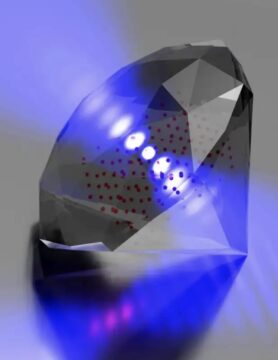 The famous marketing slogan about how a diamond is forever may only be a slight exaggeration for a diamond-based system capable of storing information for millions of years – and now researchers have created one with a record-breaking storage density of 1.85 terabytes per cubic centimetre.
 Regular Noahpinion readers will know that I’m
  I ONCE ASKED Breyten Breytenbach, the exiled South African poet and painter, why, in his opinion, after the fiasco of his clandestine return to his homeland in 1975 (traveling incognito as a would-be revolutionary organizer), the calamity of his arrest (his cover having likely been blown before he even entered the country, such that not only was he arrested but virtually everyone he’d contacted was arrested as well), the debacle of his trial (his appalling, groveling breakdown, his operatic recantations and expressions of contrition, all to no avail), after his being sentenced to nine years’ hard time in the country’s notorious penal system, why, I asked him, why had the authorities who allowed him to go on writing in prison nevertheless forbidden him to paint?
 Dreams can transport us anywhere—from soaring above treetops to reliving the grind of office life—but what do they truly reveal? A recent survey by Talker Research for Newsweek asked 1,000 U.S. adults about their most
  Students, colleagues, and friends all saw how seriously Edward Said took clothes. “Our usual ritual upon meeting after some time apart,” a friend remembers, “was for him to look me up and down and pass withering judgments on the condition of my shoes, and to berate my obstinate reluctance to engage a proper tailor.” Said insisted another friend, a colleague at Columbia University, buy a jacket he “didn’t need (and couldn’t afford) . . .. but I couldn’t withstand the force of Edward’s solicitude, and finally went and bought one. Black. Cashmere. Very nice. I wore it for ages.” In all these accounts, Said’s clothes set him apart. “[O]ne of the features that distinguished him from the rest of us,” a fellow seminar participant recalls, “was his immaculate dress sense: everything was meticulously chosen, down to the socks. It is almost impossible to visualize him any other way.”
 Not too long ago, Brad Pitt and Eric Bana starred in a (loose)
 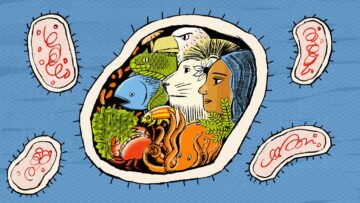 If you follow any path of ancestry back far enough, you’ll reach the same single point. Whether you begin with gorillas or ginkgo trees or bacteria that live deep in the bowels of the Earth — or yourself, for that matter — all roads lead to LUCA, the “last universal common ancestor.” This ancient, single-celled organism (or, possibly, population of single-celled organisms) was the progenitor of every varied form that makes a life for itself on our planet today.
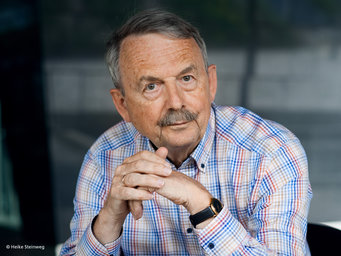 Who could have seen Donald Trump’s resounding victory coming? Ask the question of an American intellectual these days and you may meet with embittered silence. Ask a European intellectual and you will likely hear the name of Wolfgang Streeck, a German sociologist and theorist of capitalism.
 I
I “My friend is a late-in-life medical student with a graduate degree in art history. His hobbies include feeling sad on rainy nights, wearing expensive pajamas and reading the same John Cheever stories over and over again. He knows every smoking-allowed dive bar in Philadelphia. He sculls before class, plays tennis on the city courts and has an encyclopedic knowledge of Bill Evans recordings. His favorite things are small, impractical and impossible to find: a paperback edition of Lydia Davis’s “The Cows,” a pair of hand-painted Qajar dynasty equestrian tiles and a trompe l’oeil pen holder in the shape of a daikon radish.” — Michael, Philadelphia; budget: $75 to $100
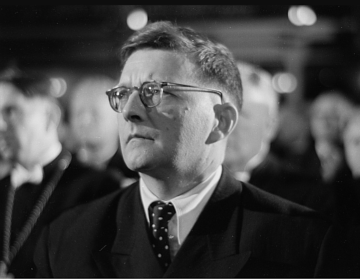 Dmitri Shostakovich’s Fifth Symphony, one of the mainstays of the twentieth-century orchestral repertory, ends with an unapologetic display of musical bombast. The coda consists of thirty-five triple-forte bars in the key of D major, anchored on grandiloquent, fanfare-like gestures in the brass. The strings saw away at the note A, playing it no fewer than two hundred and fifty-two times, the winds piping along with them. The timpani pound relentlessly on D and A, the final notes accentuated by elephantine bass-drum thwacks. It is the pum-pum-pum-pum of “Also Sprach Zarathustra” run amok. The audience invariably springs to its feet.