
Notes From a Pioneer On a Speck in Space
Few things that grow here poison us.
Most of the animals are small.
Those big enough to kill us do it in a way
Easy to understand, easy to defend against.
The air, here, is just what the blood needs.
We don’t us helmets or space suits.
The star, here, doesn’t burn you if you
Stay outside as much as you should.
The worst of our winters are bearable.
Water, both salt and sweet, is everywhere.
The things that live in it are easily gathered.
Mostly, you can eat them raw with safety and pleasure.
Yesterday my wife and I brought back
Shells, driftwood, stones, and other curiosities
Found on the beach of the immense
Fresh-water Sea we live by.
She was al excited by a slender white stone which:
“Exactly fits the hand!”
I couldn’t share her wonder;
Here, almost everything does.
Lew Welsh
from Ring of Bone
Grey Fox Press, 1979
Enjoying the content on 3QD? Help keep us going by donating now.
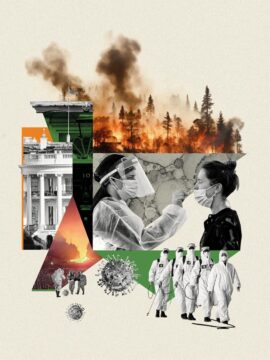 Nature’s survey — which took place before the US election in November — together with more than 20 interviews, revealed where some of the biggest obstacles to providing science advice lie. Eighty per cent of respondents thought policymakers lack sufficient understanding of science — but 73% said that researchers don’t understand how policy works. “It’s a constant tension between the scientifically illiterate and the politically clueless,” says Paul Dufour, a policy specialist at the University of Ottawa in Canada.
 To wake up one morning
 W
W Philosophers tend to tolerate a high degree of personal strangeness in one another. More specifically, they tend not to worry – at least explicitly or on the record – about whether the weird philosophical beliefs and the weird non-philosophical actions of a colleague might have a common source. The methodological norm rather is that ideas must stand or fall on their intrinsic merits; apart from anything else, this is probably good politics. Making the obvious psychological peculiarities of an author too operative a consideration within academic life might risk implicating an impractically large number of people. (And in that case, one probably wouldn’t trust most of them to apply the relevant criteria accurately anyway.) But this does make philosophy different from other areas of life, where we readily make informative connections, in both directions, between the strangeness of the person and the strangeness of his beliefs, often with a view to discrediting one or the other.
 Philosopher Peter Godfrey-Smith has devoted his career to examining how animal minds evolved. He blends formidable analytical skills with a deep curiosity about the natural world, mostly experienced at first hand in his native Australia. While writing his latest book, Living on Earth, he spent many hours scrutinizing noisy parrots and cockatoos in his back garden, weeks observing gobies building underwater towers made of shells and seaweed and years closely watching
  The political spasm that gripped South Korea last night has been widely seen as a portent of doom, but it need not be. Taking a page from
  T
T AI has become uncannily good at aping human conversational capabilities. New research suggests its powers of mimicry go a lot further, making it possible to replicate specific people’s personalities. Humans are complicated. Our beliefs, character traits, and the way we approach decisions are products of both nature and nurture, built up over decades and shaped by our distinctive life experiences.
 V
V
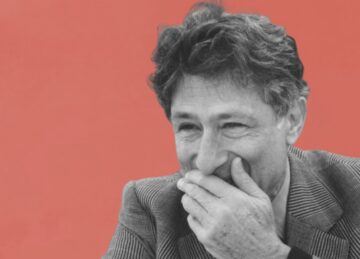 The Question of Palestine was published in 1979, one year after Said’s pivotal book Orientalism and two before Covering Islam—a trilogy that helped found post-colonial theory and develop a framework to critique the West’s stereotypical and often racist lens of the Arab and Muslim world. The Question of Palestine was particularly noteworthy for being the first English-language book to narrate the Palestinian experience and deconstruct Zionism as a settler-colonial project.
 Toi Labs TrueLoo
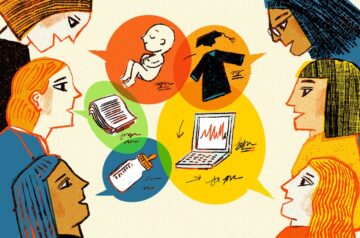 Cecilia hadn’t expected the video to resonate so deeply. She often watched online talks about her field of research. But this one didn’t just present pioneering scientific ideas; it put into words the uncomfortable reality she had been grappling with. She was nearly 30 years old and single, and she had recently interviewed for a postdoc position that would require her to uproot her life yet again. She couldn’t ignore a growing question: whether and how she would be able to have children. The talk, by anthropologist Marcia Inhorn, explored the silent struggles many highly educated women face in balancing their careers not just with motherhood, but with what comes before: relationships and planning for a family. It was an “aha!” moment. Cecilia sent it to her friend and fellow academic Erika, who responded immediately: “Why haven’t we talked about this before?”