
Category: Recommended Reading
Literally the Worst Definition of a Word Ever
Nicholas Clairmont in Big Think:

For just that reason, people need to stop using the word 'literally' to mean 'figuratively'. I am not the first to say this. Yet the point failed to sink in. Worse, prompted by the addition of the non-literal sense of 'literal' to several dictionaries, including the Oxford Enflish Dictionary Online, the usage is getting even more accepted.
The situation is also getting worse because the flames are being fanned by several reactionary articles which claim that the usage which means 'figuratively' is perfectly legitimate. They make this claim based on three lines of reasoning: That the usage is very old, that nobody actually gets confused by the two meanings, and that language evolves naturally and we must simply describe it and conform to it, rather than judge it or make prescriptions for it.
I will describe precisely why this usage is a bad thing for the language. But first, because all of the above arguments are faulty, I want to take the time to point out why:
Bad Reason 1: “Aha!” they point out. “The usage is not some horrible new invention of the millennials, it has been around for a very long time, in the dictionary since 1903, and first used in 1759!”
This point tends to be the primary data used to make the non-literal use of 'literally' look legitimate to detractors. Why the hell does this matter to anyone?
More here.
Thursday, August 29, 2013
Is America Addicted to War?
Stephen M. Walt in Foreign Policy:

Here are my Top 5 Reasons Why America Keeps Fighting Foolish Wars:
1. Because We Can.
The most obvious reason that the United States keeps doing these things is the fact that it has a remarkably powerful military, especially when facing a minor power like Libya. As I wrote a couple of weeks ago, when you've got hundreds of planes, smart bombs, and cruise missiles, the whole world looks like a target set. So when some thorny problem arises somewhere in the world, it's hard to resist the temptation to “do something!”
More here.
Q & A with Shadab Zeest Hashmi
Soniah Kamal at her website:
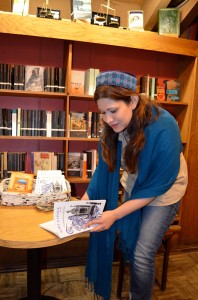
I write on an empty stomach. The first draft is hand-written in a slim notebook that I keep with me. I like to take a break before revising, so I have some distance from the work and I can be super-critical. I revise on the computer and I revise multiple times, typically with tea and almonds.
Any advice for a beginning writer?
Read a rich variety of works. Don’t ignore the voices in your head—they’ll never say anything unimportant to an artist. Be kind to yourself when writing and harsh when editing. I believe that “there is no great writing, only great rewriting.”
A favorite essay/memoir/short story on the topic of identity and borders?
Manto’s short story “Toba Tek Singh” is a classic. NovelsAli and Nino by Kurban Said and People of the Book by Geraldine Brooks explore identity in poignant ways. I find Ibtisam Barakat’sTasting the Sky: A Palestinian Childhood to be one of the most moving, beautiful memoirs dealing with identity and borders.
Your favorite social media tool?
More here.
the berlin story
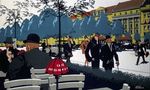
Berlin’s image as an outpost of America within Germany was established long before the 1920s. Mass spectator sport in the form of six-day cycle races antedated the war; the first such event was held in New York in 1896, and they were introduced into Berlin in 1909. In Georg Kaiser’s Expressionist drama Von morgens bis mitternachts (From Morning to Midnight, probably written in 1912), the mass excitement aroused by a cycle race leads the protagonist briefly to hope that such collective feeling can form the basis for a new society. The editors take a gloomier view, seeing in such large-scale sporting events the prototype for the mass spectacles organized under the Third Reich; the Berlin Olympics of 1936 come readily to mind. The narrative that emerges from the extracts assembled by Frisby and Boyd Whyte inevitably terminates in the Third Reich. Hitler’s state did not reject the modernity typified by Berlin, but adapted and redirected it. For example, the factory of the Borsig engineering company in Tegel was used to produce anti-aircraft guns instead of locomotives. Light effects like those at Karstadt were further developed so that Mussolini, paying a state visit in 1937, was greeted as he drove along Unter den Linden by the semblance of hundreds of golden eagles.
more from Ritchie Robertson at the TLS here.
ware

SAN ANTONIO, TEXAS, 1990. A lady named Clara lies dying in a nursing home. As she declines, she has strange dreams and hallucinations. Fragments of her life come back to her in snatches. She sees herself in her old house in Omaha, Nebraska. All the furniture is gone. She sees rain falling through a hatch in the ceiling and freezing into icicles. One day she sees a newspaper unroll on a screen above her, and all the news is of tiny fleeting moments—someone finding a penny, or doing the dishes, or picking up a coaster from a table. “I thought there was something so strangely beautiful about that,” Chris Ware says. “There’s no telling what one will remember. It makes no sense, but there will be these moments that glow in our memories.” Clara was his grandmother, and he has been thinking about this ever since. Ware is America’s most subtle and original graphic novelist, but for the sake of simplicity he often calls himself a cartoonist.
more from Simon Willis at More Intelligent Life here.
All quiet on the euro front?

What will become of the EU countries outside a more tightly co-ordinated Eurozone? In Au Revoir, Europe: What if Britain Left the EU? David Charter, a Times journalist, argues that the combined dynamics of growing Euroscepticism in the UK and increasing integration in the Eurozone mean that London will either have to negotiate a form of second-tier membership – some have proposed making a virtue of a looser outer ring, which could include Turkey and the Balkan states as well as Britain – or quit the EU altogether. One can see why many in Europe might welcome that possibility. Britain has loyally fulfilled De Gaulle’s prediction that it would serve as a Trojan horse for US interests in Europe. Cameron has lately spared no efforts in defending London’s derivative traders – mostly subsidiaries of US banks – from EU regulation, let alone taxes, while backing savage austerity programmes and urging Germany to step up to the mark. Charter’s history of the UK’s relationship with Europe is a useful reminder that much of what people loathe about the EU has been the result of British intervention. Polls say a majority would favour a single market – Thatcher’s dream – without the mass of EU regulations, but the latter are a precondition for the former. By the 1980s, every advanced industrial economy had built up its own web of health and safety rules, not without reason: specifications for product labelling; safety requirements for electrical appliances; protocols for food standards and abattoir inspection agencies; restrictions on toxic substances, such as lead paint on children’s toys.
more from Susan Watkins at the LRB here.
Leaders Are Born, Not Made
Shinnosuke Nakayama in Scientific American:

We forced the pairs of fish to take opposite roles to see if they could switch with a little training. The shy fish was rewarded with a small amount of food every time it initiated collective movement, regardless of whether it was followed by the bolder partner or not. The bolder fish was also rewarded every time it followed the shyer member, but not when it emerged from safe cover by itself. In this way, we trained pairs to swap their natural roles and compared their behavior to the pairs that assume their natural roles. Our prediction was that bold individuals would perform poorly when forced to become followers, because they are less responsive to the behavior of others in their natural role, while shy individuals would adopt the role of leader more easily. However, the results were completely opposite: for both bold and shy individuals, the tendency to lead is much less flexible than the tendency to follow. The bold fish readily adapted to following but the shy fish could not be trained to lead, even when it learnt to stop following the other fish.
More here.
Saluting a Dream, and Adapting It for a New Era
From The New York Times:
President Obama stepped into the space on Wednesday where the Rev. Dr. Martin Luther King Jr. once stood, summoning his iconic dream of a colorblind society in a celebration of a half-century of progress and a call to arms for the next generation. On a day of overcast skies and misty rain, tens of thousands of Americans — black, white and every shade in between — returned to the site of Dr. King’s “I Have a Dream” speech to listen to the nation’s first black president pay tribute to the pioneers who paved the way for his own ascension to the heights of American government. “Because they kept marching, America changed,” the president said as Dr. King’s family watched. “Because they marched, a civil rights law was passed. Because they marched, a voting rights law was signed. Because they marched, doors of opportunity and education swung open so their daughters and sons could finally imagine a life for themselves beyond washing somebody else’s laundry or shining somebody else’s shoes.
“Because they marched,” he added, “city councils changed and state legislatures changed and Congress changed and, yes, eventually, the White House changed.” The symbolic journey from Dr. King to Mr. Obama on the steps of the Lincoln Memorial animated the 50th anniversary of the March on Washington for Jobs and Freedom more than any oratory. While Mr. Obama’s line about the White House changing was his only reference to his unique place in history, the power of his presence was lost on no one.
More here.
Thursday Poem
White Spine
Liar, I thought, kneeling with the others,
how can He love me and hate what I am?
The dome of St. Peter's shone yellowish
gold, like butter and eggs. My God, I prayed
anyhow, as if made in the image
and likeness of Him. Nearby, a handsome
priest looked at me like a stone; I looked back,
not desiring to go it alone.
The college of cardinals wore punitive red.
The white spine waved to me from his white throne.
Being in a place not my own, much less
myself, I climbed out, a beast in a crib.
Somewhere a terrorist rolled a cigarette.
Reason, not faith, would change him.
by Henri Cole
from The Visible Man
Knopf, 1998
Philosophy as a Humanist Discipline: The Legacy of Isaiah Berlin, Stuart Hampshire, and Bernard Williams
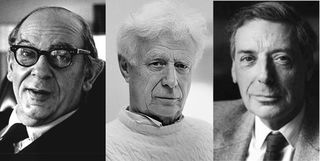
Over at the NYRB, recording of the five panels of the following event:
On June 22, 2013, at Wadham College, Oxford, The New York Review held a free conference to celebrate its fiftieth anniversary and to honor the lives, work, and legacy of Isaiah Berlin, Stuart Hampshire and Bernard Williams. Cosponsored by The New York Review of Books Foundation, Fritt Ord, All Souls College, The Europaeum, Wadham College, and Wolfson College, the conference included remarks by Avishai Margalit, Alan Ryan, Mary Warnock, John Gray, Helena Kennedy, Mark Lilla, Naomi Eilan, Edward Skidelsky, Jerome Bruner, Samuel Scheffler, Jeremy Waldron, Timothy Garton Ash, and Marc Stears. The sessions were chaired by Robert Silvers, John Vickers, Hermione Lee, and Ken Macdonald.
In Place of Thought
Teju Cole over at the New Yorker's blog Page Turner:
In 1913, a compilation of Gustave Flaubert’s satirical definitions was posthumously published as “Le Dictionnaire des Idées Reçues” (“The Dictionary of Received Ideas”). Flaubert hated cliché, a hatred that expressed itself not only in the pristine prose of “Madame Bovary” but also in his letters and notes on the thoughtless platitudes of the day. “The Dictionary of Received Ideas” is a complaint against automatic thinking. What galls Flaubert most is the inevitability, given an action, of a certain standard reaction. We could learn from his impatience: there are too many standard formulations in our language. They stand in place of thought, but we proclaim them each time—due to laziness, prejudice, or hypocrisy—as though they were fresh insight.
Flaubert’s “Dictionary” inspired me to try something similar, over the course of a few hours, on Twitter. I think, also, there was the influence of Ambrose Bierce and his cynical “Devil’s Dictionary,” Samuel Johnson’s mostly serious but occasionally coruscating “Dictionary of the English Language,” and Gelett Burgess’s now-forgotten send-up of platitudes, “Are You a Bromide?” What the entries in these books have in common, in addition to compression and wit, is an intolerance of stupidity. As I wrote my modern cognates, I was struck at how close some of them came to the uninterrogated platitudes in my own head. Stupidity stalks us all.
AFRICA. A country. Poor but happy. Rising.
ALMOND. All eyes are almond-shaped.
AMERICAN. With the prefix “all,” a blonde.
ARTICULATE. Say “you’re very articulate” to young blacks, and then ask where they are from.
ARTISAN. A carpenter, in Brooklyn.
ATHEISM. Deranged cult of violent fanatics.
AUSTRALIANS. Extremely fit. Immune to pain. If you meet one, say “Foster’s.” The whole country is nothing but beaches.
BLUE. The color of purity. Countless mysterious ads are devoted to pads and liners that absorb blue liquid.
BRAVE. Doomed.
Noam Chomsky On The Philosophy Of Mind
Wednesday, August 28, 2013
Jimmy Carter: Martin Luther King Jr. was greatest American leader
Is Intervention in Syria Legal? Does Obama Care?
Ian Hurd in the Boston Review:

There are three views on the question and all are on display in the current debates over Syria. As President Obama decides on an American response, he too will have to take a position on these issues.
Lavrov expressed a common view of international law: the U.N. Charter forbids countries from “the threat or use of force against the territorial integrity or political independence of any state.” This makes war illegal. It is a descendant of the Kellogg-Briand Pact of 1928, the first general treaty to outlaw war.
Having spent a decade as Ambassador to the United Nations, Lavrov knows well that the U.N. Charter makes no allowance for the intentions of the states involved. Except in self-defense, the Charter outlaws all war-making by states, and is unconcerned with the motivation of the states involved. Whether a state intends to save a population from genocide, to punish a neighbor for an insult, or to gain territory by aggression, the Charter treats all the same. All are forbidden by Article 2(4).
More here.
why they marched
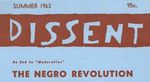
Fifty years ago today, 250,000 people joined the March on Washington for Jobs and Freedom. Dissent‘s Tom Kahn worked closely with veteran socialist and civil rights activist Bayard Rustin to organize the March. In “The Power of the March—and After,” Kahn traced the March’s history back to labor leader A. Philip Randolph’s 1940 plan to demonstrate in the capital for an end to wartime employment discrimination (called off once Franklin Roosevelt conceded certain demands). Echoing the speech delivered by John Lewis of the Student Nonviolent Coordinating Committee, Kahn identified the promise of the march with the prospect of continued militancy:
At the Lincoln Memorial, a quarter of a million people pledged to continue the struggle at home—in the streets as well as in the courts. This pledge may well turn out to be more important than the eloquent speeches or the specific demands. The streets were the incubators of the March on Washington, and it was pressures from the streets that fused jobs and freedom into a single slogan. Action in the streets in cities and towns across the country, in keeping with the pledge, will keep the March on Washington Movement alive and militant.
more from The Editors at Dissent here.
rare photos of The March
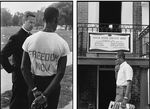
To commemorate the 50th anniversary of the March on Washington for Jobs and Freedom that called for equal rights for African-Americans, Getty has published a book of Magnum photographer Leonard Freed’s photographs titled This Is the Day: The March on Washington. Included in the book are 75 previously unpublished images Freed made that focus on moments both quiet and profound before, during, and after the march. There is also a selection of images from the 20th-anniversary march that took place in Washington, D.C., on Aug. 27, 1983. Freed, who died in 2006, was a Brooklyn, N.Y.–born photographer who discovered his craft in 1953. He joined Magnum in 1972 and became known for his images of the American civil rights movement. Paul Farber, visiting assistant professor of writing at Haverford College, met Freed’s widow, Brigitte Freed, in 2009 and served as a historical adviser and co-curator of This Is the Day. According to Farber, it was Freed who came up with the idea for the book. “She shared with me a germ of an idea she had for a posthumous Leonard Freed book, inspired by words she heard Barack Obama say while on the campaign trail: ‘I am here because somebody marched.’ ”
more from David Rosenberg at Slate here.
Ahmed Faraz – Abki tajdeed’e wafa ka
(Note: Happy Birthday to my sister Atiya. Faraz Sahib dedicated one of his books to her.)
Just thinking about science triggers moral behavior
From Nature:

…Across all these different measures, the researchers found consistent results. Simply being primed with science-related thoughts increased a) adherence to moral norms, b) real-life future altruistic intentions, and c) altruistic behavior towards an anonymous other. The conceptual association between science and morality appears strong.
More here.
Wednesday Poem
Winter Finch
.
The small red finch
so deftly slips
from the swaddling
and unseeing snow
that all envelops,
and buries all,
he thrills
and puffs
his buff red bib,
flicks his tail,
turns the lanterns
on his wings, left
right, left,
preens the gold
fleck on his
pope and
aims
his beak
with an inspired eye
t’wards the ash’s
knobbly buds,
vibrates
his craw
as if an ember
sets his throat
ablush –
and –
from the frozen holly,
snow divested
he escapes,
zips a zigzag trail of fire
across
the sky before
he fades,
a tint,
a sound,
that we tell each other,
and withhold,
and re-narrate
under the table lamp
when everything
has turned once more
to white and black
and silence
as before.
.
by Marlene van Niekerk
from Poetry International, 2013
translation by author